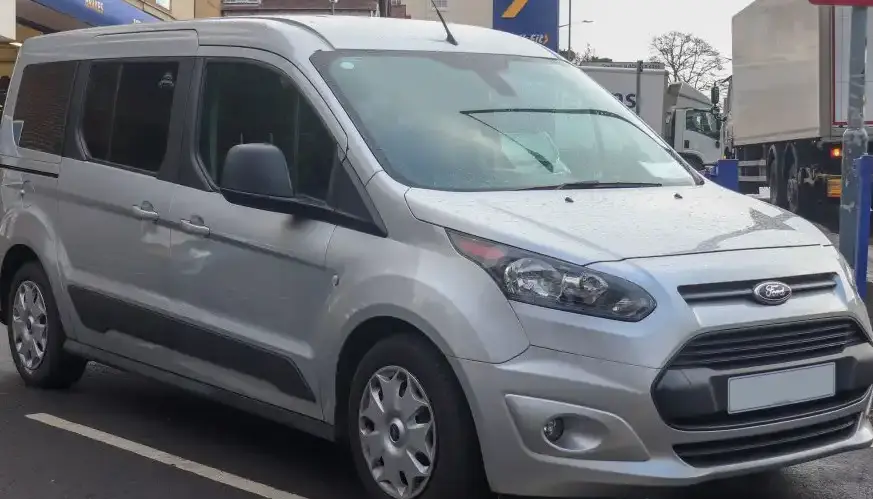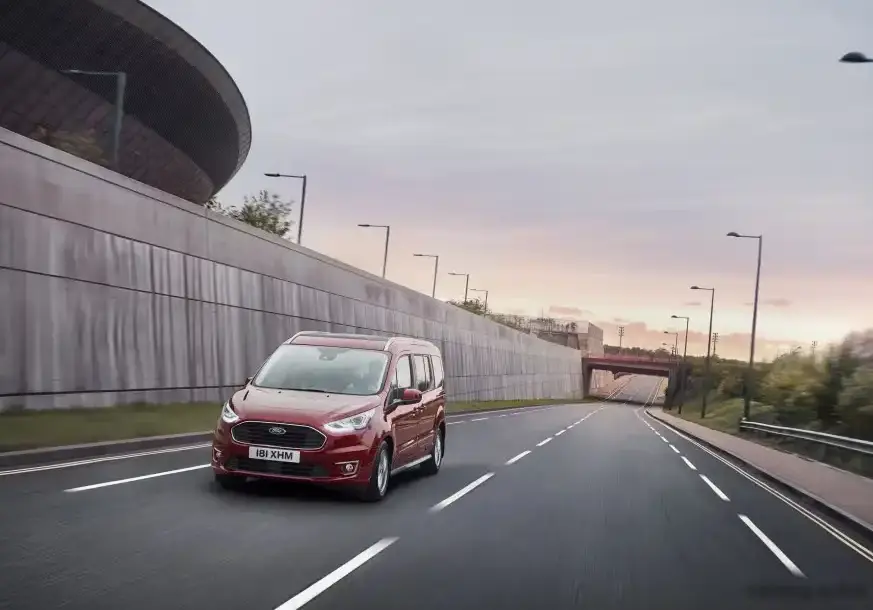
The Ford Grand Tourneo Connect II, specifically the facelifted version introduced in 2018, represented Ford’s entry into the compact people carrier segment in Europe. Positioned as a practical and versatile vehicle for families and commercial users, the Grand Tourneo Connect offered a spacious interior and a range of efficient engine options. The 1.5 EcoBlue 100 horsepower automatic variant, produced from 2018 to 2020, served as a mid-range offering, balancing affordability with convenience. It was designed to appeal to buyers seeking an easy-to-drive, fuel-efficient vehicle for daily commutes and family trips. This model is based on the Ford Transit Connect platform, sharing many components with its commercial van counterpart.
Technical Specifications
| Brand | Ford |
| Model | Tourneo Connect |
| Generation | Grand Tourneo Connect II (facelift 2018) |
| Type (Engine) | 1.5 EcoBlue (100 Hp) Automatic S&S |
| Start of production | 2018 |
| End of production | 2020 |
| Powertrain Architecture | Internal Combustion engine |
| Body type | Minivan |
| Seats | 5 |
| Doors | 5 |
| Fuel consumption (urban) | 5.4-5.6 l/100 km (43.6 – 42 US mpg) |
| Fuel consumption (extra urban) | 5.0-5.2 l/100 km (47 – 45.2 US mpg) |
| Fuel consumption (combined) | 5.1-5.3 l/100 km (46.1 – 44.4 US mpg) |
| CO2 emissions | 133-138 g/km |
| Fuel Type | Diesel |
| Acceleration 0 – 100 km/h | 14.1 sec |
| Acceleration 0 – 62 mph | 14.1 sec |
| Acceleration 0 – 60 mph | 13.4 sec |
| Maximum speed | 169 km/h (105.01 mph) |
| Emission standard | Euro 6 d-TEMP |
| Weight-to-power ratio | 17.3 kg/Hp |
| Weight-to-torque ratio | 6.4 kg/Nm |
| Power | 100 Hp @ 3600 rpm |
| Torque | 270 Nm @ 1750-2250 rpm (199.14 lb.-ft.) |
| Engine layout | Front, Transverse |
| Engine Model/Code | Z2GA |
| Engine displacement | 1499 cm3 (91.47 cu. in.) |
| Number of cylinders | 4 |
| Engine configuration | Inline |
| Number of valves per cylinder | 2 |
| Fuel injection system | Diesel Commonrail |
| Engine aspiration | Turbocharger, Intercooler |
| Engine oil capacity | 6 l (6.34 US qt | 5.28 UK qt) |
| Coolant capacity | 7 l (7.4 US qt | 6.16 UK qt) |
| Kerb Weight | 1728-1914 kg (3809.59 – 4219.65 lbs.) |
| Max. weight | 2290-2445 kg (5048.59 – 5390.3 lbs.) |
| Max load | 531-562 kg (1170.65 – 1239 lbs.) |
| Trunk (boot) space – minimum | 1529 l (54 cu. ft.) |
| Trunk (boot) space – maximum | 2761 l (97.5 cu. ft.) |
| Permitted trailer load with brakes (12%) | 723-891 kg (1593.94 – 1964.32 lbs.) |
| Permitted trailer load without brakes | 720-750 kg (1587.33 – 1653.47 lbs.) |
| Permitted towbar download | 75 kg (165.35 lbs.) |
| Length | 4825 mm (189.96 in.) |
| Width | 1835 mm (72.24 in.) |
| Width with mirrors folded | 1966 mm (77.4 in.) |
| Width including mirrors | 2137 mm (84.13 in.) |
| Height | 1847 mm (72.72 in.) |
| Wheelbase | 3062 mm (120.55 in.) |
| Minimum turning circle | 12.2 m (40.03 ft.) |
| Drivetrain | Front wheel drive |
| Number of gears | 8 |
| Gearbox type | Automatic transmission |
| Front suspension | Independent, McPherson with coil spring and anti-roll bar |
| Rear suspension | Semi-dependent beam with stabilizer |
| Front brakes | Ventilated discs |
| Rear brakes | Disc |
| Assisting systems | ABS (Anti-lock braking system) |
| Steering type | Steering rack and pinion |
| Tires size | 205/60 R16 |
| Wheel rims size | 6.5J x 16 |
INTRODUCTION
The 1.5 EcoBlue engine, introduced in 2018 as part of the facelift for the second-generation Grand Tourneo Connect, represented a significant upgrade in terms of efficiency and refinement. This engine, paired with a six-speed automatic transmission, was designed to offer a comfortable and convenient driving experience. The 100 horsepower variant occupied a middle ground in the Tourneo Connect lineup, positioned above the base engine options and below the more powerful diesels. It targeted buyers who prioritized fuel economy and ease of use over outright performance. The Grand Tourneo Connect, in general, aimed to provide a more premium experience than the standard Transit Connect van, with a focus on passenger comfort and convenience.
Powertrain & Engine Architecture
The 1.5 EcoBlue engine (specifically the Z2GA code) is a four-cylinder diesel engine featuring common-rail direct injection and a turbocharger with intercooling. This engine is part of Ford’s EcoBlue family, known for its focus on reducing emissions and improving fuel efficiency. The engine utilizes a 2.0-liter diesel particulate filter (DPF) to meet stringent Euro 6d-TEMP emission standards. The automatic transmission is a six-speed torque converter unit, chosen for its smooth operation and reliability. The engine’s valvetrain features two valves per cylinder, a relatively simple design that contributes to its durability. The fuel injection system delivers precise fuel metering for optimal combustion and reduced emissions. The EcoBlue engine also incorporates features like reduced friction components and optimized combustion chamber design to maximize efficiency.
Driving Characteristics
The 1.5 EcoBlue 100 horsepower automatic Grand Tourneo Connect delivers adequate, but not exhilarating, performance. Acceleration from 0-60 mph takes around 13.4 seconds, and top speed is around 105 mph. The automatic transmission is tuned for comfort and fuel economy, resulting in relatively smooth gear changes. However, it can sometimes feel hesitant when requesting quick acceleration, particularly when fully loaded. The engine provides a usable 270 Nm (199 lb-ft) of torque, available from 1750-2250 rpm, which makes it reasonably capable for everyday driving and carrying passengers or cargo. Compared to the higher-powered diesel variants, this engine feels noticeably slower, especially when overtaking. The manual transmission versions of this engine offer slightly better performance and fuel economy due to the reduced weight and drivetrain losses.
Equipment & Trim Levels
The 1.5 EcoBlue 100 hp Automatic S&S trim typically included standard features such as air conditioning, power windows, power mirrors, a basic audio system with Bluetooth connectivity, and a driver’s airbag. The “S&S” designation indicates the inclusion of Ford’s Auto Start-Stop system, which automatically shuts off the engine when the vehicle is stationary to save fuel. Optional extras included alloy wheels, a touchscreen infotainment system with navigation, rear parking sensors, cruise control, and upgraded interior trim. Higher trim levels offered additional features like automatic headlights, rain-sensing wipers, and a panoramic sunroof. Interior upholstery was typically cloth, with options for leather upgrades on higher-spec models.
Chassis & Braking
The Grand Tourneo Connect utilizes a McPherson strut front suspension and a semi-independent rear beam suspension. This setup provides a comfortable ride quality, although it’s not particularly sporty. The front brakes are ventilated discs, while the rear brakes are discs. ABS (Anti-lock Braking System) is standard. The suspension is tuned to prioritize ride comfort and stability when carrying a load. Stabilizer bars are fitted to both the front and rear axles to reduce body roll during cornering. The steering is a rack and pinion system, providing reasonably precise steering feel.
Market Reception & Comparison
The 1.5 EcoBlue 100 hp Automatic variant of the Grand Tourneo Connect was generally well-received by critics as a practical and fuel-efficient option. It was praised for its spacious interior, comfortable ride, and relatively low running costs. However, some reviewers noted that the engine could feel underpowered, especially when fully loaded or driving uphill. Compared to the 1.6-liter EcoBoost petrol engine, the 1.5 EcoBlue offered significantly better fuel economy, but less outright performance. Against the more powerful diesel options, it provided a more affordable entry point into the Grand Tourneo Connect range, albeit with a compromise in performance. Reliability reports suggest that the 1.5 EcoBlue engine is generally reliable, although the DPF can be prone to clogging if the vehicle is primarily used for short trips.
Legacy
The 1.5 EcoBlue engine has proven to be a relatively durable and reliable powertrain. In the used car market, the 100 horsepower automatic Grand Tourneo Connect represents a good value proposition for buyers seeking a practical and affordable people carrier. Maintenance costs are generally reasonable, although regular servicing is essential to ensure the longevity of the DPF. The Grand Tourneo Connect, in general, has established a reputation as a versatile and dependable vehicle, making it a popular choice among families and commercial users. The 1.5 EcoBlue engine, while not the most powerful option, provides a good balance of fuel efficiency, reliability, and affordability.