Technical Specifications
| Brand | Ford |
| Model | KA |
| Generation | KA+ |
| Type (Engine) | 1.2 Ti-VCT (85 Hp) |
| Start of production | 2016 |
| End of production | 2018 |
| Powertrain Architecture | Internal Combustion engine |
| Body type | Hatchback |
| Seats | 5 |
| Doors | 5 |
| Fuel consumption (urban) | 6.6 l/100 km (35.6 US mpg, 42.8 UK mpg, 15.2 km/l) |
| Fuel consumption (extra urban) | 4 l/100 km (58.8 US mpg, 70.6 UK mpg, 25 km/l) |
| Fuel consumption (combined) | 5 l/100 km (47 US mpg, 56.5 UK mpg, 20 km/l) |
| CO2 emissions | 114 g/km |
| Fuel Type | Petrol (Gasoline) |
| Acceleration 0 – 100 km/h | 13.3 sec |
| Acceleration 0 – 62 mph | 13.3 sec |
| Acceleration 0 – 60 mph | 12.6 sec |
| Maximum speed | 169 km/h (105.01 mph) |
| Emission standard | Euro 6 |
| Weight-to-power ratio | 11 kg/Hp, 91 Hp/tonne |
| Weight-to-torque ratio | 8.3 kg/Nm, 119.9 Nm/tonne |
| Power | 85 Hp @ 6300 rpm |
| Power per litre | 71.1 Hp/l |
| Torque | 112 Nm @ 4000 rpm (82.61 lb.-ft. @ 4000 rpm) |
| Engine layout | Front, Transverse |
| Engine Model/Code | YSKD, YSKE |
| Engine displacement | 1196 cm3 (72.98 cu. in.) |
| Number of cylinders | 4 |
| Engine configuration | Inline |
| Number of valves per cylinder | 4 |
| Fuel injection system | Multi-port manifold injection |
| Engine aspiration | Naturally aspirated engine |
| Engine oil capacity | 4.05 l (4.28 US qt, 3.56 UK qt) |
| Coolant capacity | 6.3 l (6.66 US qt, 5.54 UK qt) |
| Kerb Weight | 934 kg (2059.12 lbs) |
| Trunk (boot) space – minimum | 270 l (9.53 cu. ft) |
| Fuel tank capacity | 42 l (11.1 US gal, 9.24 UK gal) |
| Length | 3929 mm (154.69 in) |
| Width | 1695 mm (66.73 in) |
| Height | 1524 mm (60 in) |
| Wheelbase | 2489 mm (97.99 in) |
| Drivetrain Architecture | Front wheel drive |
| Number of gears and type of gearbox | 5 gears, manual transmission |
| Front suspension | Independent, type McPherson with coil spring and anti-roll bar |
| Rear suspension | Semi-independent, coil spring |
| Front brakes | Ventilated discs |
| Rear brakes | Drum |
| Assisting systems | ABS (Anti-lock braking system) |
| Steering type | Steering rack and pinion |
| Power steering | Electric Steering |
| Tires size | 195/55 R15 |
| Wheel rims size | 15 |
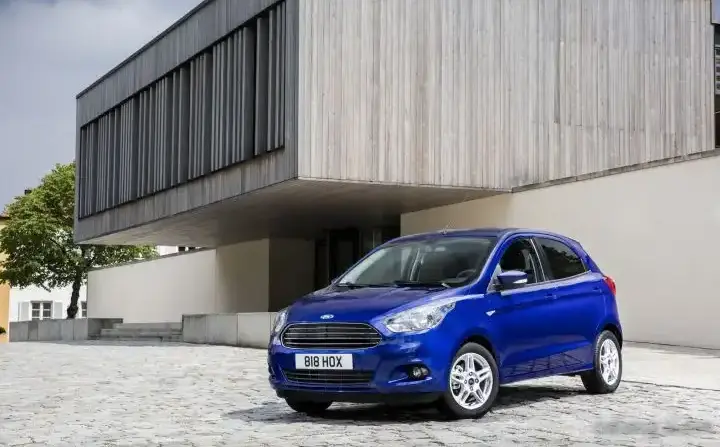
The Ford KA+ 1.2 Ti-VCT (85 hp) was introduced in 2016 as a replacement for the older KA model, offering a more spacious and practical package. Built on the global Ford B-platform (shared with the Fiesta), the KA+ aimed to provide a modern and affordable option in the competitive subcompact hatchback segment. This particular variant, powered by the 1.2-liter Ti-VCT engine, served as the entry point to the KA+ range, prioritizing fuel economy and low running costs over outright performance. It was primarily sold in Europe and other markets where smaller, economical cars are highly sought after.
Powertrain & Engine Architecture
The heart of the KA+ 1.2 Ti-VCT is the Duratec 1.2-liter inline-four cylinder engine, specifically the YSKD or YSKE engine code depending on the specific market and year. This engine utilizes a naturally aspirated configuration with multi-point fuel injection. The Ti-VCT (Twin Independent Variable Camshaft Timing) technology allows for optimized valve timing, improving both fuel efficiency and low-end torque. The engine produces 85 horsepower at 6300 rpm and 112 Nm (82.61 lb-ft) of torque at 4000 rpm. The engine is paired with a five-speed manual transmission, chosen for its simplicity and cost-effectiveness. While an automatic transmission was offered in some markets, the 85 hp version was predominantly sold with the manual gearbox.
Driving Characteristics
The KA+ 1.2 Ti-VCT offers a predictable and undemanding driving experience. Acceleration is modest, taking around 13.3 seconds to reach 62 mph (100 km/h). The engine feels relatively strained when pushed hard, but provides sufficient power for typical urban and suburban driving. The five-speed manual transmission is light and easy to operate, although the gear ratios are geared towards fuel economy rather than spirited performance. Compared to higher-powered KA+ variants (which were not widely available), this version feels noticeably slower, but offers a more relaxed and economical driving experience. The steering is light and precise, making it easy to maneuver in tight spaces.
Equipment & Trim Levels
The KA+ 1.2 Ti-VCT typically came with a basic but functional equipment list. Standard features generally included power steering, ABS brakes, front airbags, and a basic audio system with USB connectivity. Higher trim levels, such as the Zetec, added features like alloy wheels, air conditioning, electric windows, and a more comprehensive audio system. Interior upholstery was typically cloth, with a simple and durable design. Optional extras included metallic paint, parking sensors, and a trip computer. The focus was on providing essential features at an affordable price point.
Chassis & Braking
The KA+ utilizes a McPherson strut front suspension and a semi-independent coil spring rear suspension. This setup provides a comfortable ride quality, although it’s not particularly sporty. The front brakes are ventilated discs, while the rear brakes are drums. This configuration was chosen to keep costs down. ABS (Anti-lock Braking System) is standard, providing enhanced safety during emergency braking. The chassis is relatively lightweight, contributing to the car’s fuel efficiency and agility. Stabilizer bars were fitted to the front suspension to reduce body roll during cornering.
Market Reception & Comparison
The Ford KA+ 1.2 Ti-VCT was generally well-received by critics as a practical and affordable city car. It was praised for its fuel efficiency, low running costs, and ease of driving. However, it was also criticized for its modest performance and basic interior. Compared to other subcompact hatchbacks in the same segment, such as the Hyundai i10 and Volkswagen up!, the KA+ offered a competitive price point but lacked some of the refinement and features of its rivals. Fuel economy figures of around 50 mpg (combined) were typical, making it an attractive option for budget-conscious buyers.
Legacy
The Ford KA+ 1.2 Ti-VCT has proven to be a relatively reliable vehicle, with the 1.2-liter Duratec engine being known for its durability. Common issues are generally minor and related to wear and tear, such as exhaust system components and suspension bushings. On the used car market, the KA+ 1.2 Ti-VCT remains an affordable and practical option for first-time buyers or those seeking a cheap and cheerful city car. Its simplicity and low running costs continue to make it an appealing choice, although its age and basic features mean it’s unlikely to command high prices.