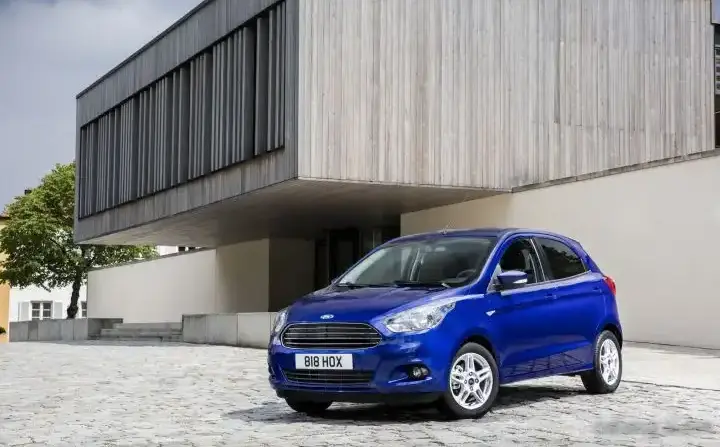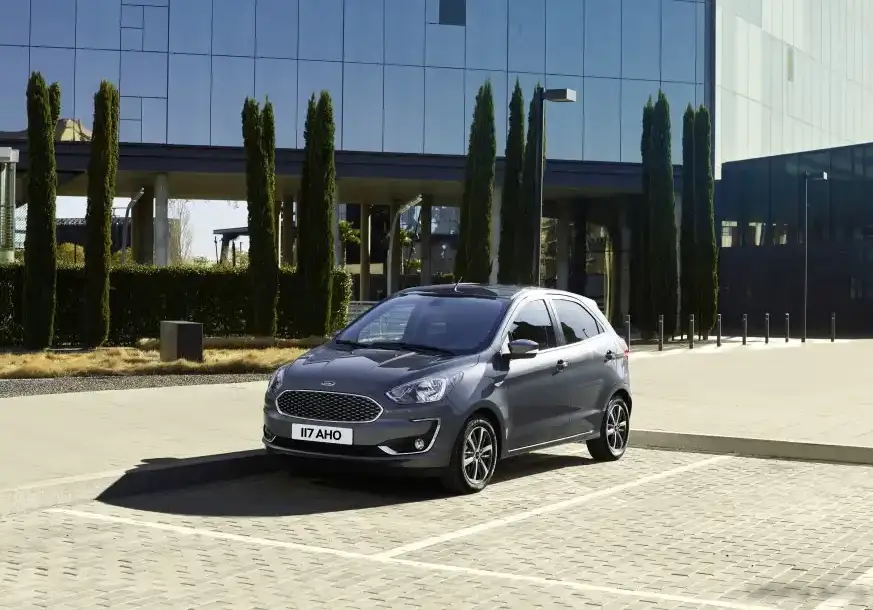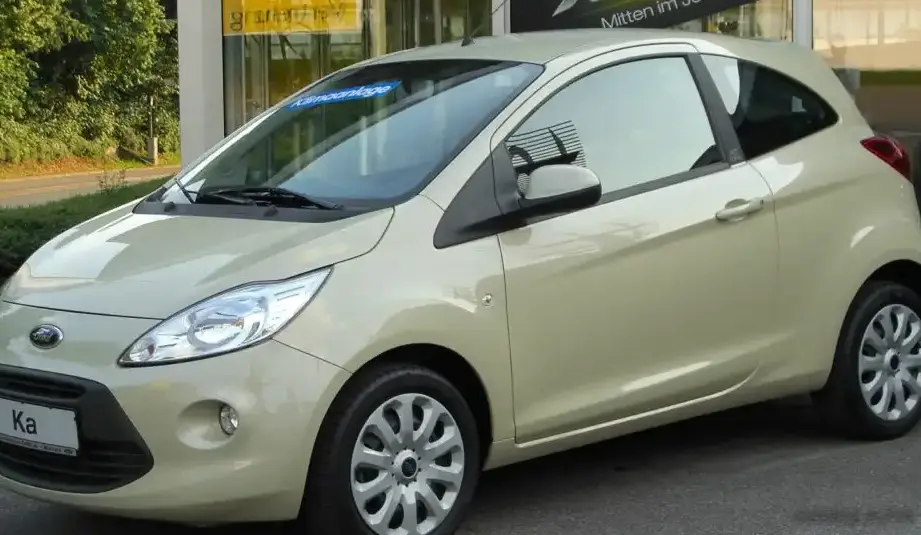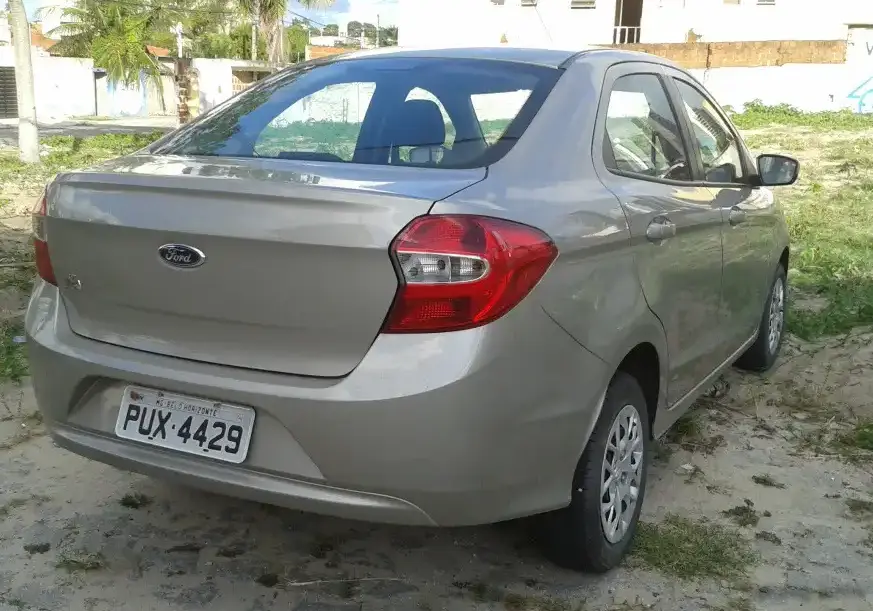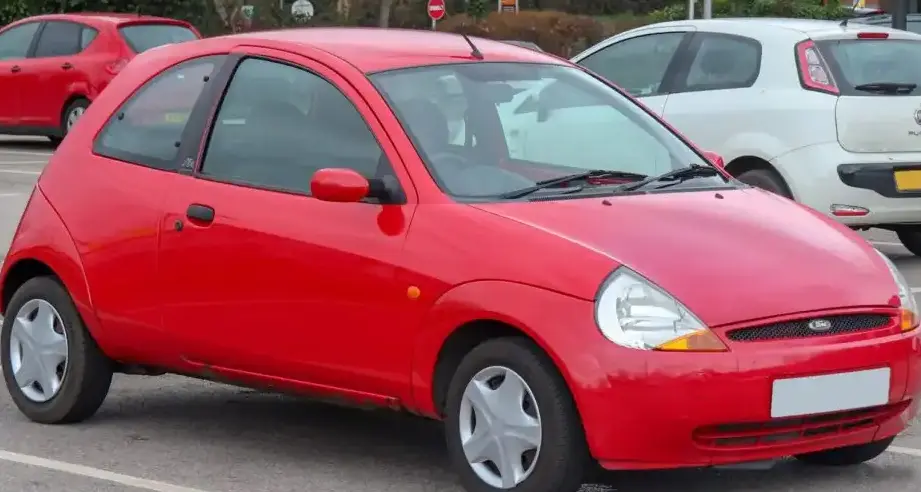
The Ford KA (RBT) 1.3 i, producing 60 horsepower, was a key model in Ford of Europe’s small car lineup from 1996 to 2002. Positioned as the entry-level trim, it aimed to provide affordable and economical transportation. The KA, designed under the leadership of Ghia, represented a significant departure from previous Ford small cars, focusing on a modern, minimalist design and surprisingly spacious interior for its diminutive size. It was built on Ford’s B3 platform, shared with the Fiesta Mark IV, but distinguished itself with unique styling and a focus on driving dynamics. The 1.3 i variant, with its relatively modest power output, was particularly popular with first-time car buyers, city dwellers, and those seeking a low-cost-to-operate vehicle.
Technical Specifications
| Brand | Ford |
| Model | KA |
| Generation | KA (RBT) |
| Type (Engine) | 1.3 i (60 Hp) |
| Start of production | 1996 |
| End of production | 2002 |
| Powertrain Architecture | Internal Combustion engine |
| Body type | Hatchback |
| Seats | 5 |
| Doors | 3 |
| Fuel consumption (urban) | 8.6 l/100 km (27.4 US mpg) |
| Fuel consumption (extra urban) | 5.5 l/100 km (42.8 US mpg) |
| Fuel Type | Petrol (Gasoline) |
| Acceleration 0 – 100 km/h | 15.4 sec |
| Acceleration 0 – 62 mph | 15.4 sec |
| Acceleration 0 – 60 mph | 14.6 sec |
| Maximum speed | 155 km/h (96.31 mph) |
| Weight-to-power ratio | 14.8 kg/Hp |
| Weight-to-torque ratio | 8.5 kg/Nm |
| Power | 60 Hp @ 5000 rpm |
| Power per litre | 46.2 Hp/l |
| Torque | 105 Nm @ 2500 rpm (77.44 lb.-ft. @ 2500 rpm) |
| Engine layout | Front, Transverse |
| Engine displacement | 1299 cm3 (79.27 cu. in.) |
| Number of cylinders | 4 |
| Engine configuration | Inline |
| Cylinder Bore | 74 mm (2.91 in.) |
| Piston Stroke | 75.5 mm (2.97 in.) |
| Compression ratio | 9.5:1 |
| Number of valves per cylinder | 2 |
| Fuel injection system | Multi-port manifold injection |
| Engine aspiration | Naturally aspirated engine |
| Valvetrain | OHC |
| Engine oil capacity | 3.25 l (3.43 US qt | 2.86 UK qt) |
| Kerb Weight | 890 kg (1962.11 lbs.) |
| Max. weight | 1265 kg (2788.85 lbs.) |
| Max load | 375 kg (826.73 lbs.) |
| Trunk (boot) space – minimum | 186 l (6.57 cu. ft.) |
| Trunk (boot) space – maximum | 724 l (25.57 cu. ft.) |
| Fuel tank capacity | 42 l (11.1 US gal | 9.24 UK gal) |
| Length | 3620 mm (142.52 in.) |
| Width | 1639 mm (64.53 in.) |
| Height | 1383 mm (54.45 in.) |
| Wheelbase | 2448 mm (96.38 in.) |
| Front track | 1395 mm (54.92 in.) |
| Rear (Back) track | 1411 mm (55.55 in.) |
| Drivetrain Architecture | Front wheel drive |
| Number of gears and type of gearbox | 5 gears, manual transmission |
| Front suspension | Spring Strut |
| Rear suspension | Coil spring |
| Front brakes | Disc |
| Rear brakes | Drum |
| Steering type | Steering rack and pinion |
| Power steering | Hydraulic Steering |
| Tires size | 155/70 R13 |
| Wheel rims size | 5J x 13 |
Introduction
The Ford KA (RBT) 1.3 i, launched in 1996, was a significant departure for Ford in the supermini segment. It was designed to be a simple, affordable, and fun-to-drive city car. The “KA” name itself was intended to evoke a sense of smallness and simplicity. Built between 1996 and 2002, this first-generation KA quickly gained popularity in Europe, particularly in the UK and Germany, due to its nimble handling and low running costs. The 1.3 i engine, producing 60 horsepower, was the base engine option, making it the most accessible version of the KA for budget-conscious buyers. It represented a deliberate move away from the more complex and expensive Fiesta, offering a back-to-basics approach to small car ownership.
Powertrain & Engine Architecture
The heart of the KA 1.3 i is the Ford Zetec-S 1.3-liter inline-four cylinder engine, internally designated as the 1.3 OHV. This engine, while relatively simple in design, proved to be robust and reliable. It features a single overhead camshaft (SOHC) operating two valves per cylinder. Fuel delivery is managed by a multi-port fuel injection system, providing adequate performance for its intended purpose. The engine’s 1299 cc displacement produces 60 horsepower at 5000 rpm and 105 Nm (77.44 lb-ft) of torque at 2500 rpm. The engine is transversely mounted at the front of the vehicle. The KA 1.3 i was exclusively offered with a five-speed manual transmission. This transmission was chosen for its simplicity and efficiency, contributing to the car’s overall affordability. The gear ratios were tuned for maximizing fuel economy and providing adequate acceleration in urban environments.
Driving Characteristics
The KA 1.3 i, while not a performance car, offered a surprisingly engaging driving experience. Its light weight (approximately 890 kg or 1962 lbs) and short wheelbase contributed to nimble handling and responsive steering. The 60 horsepower engine provided sufficient power for city driving and short highway trips, but acceleration was modest. 0-60 mph took around 14.6 seconds, and top speed was limited to 96.31 mph. The five-speed manual transmission allowed drivers to keep the engine in its optimal power band, maximizing efficiency and responsiveness. Compared to the later 1.6-liter versions of the KA, the 1.3 i felt noticeably slower, but it also offered better fuel economy and a more forgiving driving experience for novice drivers. The gear ratios were relatively long, prioritizing fuel efficiency over outright acceleration.
Equipment & Trim Levels
The KA 1.3 i was typically offered with a fairly basic level of equipment, reflecting its position as the entry-level model. Standard features generally included central locking, a basic stereo system, and front power windows. Interior upholstery was typically cloth, with a simple dashboard layout. Optional extras included air conditioning, power steering (often a popular addition), and alloy wheels. Higher trim levels, such as the Style or Ghia, added features like electric windows all around, upgraded interior trim, and body-colored bumpers. However, the core appeal of the 1.3 i was its affordability, and many owners opted for the base specification.
Chassis & Braking
The KA’s chassis was designed to be lightweight and rigid, contributing to its agile handling. Front suspension utilized MacPherson struts, while the rear employed a twist-beam axle with coil springs. This setup provided a good balance between comfort and handling. Braking was handled by disc brakes at the front and drum brakes at the rear. While adequate for the car’s performance, the rear drum brakes were a cost-saving measure. Power steering was often an optional extra, and the base model featured a manual steering rack. The 155/70 R13 tires provided reasonable grip in most conditions, but were not particularly sporty.
Market Reception & Comparison
The Ford KA 1.3 i was generally well-received by critics and buyers alike. It was praised for its nimble handling, low running costs, and surprisingly spacious interior for its size. However, some critics noted the engine’s lack of power, particularly when fully loaded or on highway journeys. Compared to other superminis of the time, such as the Renault Clio and Peugeot 206, the KA offered a more basic driving experience but was often more affordable. The 1.6-liter KA offered significantly more performance but came at a higher price point. The 1.3 i’s fuel economy was a strong selling point, averaging around 42.8 US mpg on the highway and 27.4 US mpg in the city.
Legacy
The Ford KA 1.3 i has proven to be a remarkably durable and reliable car. Many examples are still on the road today, testament to the robustness of the engine and chassis. The Zetec-S 1.3 engine is known for its longevity and relatively low maintenance costs. In the used car market, the KA 1.3 i remains an affordable and practical option for first-time car buyers or those seeking a cheap and cheerful city car. While not a collector’s item, well-maintained examples are increasingly sought after by enthusiasts who appreciate the KA’s simple design and engaging driving experience. Its impact lies in demonstrating that a small, affordable car could still be fun to drive and practical for everyday use.