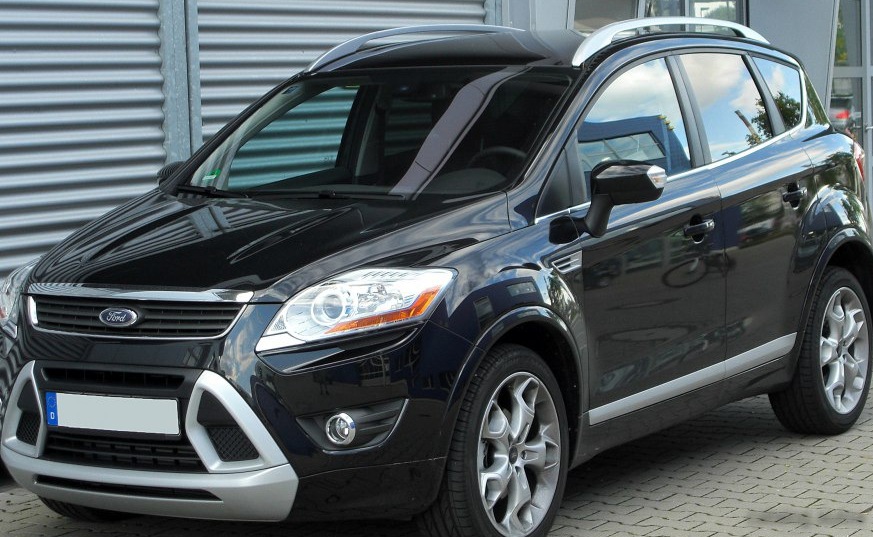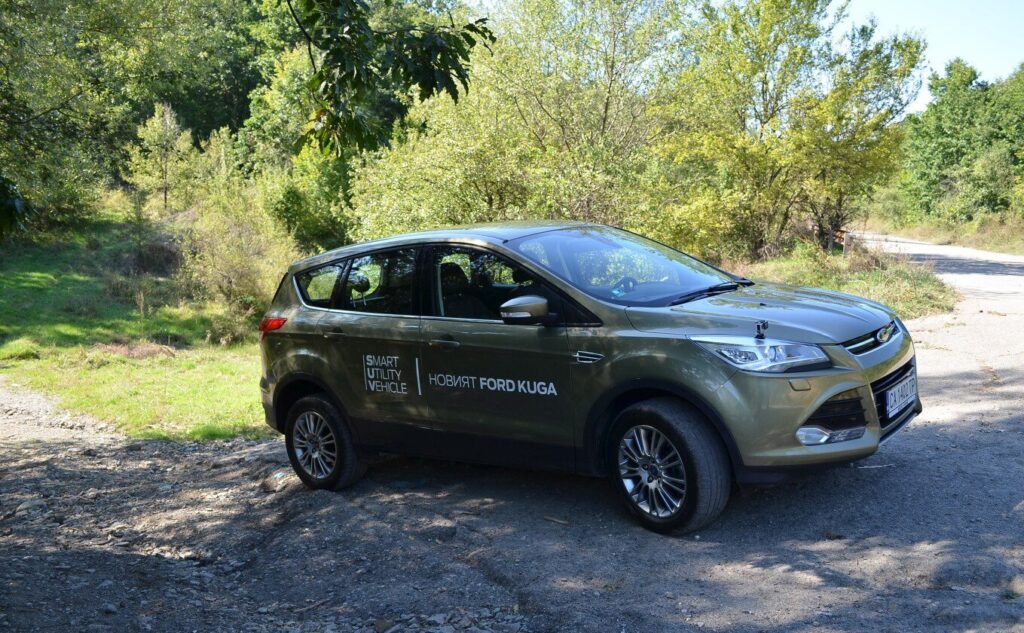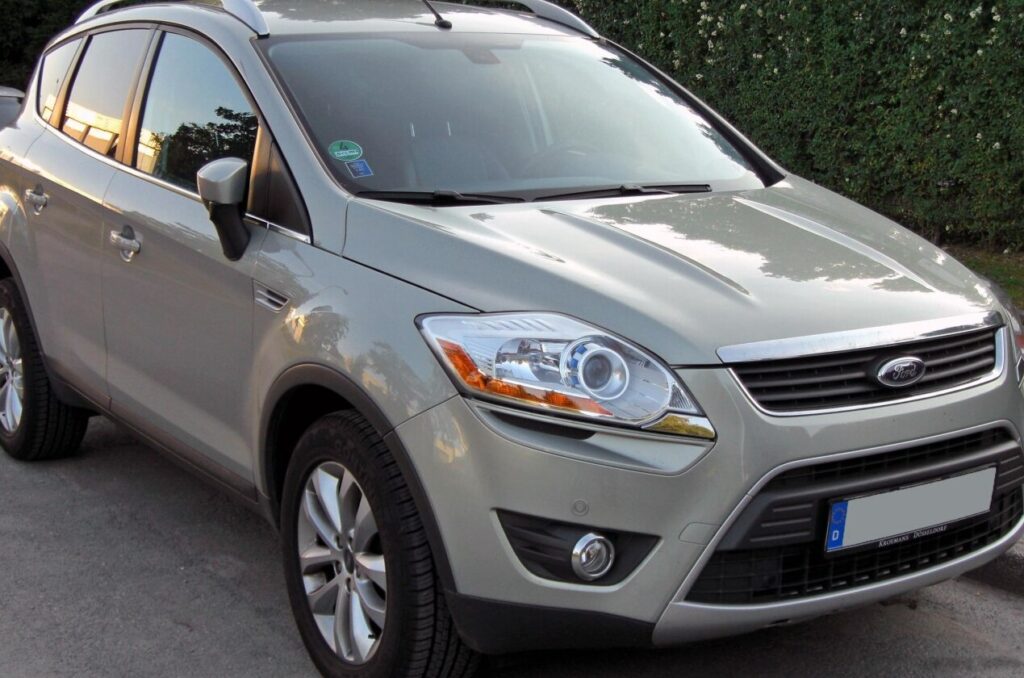
The Ford Kuga I 2.0 TDCi, producing 136 horsepower, was a significant model in Ford of Europe’s lineup from 2008 to 2010. Representing Ford’s entry into the burgeoning compact SUV segment, the Kuga aimed to offer a blend of practicality, fuel efficiency, and a more dynamic driving experience than traditional boxy SUVs. This particular variant, powered by the 2.0-liter turbodiesel engine and a six-speed manual transmission, occupied a middle ground within the Kuga range, offering a balance between performance and economy. It was positioned as a sensible choice for families and individuals seeking a versatile vehicle for both urban and rural driving.
Technical Specifications
| Brand | Ford |
| Model | Kuga |
| Generation | Kuga I |
| Type (Engine) | 2.0 TDCi (136 Hp) |
| Start of production | 2008 |
| End of production | 2010 |
| Powertrain Architecture | Internal Combustion engine |
| Body type | SUV |
| Seats | 5 |
| Doors | 5 |
| Fuel consumption (urban) | 8 l/100 km (29.4 US mpg) |
| Fuel consumption (extra urban) | 5.3 l/100 km (44.4 US mpg) |
| Fuel consumption (combined) | 6.3 l/100 km (37.3 US mpg) |
| Fuel Type | Diesel |
| Acceleration 0 – 100 km/h | 10.6 sec |
| Acceleration 0 – 62 mph | 10.6 sec |
| Acceleration 0 – 60 mph | 10.1 sec |
| Maximum speed | 182 km/h (113.09 mph) |
| Emission standard | Euro 5 |
| Weight-to-power ratio | 15.4 kg/Hp |
| Weight-to-torque ratio | 6.6 kg/Nm |
| Power | 136 Hp @ 4000 rpm |
| Torque | 320 Nm @ 2000 rpm (236.02 lb.-ft. @ 2000 rpm) |
| Engine layout | Front, Transverse |
| Engine Model/Code | G6DG |
| Engine displacement | 1997 cm3 (121.86 cu. in.) |
| Number of cylinders | 4 |
| Engine configuration | Inline |
| Cylinder Bore | 85 mm (3.35 in.) |
| Piston Stroke | 88 mm (3.46 in.) |
| Compression ratio | 18:1 |
| Number of valves per cylinder | 4 |
| Fuel injection system | Diesel Commonrail |
| Engine aspiration | Turbocharger, Intercooler |
| Engine oil capacity | 5.5 l (5.81 US qt | 4.84 UK qt) |
| Coolant | 8.4 l (8.88 US qt | 7.39 UK qt) |
| Kerb Weight | 2100 kg (4629.71 lbs.) |
| Length | 4443 mm (174.92 in.) |
| Width | 1832 mm (72.13 in.) |
| Height | 1677 mm (66.02 in.) |
| Wheelbase | 2690 mm (105.91 in.) |
| Drivetrain Architecture | Front wheel drive |
| Number of gears | 6 |
| Type of gearbox | Manual transmission |
| Front suspension | Spring Strut |
| Rear suspension | Spring Strut |
| Front brakes | Ventilated discs |
| Rear brakes | Disc |
Powertrain & Engine Architecture
The heart of the Kuga I 2.0 TDCi was the G6DG engine, a member of Ford’s Duratorq family of common-rail direct injection diesel engines. This 1997cc, four-cylinder engine featured a single overhead camshaft (SOHC) valvetrain with four valves per cylinder. The engine utilized a turbocharger with an intercooler to boost power and efficiency. The common-rail direct injection system, supplied by Bosch, delivered fuel at extremely high pressure, optimizing combustion and reducing emissions. The six-speed manual transmission provided a good balance between fuel economy and driver control. The gearbox ratios were tuned to maximize the engine’s torque output, providing adequate acceleration in most driving situations.
Driving Characteristics
The 136 hp 2.0 TDCi Kuga offered a respectable, if not exhilarating, driving experience. Acceleration from 0-60 mph took around 10.1 seconds, making it competitive with other compact SUVs of the time. The engine delivered a strong mid-range torque of 320 Nm (236 lb-ft), which was readily available from 2000 rpm, making it well-suited for overtaking and carrying a full load. Compared to the higher-output 163 hp version of the 2.0 TDCi, this variant felt slightly less responsive, particularly at higher engine speeds. However, the manual transmission allowed drivers to maintain optimal engine speed for efficient cruising. The ride quality was generally comfortable, although the suspension could feel a little firm on rough roads.
Equipment & Trim Levels
The Kuga I 2.0 TDCi was available in several trim levels, including Style, Zetec, and Titanium. The base Style trim included features such as air conditioning, electric front windows, and a CD player. The Zetec trim added alloy wheels, front fog lights, and a leather-wrapped steering wheel. The top-of-the-line Titanium trim offered features like automatic climate control, rear parking sensors, and upgraded interior trim. Optional extras included a panoramic sunroof, satellite navigation, and a premium sound system. Interior upholstery was typically cloth, with leather options available on higher trims.
Chassis & Braking
The Kuga I utilized a front-wheel-drive platform, although a four-wheel-drive system was available as an option. The suspension consisted of MacPherson struts at the front and a multi-link setup at the rear, providing a good balance between ride comfort and handling. The braking system featured ventilated discs at the front and solid discs at the rear. Anti-lock Braking System (ABS) was standard on all models. The steering was a hydraulic power-assisted rack and pinion system, offering a reasonably direct and responsive feel.
Market Reception & Comparison
The Ford Kuga I was generally well-received by automotive critics. It was praised for its stylish design, practical interior, and fuel-efficient engine. The 2.0 TDCi engine was considered a good all-rounder, offering a balance between performance and economy. However, some critics noted that the interior quality was not quite as refined as some of its competitors, such as the Volkswagen Tiguan. Compared to the more powerful 163 hp version, the 136 hp variant offered better fuel economy but lacked the same level of performance. The 1.6-liter petrol engine, while cheaper to buy, was considered less refined and less fuel-efficient.
Legacy
The Ford Kuga I 2.0 TDCi has proven to be a relatively reliable vehicle, with the Duratorq engine being known for its durability. Common issues include turbocharger failure and problems with the diesel particulate filter (DPF), particularly on vehicles that have primarily been used for short journeys. In the used car market, the Kuga I 2.0 TDCi remains a popular choice for buyers seeking a practical and affordable compact SUV. Its blend of fuel efficiency, practicality, and relatively low running costs make it a sensible option for families and individuals alike. The Kuga I paved the way for the successful second-generation Kuga, solidifying Ford’s position in the competitive SUV market.