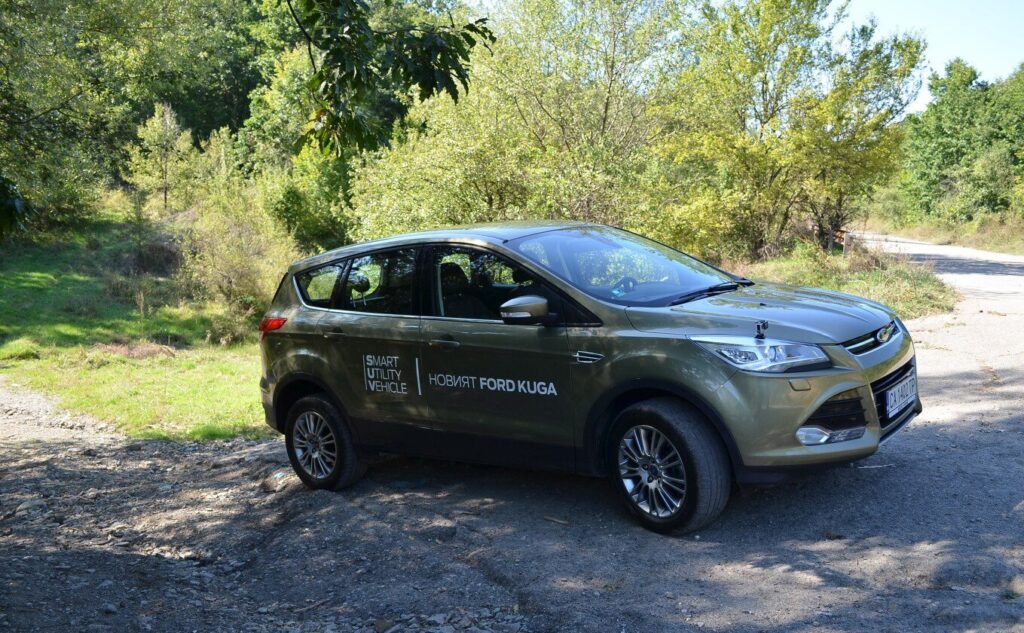
The Ford Kuga I 2.0 TDCi 4×4, produced from 2008 to 2010, represented Ford’s entry into the burgeoning compact SUV market in Europe. Positioned as a more rugged and practical alternative to traditional hatchbacks and sedans, the Kuga aimed to capitalize on the growing demand for vehicles offering both on-road comfort and limited off-road capability. This particular variant, equipped with the 2.0-liter turbodiesel engine producing 136 horsepower and a six-speed manual transmission, served as a mid-range offering within the Kuga I lineup, slotting between the lower-powered front-wheel-drive models and the higher-specification trims. It was a key component of Ford’s strategy to broaden its appeal to families and individuals seeking a versatile vehicle.
Technical Specifications
| Brand | Ford |
| Model | Kuga |
| Generation | Kuga I |
| Type (Engine) | 2.0 TDCi (136 Hp) 4×4 |
| Start of production | 2008 |
| End of production | 2010 |
| Powertrain Architecture | Internal Combustion engine |
| Body type | SUV |
| Seats | 5 |
| Doors | 5 |
| Fuel consumption (urban) | 8.1 l/100 km (29 US mpg, 34.9 UK mpg) |
| Fuel consumption (extra urban) | 5.4 l/100 km (43.6 US mpg, 52.3 UK mpg) |
| Fuel consumption (combined) | 6.4 l/100 km (36.8 US mpg, 44.1 UK mpg) |
| Fuel Type | Diesel |
| Acceleration 0 – 100 km/h | 10.7 sec |
| Acceleration 0 – 62 mph | 10.7 sec |
| Acceleration 0 – 60 mph | 10.2 sec |
| Maximum speed | 180 km/h (111.85 mph) |
| Emission standard | Euro 5 |
| Weight-to-power ratio | 15.4 kg/Hp |
| Weight-to-torque ratio | 6.6 kg/Nm |
| Power | 136 Hp @ 4000 rpm |
| Torque | 320 Nm @ 2000 rpm (236.02 lb.-ft. @ 2000 rpm) |
| Engine layout | Front, Transverse |
| Engine Model/Code | G6DG |
| Engine displacement | 1997 cm3 (121.86 cu. in.) |
| Number of cylinders | 4 |
| Engine configuration | Inline |
| Cylinder Bore | 85 mm (3.35 in.) |
| Piston Stroke | 88 mm (3.46 in.) |
| Compression ratio | 18:1 |
| Number of valves per cylinder | 4 |
| Fuel injection system | Diesel Commonrail |
| Engine aspiration | Turbocharger, Intercooler |
| Engine oil capacity | 5.5 l (5.81 US qt | 4.84 UK qt) |
| Coolant capacity | 8.4 l (8.88 US qt | 7.39 UK qt) |
| Kerb Weight | 2100 kg (4629.71 lbs.) |
| Length | 4443 mm (174.92 in.) |
| Width | 1832 mm (72.13 in.) |
| Height | 1677 mm (66.02 in.) |
| Wheelbase | 2690 mm (105.91 in.) |
| Drive wheel | All wheel drive (4×4) |
| Number of gears | 6 |
| Gearbox type | Manual transmission |
| Front suspension | Spring Strut |
| Rear suspension | Spring Strut |
| Front brakes | Ventilated discs |
| Rear brakes | Disc |
| Steering type | Steering rack and pinion |
| Power steering | Hydraulic Steering |
Powertrain & Engine Architecture
The heart of the Kuga I 2.0 TDCi 4×4 is the G6DG engine, a member of Ford’s Duratorq family of common-rail direct injection diesel engines. This 1997cc, four-cylinder engine utilizes a turbocharger with an intercooler to boost power and efficiency. The common-rail fuel injection system, supplied by Bosch, delivers fuel at extremely high pressure, optimizing combustion and reducing emissions. The engine features a single overhead camshaft (SOHC) operating four valves per cylinder. The six-speed manual transmission, a Getrag M66 gearbox, was chosen for its durability and relatively smooth shifting characteristics. The 4×4 system employed a viscous coupling to distribute torque between the front and rear axles, providing enhanced traction in slippery conditions without requiring driver intervention.
Driving Characteristics
The 136 horsepower and 320 Nm (236 lb-ft) of torque provided by the 2.0 TDCi engine offered a reasonable balance between performance and fuel economy. Acceleration from 0-60 mph took around 10.2 seconds, which was adequate for everyday driving but not particularly sporty. The engine’s torque curve was relatively flat, providing good pulling power from low engine speeds, making it well-suited for towing or navigating hilly terrain. Compared to the higher-output 163 hp version of the 2.0 TDCi, this variant felt noticeably less responsive, particularly at higher speeds. The manual transmission allowed for greater driver control compared to the optional automatic, and the gear ratios were well-chosen for both urban and highway driving. The all-wheel-drive system added a sense of security and stability, especially on loose surfaces.
Equipment & Trim Levels
The Kuga I 2.0 TDCi 4×4 typically came equipped with a respectable level of standard features. These included air conditioning, power windows, power mirrors, a CD player with auxiliary input, and alloy wheels. Safety features such as ABS, traction control, and front and side airbags were also standard. Higher trim levels, such as the Titanium, added features like automatic climate control, rain-sensing wipers, a sunroof, and upgraded interior trim. Optional extras included a navigation system, leather upholstery, and parking sensors.
Chassis & Braking
The Kuga I utilized a MacPherson strut front suspension and a multi-link rear suspension, providing a comfortable ride and decent handling. The suspension was tuned to prioritize comfort over outright sportiness. The braking system consisted of ventilated discs on the front wheels and solid discs on the rear. ABS (Anti-lock Braking System) was standard, enhancing braking performance and stability. The steering was hydraulic power-assisted, offering a reasonable level of feedback.
Market Reception & Comparison
The Ford Kuga I was generally well-received by automotive critics, who praised its practicality, spacious interior, and comfortable ride. However, some criticisms were leveled at its somewhat uninspired styling and the relatively high price compared to some of its competitors. The 2.0 TDCi 136 hp engine was considered a good all-rounder, offering a decent compromise between performance and fuel economy. Compared to the 163 hp version, it was seen as a more sensible choice for drivers prioritizing fuel efficiency and lower running costs. The 1.6-liter petrol engine, while cheaper to purchase, lacked the torque and fuel economy of the diesel options.
Legacy
The Ford Kuga I, and specifically the 2.0 TDCi 136 hp 4×4 variant, has proven to be a relatively reliable vehicle in the used car market. The Duratorq diesel engine is known for its durability, although regular maintenance is crucial to prevent issues with the fuel injection system and turbocharger. Common issues reported by owners include problems with the electronic parking brake and occasional failures of the viscous coupling in the all-wheel-drive system. Today, the Kuga I represents an affordable and practical option for buyers seeking a compact SUV with all-wheel drive, offering a blend of comfort, space, and reasonable running costs. Its success paved the way for the subsequent generations of the Kuga, which have become increasingly popular in the European market.