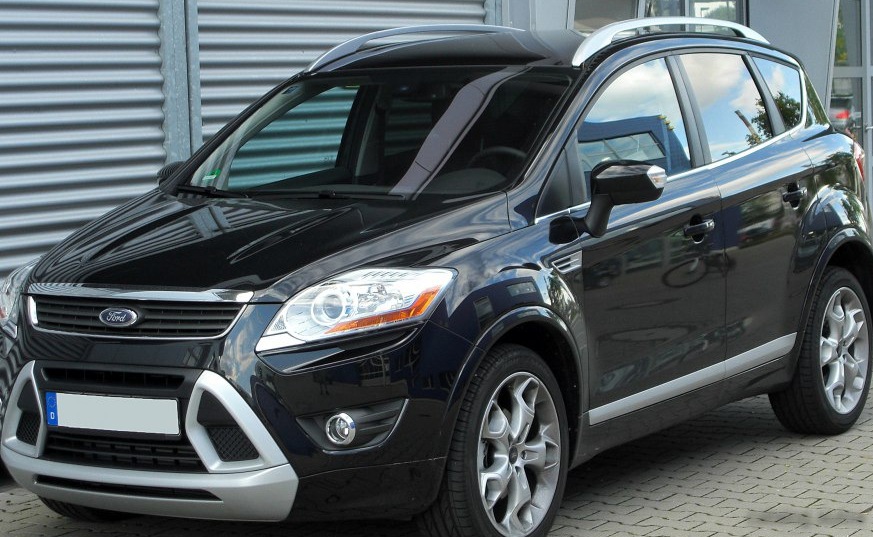
The Ford Kuga I 2.5i 20V Automatic, produced between 2008 and 2010, marked Ford’s initial foray into the compact SUV market in Europe. Positioned as a mid-to-upper trim level within the first-generation Kuga (internally designated as the 1HX0 series), this variant aimed to deliver a balance of performance and convenience for buyers desiring a more refined driving experience. It represented Ford’s attempt to offer a more premium experience within the Kuga range, competing with vehicles such as the Volkswagen Tiguan and the Renault Kadjar. The Kuga itself was Ford’s first dedicated crossover SUV, built upon a modified Ford Focus C-platform.
Technical Specifications
| Brand | Ford |
| Model | Kuga |
| Generation | Kuga I |
| Type (Engine) | 2.5 i 20V (200 Hp) Automatic |
| Start of production | 2008 |
| End of production | 2010 |
| Powertrain Architecture | Internal Combustion engine |
| Body type | SUV |
| Seats | 5 |
| Doors | 5 |
| Fuel consumption (urban) | 14.6 l/100 km (16.1 US mpg, 19.3 UK mpg, 6.8 km/l) |
| Fuel consumption (extra urban) | 7.8 l/100 km (30.2 US mpg, 36.2 UK mpg, 12.8 km/l) |
| Fuel consumption (combined) | 10.3 l/100 km (22.8 US mpg, 27.4 UK mpg, 9.7 km/l) |
| Fuel Type | Petrol (Gasoline) |
| Acceleration 0 – 100 km/h | 8.8 sec |
| Acceleration 0 – 62 mph | 8.8 sec |
| Acceleration 0 – 60 mph | 8.4 sec |
| Maximum speed | 205 km/h (127.38 mph) |
| Emission standard | Euro 5 |
| Weight-to-power ratio | 8.1 kg/Hp, 124 Hp/tonne |
| Weight-to-torque ratio | 5 kg/Nm, 198.4 Nm/tonne |
| Power | 200 Hp @ 6000 rpm |
| Power per litre | 79.3 Hp/l |
| Torque | 320 Nm @ 1500-4800 rpm (236.02 lb.-ft. @ 1500-4800 rpm) |
| Engine layout | Front, Transverse |
| Engine Model/Code | HYDB |
| Engine displacement | 2523 cm3 (153.96 cu. in.) |
| Number of cylinders | 5 |
| Engine configuration | Inline |
| Cylinder Bore | 83 mm (3.27 in.) |
| Piston Stroke | 93.2 mm (3.67 in.) |
| Compression ratio | 9:1 |
| Number of valves per cylinder | 4 |
| Fuel injection system | Multi-port manifold injection |
| Engine aspiration | Turbocharger, Intercooler |
| Valvetrain | DOHC |
| Engine oil capacity | 5.8 l (6.13 US qt | 5.1 UK qt) |
| Coolant | 8.6 l (9.09 US qt | 7.57 UK qt) |
| Kerb Weight | 1613 kg (3556.06 lbs.) |
| Fuel tank capacity | 58 l (15.32 US gal | 12.76 UK gal) |
| Length | 4443 mm (174.92 in.) |
| Width | 1832 mm (72.13 in.) |
| Height | 1677 mm (66.02 in.) |
| Wheelbase | 2690 mm (105.91 in.) |
| Drive wheel | All wheel drive (4×4) |
| Number of gears and type of gearbox | 5 gears, automatic transmission |
| Front suspension | Spring Strut |
| Rear suspension | Spring Strut |
| Front brakes | Ventilated discs |
| Rear brakes | Disc |
| Assisting systems | ABS (Anti-lock braking system) |
| Steering type | Steering rack and pinion |
| Power steering | Hydraulic Steering |
| Tires size | 235/55 R17H |
Powertrain & Engine Architecture
The Ford Kuga I 2.5i Automatic’s powertrain centers around the HYDB engine, a 2.5-liter turbocharged inline-five cylinder gasoline engine. This engine belonged to Ford’s Duratec family, recognized for its relatively smooth operation and respectable power output. The HYDB featured a cast iron block and an aluminum cylinder head, incorporating a dual overhead camshaft (DOHC) valvetrain with four valves per cylinder. Fuel delivery was managed by a multi-port fuel injection system, and a turbocharger with an intercooler was utilized to enhance both power and torque. The turbocharger significantly improved low-end torque compared to naturally aspirated engines of similar displacement.
The engine was paired with a five-speed automatic transmission, a defining characteristic of this particular variant. While offering convenience, this transmission wasn’t known for particularly swift shifts or optimal fuel efficiency when compared to the available six-speed manual gearbox. The automatic transmission was engineered to provide smooth gear changes for everyday driving, prioritizing comfort over outright performance.
Driving Characteristics
The 200 horsepower and 320 Nm (236 lb-ft) of torque generated by the 2.5i engine provided the Kuga I Automatic with commendable performance. Acceleration from 0 to 60 mph was achieved in approximately 8.4 seconds, with a top speed of 127.38 mph. However, the automatic transmission did slightly reduce overall performance compared to the manual version. Power delivery was relatively linear, with the turbocharger providing a noticeable boost in the mid-range. The all-wheel-drive system offered good traction in diverse conditions, enhancing stability and handling. The automatic transmission’s gear ratios were tuned for everyday usability, resulting in a comfortable, though not particularly sporty, driving experience. Compared to the lower-powered 2.0-liter versions, the 2.5i offered a substantial performance upgrade, but at the cost of increased fuel consumption.
Equipment & Trim Levels
The 2.5i Automatic trim typically included standard features such as air conditioning, power windows, power mirrors, a CD player with auxiliary input, and alloy wheels. Higher-specification models could be equipped with optional extras like leather upholstery, a sunroof, parking sensors, and a premium sound system. Safety features included ABS, electronic brakeforce distribution (EBD), and multiple airbags. The interior design was functional and relatively modern for its time, emphasizing practicality and durability. The Kuga I aimed for a comfortable and well-equipped interior, though it didn’t quite match the levels of luxury found in some of its competitors.
Chassis & Braking
The Kuga I employed a MacPherson strut front suspension and a multi-link rear suspension, delivering a comfortable ride and respectable handling characteristics. The all-wheel-drive system utilized a viscous coupling to distribute torque between the front and rear axles, enhancing traction in slippery conditions. Braking was provided by ventilated discs at the front and solid discs at the rear. The braking system was adequate for the vehicle’s weight and performance, but it wasn’t particularly sporty or high-performance. The steering was hydraulic, offering a reasonably direct feel, though it lacked the feedback of more contemporary electric power steering systems.
Market Reception & Comparison
The Kuga I 2.5i Automatic received mixed reviews from automotive critics. While the engine was praised for its power and torque, the automatic transmission was frequently criticized for its sluggishness and lack of responsiveness. Fuel economy was also a concern, with the 2.5i consuming considerably more fuel than the lower-powered engine options. Compared to the 2.0-liter diesel and gasoline versions, the 2.5i offered a more engaging driving experience but at the expense of fuel efficiency and running costs. The 2.5i was generally considered a suitable option for buyers who prioritized performance and convenience over fuel economy.
Legacy
The Ford Kuga I 2.5i Automatic, while not a massive sales success, established the Kuga as a viable competitor in the compact SUV segment. The HYDB engine, despite some minor quirks, proved to be relatively reliable with proper maintenance. Today, these vehicles are becoming increasingly scarce, and well-maintained examples are sought after by enthusiasts. Common issues include turbocharger wear and potential oil leaks. The automatic transmission, while generally durable, may require more frequent servicing than the manual gearbox. Overall, the Kuga I 2.5i Automatic represents a significant chapter in Ford’s SUV history, offering a unique combination of performance, practicality, and style.