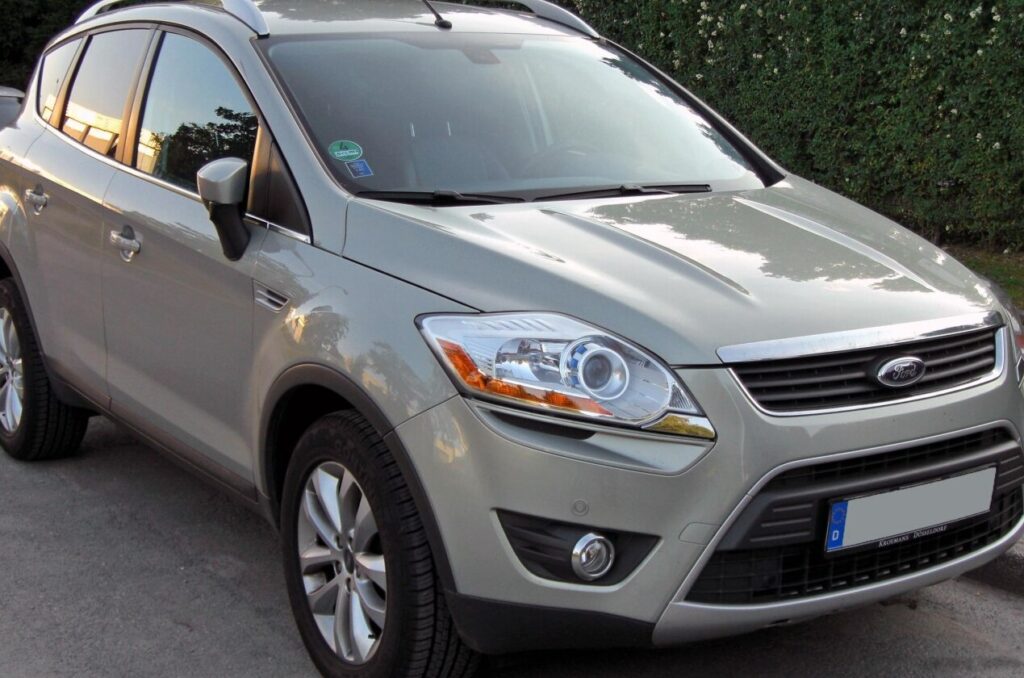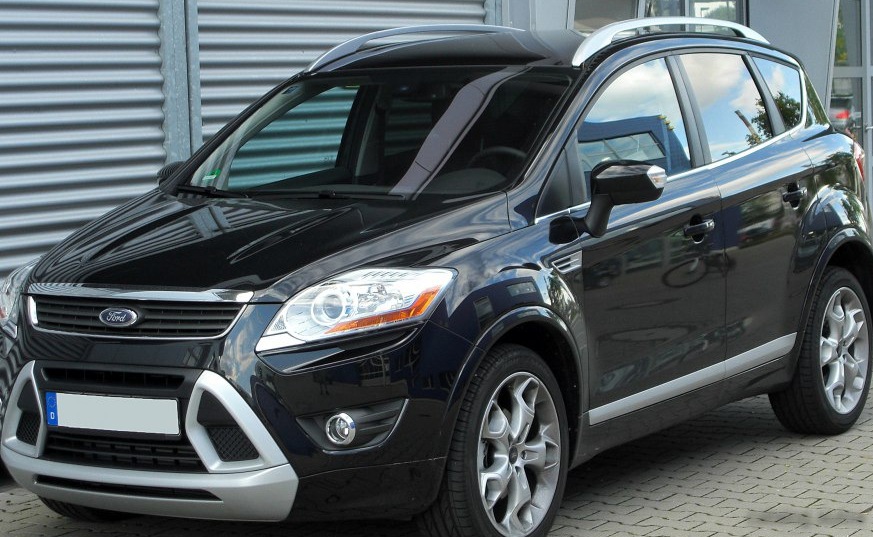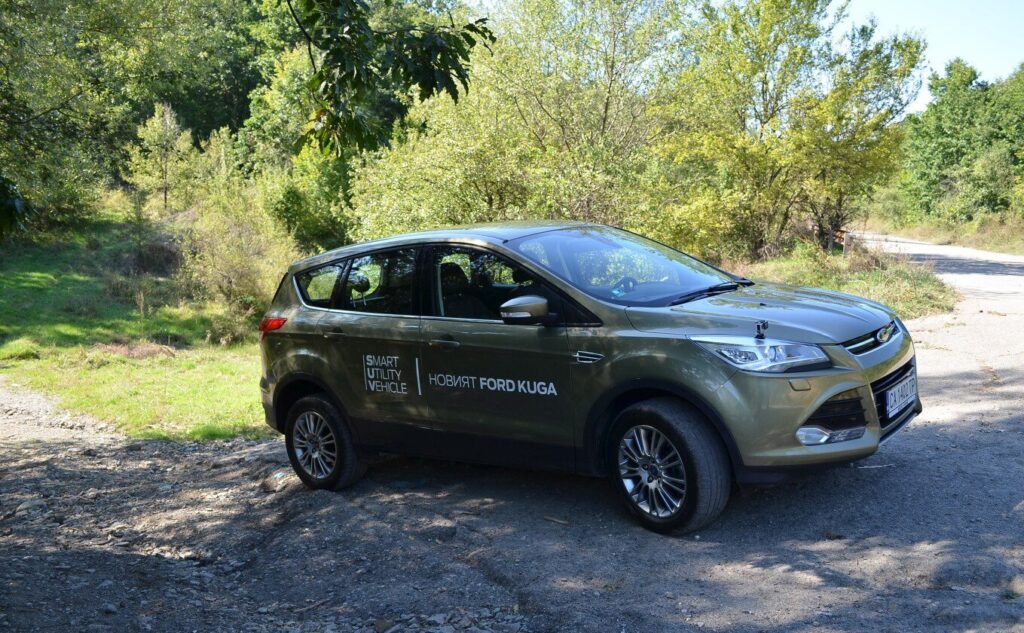
The Ford Kuga II 1.6 EcoBoost 150 hp 4×4 Automatic, produced between 2012 and 2014, represented a significant offering in Ford’s European compact SUV lineup. Positioned as a mid-range option within the Kuga II generation (introduced in 2012, internally designated as the 1HX0 platform), this variant aimed to balance fuel efficiency, all-weather capability, and a comfortable driving experience. It served as a key model for Ford in Europe, competing with vehicles like the Nissan Qashqai, Volkswagen Tiguan, and Hyundai ix35. The Kuga II marked a substantial upgrade over its predecessor, offering improved refinement, technology, and a more modern design.
Technical Specifications
| Brand | Ford |
| Model | Kuga |
| Generation | Kuga II |
| Type (Engine) | 1.6 EcoBoost (150 Hp) 4×4 Automatic |
| Start of production | 2012 |
| End of production | 2014 |
| Powertrain Architecture | Internal Combustion engine |
| Body type | SUV |
| Seats | 5 |
| Doors | 5 |
| Fuel consumption (urban) | 10.2 l/100 km (23.1 US mpg, 27.7 UK mpg, 9.8 km/l) |
| Fuel consumption (extra urban) | 6.3 l/100 km (37.3 US mpg, 44.8 UK mpg, 15.9 km/l) |
| Fuel consumption (combined) | 7.7 l/100 km (30.5 US mpg, 36.7 UK mpg, 13 km/l) |
| CO2 emissions | 179 g/km |
| Fuel Type | Petrol (Gasoline) |
| Acceleration 0 – 100 km/h | 9.7 sec |
| Acceleration 0 – 62 mph | 9.7 sec |
| Acceleration 0 – 60 mph | 9.2 sec |
| Maximum speed | 200 km/h (124.27 mph) |
| Emission standard | Euro 5 |
| Weight-to-power ratio | 11.2 kg/Hp, 89.2 Hp/tonne |
| Weight-to-torque ratio | 7 kg/Nm, 142.7 Nm/tonne |
| Power | 150 Hp @ 5700 rpm |
| Power per litre | 94 Hp/l |
| Torque | 240 Nm @ 1600-4000 rpm (177.01 lb.-ft. @ 1600-4000 rpm) |
| Engine layout | Front, Transverse |
| Engine Model/Code | JQMA, JQMB |
| Engine displacement | 1596 cm3 (97.39 cu. in.) |
| Number of cylinders | 4 |
| Engine configuration | Inline |
| Cylinder Bore | 79 mm (3.11 in.) |
| Piston Stroke | 81.4 mm (3.2 in.) |
| Compression ratio | 10.1:1 |
| Number of valves per cylinder | 4 |
| Fuel injection system | Direct injection |
| Engine aspiration | Turbocharger, Intercooler |
| Valvetrain | DOHC |
| Engine oil capacity | 3.8 l (4.02 US qt | 3.34 UK qt) |
| Coolant | 6.3 l (6.66 US qt | 5.54 UK qt) |
| Kerb Weight | 1682 kg (3708.18 lbs.) |
| Max. weight | 2250 kg (4960.4 lbs.) |
| Max load | 568 kg (1252.23 lbs.) |
| Trunk (boot) space – minimum | 425 l (15.01 cu. ft.) |
| Trunk (boot) space – maximum | 1568 l (55.37 cu. ft.) |
| Fuel tank capacity | 60 l (15.85 US gal | 13.2 UK gal) |
| Length | 4524 mm (178.11 in.) |
| Width | 1838 mm (72.36 in.) |
| Height | 1701 mm (66.97 in.) |
| Wheelbase | 2690 mm (105.91 in.) |
| Front track | 1563 mm (61.54 in.) |
| Rear (Back) track | 1565 mm (61.61 in.) |
| Drive wheel | All wheel drive (4×4) |
| Number of gears and type of gearbox | 6 gears, automatic transmission |
| Assisting systems | ABS (Anti-lock braking system) |
| Steering type | Steering rack and pinion |
| Tires size | 235/55 R17; 235/50 R18; 235/45 R19 |
| Wheel rims size | 7.0J x 17; 7.5J x 17; 7.5J x 18; 8.0J x 19 |
Powertrain & Engine Architecture
The heart of the Kuga II 1.6 EcoBoost 4×4 Automatic is the Ford EcoBoost 1.6-liter inline-four cylinder engine, specifically the JQMA or JQMB engine code depending on the specific market and calibration. This engine is a key component of Ford’s EcoBoost family, characterized by its combination of direct fuel injection, turbocharging, and variable valve timing. The direct injection system allows for precise fuel delivery, improving efficiency and reducing emissions. The single scroll turbocharger, coupled with an intercooler, provides increased power output without significantly sacrificing fuel economy. The engine utilizes a double overhead camshaft (DOHC) valvetrain with four valves per cylinder, optimizing airflow for enhanced performance. The 1.6L EcoBoost produces 150 horsepower at 5700 rpm and 240 Nm (177 lb-ft) of torque between 1600 and 4000 rpm. This torque curve provides good low-end responsiveness, which is particularly useful in everyday driving situations. Paired with the engine is a six-speed automatic transmission, designed to provide smooth and efficient gear changes. This transmission was a conventional torque-converter automatic, prioritizing comfort over outright performance.
Driving Characteristics
The 1.6 EcoBoost 4×4 Automatic Kuga offers a comfortable and capable driving experience. While not a performance-oriented vehicle, the engine provides adequate power for most driving scenarios. Acceleration from 0-60 mph takes around 9.2 seconds, and the top speed is 124 mph. The automatic transmission contributes to a relaxed driving style, particularly in urban environments. The all-wheel-drive system provides enhanced traction in slippery conditions, making it a suitable choice for drivers in regions with inclement weather. Compared to the higher-output 1.6 EcoBoost variants (190 hp), this version feels less eager to rev, but the broader torque band makes it more forgiving. Against the diesel options (like the 2.0 TDCi), the 1.6 EcoBoost offers a more refined engine note and quicker throttle response, but typically at the expense of fuel economy.
Equipment & Trim Levels
The Kuga II 1.6 EcoBoost 150 hp 4×4 Automatic typically came equipped with a reasonable level of standard features. These included air conditioning, power windows, power mirrors, a basic audio system with USB connectivity, and alloy wheels. Higher trim levels, such as Titanium, added features like dual-zone climate control, a more advanced audio system, parking sensors, rain-sensing wipers, and leather upholstery. Optional extras included a panoramic sunroof, navigation system, and a rear-view camera. Interior upholstery was typically cloth on the base models, with leather options available on higher trims. The dashboard layout was functional and modern, with a focus on ease of use.
Chassis & Braking
The Kuga II utilizes a front MacPherson strut suspension and a multi-link rear suspension, providing a good balance between ride comfort and handling. The all-wheel-drive system employs a Haldex clutch to distribute torque between the front and rear axles as needed. Braking systems varied slightly depending on the trim level, but generally consisted of ventilated front discs and either disc or drum brakes on the rear. The 1.6 EcoBoost models typically featured smaller rear drums compared to the higher-powered variants. Anti-lock Braking System (ABS) was standard, enhancing safety during emergency braking situations. Stabilizer bars were fitted to both the front and rear axles to reduce body roll during cornering.
Market Reception & Comparison
The Ford Kuga II 1.6 EcoBoost 150 hp 4×4 Automatic was generally well-received by automotive critics. It was praised for its comfortable ride, spacious interior, and decent fuel economy. However, some reviewers noted that the engine could feel a bit underpowered when fully loaded or tackling steep hills. Compared to the 2.0-liter diesel variants, the 1.6 EcoBoost offered lower CO2 emissions but typically returned lower fuel economy in real-world driving. The automatic transmission was appreciated for its smoothness, but some drivers preferred the more engaging experience of the manual gearbox. Reliability reports suggest that the 1.6 EcoBoost engine is generally reliable, although some owners have reported issues with the turbocharger and fuel injectors.
Legacy
The Ford Kuga II 1.6 EcoBoost 150 hp 4×4 Automatic remains a popular choice in the used car market. Its combination of practicality, affordability, and all-weather capability makes it a compelling option for buyers seeking a compact SUV. The EcoBoost engine, while not without its potential issues, has proven to be relatively durable when properly maintained. Regular oil changes and timely servicing are crucial for ensuring the long-term reliability of this powertrain. Today, these Kugas represent a good value proposition for those seeking a well-rounded and capable SUV without breaking the bank.