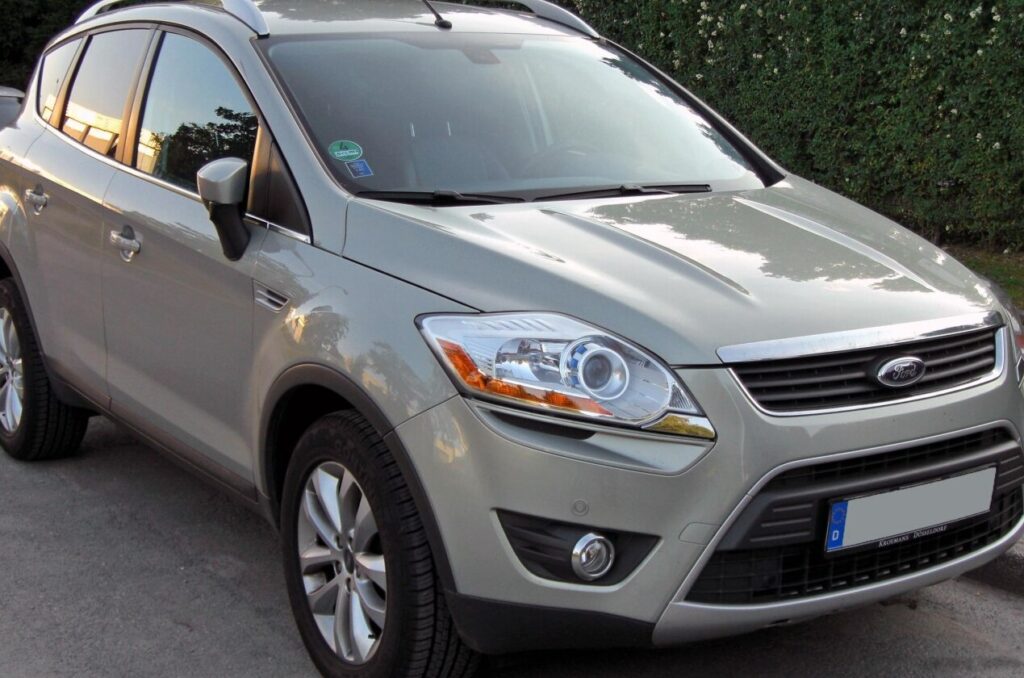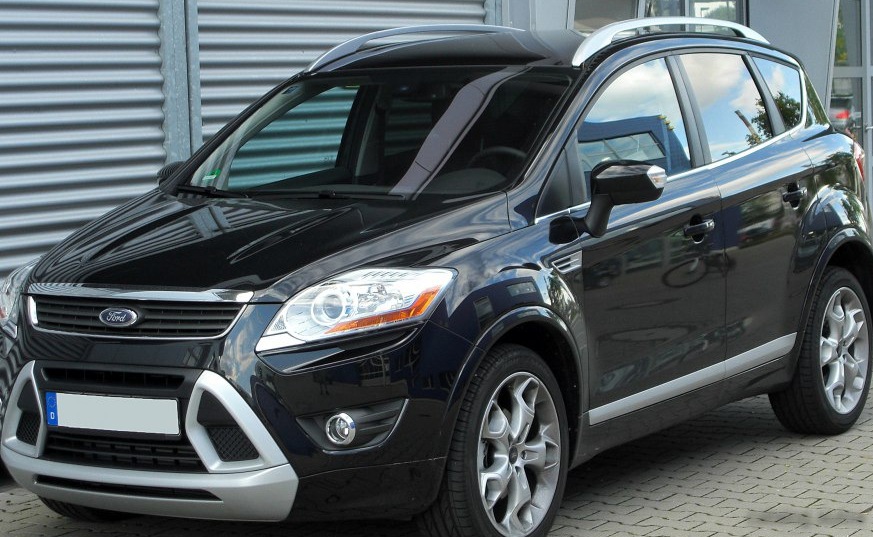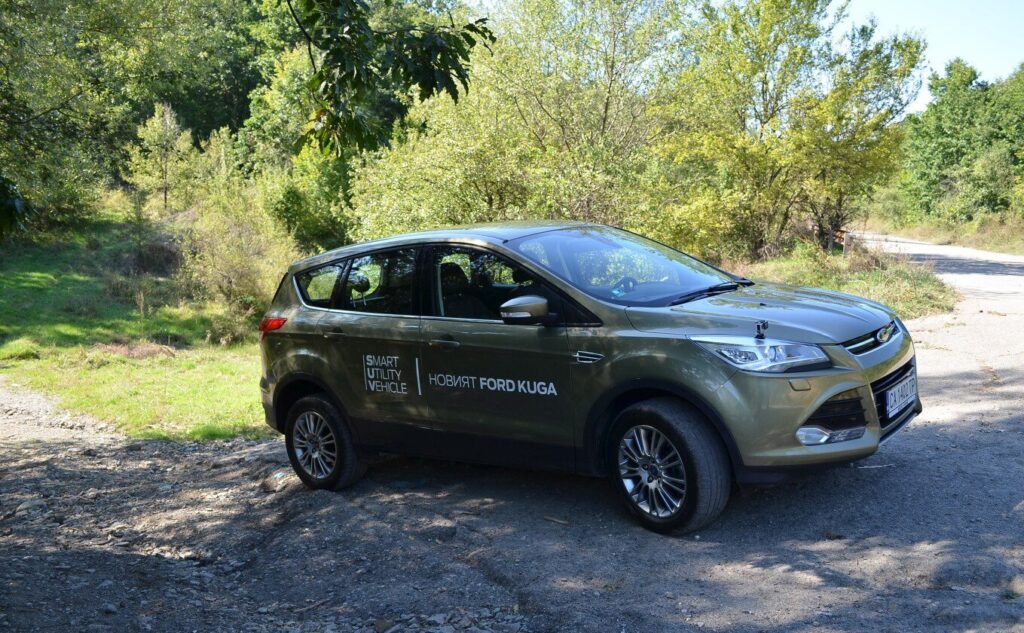
The Ford Kuga II 1.6 EcoBoost 4×4 Automatic, produced between 2012 and 2014, represents a significant iteration of Ford’s compact SUV offering in the European market. Positioned as a mid-range option within the Kuga II lineup, this variant aimed to balance performance, fuel efficiency, and all-weather capability for family buyers. It was built on the C520 platform, shared with other Ford and Mazda vehicles of the era. The Kuga II, in general, was Ford’s response to the growing popularity of compact crossovers, offering a more practical and versatile alternative to traditional hatchbacks and sedans.
Technical Specifications
| Brand | Ford |
| Model | Kuga |
| Generation | Kuga II |
| Type (Engine) | 1.6 EcoBoost (182 Hp) 4×4 Automatic |
| Start of production | 2012 |
| End of production | 2014 |
| Powertrain Architecture | Internal Combustion engine |
| Body type | SUV |
| Seats | 5 |
| Doors | 5 |
| Fuel consumption (urban) | 10.2 l/100 km (23.1 US mpg) |
| Fuel consumption (extra urban) | 6.3 l/100 km (37.3 US mpg) |
| Fuel consumption (combined) | 7.7 l/100 km (30.5 US mpg) |
| Fuel Type | Petrol (Gasoline) |
| Acceleration 0 – 100 km/h | 9.7 sec |
| Acceleration 0 – 62 mph | 9.7 sec |
| Acceleration 0 – 60 mph | 9.2 sec |
| Maximum speed | 200 km/h (124.27 mph) |
| Emission standard | Euro 5 |
| Weight-to-power ratio | 9.2 kg/Hp |
| Power | 182 Hp |
| Engine layout | Front, Transverse |
| Engine Model/Code | JTMA |
| Engine configuration | Inline |
| Fuel injection system | Multi-port manifold injection |
| Engine aspiration | Naturally aspirated engine |
| Engine oil capacity | 3.8 l (4.02 US qt | 3.34 UK qt) |
| Coolant capacity | 6.3 l (6.66 US qt | 5.54 UK qt) |
| Kerb Weight | 1682 kg (3708.18 lbs) |
| Max. weight | 2250 kg (4960.4 lbs) |
| Max load | 568 kg (1252.23 lbs) |
| Length | 4443 mm (174.92 in) |
| Width | 1842 mm (72.52 in) |
| Height | 1710 mm (67.32 in) |
| Wheelbase | 2690 mm (105.91 in) |
| Drive wheel | All wheel drive (4×4) |
| Number of gears and type of gearbox | 6 gears, automatic transmission |
| Assisting systems | ABS (Anti-lock braking system) |
| Steering type | Steering rack and pinion |
Powertrain & Engine Architecture
The heart of the Kuga II 1.6 EcoBoost 4×4 Automatic is the JTMA engine, a 1.6-liter inline-four cylinder gasoline engine. While marketed as “EcoBoost,” this particular iteration doesn’t feature direct injection or a turbocharger; it utilizes multi-port fuel injection. This contrasts with other EcoBoost engines in the Ford lineup which did employ turbocharging and direct injection for increased power and efficiency. The engine produces 182 horsepower and is paired with a six-speed automatic transmission. The transmission was a conventional torque-converter automatic, chosen for its smoothness and ease of use, particularly appealing to the target demographic. The 4×4 system is a part-time all-wheel-drive system, engaging the rear wheels when traction is lost at the front, providing enhanced stability in slippery conditions.
Driving Characteristics
The 1.6 EcoBoost engine, coupled with the automatic transmission, delivers adequate performance for everyday driving. Acceleration from 0-60 mph takes approximately 9.2 seconds, which is respectable but not particularly sporty. The automatic transmission is tuned for comfort, with smooth gear changes and a focus on fuel economy. Compared to the more powerful 2.0-liter EcoBoost variants, this 1.6L engine feels less responsive, especially during overtaking maneuvers. The six-speed automatic transmission’s gear ratios are optimized for cruising, but can sometimes feel a bit sluggish when downshifting. The all-wheel-drive system provides confident handling in various weather conditions, but adds weight, slightly impacting fuel economy and agility compared to front-wheel-drive Kuga models.
Equipment & Trim Levels
The 1.6 EcoBoost 4×4 Automatic typically came equipped with a reasonable level of standard features. These included air conditioning, a basic audio system with USB connectivity, power windows and mirrors, and alloy wheels. Higher trim levels, such as Titanium, added features like dual-zone climate control, a more advanced audio system, parking sensors, and leather upholstery. Optional extras included a panoramic sunroof, navigation system, and heated front seats. Interior upholstery was typically cloth, with the option of leather on higher-spec models. The dashboard layout was functional and straightforward, prioritizing usability over outright style.
Chassis & Braking
The Kuga II utilizes a MacPherson strut front suspension and a multi-link rear suspension. This setup provides a good balance between ride comfort and handling. The 4×4 models generally featured slightly stiffer springs and dampers to cope with the added weight of the all-wheel-drive system. Braking on the 1.6 EcoBoost 4×4 Automatic consists of ventilated front discs and solid rear drums. Anti-lock Braking System (ABS) is standard. The steering is a rack-and-pinion system, providing reasonably precise control, although it lacks the feel of more performance-oriented SUVs.
Market Reception & Comparison
The Kuga II 1.6 EcoBoost 4×4 Automatic received mixed reviews. Critics praised its comfortable ride, spacious interior, and all-weather capability. However, the 1.6-liter engine was often criticized for being underpowered, especially when compared to the more potent 2.0-liter EcoBoost and diesel options. Fuel economy was considered average for the class, falling slightly behind some of its competitors. Compared to the 1.6 EcoBoost front-wheel-drive version, the 4×4 model offered improved traction but at the cost of slightly reduced fuel efficiency and a higher price point. The diesel variants, particularly the 2.0 TDCi, were favored by those prioritizing fuel economy and torque.
Legacy
The Ford Kuga II 1.6 EcoBoost 4×4 Automatic has proven to be a relatively reliable vehicle, although some owners have reported issues with the automatic transmission, particularly with harsh shifting or failure. The 1.6 EcoBoost engine itself is generally considered durable, but regular maintenance is crucial. In the used car market, this variant represents a reasonably affordable entry point into the Kuga II range. Its combination of practicality, all-wheel-drive capability, and automatic transmission makes it a popular choice for families seeking a versatile and comfortable SUV. However, potential buyers should be aware of the engine’s limitations and the potential for transmission issues, and a thorough inspection is recommended before purchase.