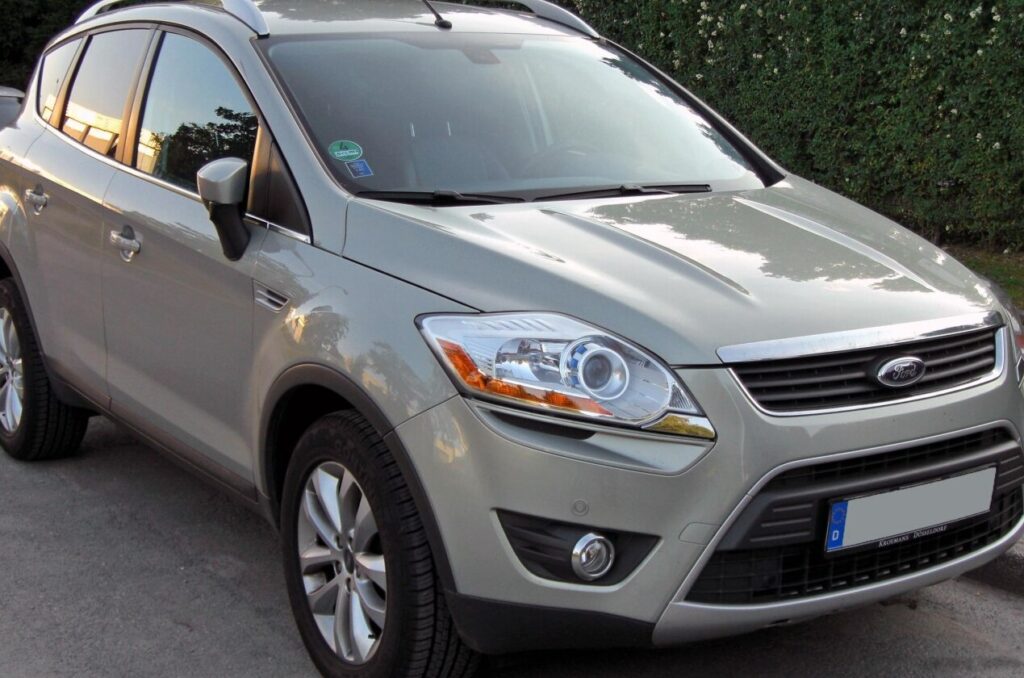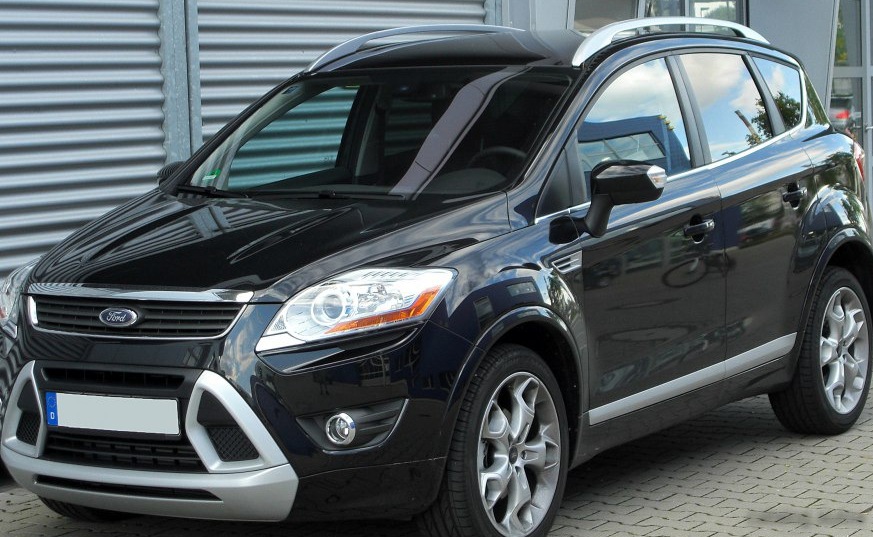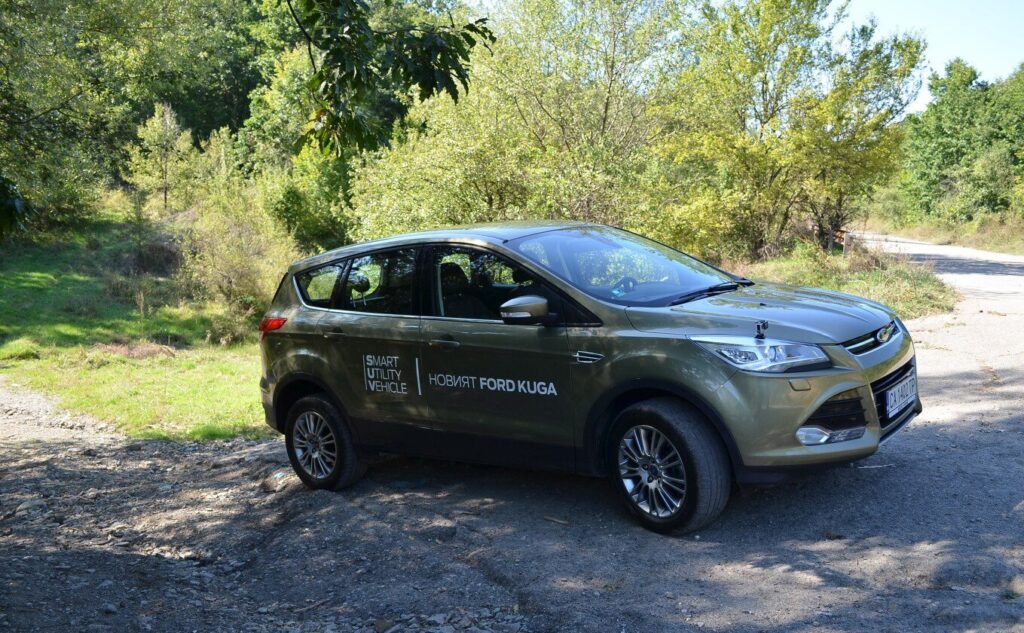
The Ford Kuga II 2.0 TDCi, producing 140 horsepower, was a significant variant within the second generation Kuga (also known as the Escape in North America) lineup, manufactured between 2012 and 2014. Positioned as a mid-range offering, it aimed to balance fuel efficiency with acceptable performance for the European compact SUV market. This model represented Ford’s continued effort to provide a versatile and practical vehicle appealing to families and individuals seeking a blend of space, comfort, and economy. It was a key player in Ford’s strategy to compete with established rivals like the Nissan Qashqai and Volkswagen Tiguan.
Technical Specifications
| Brand | Ford |
| Model | Kuga |
| Generation | Kuga II |
| Type (Engine) | 2.0 TDCi (140 Hp) |
| Start of production | 2012 |
| End of production | 2014 |
| Powertrain Architecture | Internal Combustion engine |
| Body type | SUV |
| Seats | 5 |
| Doors | 5 |
| Fuel consumption (urban) | 6.3 l/100 km (37.3 US mpg, 44.8 UK mpg, 15.9 km/l) |
| Fuel consumption (extra urban) | 4.7 l/100 km (50 US mpg, 60.1 UK mpg, 21.3 km/l) |
| Fuel consumption (combined) | 5.3 l/100 km (44.4 US mpg, 53.3 UK mpg, 18.9 km/l) |
| CO2 emissions | 139 g/km |
| Fuel Type | Diesel |
| Acceleration 0 – 100 km/h | 10.6 sec |
| Acceleration 0 – 62 mph | 10.6 sec |
| Acceleration 0 – 60 mph | 10.1 sec |
| Maximum speed | 190 km/h (118.06 mph) |
| Emission standard | Euro 5 |
| Weight-to-power ratio | 11.5 kg/Hp, 87.2 Hp/tonne |
| Weight-to-torque ratio | 5 kg/Nm, 199.4 Nm/tonne |
| Power | 140 Hp @ 3750 rpm |
| Power per litre | 70.1 Hp/l |
| Torque | 320 Nm @ 1750-2750 rpm (236.02 lb.-ft. @ 1750-2750 rpm) |
| Engine layout | Front, Transverse |
| Engine Model/Code | UFMA |
| Engine displacement | 1997 cm3 (121.86 cu. in.) |
| Number of cylinders | 4 |
| Engine configuration | Inline |
| Cylinder Bore | 85 mm (3.35 in.) |
| Piston Stroke | 88 mm (3.46 in.) |
| Compression ratio | 16:1 |
| Number of valves per cylinder | 4 |
| Fuel injection system | Diesel Commonrail |
| Engine aspiration | Turbocharger, Intercooler |
| Valvetrain | DOHC |
| Engine oil capacity | 5.7 l (6.02 US qt | 5.02 UK qt) |
| Coolant | 8.5 l (8.98 US qt | 7.48 UK qt) |
| Kerb Weight | 1605 kg (3538.42 lbs.) |
| Max. weight | 2250 kg (4960.4 lbs.) |
| Max load | 645 kg (1421.98 lbs.) |
| Trunk (boot) space – minimum | 425 l (15.01 cu. ft.) |
| Trunk (boot) space – maximum | 1568 l (55.37 cu. ft.) |
| Fuel tank capacity | 60 l (15.85 US gal | 13.2 UK gal) |
| Length | 4524 mm (178.11 in.) |
| Width | 1838 mm (72.36 in.) |
| Height | 1702 mm (67.01 in.) |
| Wheelbase | 2690 mm (105.91 in.) |
| Front track | 1563 mm (61.54 in.) |
| Rear (Back) track | 1565 mm (61.61 in.) |
| Drivetrain Architecture | Front wheel drive |
| Number of gears | 6 |
| Type of gearbox | Manual transmission |
Powertrain & Engine Architecture
The heart of the Kuga II 2.0 TDCi (140 Hp) is the UFMA engine, a 2.0-liter inline-four cylinder diesel engine. This engine utilizes a common rail direct injection system, delivering fuel directly into the combustion chamber at extremely high pressure. This technology, coupled with a turbocharger and intercooler, optimizes combustion efficiency and boosts power output. The engine features a double overhead camshaft (DOHC) valvetrain with four valves per cylinder, further enhancing breathing and performance. The 140 horsepower variant was tuned for efficiency and drivability rather than outright performance. The six-speed manual transmission was the standard offering, providing a good balance between fuel economy and driver control. The engine’s design prioritized low-end torque, making it suitable for everyday driving and towing.
Driving Characteristics
The 140 hp 2.0 TDCi Kuga II offered a comfortable and practical driving experience. Acceleration from 0-60 mph took around 10.1 seconds, which was adequate for most driving situations but not particularly sporty. The engine’s strong low-end torque (320 Nm) meant that it felt responsive in everyday traffic and provided sufficient power for overtaking maneuvers. Compared to the higher-output 163 hp version of the 2.0 TDCi, the 140 hp model felt noticeably less energetic, especially at higher speeds. However, the manual transmission allowed drivers to maintain control and extract the most from the available power. The gear ratios were well-chosen to maximize fuel efficiency and provide smooth transitions between gears. The ride quality was generally comfortable, absorbing bumps and imperfections in the road well.
Equipment & Trim Levels
The 2.0 TDCi 140 hp Kuga II typically came equipped with a reasonable level of standard features. These included air conditioning, electric front and rear windows, a basic audio system with USB connectivity, and alloy wheels. Higher trim levels, such as Titanium, added features like dual-zone climate control, rear parking sensors, cruise control, and upgraded interior upholstery. Optional extras included a panoramic sunroof, leather seats, and a more advanced navigation system. The interior design was functional and well-built, with a focus on practicality and durability. The dashboard layout was straightforward and easy to use, with clearly labeled controls.
Chassis & Braking
The Kuga II featured a front-wheel-drive chassis with independent suspension at the front and a multi-link suspension at the rear. This setup provided a good balance between ride comfort and handling. The steering was light and precise, making it easy to maneuver in urban environments. The braking system consisted of ventilated front discs and drum brakes at the rear. Anti-lock Braking System (ABS) was standard, providing enhanced stopping power and stability in emergency situations. The suspension was tuned to prioritize comfort, but it also offered reasonable body control in corners. Stabilizer bars were fitted to both the front and rear axles to reduce body roll.
Market Reception & Comparison
The Ford Kuga II 2.0 TDCi (140 Hp) was generally well-received by automotive critics. It was praised for its fuel efficiency, spacious interior, and comfortable ride. However, some reviewers noted that the engine lacked the punch of its higher-powered counterparts. Compared to the 163 hp version, the 140 hp model offered slightly better fuel economy but at the expense of performance. The 1.6 EcoBoost petrol engine offered a more engaging driving experience but was less fuel-efficient. The Kuga II’s main rivals, such as the Nissan Qashqai and Volkswagen Tiguan, offered similar levels of practicality and comfort, but the Kuga stood out with its attractive styling and competitive pricing.
Legacy
The 2.0 TDCi engine, in its various iterations, proved to be a reliable and durable powertrain. While some early examples experienced issues with diesel particulate filters (DPF), these were largely addressed with software updates and improved maintenance procedures. Today, the Kuga II 2.0 TDCi (140 Hp) remains a popular choice in the used car market, offering a good balance of affordability, practicality, and fuel efficiency. Regular maintenance, including timely oil changes and DPF regeneration, is crucial to ensure the long-term reliability of this powertrain. The Kuga II helped solidify Ford’s position as a major player in the European compact SUV segment, paving the way for future generations of the popular model.