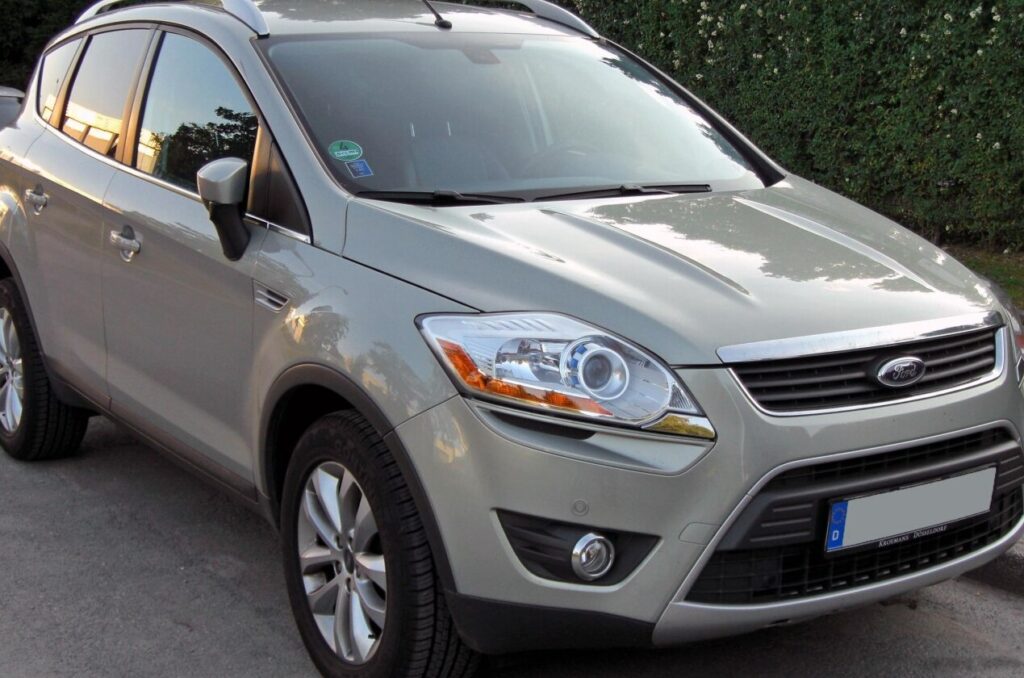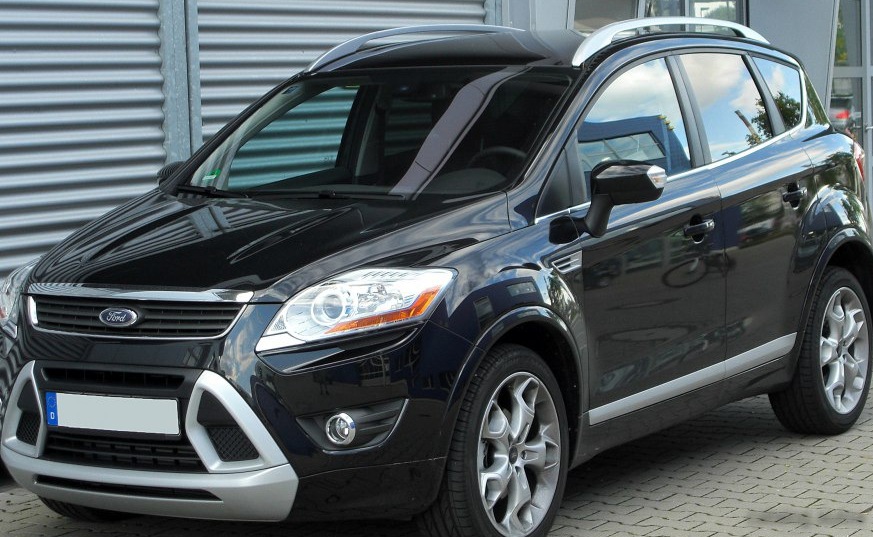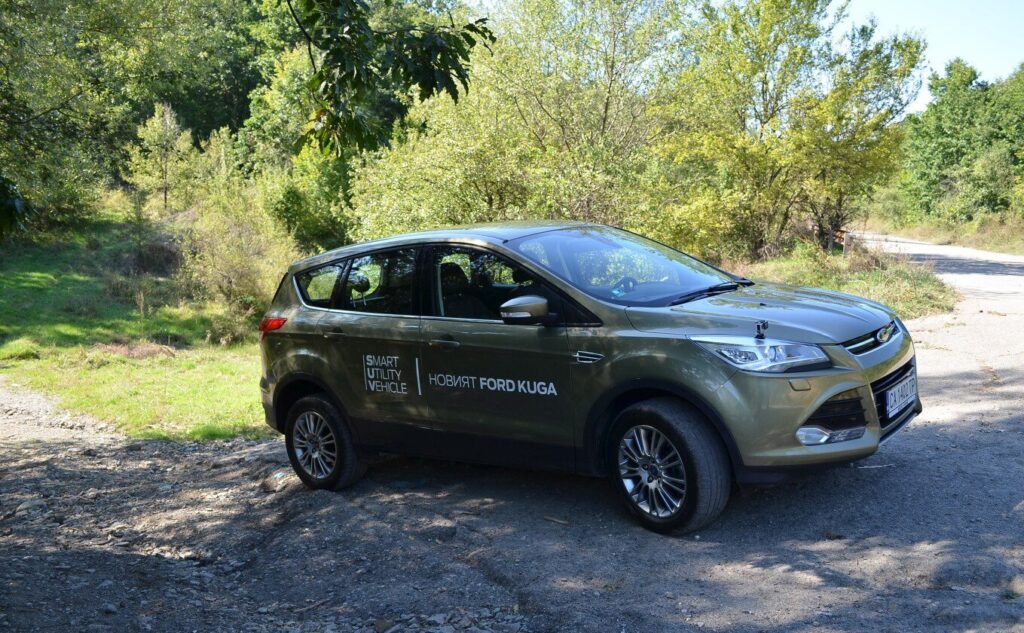
The Ford Kuga II 2.0 TDCi 4×4 Automatic, produced between 2012 and 2014, represented a significant offering in Ford’s European SUV lineup. Positioned as a mid-range trim within the second generation Kuga (also known as the Escape in North America), this variant combined a diesel engine with all-wheel drive and a six-speed automatic transmission, appealing to buyers seeking practicality, fuel efficiency, and all-weather capability. It was a key model in Ford’s strategy to expand its presence in the increasingly popular compact SUV segment.
Technical Specifications
| Brand | Ford |
| Model | Kuga |
| Generation | Kuga II |
| Type (Engine) | 2.0 TDCi (140 Hp) 4×4 Automatic |
| Start of production | 2012 |
| End of production | 2014 |
| Powertrain Architecture | Internal Combustion engine |
| Body type | SUV |
| Seats | 5 |
| Doors | 5 |
| Fuel consumption (urban) | 7.4 l/100 km (31.8 US mpg) |
| Fuel consumption (extra urban) | 5.5 l/100 km (42.8 US mpg) |
| Fuel consumption (combined) | 6.2 l/100 km (37.9 US mpg) |
| CO2 emissions | 162 g/km |
| Fuel Type | Diesel |
| Acceleration 0 – 100 km/h | 11.2 sec |
| Acceleration 0 – 62 mph | 11.2 sec |
| Acceleration 0 – 60 mph | 10.6 sec |
| Maximum speed | 187 km/h (116.2 mph) |
| Emission standard | Euro 5 |
| Weight-to-power ratio | 12.2 kg/Hp |
| Weight-to-torque ratio | 5.3 kg/Nm |
| Power | 140 Hp @ 3750 rpm |
| Torque | 320 Nm @ 1750-2750 rpm (236.02 lb.-ft.) |
| Engine layout | Front, Transverse |
| Engine Model/Code | UFMA |
| Engine displacement | 1997 cm3 (121.86 cu. in.) |
| Number of cylinders | 4 |
| Engine configuration | Inline |
| Cylinder Bore | 85 mm (3.35 in.) |
| Piston Stroke | 88 mm (3.46 in.) |
| Compression ratio | 16:1 |
| Number of valves per cylinder | 4 |
| Fuel injection system | Diesel Commonrail |
| Engine aspiration | Turbocharger, Intercooler |
| Valvetrain | DOHC |
| Engine oil capacity | 5.7 l (6.02 US qt | 5.02 UK qt) |
| Coolant capacity | 8.5 l (8.98 US qt | 7.48 UK qt) |
| Kerb Weight | 1707 kg (3763.29 lbs.) |
| Max. weight | 2250 kg (4960.4 lbs.) |
| Max load | 543 kg (1197.11 lbs.) |
| Trunk (boot) space – minimum | 425 l (15.01 cu. ft.) |
| Trunk (boot) space – maximum | 1568 l (55.37 cu. ft.) |
| Fuel tank capacity | 60 l (15.85 US gal | 13.2 UK gal) |
| Length | 4524 mm (178.11 in.) |
| Width | 1838 mm (72.36 in.) |
| Height | 1701 mm (66.97 in.) |
| Wheelbase | 2690 mm (105.91 in.) |
| Front track | 1563 mm (61.54 in.) |
| Rear track | 1565 mm (61.61 in.) |
| Drive wheel | All wheel drive (4×4) |
| Number of gears | 6 |
| Gearbox type | Automatic transmission |
| Assisting systems | ABS (Anti-lock braking system) |
| Steering type | Steering rack and pinion |
| Tires size | 235/55 R17; 235/50 R18; 235/45 R19 |
| Wheel rims size | 7.0J x 17; 7.5J x 17; 7.5J x 18; 8.0J x 19 |
INTRODUCTION
The Ford Kuga II, launched in 2012, represented a significant step forward for Ford’s compact SUV offering in Europe. Built on the global C-platform (also known as the 1HX0/A3 platform, shared with the Ford Focus), the Kuga II aimed to provide a more refined and capable vehicle than its predecessor. The 2.0 TDCi 140 hp 4×4 Automatic variant was a popular choice, offering a balance between performance, fuel economy, and practicality. It catered to customers who needed the added security of all-wheel drive, particularly in regions with inclement weather, but didn’t necessarily require the higher performance of the more powerful engine options.
Powertrain & Engine Architecture
At the heart of the Kuga II 2.0 TDCi 4×4 Automatic lies the Ford UFMA engine, a 2.0-liter inline-four cylinder diesel engine. This engine utilized a common-rail direct fuel injection system, delivering fuel at extremely high pressure for improved combustion efficiency and reduced emissions. The engine featured a turbocharger with an intercooler, boosting power output and torque. The valvetrain employed a double overhead camshaft (DOHC) design with four valves per cylinder, optimizing airflow for enhanced performance. The 140 horsepower output was achieved at 3750 rpm, while peak torque of 320 Nm (236 lb-ft) was available between 1750 and 2750 rpm, providing strong pulling power at lower engine speeds. Paired with this engine was a six-speed automatic transmission, providing smooth and convenient gear changes. This transmission was specifically tuned to work with the engine’s torque characteristics, offering a balance between responsiveness and fuel efficiency.
Driving Characteristics
The Kuga II 2.0 TDCi 4×4 Automatic offered a comfortable and composed driving experience. While not particularly sporty, the 140 hp engine provided adequate power for everyday driving and highway cruising. Acceleration from 0 to 60 mph took around 10.6 seconds, which was respectable for a diesel-powered SUV of this size. The automatic transmission shifted smoothly, although it could occasionally feel hesitant during quick acceleration. The all-wheel-drive system provided enhanced traction and stability, particularly on slippery surfaces. The gear ratios were optimized for fuel efficiency, with higher gears designed for relaxed cruising. Compared to the higher-output 163 hp version of the 2.0 TDCi, this variant felt less eager to accelerate, but it offered better fuel economy and a more relaxed driving experience. The manual transmission versions of the same engine offered a more engaging driving experience, but the automatic was preferred by those prioritizing convenience.
Equipment & Trim Levels
The Kuga II 2.0 TDCi 4×4 Automatic typically came equipped with a reasonable level of standard features. These included air conditioning, power windows, power mirrors, a CD/MP3 stereo system, and alloy wheels. Higher trim levels added features such as automatic climate control, a touchscreen infotainment system, parking sensors, and leather upholstery. Optional extras included a panoramic sunroof, heated seats, and a navigation system. Interior upholstery was typically cloth, although leather options were available. The dashboard layout was functional and user-friendly, with clearly labeled controls. Safety features included ABS, electronic stability control, and multiple airbags.
Chassis & Braking
The Kuga II featured a MacPherson strut front suspension and a multi-link rear suspension, providing a comfortable ride and good handling characteristics. The all-wheel-drive system utilized a Haldex clutch to distribute torque between the front and rear axles as needed. Braking duties were handled by disc brakes on all four wheels, providing ample stopping power. The rear suspension on some models utilized drum brakes, depending on the specific trim level and market. Stabilizer bars were fitted to both the front and rear axles to reduce body roll during cornering. The steering was a rack and pinion system, providing precise and responsive steering feel.
Market Reception & Comparison
The Ford Kuga II 2.0 TDCi 4×4 Automatic was generally well-received by automotive critics. It was praised for its comfortable ride, spacious interior, and fuel efficiency. However, some critics noted that the engine could feel underpowered when fully loaded or when tackling steep hills. Compared to other compact SUVs in its class, such as the Nissan Qashqai and the Volkswagen Tiguan, the Kuga II offered a competitive package in terms of price, features, and performance. The 1.8L petrol versions were often criticized for lacking power, making the 2.0 TDCi a more popular choice for many buyers. The 2.0 TDCi 163 hp version offered more performance, but at the cost of slightly lower fuel economy.
Legacy
The Ford Kuga II 2.0 TDCi 4×4 Automatic has proven to be a relatively reliable vehicle, with the UFMA engine generally considered to be durable. However, like all diesel engines, it is important to ensure regular maintenance, including oil changes and filter replacements. Common issues include problems with the diesel particulate filter (DPF) and the turbocharger. On the used car market, these Kugas represent good value for money, offering a practical and capable SUV at an affordable price. The combination of all-wheel drive and an automatic transmission continues to appeal to buyers seeking a versatile and easy-to-drive vehicle.