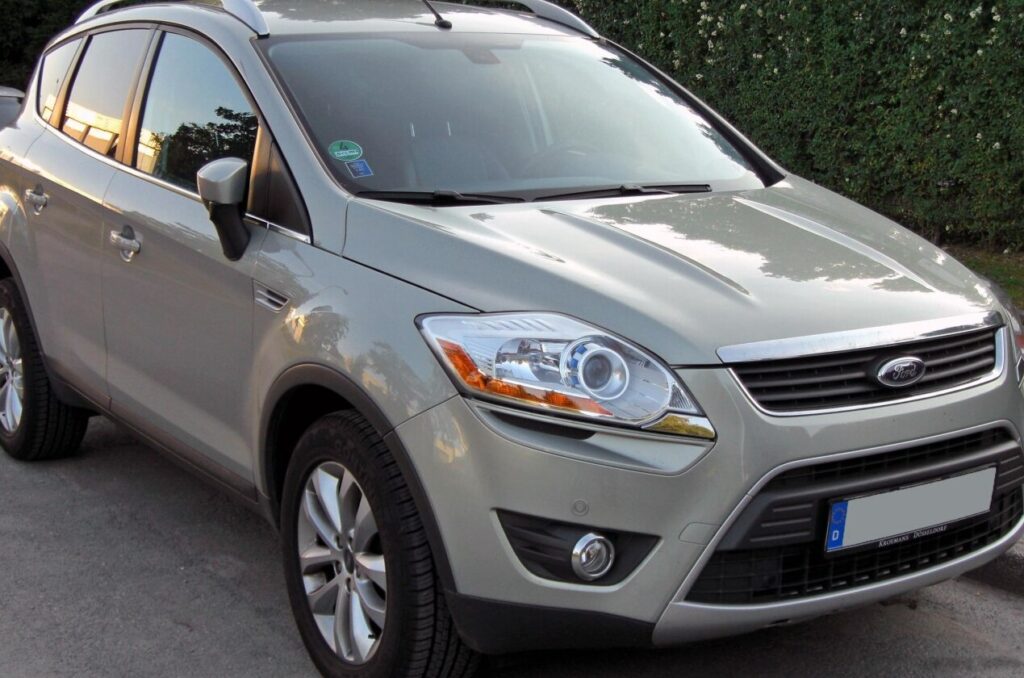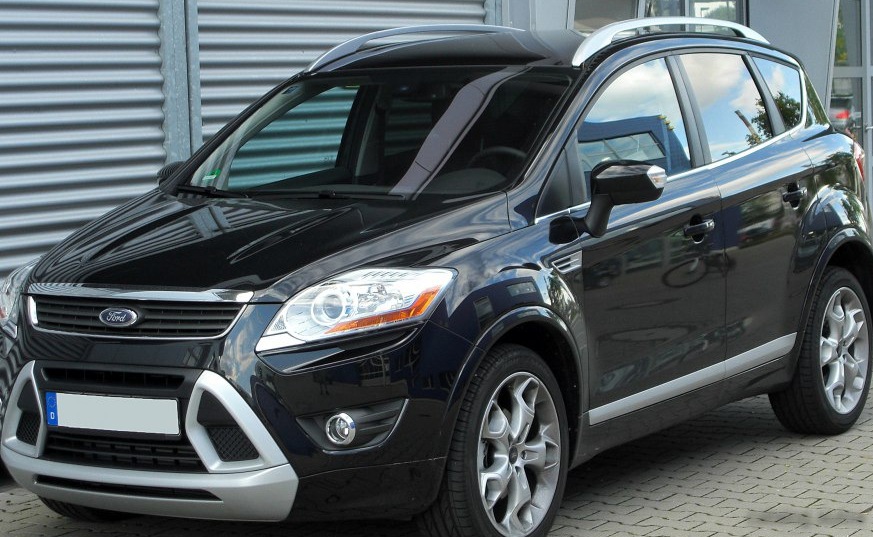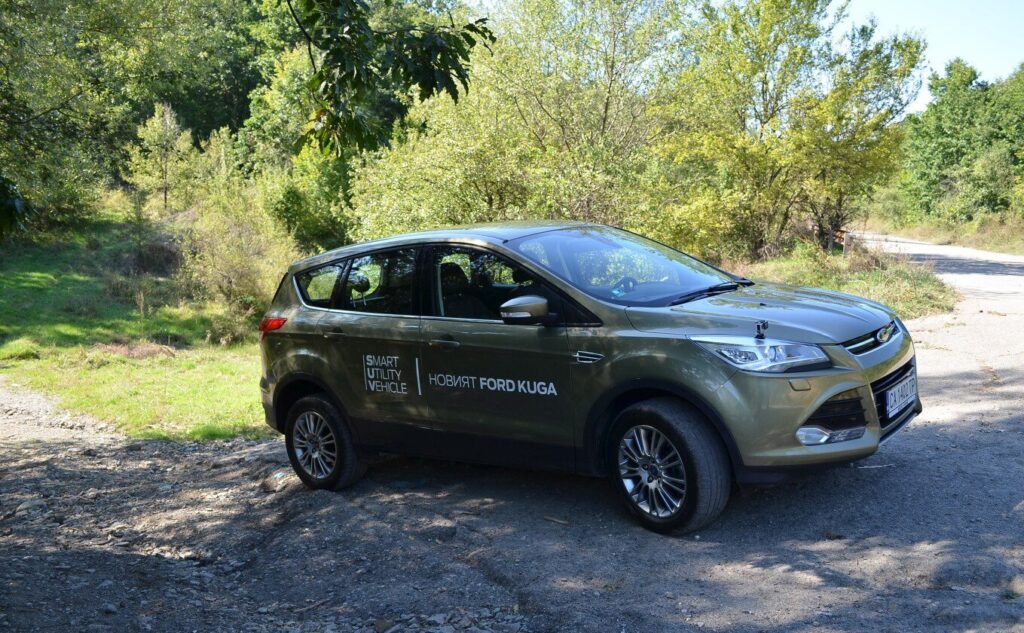
The Ford Kuga II 2.0 TDCi 4×4, manufactured between 2012 and 2014, was a significant model within Ford’s European SUV range. Positioned as a mid-range trim level within the second-generation Kuga (internally designated as the 1HX0 platform, launched in 2012), this variant combined a 2.0-liter turbodiesel engine with a six-speed manual transmission and Ford’s intelligent all-wheel-drive system. It aimed to deliver a balance of fuel efficiency, practicality, and all-weather capability, appealing to families and individuals needing a versatile vehicle. The Kuga II represented Ford’s response to the growing demand for compact SUVs in Europe, offering a more refined and capable alternative to its predecessors.
Technical Specifications
| Brand | Ford |
| Model | Kuga |
| Generation | Kuga II |
| Type (Engine) | 2.0 TDCi (163 Hp) 4×4 |
| Start of production | 2012 |
| End of production | 2014 |
| Powertrain Architecture | Internal Combustion engine |
| Body type | SUV |
| Seats | 5 |
| Doors | 5 |
| Fuel consumption (urban) | 7.2 l/100 km (32.7 US mpg) |
| Fuel consumption (extra urban) | 5.1 l/100 km (46.1 US mpg) |
| Fuel consumption (combined) | 5.9 l/100 km (39.9 US mpg) |
| CO2 emissions | 154 g/km |
| Fuel Type | Diesel |
| Acceleration 0 – 100 km/h | 9.9 sec |
| Acceleration 0 – 62 mph | 9.9 sec |
| Acceleration 0 – 60 mph | 9.4 sec |
| Maximum speed | 198 km/h (123.03 mph) |
| Emission standard | Euro 5 |
| Weight-to-power ratio | 10.4 kg/Hp |
| Weight-to-torque ratio | 5 kg/Nm |
| Power | 163 Hp @ 3750 rpm |
| Torque | 340 Nm @ 2000-3250 rpm (250.77 lb.-ft.) |
| Engine layout | Front, Transverse |
| Engine Model/Code | TXDA, TXMA |
| Engine displacement | 1997 cm3 (121.86 cu. in.) |
| Number of cylinders | 4 |
| Engine configuration | Inline |
| Cylinder Bore | 85 mm (3.35 in.) |
| Piston Stroke | 88 mm (3.46 in.) |
| Compression ratio | 16:1 |
| Number of valves per cylinder | 4 |
| Fuel injection system | Diesel Commonrail |
| Engine aspiration | Turbocharger, Intercooler |
| Valvetrain | DOHC |
| Engine oil capacity | 5.7 l (6.02 US qt | 5.02 UK qt) |
| Coolant capacity | 8.5 l (8.98 US qt | 7.48 UK qt) |
| Kerb Weight | 1692 kg (3730.22 lbs.) |
| Max. weight | 2250 kg (4960.4 lbs.) |
| Max load | 558 kg (1230.18 lbs.) |
| Trunk (boot) space – minimum | 425 l (15.01 cu. ft.) |
| Trunk (boot) space – maximum | 1568 l (55.37 cu. ft.) |
| Fuel tank capacity | 60 l (15.85 US gal | 13.2 UK gal) |
| Length | 4524 mm (178.11 in.) |
| Width | 1838 mm (72.36 in.) |
| Height | 1701 mm (66.97 in.) |
| Wheelbase | 2690 mm (105.91 in.) |
| Front track | 1563 mm (61.54 in.) |
| Rear track | 1565 mm (61.61 in.) |
| Drive wheel | All wheel drive (4×4) |
| Number of gears | 6 |
| Gearbox type | Manual transmission |
| Assisting systems | ABS (Anti-lock braking system) |
| Steering type | Steering rack and pinion |
| Tires size | 235/55 R17; 235/50 R18; 235/45 R19 |
| Wheel rims size | 7.0J x 17; 7.5J x 17; 7.5J x 18; 8.0J x 19 |
Powertrain & Engine Architecture
The Ford Kuga II 2.0 TDCi 4×4’s powertrain centers around the Ford Duratorq 2.0-liter inline-four diesel engine. The TXDA and TXMA engine codes were commonly used in this application. This engine employs a common-rail direct fuel injection system, injecting fuel at very high pressure for optimized combustion efficiency. A variable geometry turbocharger (VGT) paired with an intercooler enhances power and torque delivery across a wide RPM range. The engine features a double overhead camshaft (DOHC) valvetrain with four valves per cylinder, contributing to its responsiveness and efficiency. The six-speed manual transmission provides precise gear changes, allowing the driver to effectively utilize the engine’s torque. The transmission’s gear ratios are optimized for a balance between acceleration and fuel economy, with a relatively long sixth gear designed for comfortable highway cruising.
Driving Characteristics
The 2.0 TDCi engine produces 163 horsepower and 340 Nm (250 lb-ft) of torque, providing sufficient performance for daily driving. Acceleration from 0-60 mph takes around 9.4 seconds, with a top speed of approximately 123 mph. While not a performance-oriented SUV, the Kuga II 2.0 TDCi 4×4 delivers enough power for overtaking and maintaining comfortable speeds on the highway. Compared to the lower-powered 1.6-liter TDCi versions, the 2.0-liter engine offers a noticeable increase in power, particularly when the vehicle is fully loaded or climbing inclines. The all-wheel-drive system improves traction in adverse conditions, making it a capable vehicle for year-round use. The manual transmission, while offering a more engaging driving experience, requires more driver input than the optional automatic transmission available on other Kuga II trims.
Equipment & Trim Levels
The 2.0 TDCi 4×4 trim typically included standard features such as air conditioning, a CD/MP3 stereo system, power windows and mirrors, and alloy wheels. Higher trim levels, like the Titanium, added features like dual-zone climate control, a touchscreen infotainment system, parking sensors, and leather upholstery. Optional extras included a panoramic sunroof, heated seats, and a navigation system. Interior upholstery was generally cloth on base trims, with leather options available on higher-specification models. The dashboard layout was functional and user-friendly, prioritizing practicality over luxury.
Chassis & Braking
The Kuga II features a MacPherson strut front suspension and a multi-link rear suspension, providing a comfortable ride and good handling. The 4×4 system utilizes a Haldex clutch to distribute torque between the front and rear axles as needed, optimizing traction in various conditions. Braking is handled by disc brakes on all four wheels, with ABS (Anti-lock Braking System) as standard equipment. The suspension tuning prioritizes comfort, but the Kuga II still exhibits reasonably controlled body roll during cornering. Stabilizer bars are fitted to both the front and rear axles to further minimize body roll.
Market Reception & Comparison
The Ford Kuga II 2.0 TDCi 4×4 received generally positive reviews from automotive critics. It was praised for its spacious interior, comfortable ride, and capable all-wheel-drive system. Fuel economy was also a strong point, with combined fuel consumption around 39.9 US mpg. Compared to the 1.6-liter TDCi variants, the 2.0-liter engine offered a significant performance improvement, albeit at a slightly higher price. The 2.0 TDCi 4×4 also provided a more refined driving experience than some competitors, such as the Nissan Qashqai and the Kia Sportage. However, some critics noted that the interior materials weren’t as premium as those found in some rival SUVs.
Legacy
The Ford Kuga II 2.0 TDCi 4×4 has proven to be a relatively reliable vehicle, with the Duratorq engine generally considered robust and durable. Common issues include occasional problems with the diesel particulate filter (DPF) and the turbocharger, particularly on vehicles that haven’t been properly maintained. However, these issues aren’t widespread, and the Kuga II remains a popular choice in the used car market. Its combination of practicality, fuel efficiency, and all-weather capability continues to appeal to buyers seeking a versatile and affordable SUV. The Kuga II established a strong foundation for the continued success of the Kuga/Escape model line, solidifying its position as a key competitor in the compact SUV segment.