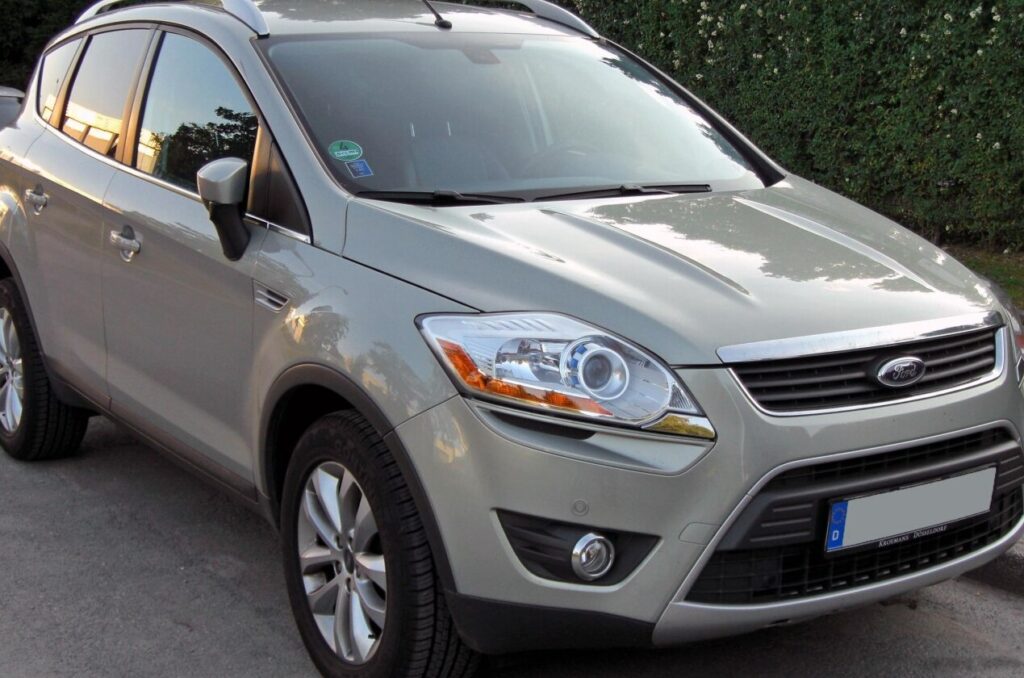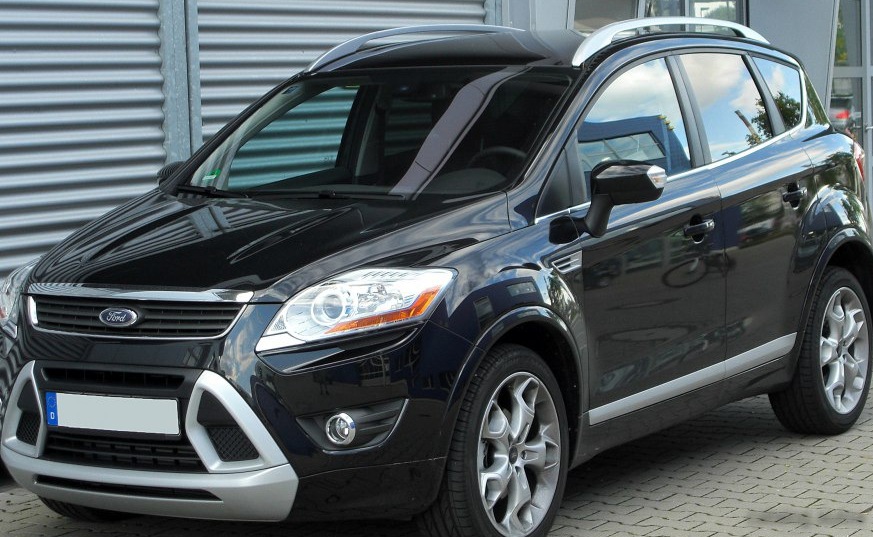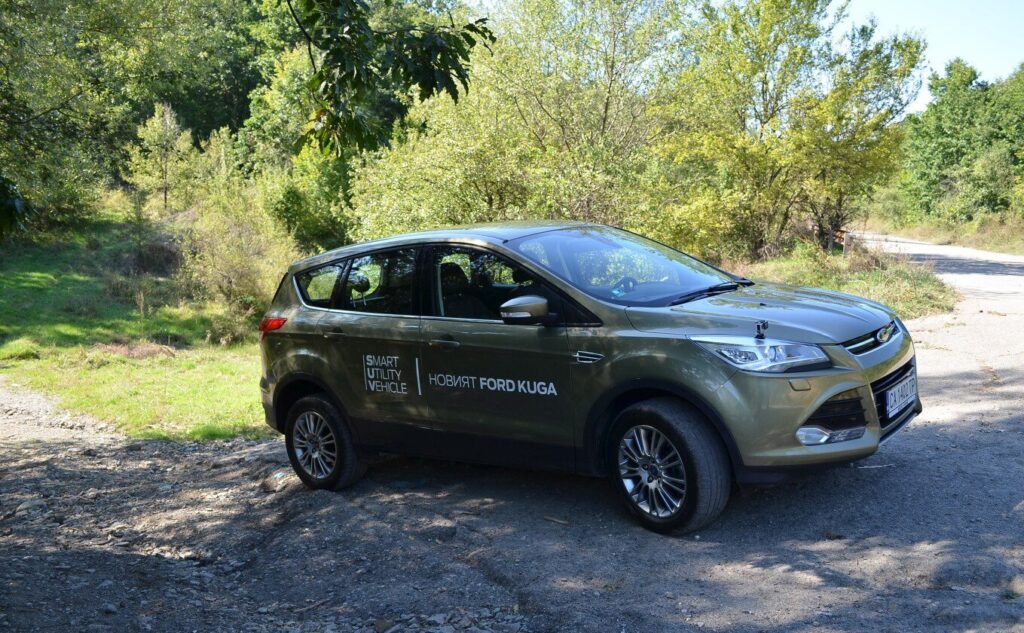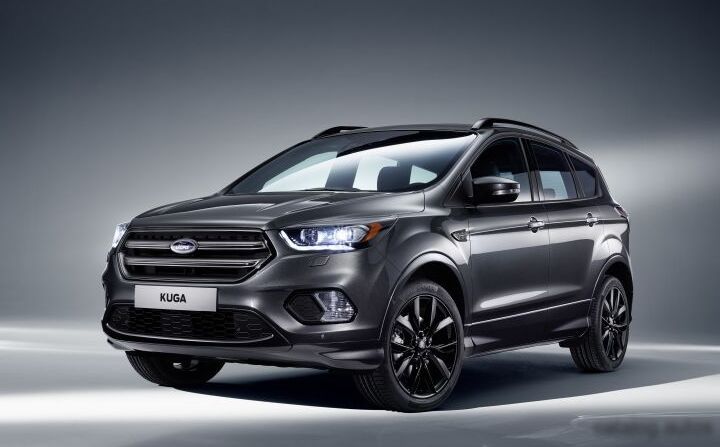
The Ford Kuga II, specifically the facelifted version introduced in 2016, represented a significant step forward for Ford’s compact SUV offering in the European market. The 2.0 EcoBoost 242 horsepower, four-wheel-drive, automatic variant, produced from 2017 to 2018, occupied the premium position within the Kuga II lineup. This model aimed to deliver a blend of performance, practicality, and technology, appealing to buyers seeking a more engaging driving experience than the lower-powered engine options. It was never officially sold in the US market, remaining a primarily European offering.
Technical Specifications
| Brand | Ford |
| Model | Kuga |
| Generation | Kuga II (facelift 2016) |
| Type (Engine) | 2.0 EcoBoost (242 Hp) 4×4 Automatic |
| Start of production | 2017 |
| End of production | 2018 |
| Powertrain Architecture | Internal Combustion engine |
| Body type | SUV |
| Seats | 5 |
| Doors | 5 |
| Fuel consumption (urban) | 11.3 l/100 km (20.8 US mpg, 25 UK mpg, 8.8 km/l) |
| Fuel consumption (extra urban) | 7.2 l/100 km (32.7 US mpg, 39.2 UK mpg, 13.9 km/l) |
| Fuel consumption (combined) | 8.7 l/100 km (27 US mpg, 32.5 UK mpg, 11.5 km/l) |
| CO2 emissions | 199 g/km |
| Fuel Type | Petrol (Gasoline) |
| Acceleration 0 – 100 km/h | 8.8 sec |
| Acceleration 0 – 62 mph | 8.8 sec |
| Acceleration 0 – 60 mph | 8.4 sec |
| Maximum speed | 212 km/h (131.73 mph) |
| Emission standard | Euro 6 |
| Weight-to-power ratio | 7 kg/Hp, 142.2 Hp/tonne |
| Weight-to-torque ratio | 4.3 kg/Nm, 231.5 Nm/tonne |
| Power | 242 Hp @ 5000 rpm |
| Power per litre | 121.1 Hp/l |
| Torque | 394 Nm @ 2500 rpm (290.6 lb.-ft. @ 2500 rpm) |
| Engine layout | Front, Transverse |
| Engine Model/Code | R9MA |
| Engine displacement | 1999 cm3 (121.99 cu. in.) |
| Number of cylinders | 4 |
| Engine configuration | Inline |
| Number of valves per cylinder | 4 |
| Fuel injection system | Direct injection |
| Engine aspiration | Turbocharger, Intercooler |
| Engine oil capacity | 5.4 l (5.71 US qt | 4.75 UK qt) |
| Coolant capacity | 9.8 l (10.36 US qt | 8.62 UK qt) |
| Kerb Weight | 1702 kg (3752.27 lbs.) |
| Max. weight | 2250 kg (4960.4 lbs.) |
| Max load | 548 kg (1208.13 lbs.) |
| Trunk (boot) space – minimum | 456 l (16.1 cu. ft.) |
| Trunk (boot) space – maximum | 1653 l (58.38 cu. ft.) |
| Fuel tank capacity | 60 l (15.85 US gal | 13.2 UK gal) |
| Max. roof load | 75 kg (165.35 lbs.) |
| Permitted trailer load without brakes | 750 kg (1653.47 lbs.) |
| Permitted towbar download | 100 kg (220.46 lbs.) |
| Length | 4531 mm (178.39 in.) |
| Width | 1838 mm (72.36 in.) |
| Width with mirrors folded | 1911 mm (75.24 in.) |
| Width including mirrors | 2086 mm (82.13 in.) |
| Height | 1703 mm (67.05 in.) |
| Wheelbase | 2690 mm (105.91 in.) |
| Front track | 1573 mm (61.93 in.) |
| Rear track | 1583 mm (62.32 in.) |
| Minimum turning circle | 11.1 m (36.42 ft.) |
| Drive wheel | All wheel drive (4×4) |
| Number of gears | 6 |
| Gearbox type | Automatic transmission |
| Front suspension | Independent type McPherson |
| Rear suspension | Independent multi-link suspension |
| Front brakes | Ventilated discs |
| Rear brakes | Disc |
| Assisting systems | ABS (Anti-lock braking system) |
| Steering type | Steering rack and pinion |
| Power steering | Electric Steering |
INTRODUCTION
The 2017-2018 Ford Kuga II 2.0 EcoBoost 4×4 Automatic represented the pinnacle of performance for the second-generation Kuga in Europe. Positioned as the range-topping engine option, it built upon the 2016 facelift which brought styling updates and enhanced technology. The Kuga II, based on the Ford C-segment global platform (also known as the 1HX0/A3 platform), aimed to compete with popular European SUVs like the Nissan Qashqai, Volkswagen Tiguan, and Hyundai Tucson. This particular variant catered to drivers who desired a more spirited driving experience and the added security of all-wheel drive.
Powertrain & Engine Architecture
At the heart of this Kuga variant lies the Ford R9MA 2.0-liter EcoBoost inline-four cylinder engine. This engine utilizes direct fuel injection and a single turbocharger with an intercooler to deliver 242 horsepower at 5000 rpm and 394 Nm (290.6 lb-ft) of torque at 2500 rpm. The engine benefits from Ford’s twin independent variable camshaft timing (Ti-VCT) technology, optimizing valve timing for improved performance and efficiency. The engine is transversely mounted in the front of the vehicle. Paired with this engine is a six-speed automatic transmission, specifically designed to handle the engine’s output and provide smooth gear changes. The transmission features a torque converter and allows for manual gear selection.
Driving Characteristics
The 2.0 EcoBoost engine, coupled with the all-wheel-drive system, provided a noticeable performance upgrade compared to the lower-powered Kuga variants. Acceleration from 0-100 km/h (0-62 mph) took approximately 8.8 seconds, making it one of the quicker options in the compact SUV segment. The all-wheel-drive system, typically operating in front-wheel drive under normal conditions, seamlessly engaged the rear wheels when traction was needed, enhancing stability and grip, particularly in adverse weather. The six-speed automatic transmission, while generally smooth, wasn’t the quickest shifting unit available, and some drivers preferred the more engaging experience of the manual transmission options. The gear ratios were tuned for a balance between acceleration and fuel economy, with a focus on providing adequate torque for everyday driving situations.
Equipment & Trim Levels
The 2.0 EcoBoost 4×4 Automatic Kuga typically came equipped with a generous level of standard features. These included alloy wheels, automatic climate control, a touchscreen infotainment system with navigation, rear parking sensors, and cruise control. Higher trim levels, such as Titanium, added features like leather upholstery, heated front seats, a panoramic sunroof, and advanced driver-assistance systems like lane-keeping assist and adaptive cruise control. Optional extras included a premium sound system, xenon headlights, and a hands-free power tailgate.
Chassis & Braking
The Kuga II utilized an independent McPherson strut suspension setup at the front and an independent multi-link suspension at the rear, providing a comfortable ride and competent handling. The all-wheel-drive system added to the vehicle’s stability and cornering ability. Braking duties were handled by ventilated discs at the front and solid discs at the rear, equipped with ABS (Anti-lock Braking System) and Electronic Stability Control (ESC). The steering system employed an electric power steering rack and pinion, offering a responsive and precise steering feel.
Market Reception & Comparison
The 2.0 EcoBoost 4×4 Automatic Kuga was generally well-received by automotive critics. It was praised for its strong performance, comfortable ride, and spacious interior. However, some reviewers noted that the fuel economy wasn’t as competitive as some of its rivals, particularly the diesel-powered options. Compared to the 1.5 EcoBoost variants, the 2.0 offered a significant power boost, but at a higher price point. Against the diesel-powered 2.0 TDCi models, the EcoBoost offered a more refined driving experience but lacked the same level of fuel efficiency.
Legacy
The Ford Kuga II 2.0 EcoBoost 4×4 Automatic has proven to be a relatively reliable vehicle in the used car market. The EcoBoost engine, while capable, requires regular maintenance, including oil changes with the correct specification oil, to prevent potential issues with carbon buildup. The automatic transmission is generally robust, but it’s essential to check for smooth gear changes during a pre-purchase inspection. Today, these Kugas represent a good value proposition for buyers seeking a capable and well-equipped compact SUV, offering a blend of performance and practicality that remains appealing even years after production ended.