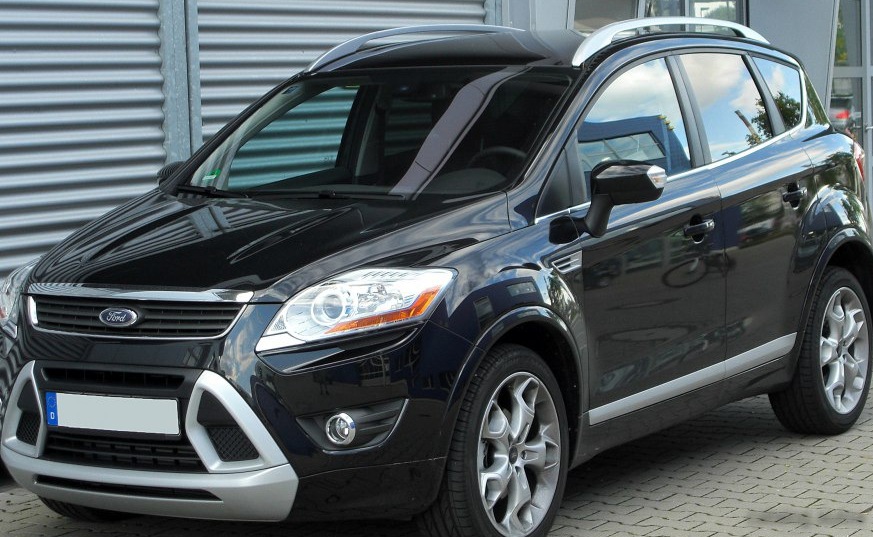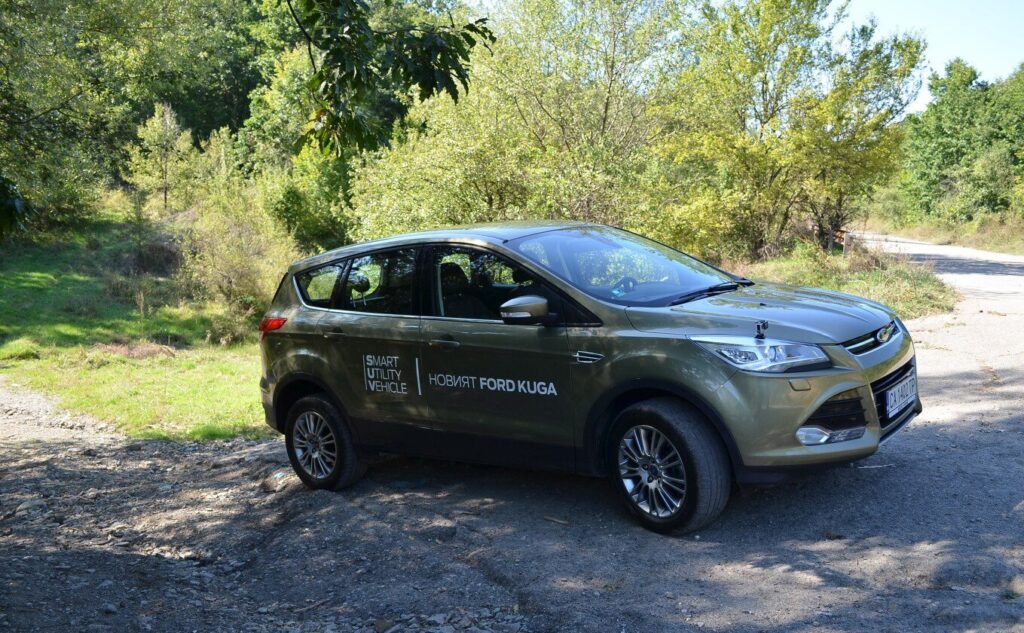
The Ford Kuga II (facelift, produced from 2016 to 2019) 2.0 TDCi 180 horsepower 4×4 represents a significant iteration of Ford’s compact SUV offering in the European market. Positioned as a mid-to-high trim level within the Kuga II range, this variant aimed to provide a balance of performance, fuel efficiency, and all-weather capability. It built upon the success of the original Kuga, offering a more refined driving experience and updated technology. The facelift brought styling revisions, interior upgrades, and powertrain enhancements, solidifying the Kuga’s position as a competitive choice in the crowded crossover segment.
Technical Specifications
| Brand | Ford |
| Model | Kuga |
| Generation | Kuga II (facelift 2016) |
| Type (Engine) | 2.0 TDCI (180 Hp) 4×4 |
| Start of production | 2016 |
| End of production | 2019 |
| Powertrain Architecture | Internal Combustion engine |
| Body type | SUV |
| Seats | 5 |
| Doors | 5 |
| Fuel consumption (urban) | 6 l/100 km (39.2 US mpg, 47.1 UK mpg, 16.7 km/l) |
| Fuel consumption (extra urban) | 4.7 l/100 km (50 US mpg, 60.1 UK mpg, 21.3 km/l) |
| Fuel consumption (combined) | 5.2 l/100 km (45.2 US mpg, 54.3 UK mpg, 19.2 km/l) |
| CO2 emissions | 135 g/km |
| Fuel Type | Diesel |
| Acceleration 0 – 100 km/h | 9.2 sec |
| Acceleration 0 – 62 mph | 9.2 sec |
| Acceleration 0 – 60 mph | 8.7 sec |
| Maximum speed | 202 km/h (125.52 mph) |
| Emission standard | Euro 6 |
| Weight-to-power ratio | 9.5 kg/Hp, 105.8 Hp/tonne |
| Weight-to-torque ratio | 4.3 kg/Nm, 235 Nm/tonne |
| Power | 180 Hp @ 3500 rpm |
| Power per litre | 90.1 Hp/l |
| Torque | 400 Nm @ 2000-2500 rpm (295.02 lb.-ft. @ 2000-2500 rpm) |
| Engine layout | Front, Transverse |
| Engine Model/Code | T8MA, T8MB, T8MC |
| Engine displacement | 1997 cm3 (121.86 cu. in.) |
| Number of cylinders | 4 |
| Engine configuration | Inline |
| Cylinder Bore | 85 mm (3.35 in.) |
| Piston Stroke | 88 mm (3.46 in.) |
| Compression ratio | 16:1 |
| Number of valves per cylinder | 4 |
| Fuel injection system | Diesel Commonrail |
| Engine aspiration | Turbocharger, Intercooler |
| Valvetrain | DOHC |
| Engine oil capacity | 6.1 l (6.45 US qt | 5.37 UK qt) |
| Coolant | 8 l (8.45 US qt | 7.04 UK qt) |
| Kerb Weight | 1702 kg (3752.27 lbs.) |
| Max. weight | 2250 kg (4960.4 lbs.) |
| Max load | 548 kg (1208.13 lbs.) |
| Trunk (boot) space – minimum | 456 l (16.1 cu. ft.) |
| Trunk (boot) space – maximum | 1603 l (56.61 cu. ft.) |
| Fuel tank capacity | 60 l (15.85 US gal | 13.2 UK gal) |
| Max. roof load | 75 kg (165.35 lbs.) |
| Permitted trailer load with brakes (12%) | 2100 kg (4629.71 lbs.) |
| Permitted trailer load without brakes | 750 kg (1653.47 lbs.) |
| Permitted towbar download | 100 kg (220.46 lbs.) |
| Length | 4531 mm (178.39 in.) |
| Width | 1838 mm (72.36 in.) |
| Width with mirrors folded | 1911 mm (75.24 in.) |
| Width including mirrors | 2086 mm (82.13 in.) |
| Height | 1703 mm (67.05 in.) |
| Wheelbase | 2690 mm (105.91 in.) |
| Front track | 1573 mm (61.93 in.) |
| Rear (Back) track | 1583 mm (62.32 in.) |
| Minimum turning circle | 11.1 m (36.42 ft.) |
| Drive wheel | All wheel drive (4×4) |
| Number of gears and type of gearbox | 6 gears, manual transmission |
| Front suspension | Independent type McPherson |
| Rear suspension | Independent multi-link suspension |
| Front brakes | Ventilated discs |
| Rear brakes | Disc |
| Assisting systems | ABS (Anti-lock braking system) |
| Steering type | Steering rack and pinion |
| Power steering | Electric Steering |
| Tires size | 235/50 R18 |
| Wheel rims size | 7.5 J x 18 |
INTRODUCTION
The 2.0 TDCi 180 horsepower 4×4 variant of the Ford Kuga II (facelift) was produced between 2016 and 2019. It occupied a sweet spot in the Kuga lineup, offering a significant step up in performance from the lower-powered engine options while remaining more accessible than the range-topping trims. Built on the Ford C-MAX/Focus-derived global C platform (specifically the 1HX0/A3 variant), the Kuga II aimed to provide a more sophisticated and versatile SUV experience. The facelift brought a revised front fascia, updated interior materials, and improvements to the infotainment system, enhancing the Kuga’s overall appeal.
Powertrain & Engine Architecture
At the heart of this Kuga variant lies Ford’s 2.0-liter TDCi turbocharged diesel engine. Engine codes T8MA, T8MB, and T8MC were used depending on specific market and calibration. This engine utilizes a common-rail direct injection system, delivering fuel at extremely high pressure for optimized combustion. The engine features a double overhead camshaft (DOHC) valvetrain with four valves per cylinder, contributing to its efficient breathing and power output. A turbocharger with an intercooler further enhances performance by forcing more air into the cylinders. The 180 horsepower output is achieved through careful tuning of the engine management system. The engine is transversely mounted in the front of the vehicle. The 4×4 system employs a multi-plate clutch to distribute torque between the front and rear axles as needed, providing enhanced traction in slippery conditions. The six-speed manual transmission provides precise gear changes and contributes to the vehicle’s overall efficiency.
Driving Characteristics
The 180 horsepower 2.0 TDCi engine, coupled with the six-speed manual transmission, delivers a respectable driving experience. Acceleration from 0-60 mph takes approximately 8.7 seconds, and the vehicle reaches a top speed of 125.52 mph. While not a sports SUV, the engine provides ample torque (400 Nm or 295 lb-ft) from 2000-2500 rpm, making it capable of effortless overtaking and comfortable cruising. The manual transmission allows for greater driver control, although the gear ratios are tuned more for fuel efficiency than outright performance. Compared to the lower-powered 1.5 TDCi variants, this 2.0-liter engine offers a noticeably more responsive and refined driving experience. It also feels more capable when fully loaded or towing. Compared to higher-output petrol versions, the diesel offers superior fuel economy and a broader torque curve, but lacks the immediate responsiveness of the gasoline engine.
Equipment & Trim Levels
The 2.0 TDCi 180 horsepower 4×4 Kuga typically came equipped with a generous level of standard features. These included air conditioning, power windows, power mirrors, a basic infotainment system with Bluetooth connectivity, and alloy wheels. Higher trim levels, such as Titanium and Vignale, added features like leather upholstery, a more advanced infotainment system with navigation, parking sensors, a rearview camera, and automatic climate control. Optional extras included a panoramic sunroof, heated seats, and a premium sound system. The interior design was generally functional and well-built, with a focus on practicality and durability.
Chassis & Braking
The Kuga II utilizes an independent McPherson strut suspension at the front and an independent multi-link suspension at the rear, providing a comfortable and controlled ride. The 4×4 system adds to the vehicle’s stability and handling, particularly on loose surfaces. The braking system consists of ventilated discs at the front and solid discs at the rear, providing adequate stopping power. Anti-lock Braking System (ABS) is standard. The suspension tuning is geared towards comfort, but the Kuga II still offers reasonably responsive handling for an SUV of its size. Stabilizer bars are fitted to both the front and rear axles to reduce body roll during cornering.
Market Reception & Comparison
The Ford Kuga II (facelift) 2.0 TDCi 180 horsepower 4×4 was generally well-received by automotive critics. It was praised for its comfortable ride, spacious interior, and fuel-efficient engine. The 4×4 system was also seen as a valuable asset for drivers in regions with inclement weather. Compared to rivals like the Nissan Qashqai and Kia Sportage, the Kuga offered a more engaging driving experience and a more refined interior. Fuel economy figures of around 45.2 US mpg (combined) were competitive for its class. Reliability was generally good, although some owners reported minor issues with the infotainment system and the diesel particulate filter (DPF).
Legacy
The 2.0 TDCi engine in this configuration has proven to be a relatively reliable powertrain, although regular maintenance is crucial, particularly regarding the DPF. The Kuga II (facelift) remains a popular choice in the used car market, offering a good balance of practicality, comfort, and affordability. Its all-wheel-drive capability and fuel-efficient diesel engine continue to appeal to buyers looking for a versatile and economical SUV. While newer models have since been released, the Kuga II (facelift) 2.0 TDCi 180 horsepower 4×4 remains a competent and well-rounded vehicle.