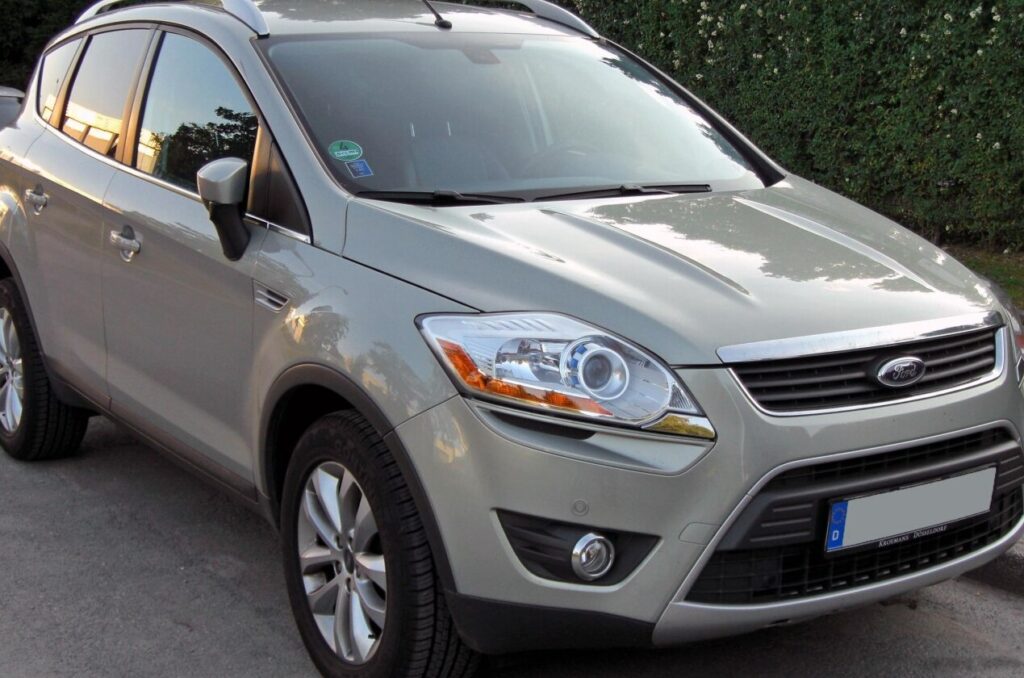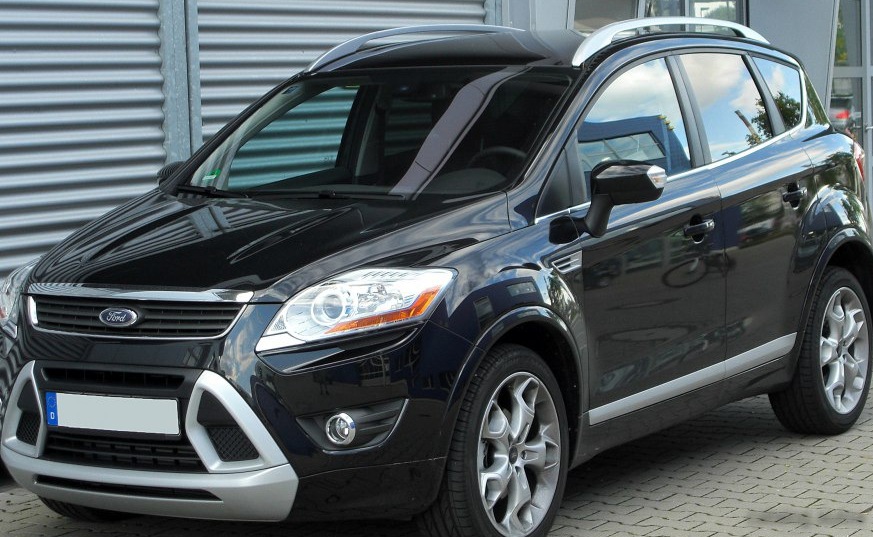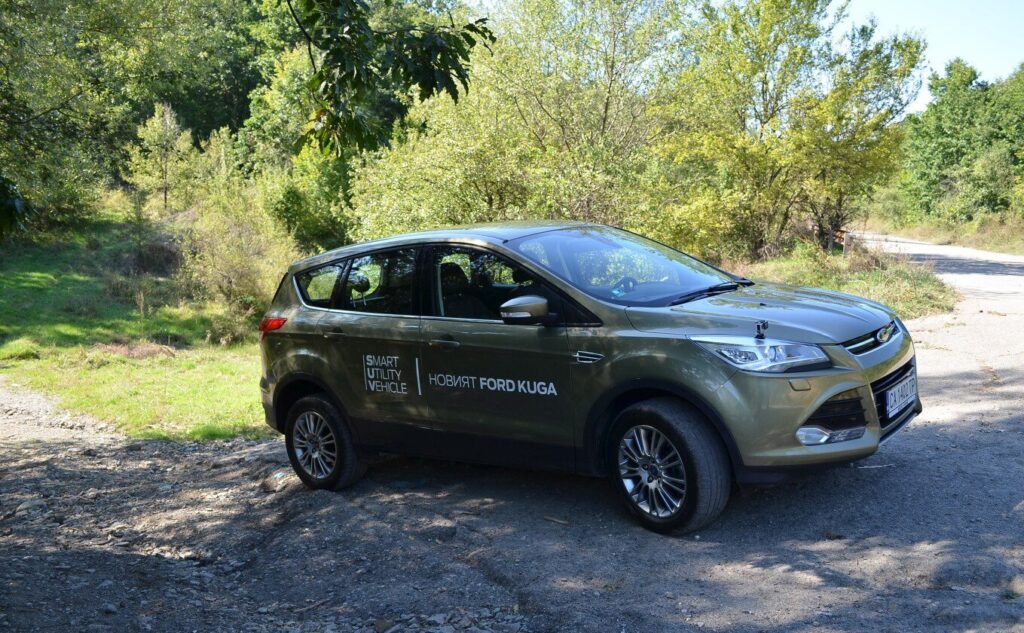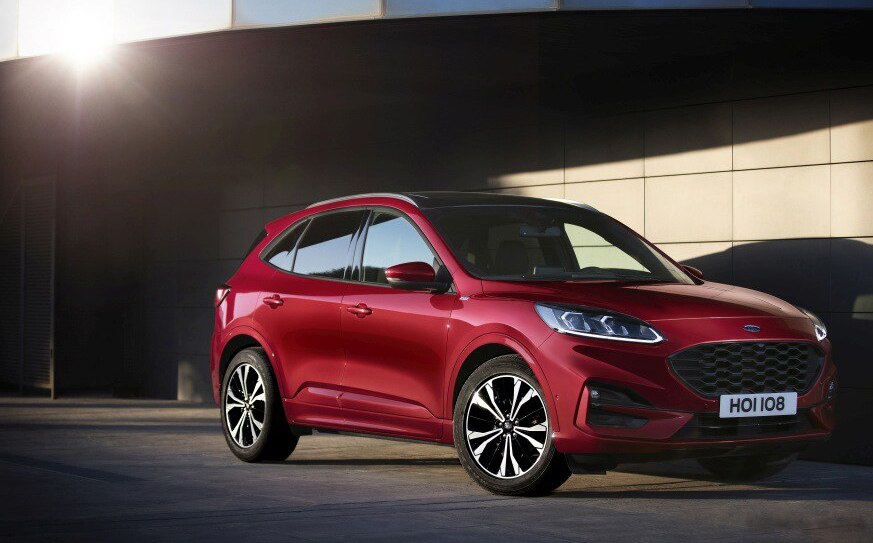
The Ford Kuga III 2.0 EcoBlue (150 hp) Mild Hybrid, produced from September 2020 to November 2021, represents a significant step in Ford’s European SUV strategy. Positioned as a mid-range offering within the Kuga III lineup, this variant aimed to balance fuel efficiency with acceptable performance for everyday driving. It leverages a 48-volt mild hybrid system to enhance the fuel economy of the proven 2.0-liter EcoBlue diesel engine. The Kuga III itself is built on the Ford C2 platform, shared with the Ford Focus, and was designed to appeal to families and individuals seeking a practical and technologically advanced SUV.
Technical Specifications
| Brand | Ford |
| Model | Kuga |
| Generation | Kuga III |
| Type (Engine) | 2.0 EcoBlue (150 Hp) Mild Hybrid |
| Start of production | September, 2020 |
| End of production | November, 2021 |
| Powertrain Architecture | MHEV (Mild Hybrid Electric Vehicle) |
| Body type | SUV |
| Seats | 5 |
| Doors | 5 |
| Combined fuel consumption (WLTP) | 5.0-5.1 l/100 km (47 – 46.1 US mpg, 56.5 – 55.4 UK mpg, 20 – 19.6 km/l) |
| CO2 emissions (WLTP) | 132-135 g/km |
| Fuel consumption (urban – NEDC) | 4.7 l/100 km (50 US mpg, 60.1 UK mpg, 21.3 km/l) |
| Fuel consumption (extra urban – NEDC) | 4.0-4.1 l/100 km (58.8 – 57.4 US mpg, 70.6 – 68.9 UK mpg, 25 – 24.4 km/l) |
| Fuel consumption (combined – NEDC) | 4.3-4.4 l/100 km (54.7 – 53.5 US mpg, 65.7 – 64.2 UK mpg, 23.3 – 22.7 km/l) |
| CO2 emissions (NEDC) | 111-113 g/km |
| Fuel Type | Diesel |
| Acceleration 0 – 100 km/h | 9.6 sec |
| Acceleration 0 – 62 mph | 9.6 sec |
| Acceleration 0 – 60 mph | 9.1 sec |
| Maximum speed | 194 km/h (120.55 mph) |
| Emission standard | Euro 6d-TEMP |
| Weight-to-power ratio | 10.7 kg/Hp, 93.5 Hp/tonne |
| Weight-to-torque ratio | 4.3 kg/Nm, 230.5 Nm/tonne |
| Power | 150 Hp @ 3500 rpm |
| Torque | 370 Nm @ 2000-2500 rpm (272.9 lb.-ft. @ 2000-2500 rpm) |
| Engine layout | Front, Transverse |
| Engine Model/Code | YLDC |
| Engine displacement | 1995 cm3 (121.74 cu. in.) |
| Number of cylinders | 4 |
| Engine configuration | Inline |
| Cylinder Bore | 84 mm (3.31 in.) |
| Piston Stroke | 90 mm (3.54 in.) |
| Compression ratio | 15.8:1 |
| Number of valves per cylinder | 4 |
| Fuel injection system | Diesel Commonrail |
| Engine aspiration | Turbocharger, Intercooler |
| Valvetrain | DOHC |
| Engine oil capacity | 6.37 l (6.73 US qt | 5.6 UK qt) |
| Kerb Weight | 1605 kg (3538.42 lbs.) |
| Max. weight | 2155 kg (4750.96 lbs.) |
| Max load | 550 kg (1212.54 lbs.) |
| Trunk (boot) space – minimum | 435 l (15.36 cu. ft.) |
| Trunk (boot) space – maximum | 1534 l (54.17 cu. ft.) |
| Fuel tank capacity | 54 l (14.27 US gal | 11.88 UK gal) |
| Max. roof load | 75 kg (165.35 lbs.) |
| Permitted trailer load with brakes (12%) | 1900 kg (4188.78 lbs.) |
| Permitted trailer load without brakes | 750 kg (1653.47 lbs.) |
| Permitted towbar download | 100 kg (220.46 lbs.) |
| Length | 4614-4629 mm (181.65 – 182.24 in.) |
| Width | 1883 mm (74.13 in.) |
| Width with mirrors folded | 2000 mm (78.74 in.) |
| Width including mirrors | 2178 mm (85.75 in.) |
| Height | 1666-1680 mm (65.59 – 66.14 in.) |
| Wheelbase | 2710 mm (106.69 in.) |
| Front track | 1597 mm (62.87 in.) |
| Rear track | 1588 mm (62.52 in.) |
| Ride height (ground clearance) | 146-191 mm (5.75 – 7.52 in.) |
| Minimum turning circle | 11.38 m (37.34 ft.) |
| Front brakes | Ventilated discs, 308-330 mm |
| Rear brakes | Disc, 302 mm |
| Tires size | 225/65 R17; 225/60 R18; 225/55 R19; 245/45 R20 |
| Wheel rims size | 7J x 17; 7.5J x 18; 7.5J x 19; 7.5J x 20; 8.0J x 20 |
| Number of gears | 6 |
| Type of gearbox | Manual transmission |
Powertrain & Engine Architecture
At the heart of the Kuga III 2.0 EcoBlue (150 hp) Mild Hybrid lies the YLDC engine, a 2.0-liter inline-four cylinder diesel. This engine is part of Ford’s EcoBlue family, known for its focus on efficiency and reduced emissions. The engine utilizes a common-rail direct fuel injection system, delivering fuel at extremely high pressure for optimized combustion. A turbocharger with an intercooler further enhances performance by forcing more air into the cylinders. The engine features a double overhead camshaft (DOHC) valvetrain with four valves per cylinder, contributing to improved breathing and power output. The mild hybrid system consists of a 48-volt belt-integrated starter generator (BiSG) and a small lithium-ion battery. The BiSG provides regenerative braking, capturing energy during deceleration and storing it in the battery. This stored energy can then be used to assist the engine during acceleration, reducing load and improving fuel economy. The 6-speed manual transmission was the standard offering for this variant, providing a balance between fuel efficiency and driver engagement.
Driving Characteristics
The 150 hp and 370 Nm (272.9 lb-ft) of torque delivered by the 2.0 EcoBlue engine, combined with the mild hybrid assistance, provides adequate performance for most driving situations. Acceleration from 0-60 mph takes approximately 9.1 seconds, and the top speed is 194 km/h (120.55 mph). While not a particularly sporty setup, the engine offers a usable amount of power for overtaking and highway cruising. The mild hybrid system is most noticeable during acceleration, where it provides a subtle boost. The 6-speed manual transmission allows for good control over the engine’s power band. Compared to higher-output versions of the 2.0 EcoBlue, this variant feels less eager to accelerate, but it offers significantly better fuel economy. The manual transmission also provides a more engaging driving experience than the optional automatic.
Equipment & Trim Levels
The Kuga III 2.0 EcoBlue (150 hp) Mild Hybrid typically came equipped with a respectable level of standard features. These included air conditioning, a touchscreen infotainment system with Apple CarPlay and Android Auto compatibility, Ford’s Co-Pilot360 suite of driver-assistance technologies (including lane-keeping assist, pre-collision assist with pedestrian and cyclist detection, and adaptive cruise control), and alloy wheels. Higher trim levels offered additional features such as heated seats, a panoramic sunroof, a premium sound system, and leather upholstery. Interior upholstery was typically cloth on the base models, with leather options available on higher trims. The dashboard layout was modern and functional, with a focus on ease of use.
Chassis & Braking
The Kuga III utilizes a MacPherson strut front suspension and a multi-link rear suspension, providing a comfortable and controlled ride. The suspension was tuned to prioritize comfort over outright handling prowess. Braking duties are handled by ventilated discs at the front and solid discs at the rear. Anti-lock braking system (ABS) and electronic stability control (ESC) are standard features. The Kuga III’s chassis is designed to provide a good balance between ride comfort and handling stability. Stabilizer bars are fitted to both the front and rear axles to reduce body roll during cornering.
Market Reception & Comparison
The Kuga III 2.0 EcoBlue (150 hp) Mild Hybrid was generally well-received by critics, who praised its fuel efficiency and comfortable ride. However, some reviewers noted that the engine could feel underpowered, especially when fully loaded. Compared to the more powerful 190 hp version of the 2.0 EcoBlue, this variant offered lower running costs but less performance. The 1.5 EcoBoost petrol engine was another alternative, offering a different driving experience with a focus on refinement. The mild hybrid system was seen as a positive step towards reducing emissions, but its impact on fuel economy was relatively modest.
Legacy
The Ford Kuga III 2.0 EcoBlue (150 hp) Mild Hybrid represents a transitional point in Ford’s powertrain strategy, bridging the gap between traditional diesel engines and more advanced hybrid technologies. The 2.0 EcoBlue engine itself has proven to be relatively reliable, although regular maintenance is essential. The mild hybrid system has also demonstrated good durability. In the used car market, this variant offers a good value proposition for buyers seeking a practical and fuel-efficient SUV. Its combination of reasonable performance, good fuel economy, and a comfortable ride makes it a compelling choice for families and individuals alike.