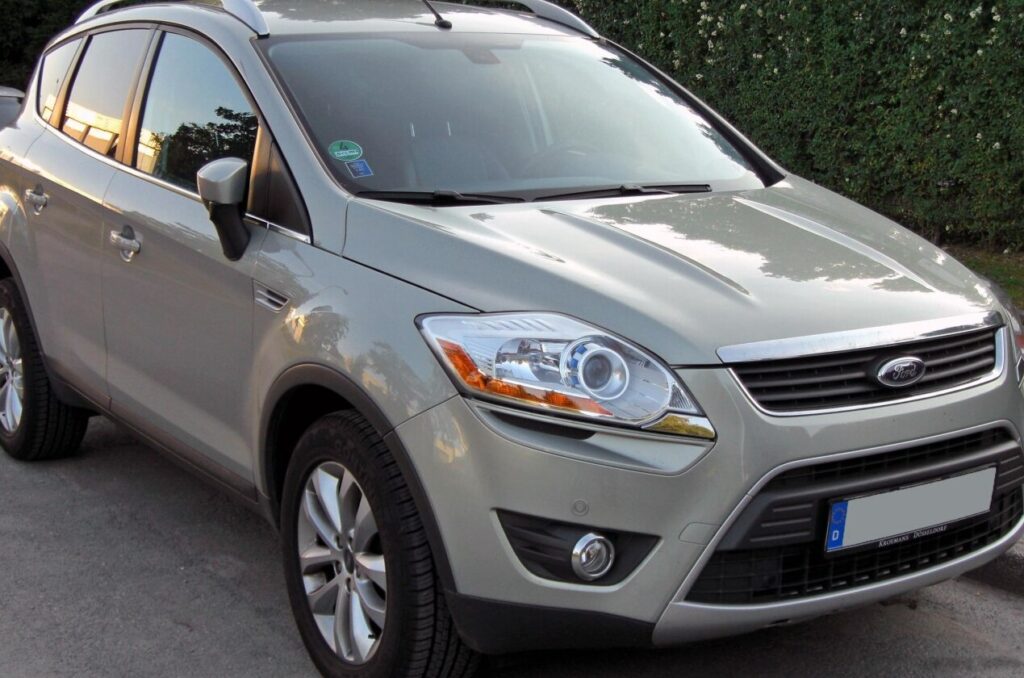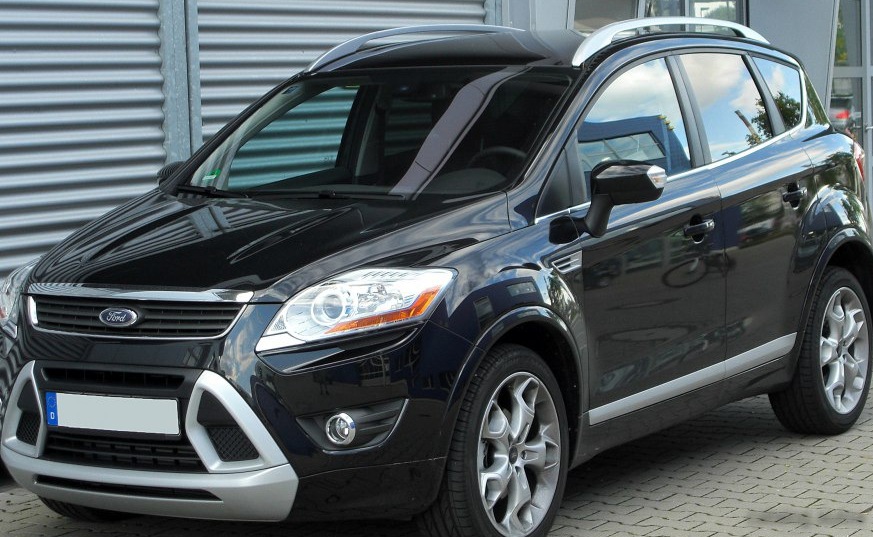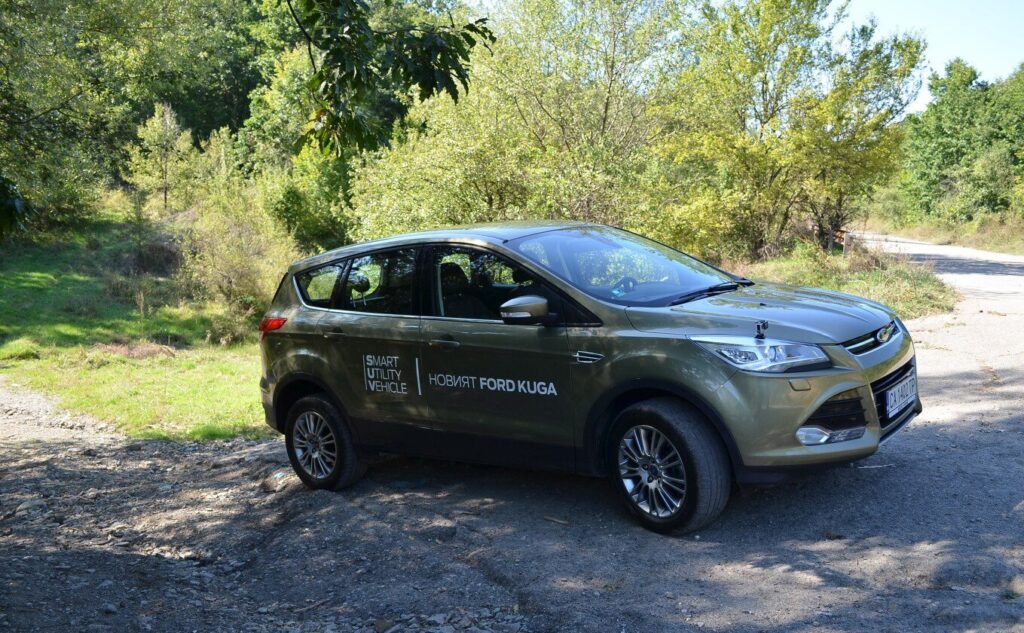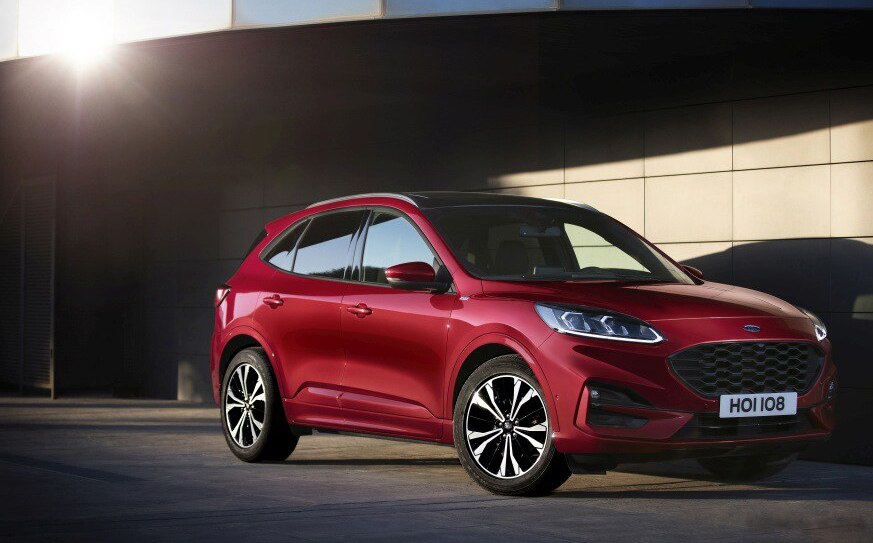
The Ford Kuga III 2.5 Duratec (190 Hp) FHEV i-AWD CVT is a compact SUV produced by Ford from September 2020 to January 2024. This variant represents a significant step in Ford’s electrification strategy, offering a full hybrid electric vehicle (FHEV) powertrain combined with intelligent all-wheel drive (i-AWD). Positioned as a mid-range to upper-mid-range offering within the Kuga III lineup, it aimed to provide a balance of fuel efficiency, performance, and all-weather capability. The Kuga III, launched in 2019, is based on the Ford C2 platform, shared with the Ford Focus, and represents the third generation of Ford’s popular crossover SUV.
Technical Specifications
| Brand | Ford |
| Model | Kuga |
| Generation | Kuga III |
| Type (Engine) | 2.5 Duratec (190 Hp) FHEV i-AWD CVT |
| Start of production | September, 2020 |
| End of production | January, 2024 |
| Powertrain Architecture | FHEV (Full Hybrid Electric Vehicle) |
| Body type | SUV |
| Seats | 5 |
| Doors | 5 |
| Combined fuel consumption (WLTP) | 5.8 l/100 km (40.6 US mpg, 48.7 UK mpg, 17.2 km/l) |
| CO2 emissions (WLTP) | 132 g/km |
| Fuel consumption (economy) – urban (NEDC) | 6.4-6.6 l/100 km (36.8 – 35.6 US mpg, 44.1 – 42.8 UK mpg, 15.6 – 15.2 km/l) |
| Fuel consumption (economy) – extra urban (NEDC) | 4.6-4.8 l/100 km (51.1 – 49 US mpg, 61.4 – 58.9 UK mpg, 21.7 – 20.8 km/l) |
| Fuel consumption (economy) – combined (NEDC) | 5.3-5.4 l/100 km (44.4 – 43.6 US mpg, 53.3 – 52.3 UK mpg, 18.9 – 18.5 km/l) |
| CO2 emissions (NEDC) | 120-125 g/km |
| Fuel Type | Petrol (Gasoline) |
| Acceleration 0 – 100 km/h | 9.5 sec |
| Acceleration 0 – 62 mph | 9.5 sec |
| Acceleration 0 – 60 mph | 9 sec |
| Maximum speed | 196 km/h (121.79 mph) |
| Emission standard | Euro 6d-ISC-FCM |
| Weight-to-power ratio | 8.9 kg/Hp, 111.9 Hp/tonne |
| Weight-to-torque ratio | 8.5 kg/Nm, 117.8 Nm/tonne |
| Gross battery capacity | 1.4 kWh |
| Battery technology | Lithium-ion (Li-Ion) |
| Electric motor power | 125 Hp |
| System power | 190 Hp @ 5500 rpm |
| Internal combustion engine power | 152 Hp |
| Power per litre | 61.1 Hp/l |
| Torque | 200 Nm (147.51 lb.-ft.) |
| Engine layout | Front, Transverse |
| Engine Model/Code | BGDA |
| Engine displacement | 2488 cm3 (151.83 cu. in.) |
| Number of cylinders | 4 |
| Engine configuration | Inline |
| Cylinder Bore | 89 mm (3.5 in.) |
| Piston Stroke | 100 mm (3.94 in.) |
| Number of valves per cylinder | 4 |
| Valvetrain | DOHC |
| Engine oil capacity | 5.4 l (5.71 US qt | 4.75 UK qt) |
| Kerb Weight | 1698 kg (3743.45 lbs.) |
| Max. weight | 2280 kg (5026.54 lbs.) |
| Max load | 582 kg (1283.09 lbs.) |
| Trunk (boot) space – minimum | 405 l (14.3 cu. ft.) |
| Trunk (boot) space – maximum | 1481 l (52.3 cu. ft.) |
| Fuel tank capacity | 45 l (11.89 US gal | 9.9 UK gal) |
| Max. roof load | 75 kg (165.35 lbs.) |
| Permitted trailer load with brakes (12%) | 1800 kg (3968.32 lbs.) |
| Permitted trailer load without brakes | 750 kg (1653.47 lbs.) |
| Permitted towbar download | 100 kg (220.46 lbs.) |
| Length | 4614 mm (181.65 in.) |
| Width | 1883 mm (74.13 in.) |
| Width including mirrors | 2178 mm (85.75 in.) |
| Height | 1658 mm (65.28 in.) |
| Wheelbase | 2710 mm (106.69 in.) |
| Front overhang | 966 mm (38.03 in.) |
| Rear overhang | 938 mm (36.93 in.) |
| Ride height (ground clearance) | 160 mm (6.3 in.) |
| Minimum turning circle (turning diameter) | 11.4 m (37.4 ft.) |
| Drivetrain Architecture | The Internal combustion engine (ICE) and the electric motor permanently drive the front wheels of the vehicle, capable of running in full electric or mixed mode, and if necessary through the electrically or mechanically controlled clutch, the rear wheels are driven. |
| Drive wheel | All wheel drive (4×4) |
| Number of gears and type of gearbox | automatic transmission CVT |
| Front suspension | Independent type McPherson, Transverse stabilizer |
| Rear suspension | Double wishbone, Transverse stabilizer |
| Front brakes | Ventilated discs |
| Rear brakes | Disc |
Powertrain & Engine Architecture
The Kuga III 2.5 Duratec FHEV utilizes a 2.5-liter naturally aspirated inline-four cylinder gasoline engine (BGDA engine code) paired with an electric motor and a continuously variable transmission (CVT). The gasoline engine produces 152 horsepower, while the electric motor contributes an additional 125 horsepower, resulting in a combined system output of 190 horsepower at 5500 rpm. The engine features direct fuel injection and a dual overhead camshaft (DOHC) valvetrain. The CVT, while offering smooth acceleration, is a key component in optimizing fuel efficiency by keeping the engine operating within its most efficient range. The hybrid system incorporates a small 1.4 kWh lithium-ion battery pack, allowing for limited all-electric driving range, primarily used for low-speed maneuvers and assisting the gasoline engine during acceleration. The i-AWD system uses an electrically driven rear axle, engaging as needed to provide additional traction.
Driving Characteristics
The 190 hp FHEV i-AWD Kuga offers a comfortable and refined driving experience. The CVT transmission provides seamless acceleration, although it lacks the responsiveness of a traditional automatic or dual-clutch transmission. Acceleration from 0-60 mph takes approximately 9 seconds, which is adequate for everyday driving but not particularly sporty. The electric motor provides instant torque, enhancing low-speed responsiveness. The i-AWD system delivers confident handling in various weather conditions. Compared to the 1.5L EcoBoost versions, the FHEV offers superior fuel economy, but slightly less outright performance. Compared to diesel variants, the FHEV provides a quieter and smoother driving experience, albeit with potentially higher running costs depending on fuel prices.
Equipment & Trim Levels
The 2.5 Duratec FHEV i-AWD CVT trim typically came standard with features such as Ford’s SYNC 3 infotainment system with an 8-inch touchscreen, Apple CarPlay and Android Auto compatibility, automatic climate control, keyless entry, and a suite of driver-assistance technologies including lane-keeping assist, adaptive cruise control, and automatic emergency braking. Interior upholstery was typically cloth or a combination of cloth and leatherette. Optional extras included a panoramic sunroof, upgraded sound system, and heated front seats. Higher trim levels offered more luxurious interior appointments and additional features.
Chassis & Braking
The Kuga III utilizes an independent McPherson strut suspension at the front and a multi-link double wishbone suspension at the rear, providing a comfortable ride and good handling characteristics. Stabilizer bars are fitted to both axles to reduce body roll. The braking system consists of ventilated discs at the front and solid discs at the rear. Anti-lock braking system (ABS) and electronic stability control (ESC) are standard features. The Kuga’s chassis is tuned to balance comfort and handling, making it suitable for both urban driving and longer journeys.
Market Reception & Comparison
The Ford Kuga III 2.5 Duratec FHEV i-AWD CVT was generally well-received by critics for its fuel efficiency, comfortable ride, and all-weather capability. However, some reviewers noted the CVT transmission’s lack of responsiveness and the relatively high price compared to non-hybrid Kuga models. Fuel economy figures of around 40.6 US mpg (WLTP combined) were competitive within the compact SUV segment. Reliability reports have been generally positive, with the hybrid powertrain proving to be relatively robust. Compared to the diesel-powered Kugas, the FHEV offered a quieter and more refined driving experience, but potentially higher fuel costs depending on driving patterns and fuel prices.
Legacy
The Ford Kuga III 2.5 Duratec FHEV i-AWD CVT represents an important step in Ford’s transition towards electrification. The powertrain has proven to be relatively reliable, and the Kuga III remains a popular choice in the used car market. The combination of a gasoline engine, electric motor, and intelligent all-wheel drive provides a versatile and efficient package for drivers seeking a practical and capable compact SUV. As hybrid technology continues to evolve, the Kuga III FHEV serves as a solid foundation for Ford’s future electrified offerings.