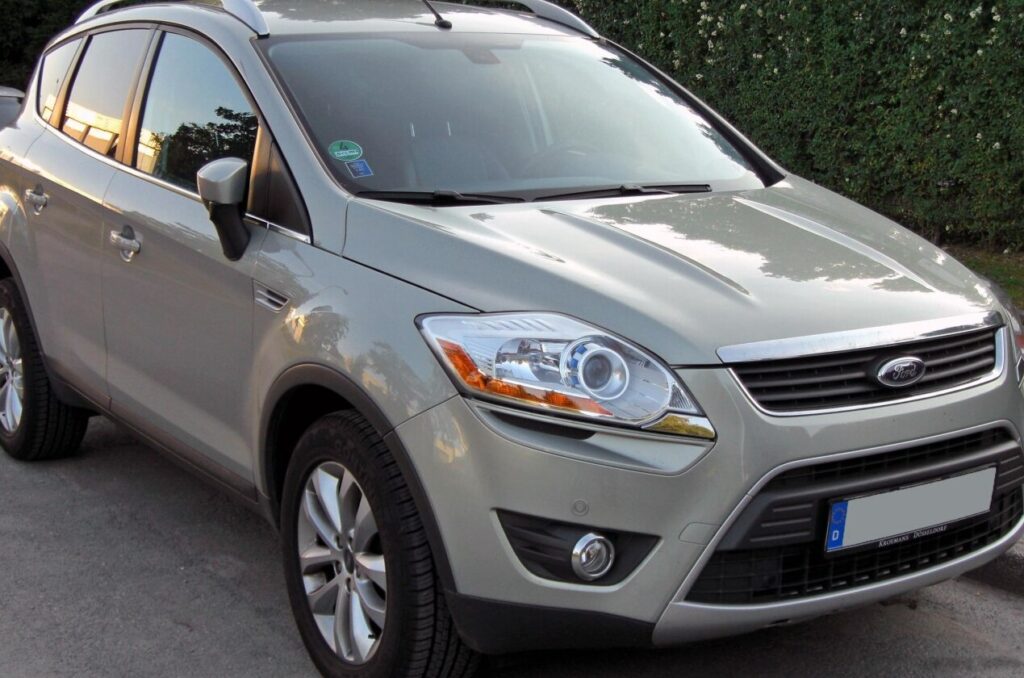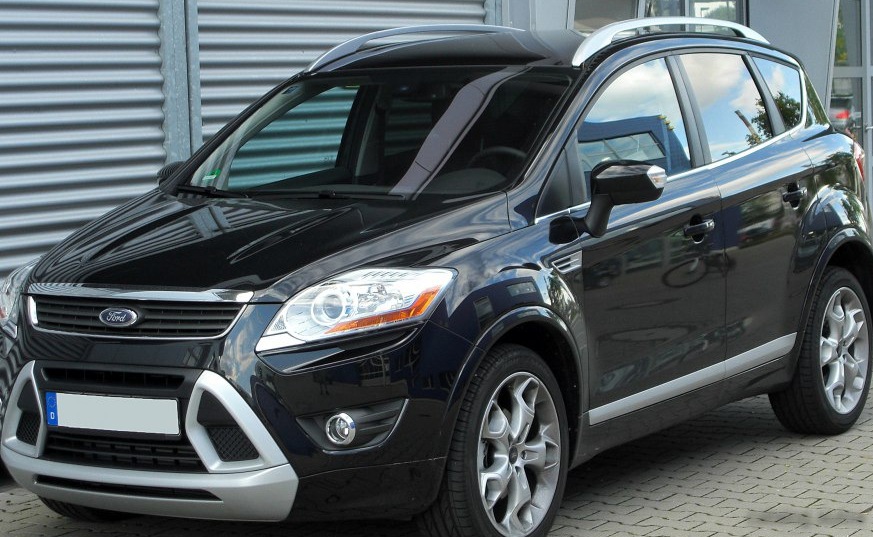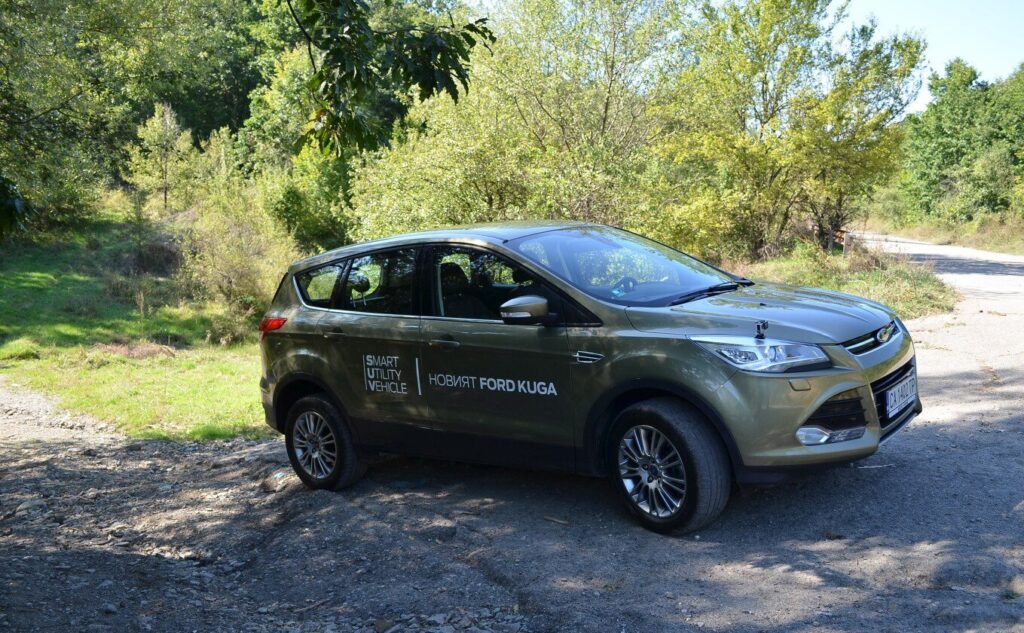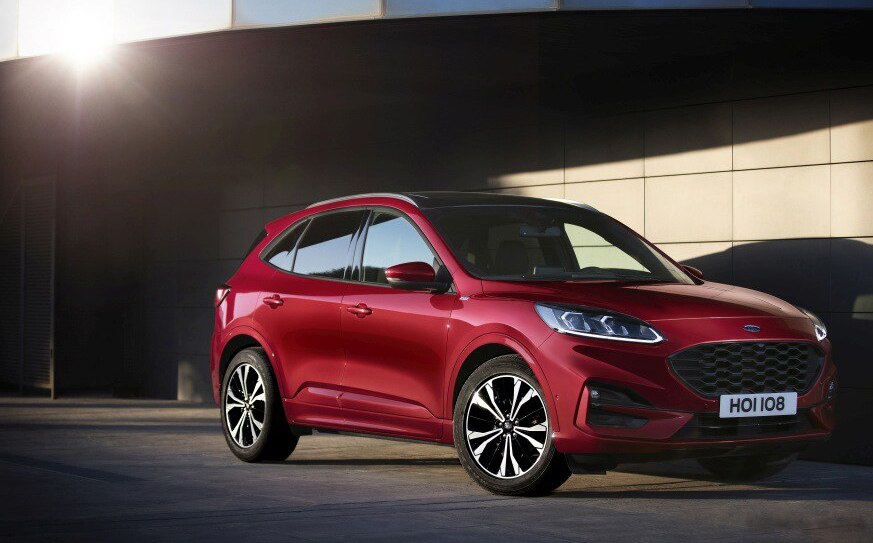
The Ford Kuga III 2.5 Duratec (225 Hp) Plug-in Hybrid eCVT, introduced in September 2019 and produced through January 2024, represents Ford’s entry into the increasingly competitive plug-in hybrid SUV segment. Positioned as a premium offering within the Kuga III range (which itself is based on the Ford C2 platform, shared with the Ford Focus), this variant aimed to provide a balance of fuel efficiency, electric driving range, and respectable performance. It was primarily marketed in Europe, where demand for PHEV vehicles was growing, offering a compelling alternative to traditional gasoline and diesel SUVs. The Kuga III, in general, aimed to elevate Ford’s presence in the compact SUV market with a more refined and technologically advanced package.
Technical Specifications
| Brand | Ford |
| Model | Kuga |
| Generation | Kuga III |
| Type (Engine) | 2.5 Duratec (225 Hp) Plug-in Hybrid eCVT |
| Start of production | September, 2019 |
| End of production | January, 2024 |
| Powertrain Architecture | PHEV (Plug-in Hybrid Electric Vehicle) |
| Body type | SUV |
| Seats | 5 |
| Doors | 5 |
| Combined fuel consumption (WLTP) | 1.4 l/100 km (168 US mpg, 201.8 UK mpg, 71.4 km/l) |
| CO2 emissions (WLTP) | 32 g/km |
| Fuel consumption (NEDC) – combined | 1.2 l/100 km (196 US mpg, 235.4 UK mpg, 83.3 km/l) |
| CO2 emissions (NEDC) | 26 g/km |
| Fuel Type | Petrol / electricity |
| Acceleration 0 – 100 km/h | 9.2 sec |
| Acceleration 0 – 62 mph | 9.2 sec |
| Acceleration 0 – 60 mph | 8.7 sec |
| Maximum speed | 200 km/h (124.27 mph) |
| Emission standard | Euro 6d-TEMP |
| Weight-to-power ratio | 7.9 kg/Hp, 127.2 Hp/tonne |
| Weight-to-torque ratio | 8.8 kg/Nm, 113.1 Nm/tonne |
| Gross battery capacity | 14.4 kWh |
| Battery technology | Lithium-ion (Li-Ion) |
| Battery location | Below the floor |
| All-electric range (WLTP) | 56 km (34.8 mi) |
| All-electric range (NEDC) | 72 km (44.74 mi) |
| Average Energy consumption (WLTP) | 14.8-15.6 kWh/100 km (23.82 – 25.11 kWh/100 mi, 141 – 134 MPGe, 6.8 – 6.4 km/kWh, 4.2 – 4 mi/kWh) |
| Average Energy consumption (NEDC) | 18.7 kWh/100 km (30.09 kWh/100 mi, 112 MPGe, 5.3 km/kWh, 3.3 mi/kWh) |
| Max speed (electric) | 135 km/h (83.89 mph) |
| Power | 225 Hp |
| Torque | 200 Nm (147.51 lb.-ft.) |
| Engine layout | Front, Transverse |
| Engine Model/Code | BGDA |
| Engine displacement | 2488 cm3 (151.83 cu. in.) |
| Number of cylinders | 4 |
| Engine configuration | Inline |
| Cylinder Bore | 89 mm (3.5 in.) |
| Piston Stroke | 100 mm (3.94 in.) |
| Compression ratio | 13:1 |
| Number of valves per cylinder | 4 |
| Fuel injection system | Multi-port manifold injection |
| Engine aspiration | Naturally aspirated engine |
| Valvetrain | DOHC |
| Engine oil capacity | 5.4 l (5.71 US qt | 4.75 UK qt) |
| Kerb Weight | 1769 kg (3899.98 lbs.) |
| Max. weight | 2320 kg (5114.72 lbs.) |
| Max load | 551 kg (1214.75 lbs.) |
| Trunk (boot) space – minimum | 411 l (14.51 cu. ft.) |
| Trunk (boot) space – maximum | 1481 l (52.3 cu. ft.) |
| Fuel tank capacity | 42.7 l (11.28 US gal | 9.39 UK gal) |
| Max. roof load | 75 kg (165.35 lbs.) |
| Permitted trailer load with brakes (12%) | 1200 kg (2645.55 lbs.) |
| Permitted trailer load without brakes | 750 kg (1653.47 lbs.) |
| Permitted towbar download | 100 kg (220.46 lbs.) |
| Length | 4614 mm (181.65 in.) |
| Width | 1883 mm (74.13 in.) |
| Width with mirrors folded | 2000 mm (78.74 in.) |
| Width including mirrors | 2178 mm (85.75 in.) |
| Height | 1675 mm (65.94 in.) |
| Wheelbase | 2710 mm (106.69 in.) |
| Front track | 1597 mm (62.87 in.) |
| Rear (Back) track | 1588 mm (62.52 in.) |
| Ride height (ground clearance) | 139-160 mm (5.47 – 6.3 in.) |
| Minimum turning circle (turning diameter) | 11.38 m (37.34 ft.) |
| Front brakes | Ventilated discs, 308-330 mm |
| Rear brakes | Disc, 302 mm |
| Drive wheel | Front wheel drive |
| Number of gears and type of gearbox | automatic transmission eCVT |
| Tires size | 225/60 R18; 225/55 R19; 245/45 R20 |
| Wheel rims size | 7.5J x 18; 7.5J x 19; 7.5J x 20; 8.0J x 20 |
INTRODUCTION
The Ford Kuga III 2.5 Duratec (225 Hp) Plug-in Hybrid eCVT, launched in 2019, marked a significant step for Ford in offering electrified options within its popular SUV lineup. This model combined a 2.5-liter four-cylinder gasoline engine with an electric motor and a 14.4 kWh battery pack, allowing for a substantial all-electric range of up to 56 km (34.8 miles) under WLTP testing. The Kuga III, representing the third generation of Ford’s compact SUV, aimed to provide a more sophisticated and technologically advanced experience compared to its predecessors. The plug-in hybrid variant specifically targeted environmentally conscious buyers seeking reduced emissions and lower running costs, while still retaining the practicality and versatility of an SUV.
Powertrain & Engine Architecture
At the heart of the Kuga III PHEV lies the BGDA 2.5-liter Duratec inline-four cylinder engine. This naturally aspirated engine produces 152 horsepower and 200 Nm (147.51 lb.-ft.) of torque. It utilizes multi-port fuel injection and a double overhead camshaft (DOHC) valvetrain. The engine is paired with a 131 horsepower electric motor integrated into the eCVT (electronically controlled continuously variable transmission). The eCVT isn’t a traditional CVT; it’s a power-split device that seamlessly blends the power from the gasoline engine and electric motor. The 14.4 kWh lithium-ion battery pack is located under the floor of the vehicle, minimizing impact on passenger and cargo space. The system intelligently manages the power flow between the engine, motor, and battery, allowing for various driving modes including EV Only, Auto, and Sport. The engine’s 13:1 compression ratio contributes to its efficiency, while the Start & Stop system further reduces fuel consumption in city driving.
Driving Characteristics
The Kuga III 2.5 Duratec PHEV offers a refined and comfortable driving experience. In EV-only mode, the vehicle provides near-silent operation and brisk acceleration for urban commutes. The combined system output of 225 horsepower delivers a 0-60 mph time of around 8.7 seconds, which is competitive within the segment. The eCVT provides smooth and seamless acceleration, although it lacks the direct feel of a traditional automatic transmission. In Auto mode, the system automatically switches between electric and gasoline power based on driving conditions and battery charge level. The Sport mode prioritizes performance, utilizing both the engine and motor for maximum power output. Compared to the non-hybrid Kuga models, the PHEV variant feels slightly heavier due to the battery pack, but the instant torque from the electric motor compensates for this, providing responsive acceleration. The steering is light and precise, making it easy to maneuver in city traffic.
Equipment & Trim Levels
The Kuga III 2.5 Duratec PHEV was typically offered in higher trim levels, reflecting its premium positioning. Standard features generally included an 8-inch touchscreen infotainment system with Apple CarPlay and Android Auto compatibility, a digital instrument cluster, automatic climate control, and a suite of advanced driver-assistance systems (ADAS) such as lane-keeping assist, adaptive cruise control, and automatic emergency braking. Interior upholstery was typically cloth or leather, depending on the specific trim package. Optional extras included a larger touchscreen display, a premium sound system, a panoramic sunroof, and heated seats. The overall interior design was modern and well-appointed, with a focus on comfort and practicality.
Chassis & Braking
The Kuga III utilizes a front-wheel-drive platform, although all-wheel drive was available as an option on some trims. The suspension consists of MacPherson struts at the front and a multi-link setup at the rear, providing a comfortable ride and good handling characteristics. Braking duties are handled by ventilated discs at the front and solid discs at the rear. The electronic stability control (ESC) system and anti-lock braking system (ABS) are standard features, enhancing safety and control. The Kuga III’s chassis was tuned to balance ride comfort with responsive handling, making it suitable for both city driving and longer journeys.
Market Reception & Comparison
The Ford Kuga III 2.5 Duratec PHEV received generally positive reviews from automotive critics. It was praised for its fuel efficiency, electric driving range, and comfortable ride. However, some reviewers noted that the eCVT transmission could feel somewhat detached, and the overall price was higher than that of comparable non-hybrid Kuga models. Compared to other PHEV SUVs in the same segment, such as the Mitsubishi Outlander PHEV and the Toyota RAV4 Prime, the Kuga offered a competitive combination of features and performance. Its fuel economy and emissions were comparable to those of its rivals, and its all-electric range was sufficient for many daily commutes. Reliability reports have been generally positive, although some owners have reported minor issues with the infotainment system.
Legacy
The Ford Kuga III 2.5 Duratec PHEV played a key role in Ford’s electrification strategy, demonstrating the company’s commitment to offering sustainable transportation options. While production ended in January 2024, the Kuga PHEV remains a popular choice in the used car market, offering a compelling value proposition for buyers seeking a fuel-efficient and environmentally friendly SUV. The powertrain, while not without its quirks, has proven to be relatively reliable, and the availability of spare parts is generally good. The Kuga III PHEV helped to pave the way for Ford’s future electric vehicle offerings, and its legacy will continue to be felt as the automotive industry transitions towards a more sustainable future.