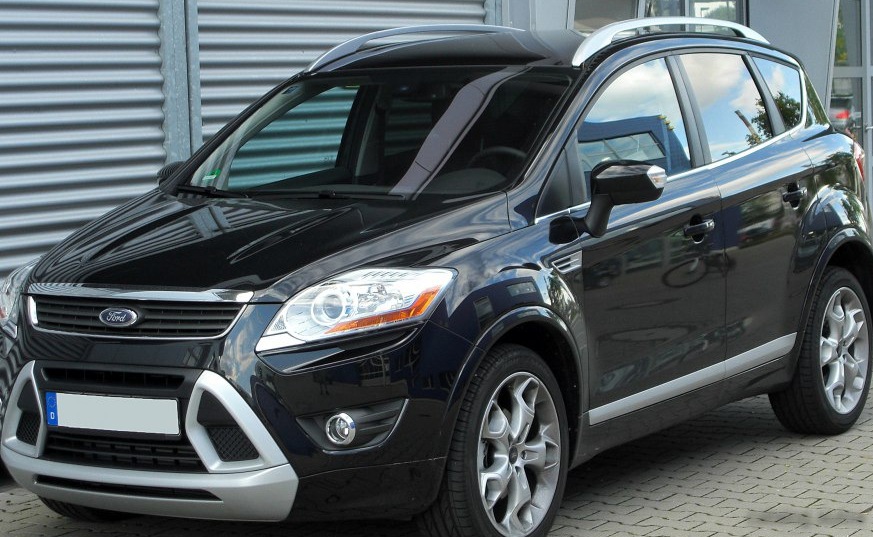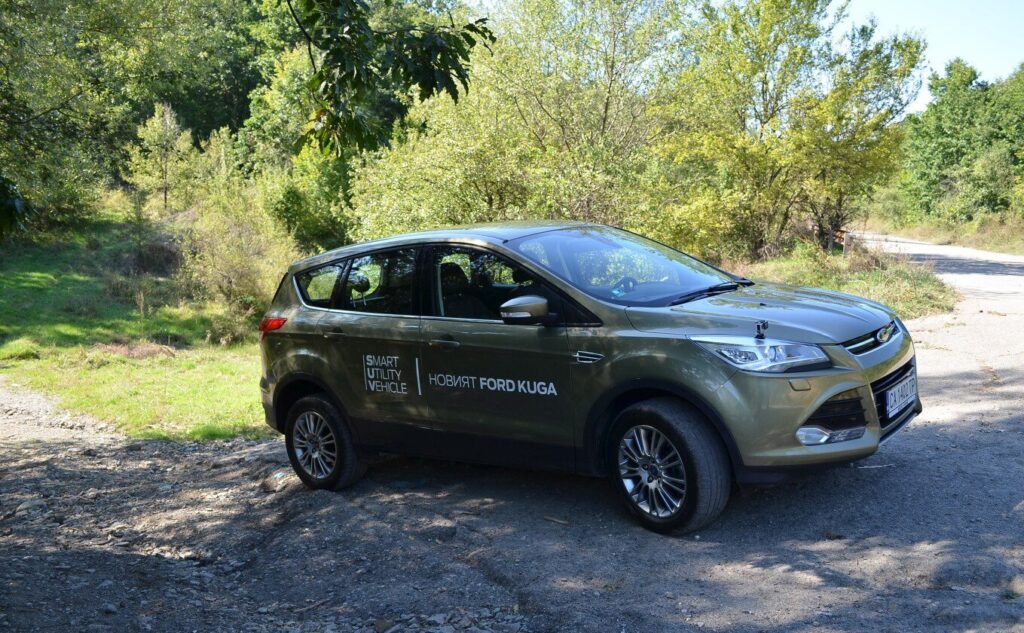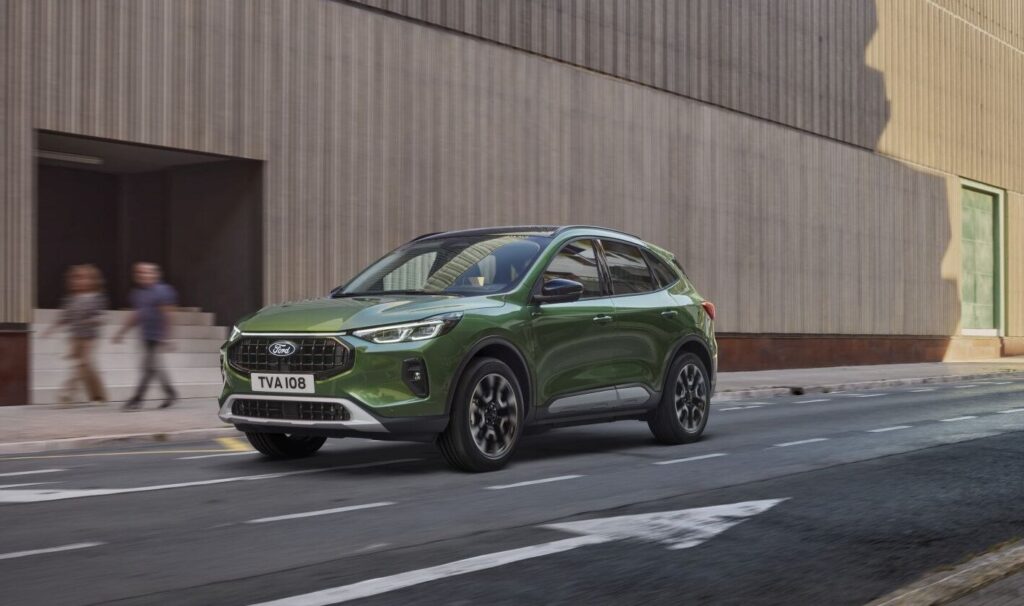
The Ford Kuga III Active 2.5 (183 Hp) Full Hybrid AWD CVT, introduced in January 2024 as part of the Kuga’s mid-life facelift, represents a significant offering in Ford’s European and increasingly North American SUV lineup. Positioned as a mid-range to upper-mid-range trim, this variant combines a 2.5-liter four-cylinder gasoline engine with a full hybrid electric vehicle (FHEV) system and a continuously variable transmission (CVT), coupled with all-wheel drive. It builds upon the success of the Kuga III, which debuted on the C2PF platform (shared with the Ford Escape in North America), aiming to deliver improved fuel efficiency and reduced emissions while maintaining a practical and versatile vehicle.
Technical Specifications
| Brand | Ford |
| Model | Kuga |
| Generation | Kuga III (facelift 2024) |
| Type (Engine) | Active 2.5 (183 Hp) Full Hybrid AWD CVT |
| Start of production | January, 2024 |
| Powertrain Architecture | FHEV (Full Hybrid Electric Vehicle) |
| Body type | SUV |
| Seats | 5 |
| Doors | 5 |
| Combined fuel consumption (WLTP) | 5.7-6.4 l/100 km (41.3 – 36.8 US mpg, 49.6 – 44.1 UK mpg, 17.5 – 15.6 km/l) |
| CO2 emissions (WLTP) | 130-146 g/km |
| Fuel Type | Petrol (Gasoline) |
| Acceleration 0 – 100 km/h | 8.3 sec |
| Acceleration 0 – 62 mph | 8.3 sec |
| Acceleration 0 – 60 mph | 7.9 sec |
| Maximum speed | 196 km/h (121.79 mph) |
| Emission standard | Euro 6d |
| Gross battery capacity | 1.1 kWh |
| Battery technology | Lithium-ion (Li-Ion) |
| System power | 183 Hp @ 5500 rpm |
| Engine layout | Front, Transverse |
| Engine Model/Code | BGDA |
| Engine displacement | 2488 cm3 (151.83 cu. in.) |
| Number of cylinders | 4 |
| Engine configuration | Inline |
| Cylinder Bore | 89 mm (3.5 in.) |
| Piston Stroke | 100 mm (3.94 in.) |
| Compression ratio | 13:1 |
| Number of valves per cylinder | 4 |
| Fuel injection system | Multi-port manifold injection |
| Engine aspiration | Naturally aspirated engine |
| Valvetrain | DOHC, VCT |
| Engine oil capacity | 5.4 l (5.71 US qt | 4.75 UK qt) |
| Trunk (boot) space – minimum | 412 l (14.55 cu. ft.) |
| Trunk (boot) space – maximum | 1534 l (54.17 cu. ft.) |
| Fuel tank capacity | 54 l (14.27 US gal | 11.88 UK gal) |
| Max. roof load | 75 kg (165.35 lbs.) |
| Permitted trailer load with brakes (12%) | 2100 kg (4629.71 lbs.) |
| Permitted trailer load without brakes | 750 kg (1653.47 lbs.) |
| Length | 4645 mm (182.87 in.) |
| Width | 1882 mm (74.09 in.) |
| Width with mirrors folded | 2000 mm (78.74 in.) |
| Width including mirrors | 2177 mm (85.71 in.) |
| Height | 1683 mm (66.26 in.) |
| Wheelbase | 2711 mm (106.73 in.) |
| Front track | 1599 mm (62.95 in.) |
| Rear (Back) track | 1590 mm (62.6 in.) |
| Ride height (ground clearance) | 168-191 mm (6.61 – 7.52 in.) |
| Minimum turning circle (turning diameter) | 11.38 m (37.34 ft.) |
| Front brakes | Ventilated discs, 308×27 mm |
| Rear brakes | Disc, 302×11 mm |
| Drive wheel | All wheel drive (4×4) |
| Number of gears and type of gearbox | automatic transmission CVT |
INTRODUCTION
The Ford Kuga Active 2.5 Full Hybrid AWD CVT is a five-door compact SUV that debuted in January 2024 as part of the Kuga III facelift. It’s designed to appeal to buyers seeking a balance between fuel efficiency, practicality, and all-weather capability. The Kuga, known as the Escape in North America, has been a key model for Ford in Europe since its introduction in 2008, and the third generation (introduced in 2019) has continued this trend. The 2024 facelift brought updated styling, enhanced technology, and this new hybrid powertrain option. This particular configuration aims to bridge the gap between the more affordable EcoBoost gasoline models and the plug-in hybrid variants, offering a compelling alternative for those not ready to fully commit to electric driving.
Powertrain & Engine Architecture
At the heart of the Kuga Active 2.5 is the BGDA engine, a 2.5-liter inline-four cylinder naturally aspirated gasoline engine. This engine is part of Ford’s Intelligent Hybrid technology, working in conjunction with an electric motor and a 1.1 kWh lithium-ion battery pack. The engine utilizes multi-port fuel injection and a double overhead camshaft (DOHC) valvetrain with variable camshaft timing (VCT) to optimize performance and efficiency. The electric motor provides supplemental power and allows for short periods of all-electric driving, particularly at lower speeds. The continuously variable transmission (CVT) is crucial to the system, allowing the engine to operate at its most efficient RPM regardless of vehicle speed. Unlike some CVTs, Ford has tuned this unit to mimic traditional gear shifts to a degree, reducing the “rubber band” feel often associated with this type of transmission. The powertrain is designed to seamlessly switch between gasoline, electric, and combined power modes, maximizing fuel economy.
Driving Characteristics
The 183 horsepower output of the combined hybrid system provides adequate performance for everyday driving. Acceleration from 0-60 mph takes approximately 7.9 seconds, which is competitive within the compact SUV segment. The CVT, while efficient, doesn’t offer the sporty feel of a traditional automatic transmission or a manual gearbox. Power delivery is smooth and linear, prioritizing fuel economy over outright acceleration. The all-wheel-drive system provides enhanced traction in slippery conditions, making it a suitable choice for regions with inclement weather. Compared to the lower-powered 1.5L EcoBoost Kuga models, the 2.5 Hybrid offers noticeably more responsive acceleration, especially when overtaking. However, it doesn’t match the punch of the more powerful plug-in hybrid variants. The CVT is programmed to hold simulated gears during acceleration, providing a more engaging driving experience than some other CVTs.
Equipment & Trim Levels
The Kuga Active 2.5 Full Hybrid AWD CVT typically comes well-equipped as a mid-range offering. Standard features generally include Ford’s SYNC 4 infotainment system with a 13.2-inch touchscreen, wireless Apple CarPlay and Android Auto compatibility, a digital instrument cluster, and a suite of advanced driver-assistance systems (ADAS) such as adaptive cruise control, lane-keeping assist, and automatic emergency braking. Interior upholstery is typically cloth, with options for leather upgrades. Available options include a panoramic sunroof, premium audio system, and heated/ventilated front seats. The “Active” trim level often includes unique exterior styling elements, such as rugged body cladding and distinctive alloy wheel designs.
Chassis & Braking
The Kuga III utilizes an independent McPherson strut suspension at the front and a multi-link suspension at the rear, providing a comfortable ride and decent handling characteristics. The suspension is tuned to prioritize comfort over sporty handling. Braking duties are handled by ventilated discs at the front and solid discs at the rear. The anti-lock braking system (ABS) and electronic stability control (ESC) are standard features. The all-wheel-drive system automatically distributes torque between the front and rear wheels as needed, enhancing traction and stability. The Kuga’s chassis is designed to provide a balance between ride comfort and handling precision.
Market Reception & Comparison
The Kuga Active 2.5 Full Hybrid AWD CVT has been generally well-received by automotive critics. Reviewers have praised its fuel efficiency, comfortable ride, and spacious interior. The CVT has received mixed reviews, with some finding it smooth and efficient, while others criticize its lack of engagement. Compared to the 1.5L EcoBoost Kuga, the hybrid offers superior fuel economy and more responsive acceleration. Compared to the plug-in hybrid variant, it offers a lower purchase price but less electric-only range. Reliability reports are still emerging for this specific powertrain combination, but the Kuga III has generally proven to be a reliable vehicle.
Legacy
The Ford Kuga III Active 2.5 Full Hybrid AWD CVT represents Ford’s commitment to offering a diverse range of powertrain options to meet the evolving needs of its customers. The combination of a naturally aspirated engine, electric motor, and CVT provides a compelling blend of fuel efficiency, practicality, and affordability. As the automotive industry continues to transition towards electrification, this hybrid variant is likely to remain a popular choice for buyers who are not yet ready to fully embrace electric vehicles. Its long-term reliability will be a key factor in its overall success, and early indications suggest that it is a solid and dependable powertrain.