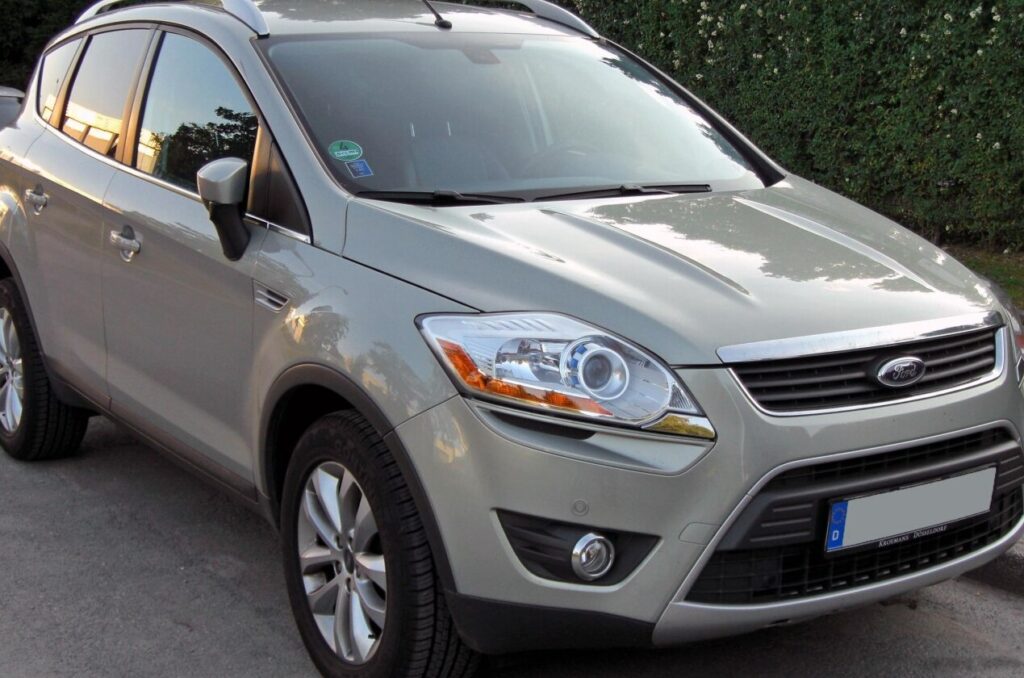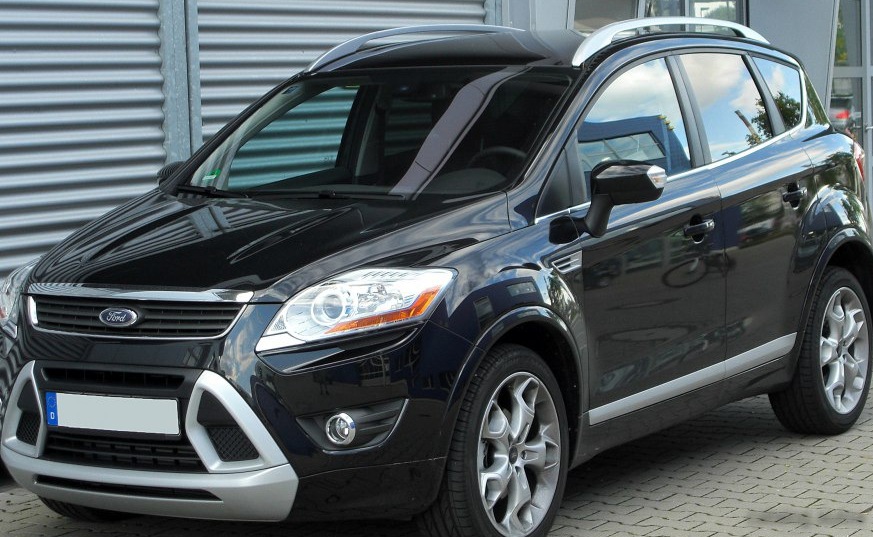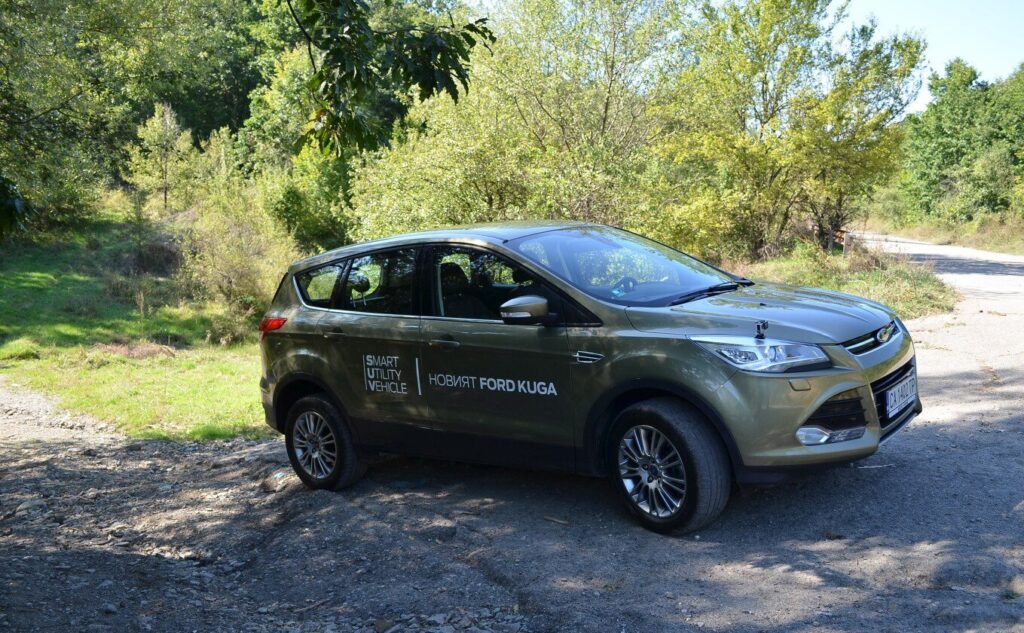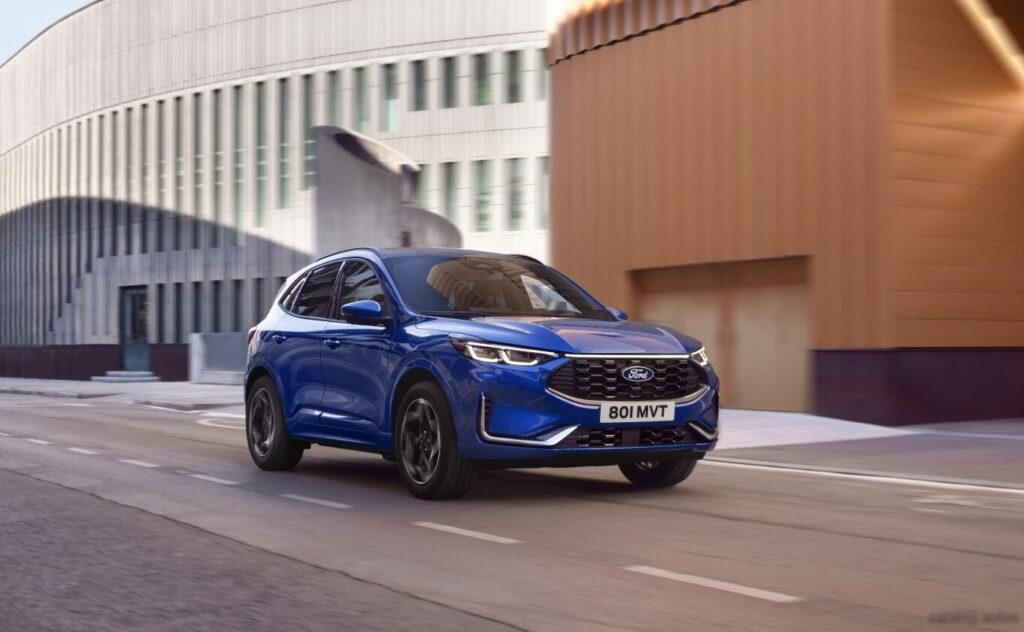
The Ford Kuga III Titanium 2.5 (183 Hp) Full Hybrid AWD CVT, introduced in January 2024 as part of the Kuga’s mid-life facelift, represents a significant offering in the increasingly competitive compact SUV segment. Positioned as a mid-to-upper trim level within the Kuga III range, this variant combines a naturally aspirated 2.5-liter gasoline engine with a full hybrid electric vehicle (FHEV) system and a continuously variable transmission (CVT), paired with all-wheel drive. It builds upon the foundation of the Kuga III, which itself is based on the Ford C2 platform (shared with the Ford Focus and other models), aiming to deliver a balance of fuel efficiency, performance, and practicality for the North American and European markets.
Technical Specifications
| Brand | Ford |
| Model | Kuga |
| Generation | Kuga III (facelift 2024) |
| Type (Engine) | Titanium 2.5 (183 Hp) Full Hybrid AWD CVT |
| Start of production | January, 2024 |
| Powertrain Architecture | FHEV (Full Hybrid Electric Vehicle) |
| Body type | SUV |
| Seats | 5 |
| Doors | 5 |
| Combined fuel consumption (WLTP) | 5.7-6.4 l/100 km (41.3 – 36.8 US mpg, 49.6 – 44.1 UK mpg, 17.5 – 15.6 km/l) |
| CO2 emissions (WLTP) | 130-146 g/km |
| Fuel Type | Petrol (Gasoline) |
| Acceleration 0 – 100 km/h | 8.3 sec |
| Acceleration 0 – 62 mph | 8.3 sec |
| Acceleration 0 – 60 mph | 7.9 sec |
| Maximum speed | 196 km/h (121.79 mph) |
| Emission standard | Euro 6d |
| Weight-to-power ratio | 9.2 kg/Hp, 108.3 Hp/tonne |
| Gross battery capacity | 1.1 kWh |
| Battery technology | Lithium-ion (Li-Ion) |
| System power | 183 Hp @ 5500 rpm |
| Engine layout | Front, Transverse |
| Engine Model/Code | BGDA |
| Engine displacement | 2488 cm3 (151.83 cu. in.) |
| Number of cylinders | 4 |
| Engine configuration | Inline |
| Cylinder Bore | 89 mm (3.5 in.) |
| Piston Stroke | 100 mm (3.94 in.) |
| Compression ratio | 13:1 |
| Number of valves per cylinder | 4 |
| Fuel injection system | Multi-port manifold injection |
| Engine aspiration | Naturally aspirated engine |
| Valvetrain | DOHC, VCT |
| Engine oil capacity | 5.4 l (5.71 US qt | 4.75 UK qt) |
| Kerb Weight | 1690 kg (3725.81 lbs.) |
| Max. weight | 2315 kg (5103.7 lbs.) |
| Max load | 625 kg (1377.89 lbs.) |
| Trunk (boot) space – minimum | 412 l (14.55 cu. ft.) |
| Trunk (boot) space – maximum | 1534 l (54.17 cu. ft.) |
| Fuel tank capacity | 54 l (14.27 US gal | 11.88 UK gal) |
| Max. roof load | 75 kg (165.35 lbs.) |
| Permitted trailer load with brakes (12%) | 2100 kg (4629.71 lbs.) |
| Permitted trailer load without brakes | 750 kg (1653.47 lbs.) |
| Length | 4604 mm (181.26 in.) |
| Width | 1882 mm (74.09 in.) |
| Width with mirrors folded | 2000 mm (78.74 in.) |
| Width including mirrors | 2177 mm (85.71 in.) |
| Height | 1679 mm (66.1 in.) |
| Wheelbase | 2711 mm (106.73 in.) |
| Front track | 1599 mm (62.95 in.) |
| Rear (Back) track | 1590 mm (62.6 in.) |
| Ride height (ground clearance) | 166-174 mm (6.54 – 6.85 in.) |
| Minimum turning circle (turning diameter) | 11.38 m (37.34 ft.) |
| Approach angle | 20° |
| Departure angle | 24.7° |
| Drivetrain Architecture | The Internal combustion engine (ICE) and the electric motor permanently drive the front wheels of the vehicle, capable of running in full electric or mixed mode, and if necessary through the electrically or mechanically controlled clutch, the rear wheels are driven. |
| Drive wheel | All wheel drive (4×4) |
| Number of gears and type of gearbox | automatic transmission CVT |
| Front suspension | Independent type McPherson, Transverse stabilizer |
| Rear suspension | Double wishbone |
| Front brakes | Ventilated discs, 308×27 mm |
| Rear brakes | Disc, 302×11 mm |
| Assisting systems | ABS (Anti-lock braking system) |
| Steering type | Steering rack and pinion |
| Power steering | Electric Steering |
| Tires size | 225/65 R17 |
| Wheel rims size | 7J x 17 |
Powertrain & Engine Architecture
At the heart of the Kuga Titanium 2.5 Hybrid AWD lies the BGDA engine, a 2.5-liter inline-four cylinder naturally aspirated gasoline engine. This engine is part of Ford’s Intelligent Hybrid technology, working in conjunction with an electric motor and a 1.1 kWh lithium-ion battery pack. The engine utilizes multi-port fuel injection and a double overhead camshaft (DOHC) valvetrain with variable camshaft timing (VCT) to optimize efficiency and performance. The hybrid system allows for electric-only driving at lower speeds and assists the gasoline engine during acceleration, contributing to improved fuel economy. The continuously variable transmission (CVT) is specifically tuned to work seamlessly with the hybrid powertrain, providing smooth and efficient power delivery. Unlike some competitors, Ford opted for a naturally aspirated engine, prioritizing a more linear power delivery over the potential for higher peak outputs offered by turbocharged alternatives.
Driving Characteristics
The 183 hp combined output of the 2.5-liter engine and electric motor delivers adequate performance for everyday driving. Acceleration from 0-60 mph takes approximately 7.9 seconds, and 0-100 km/h in 8.3 seconds. The CVT, while contributing to fuel efficiency, can sometimes feel less responsive than a traditional automatic transmission, exhibiting a “rubber band” effect during hard acceleration. However, Ford has implemented programming to mitigate this sensation. The all-wheel-drive system provides enhanced traction and stability, particularly in inclement weather conditions. Compared to the higher-output 1.5L EcoBoost variants, the hybrid offers a more relaxed driving experience, prioritizing fuel economy over outright performance. The hybrid system’s regenerative braking also contributes to a unique driving feel, with noticeable deceleration when lifting off the throttle.
Equipment & Trim Levels
The Titanium trim level, as the name suggests, offers a generous level of standard equipment. Interior features typically include comfortable cloth or leather upholstery, an 8-inch touchscreen infotainment system with Apple CarPlay and Android Auto compatibility, a digital instrument cluster, and a suite of driver-assistance technologies such as lane-keeping assist, adaptive cruise control, and automatic emergency braking. Optional extras often include a panoramic sunroof, premium audio system, and heated/ventilated front seats. The interior design is modern and functional, with a focus on user-friendliness. The Kuga Titanium aims to provide a comfortable and well-equipped cabin for both driver and passengers.
Chassis & Braking
The Kuga III utilizes an independent McPherson strut suspension at the front and a multi-link double wishbone suspension at the rear, providing a comfortable ride quality and competent handling. The suspension is tuned to balance ride comfort with body control. Braking duties are handled by ventilated discs at the front and solid discs at the rear, equipped with an anti-lock braking system (ABS). The steering is electrically assisted, providing light and precise steering feel. The all-wheel-drive system automatically distributes torque between the front and rear axles as needed, optimizing traction and stability.
Market Reception & Comparison
The Ford Kuga III Titanium 2.5 Hybrid AWD CVT has been generally well-received by automotive critics, praised for its fuel efficiency, comfortable ride, and spacious interior. However, some reviewers have noted the CVT’s occasionally unrefined feel and the relatively modest acceleration compared to some competitors. Compared to other Kuga variants, such as the 1.5L EcoBoost, the hybrid prioritizes fuel economy and a more relaxed driving experience. Its fuel economy of 5.7-6.4 l/100 km is competitive within its class, making it an attractive option for environmentally conscious buyers.
Legacy
The Ford Kuga III 2.5 Hybrid AWD CVT represents a step towards Ford’s electrification strategy. While long-term reliability data is still emerging, the combination of a naturally aspirated engine and a well-developed hybrid system suggests a potentially robust and durable powertrain. In the used car market, these models are expected to hold their value reasonably well, particularly as demand for fuel-efficient vehicles continues to grow. The Kuga III, and this variant specifically, demonstrates Ford’s commitment to offering a diverse range of powertrain options to meet the evolving needs of consumers.