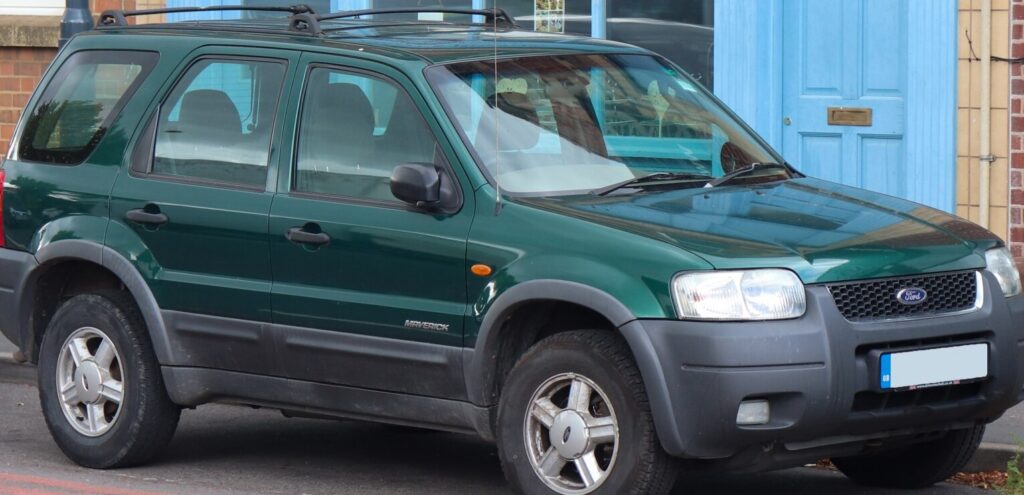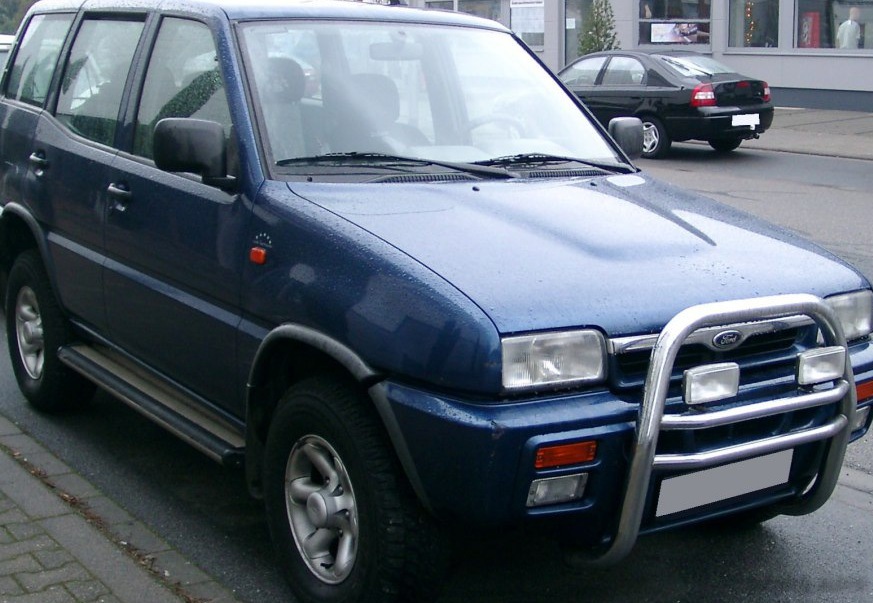
The Ford Maverick (UDS, UNS) 2.4L 12V, produced between 1993 and 1996, represented Ford’s entry into the burgeoning compact SUV market, primarily aimed at European buyers. This three-door variant, distinguished by its 124 horsepower engine and available with a five-speed manual transmission, offered a blend of practicality, affordability, and a rugged aesthetic. It was built on a modified Ford Escort platform, sharing many components but offering increased ground clearance and available four-wheel drive. The Maverick aimed to provide a versatile vehicle for both urban commuting and light off-road adventures, filling a niche between traditional hatchbacks and larger, more expensive SUVs.
Technical Specifications
| Brand | Ford |
| Model | Maverick |
| Generation | Maverick (UDS, UNS) |
| Type (Engine) | 2.4 12V (3 dr) (124 Hp) |
| Start of production | 1993 |
| End of production | 1996 |
| Powertrain Architecture | Internal Combustion engine |
| Body type | SUV |
| Seats | 5 |
| Doors | 3 |
| Fuel consumption (urban) | 13 l/100 km (18.1 US mpg, 21.7 UK mpg, 7.7 km/l) |
| Fuel consumption (extra urban) | 9 l/100 km (26.1 US mpg, 31.4 UK mpg, 11.1 km/l) |
| Fuel consumption (combined) | 11.1 l/100 km (21.2 US mpg, 25.4 UK mpg, 9 km/l) |
| Fuel Type | Petrol (Gasoline) |
| Acceleration 0 – 100 km/h | 13.2 sec |
| Acceleration 0 – 62 mph | 13.2 sec |
| Acceleration 0 – 60 mph | 12.5 sec |
| Maximum speed | 160 km/h (99.42 mph) |
| Weight-to-power ratio | 13.1 kg/Hp, 76.5 Hp/tonne |
| Weight-to-torque ratio | 8.2 kg/Nm, 121.6 Nm/tonne |
| Power | 124 Hp @ 5200 rpm |
| Power per litre | 51.9 Hp/l |
| Torque | 197 Nm @ 4000 rpm (145.3 lb.-ft. @ 4000 rpm) |
| Engine layout | Front, Longitudinal |
| Engine Model/Code | KA24E |
| Engine displacement | 2389 cm3 (145.79 cu. in.) |
| Number of cylinders | 4 |
| Engine configuration | Inline |
| Cylinder Bore | 89 mm (3.5 in.) |
| Piston Stroke | 96 mm (3.78 in.) |
| Compression ratio | 8.6:1 |
| Number of valves per cylinder | 3 |
| Fuel injection system | Multi-port manifold injection |
| Engine aspiration | Naturally aspirated engine |
| Valvetrain | OHC |
| Engine oil capacity | 4.3 l (4.54 US qt | 3.78 UK qt) |
| Kerb Weight | 1620 kg (3571.49 lbs.) |
| Max. weight | 2300 kg (5070.63 lbs.) |
| Max load | 680 kg (1499.14 lbs.) |
| Trunk (boot) space – minimum | 335 l (11.83 cu. ft.) |
| Trunk (boot) space – maximum | 1650 l (58.27 cu. ft.) |
| Fuel tank capacity | 72 l (19.02 US gal | 15.84 UK gal) |
| Length | 4105 mm (161.61 in.) |
| Width | 1735 mm (68.31 in.) |
| Height | 1805 mm (71.06 in.) |
| Wheelbase | 2450 mm (96.46 in.) |
| Front track | 1455 mm (57.28 in.) |
| Rear (Back) track | 1430 mm (56.3 in.) |
| Drive wheel | All wheel drive (4×4) |
| Number of gears and type of gearbox | 5 gears, manual transmission |
| Front suspension | Double wishbone |
| Rear suspension | Coil spring |
| Front brakes | Ventilated discs |
| Rear brakes | Drum |
| Assisting systems | ABS (Anti-lock braking system) |
| Steering type | Steering rack and pinion |
| Power steering | Hydraulic Steering |
| Tires size | 215/80 R15 R |
Powertrain & Engine Architecture
The heart of the Maverick 2.4L was the KA24E engine, a 2.4-liter inline-four cylinder gasoline engine. This engine featured a single overhead camshaft (OHC) design and three valves per cylinder (two intake, one exhaust). Fuel delivery was handled by a multi-port fuel injection system, contributing to relatively smooth operation and acceptable fuel economy for the time. The engine produced 124 horsepower at 5200 rpm and 197 Nm (145.3 lb-ft) of torque at 4000 rpm. The five-speed manual transmission was the standard offering, providing drivers with a reasonable degree of control over the engine’s power band. The transmission’s gear ratios were tuned for a balance between acceleration and fuel efficiency, though the Maverick wasn’t known for being particularly quick. The engine’s longitudinal mounting and the availability of a four-wheel-drive system were key features differentiating it from many contemporary front-wheel-drive hatchbacks.
Driving Characteristics
The 124 hp Maverick with a manual transmission offered adequate, but not exhilarating, performance. Acceleration from 0-60 mph took around 12.5 seconds, and top speed was limited to approximately 99 mph. The engine felt relatively strained at higher speeds, and the Maverick was more comfortable cruising at highway speeds than engaging in spirited driving. The four-wheel-drive system provided enhanced traction on slippery surfaces, making it a capable vehicle in inclement weather. The suspension, while providing a reasonably comfortable ride, wasn’t particularly sporty, leaning towards a softer setup designed for everyday usability. Compared to potential upgrades like a larger engine, the 2.4L offered a good balance of cost and practicality.
Equipment & Trim Levels
The Maverick 2.4L typically came with a fairly basic level of equipment, reflecting its position as an entry-level SUV. Standard features included power steering, ABS brakes, and a relatively simple interior with cloth upholstery. Optional extras included air conditioning, power windows, and a more advanced audio system. Interior trim was functional rather than luxurious, with durable plastics and a focus on practicality. The three-door body style limited rear passenger access, and the rear seats offered limited legroom. The cargo area was reasonably spacious, especially with the rear seats folded down, offering up to 1650 liters of storage space.
Chassis & Braking
The Maverick’s chassis was based on a modified Ford Escort platform, providing a solid foundation for its SUV configuration. The front suspension utilized a double wishbone setup, while the rear suspension employed coil springs. This configuration offered a reasonable compromise between ride comfort and handling. The braking system featured ventilated discs on the front wheels and drum brakes on the rear. While adequate for everyday driving, the braking performance wasn’t particularly strong, especially when the vehicle was fully loaded. The four-wheel-drive system added to the vehicle’s weight, which impacted both handling and braking performance.
Market Reception & Comparison
The Ford Maverick received mixed reviews from automotive critics. It was praised for its affordability, practicality, and available four-wheel drive, but criticized for its relatively slow performance and basic interior. Compared to other compact SUVs of the time, such as the Suzuki Vitara and the Honda CR-V, the Maverick offered a more rugged aesthetic and a lower price point. However, it lacked the refinement and performance of some of its competitors. Fuel economy was average for the class, with combined fuel consumption around 21.2 US mpg. Reliability was generally considered to be good, although some owners reported issues with the engine’s cooling system.
Legacy
The Ford Maverick, while not a runaway success, established Ford’s presence in the compact SUV segment. The 2.4L engine proved to be reasonably durable, and many examples are still on the road today. In the used car market, the Maverick 2.4L is often sought after by enthusiasts looking for an affordable and capable off-road vehicle. Parts availability is generally good, thanks to the shared components with other Ford models. While it may not offer the performance or luxury of more modern SUVs, the Maverick 2.4L remains a practical and versatile vehicle with a loyal following.