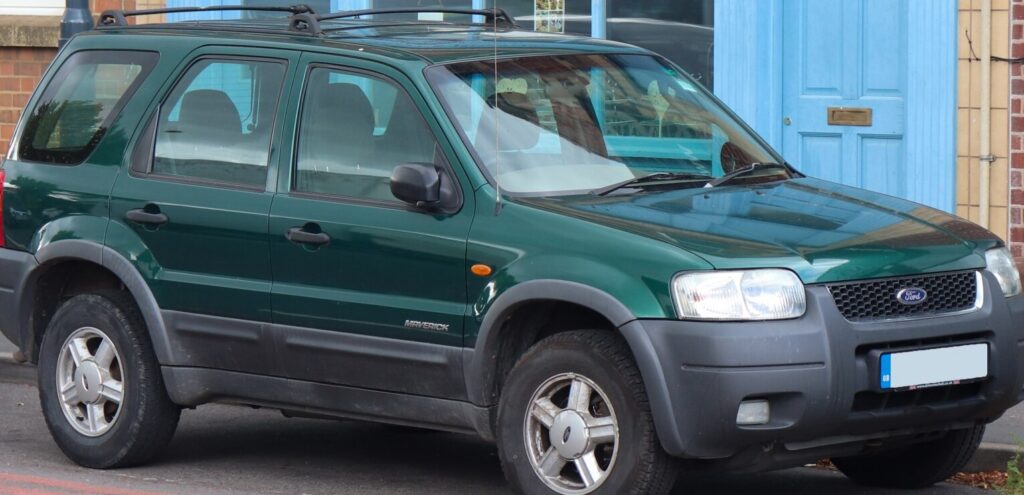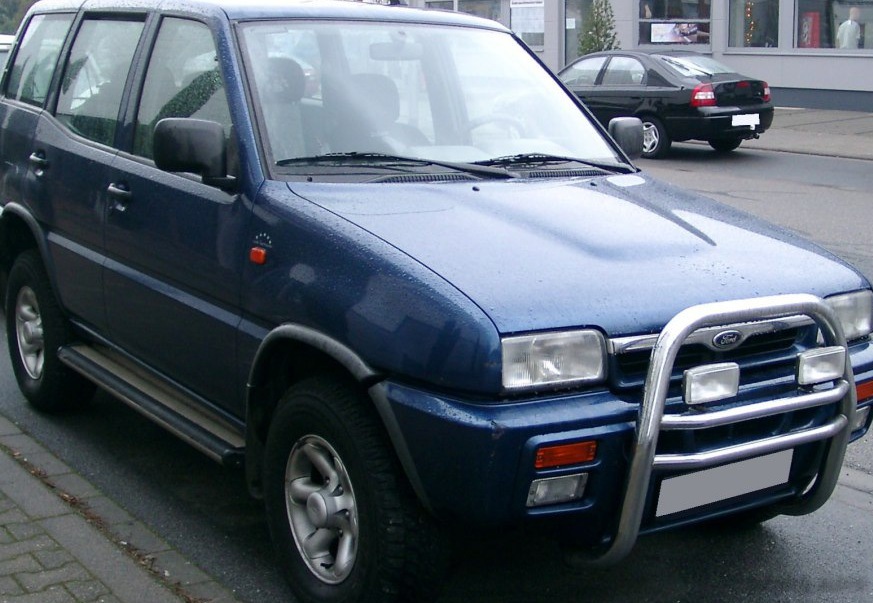
The Ford Maverick (UDS, UNS) was a compact SUV produced by Ford between 1993 and 1996. Positioned as an entry-level offering in Ford’s SUV lineup, it aimed to provide affordable all-wheel drive capability and practicality. The Maverick was notable for being one of Ford’s first attempts at a truly compact SUV, bridging the gap between traditional car-based wagons and larger, truck-based SUVs. This particular variant, equipped with the 2.4-liter 12-valve inline-four engine producing 124 horsepower, and a five-speed manual transmission, represented a balance between fuel economy and reasonable performance for the time. It was primarily sold in European and Asian markets, and never officially offered in the United States.
Technical Specifications
| Brand | Ford |
| Model | Maverick |
| Generation | Maverick (UDS, UNS) |
| Type (Engine) | 2.4 12V (5 dr) (124 Hp) |
| Start of production | 1993 |
| End of production | 1996 |
| Powertrain Architecture | Internal Combustion engine |
| Body type | SUV |
| Seats | 5 |
| Doors | 5 |
| Fuel consumption (combined) | 11.4 l/100 km (20.6 US mpg, 24.8 UK mpg, 8.8 km/l) |
| Fuel Type | Petrol (Gasoline) |
| Acceleration 0 – 100 km/h | 14 sec |
| Acceleration 0 – 62 mph | 14 sec |
| Acceleration 0 – 60 mph | 13.3 sec |
| Maximum speed | 160 km/h (99.42 mph) |
| Weight-to-power ratio | 14.1 kg/Hp, 70.9 Hp/tonne |
| Weight-to-torque ratio | 8.9 kg/Nm, 112.6 Nm/tonne |
| Power | 124 Hp @ 5200 rpm |
| Power per litre | 51.9 Hp/l |
| Torque | 197 Nm @ 4000 rpm (145.3 lb.-ft. @ 4000 rpm) |
| Engine layout | Front, Longitudinal |
| Engine Model/Code | KA24E |
| Engine displacement | 2389 cm3 (145.79 cu. in.) |
| Number of cylinders | 4 |
| Engine configuration | Inline |
| Cylinder Bore | 89 mm (3.5 in.) |
| Piston Stroke | 96 mm (3.78 in.) |
| Compression ratio | 8.6:1 |
| Number of valves per cylinder | 3 |
| Fuel injection system | Multi-port manifold injection |
| Engine aspiration | Naturally aspirated engine |
| Valvetrain | OHC |
| Engine oil capacity | 4.3 l (4.54 US qt | 3.78 UK qt) |
| Kerb Weight | 1750 kg (3858.09 lbs.) |
| Max. weight | 2580 kg (5687.93 lbs.) |
| Max load | 830 kg (1829.84 lbs.) |
| Trunk (boot) space – minimum | 115 l (4.06 cu. ft.) |
| Trunk (boot) space – maximum | 1900 l (67.1 cu. ft.) |
| Fuel tank capacity | 80 l (21.13 US gal | 17.6 UK gal) |
| Length | 4585 mm (180.51 in.) |
| Width | 1735 mm (68.31 in.) |
| Height | 1810 mm (71.26 in.) |
| Wheelbase | 2650 mm (104.33 in.) |
| Front track | 1455 mm (57.28 in.) |
| Rear (Back) track | 1430 mm (56.3 in.) |
| Drive wheel | All wheel drive (4×4) |
| Number of gears and type of gearbox | 5 gears, manual transmission |
| Front suspension | Double wishbone |
| Rear suspension | Coil spring |
| Front brakes | Ventilated discs |
| Rear brakes | Drum |
| Assisting systems | ABS (Anti-lock braking system) |
| Steering type | Steering rack and pinion |
| Power steering | Hydraulic Steering |
| Tires size | 215/80 R15 R |
Powertrain & Engine Architecture
The heart of this Maverick variant is the Ford KA24E engine, a 2.4-liter inline-four cylinder gasoline engine. This engine featured a single overhead camshaft (OHC) design and three valves per cylinder (two intake, one exhaust). The KA24E utilized multi-port fuel injection, a relatively advanced system for its time, contributing to improved fuel efficiency and smoother power delivery compared to earlier carbureted engines. The 12-valve configuration, while not as sophisticated as later multi-valve designs, offered a good balance of simplicity, reliability, and adequate performance for the vehicle’s intended purpose. The engine’s longitudinal mounting allowed for a front-engine, all-wheel-drive configuration. The five-speed manual transmission provided a reasonable spread of gears, allowing the driver to keep the engine in its optimal power band.
Driving Characteristics
The 124 horsepower and 145 lb-ft of torque offered by the 2.4-liter engine provided adequate, but not exhilarating, performance. Acceleration from 0-60 mph took around 13.3 seconds, and top speed was limited to approximately 99 mph. Compared to other Maverick trims, particularly those with larger engines, this variant felt noticeably less powerful. However, the manual transmission allowed for greater driver control and a more engaging driving experience than the available automatic option. The all-wheel-drive system provided enhanced traction in slippery conditions, making it a capable vehicle for inclement weather or light off-road use. The gear ratios were tuned for practicality and fuel economy rather than outright speed, resulting in a comfortable cruising experience but requiring frequent downshifts when overtaking or climbing hills.
Equipment & Trim Levels
The 2.4-liter Maverick typically represented the base trim level. Standard equipment included power steering, ABS brakes, and a basic audio system. Interior upholstery was typically cloth, and the dashboard featured a functional, if somewhat spartan, design. Optional extras included air conditioning, power windows, and a more advanced audio system. The interior space was relatively generous for a compact SUV, offering comfortable seating for five passengers. The rear seats could be folded down to increase cargo capacity, providing a versatile space for hauling luggage or other items.
Chassis & Braking
The Maverick utilized a double wishbone suspension setup at the front and a coil spring suspension at the rear. This configuration provided a reasonable balance of ride comfort and handling. The ventilated disc brakes at the front and drum brakes at the rear offered adequate stopping power for the vehicle’s weight and performance. The all-wheel-drive system employed a viscous coupling to distribute torque between the front and rear axles, providing automatic engagement of the rear wheels when traction was lost. Stabilizer bars were fitted to both the front and rear axles to reduce body roll during cornering.
Market Reception & Comparison
The Ford Maverick, particularly the 2.4-liter variant, was generally well-received as an affordable and practical SUV. Critics praised its all-wheel-drive capability and spacious interior, but noted its relatively modest performance. Compared to other SUVs in its class, such as the Honda CR-V or Toyota RAV4, the Maverick offered a more rugged appearance and a lower price point. However, it lacked the refinement and fuel efficiency of some of its competitors. The 2.4-liter engine was considered adequate for everyday driving, but those seeking more power often opted for the larger engine options.
Legacy
The Ford Maverick, while not a long-lived model, played a significant role in popularizing the compact SUV segment. The KA24E engine proved to be reasonably reliable, although regular maintenance was essential to prevent issues such as oil leaks and timing chain wear. Today, the Maverick is a relatively rare sight on the roads, but it has gained a following among enthusiasts who appreciate its rugged charm and affordability. The 2.4-liter variant, with its manual transmission, is often considered the most desirable version by those seeking a driver-focused experience. Parts availability can be a challenge, but many components are still available through aftermarket suppliers. Overall, the Ford Maverick (UDS, UNS) 2.4 12V remains a unique and interesting vehicle from a pivotal era in SUV development.