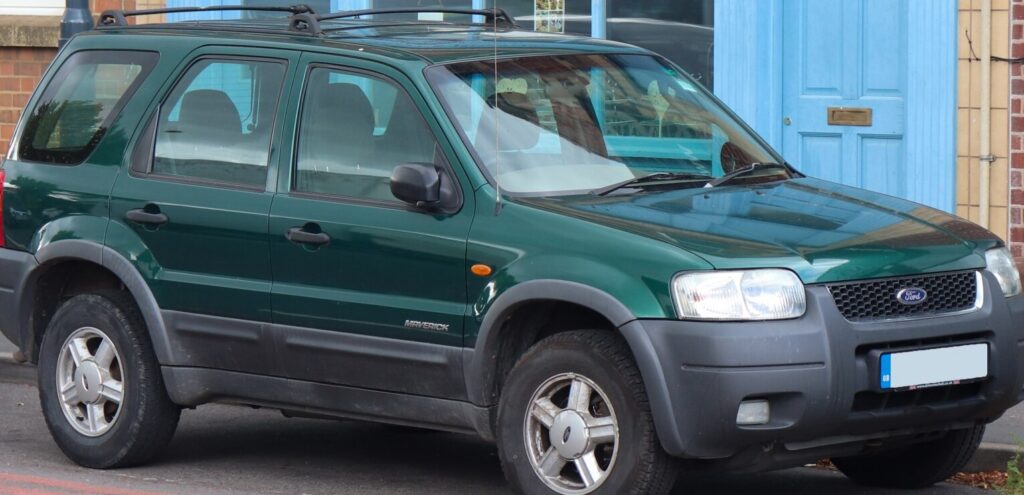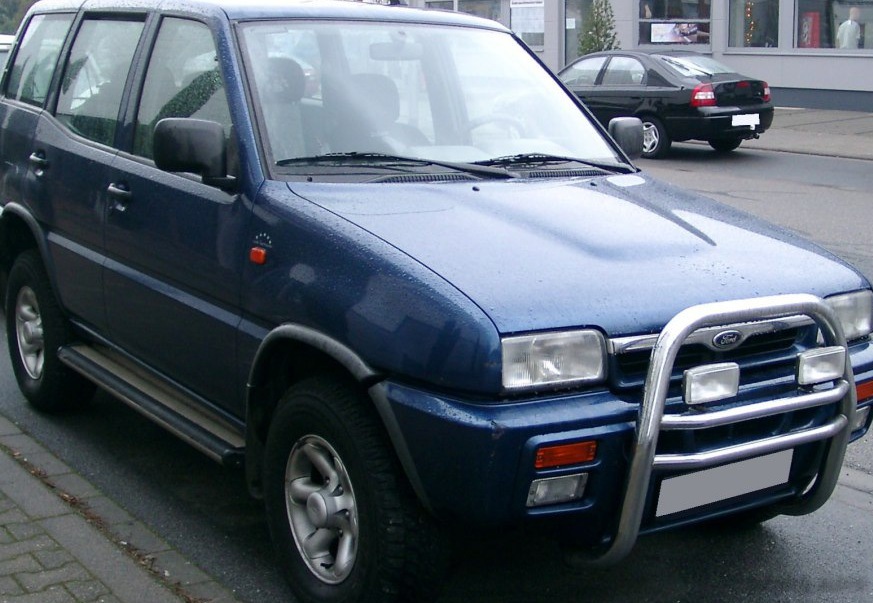
The Ford Maverick, produced between 1993 and 1996 (chassis codes UDS and UNS), represented Ford’s entry into the compact SUV market in Europe. Distinct from the later North American Ford Maverick, this model was built on a modified Ford Escort platform, offering a blend of practicality and off-road capability. The 2.7 TD variant, equipped with a 2.7-liter turbocharged diesel engine producing 100 horsepower, was a key offering within the Maverick lineup, positioned as a more economical and utilitarian option compared to the gasoline-powered models. It was primarily aimed at buyers seeking a robust, all-wheel-drive vehicle for both on and off-road use, particularly in rural areas.
Technical Specifications
| Brand | Ford |
| Model | Maverick |
| Generation | Maverick (UDS, UNS) |
| Type (Engine) | 2.7 TD (3 dr) (100 Hp) |
| Start of production | 1993 |
| End of production | 1996 |
| Powertrain Architecture | Internal Combustion engine |
| Body type | SUV |
| Seats | 5 |
| Doors | 3 |
| Fuel consumption (urban) | 10.9 l/100 km (21.6 US mpg) |
| Fuel consumption (extra urban) | 7.5 l/100 km (31.4 US mpg) |
| Fuel consumption (combined) | 9.9 l/100 km (23.8 US mpg) |
| Fuel Type | Diesel |
| Acceleration 0 – 100 km/h | 19 sec |
| Acceleration 0 – 62 mph | 19 sec |
| Acceleration 0 – 60 mph | 18.1 sec |
| Maximum speed | 145 km/h (90.1 mph) |
| Weight-to-power ratio | 17.3 kg/Hp |
| Weight-to-torque ratio | 7.8 kg/Nm |
| Power | 100 Hp @ 4000 rpm |
| Power per litre | 37.6 Hp/l |
| Torque | 221 Nm @ 2200 rpm (163 lb.-ft. @ 2200 rpm) |
| Engine layout | Front, Longitudinal |
| Engine Model/Code | TD27 |
| Engine displacement | 2663 cm3 (162.51 cu. in.) |
| Number of cylinders | 4 |
| Engine configuration | Inline |
| Cylinder Bore | 96 mm (3.78 in.) |
| Piston Stroke | 92 mm (3.62 in.) |
| Compression ratio | 21.9:1 |
| Number of valves per cylinder | 2 |
| Fuel injection system | Precombustion chamber injection |
| Engine aspiration | Turbocharger |
| Engine oil capacity | 7.2 l (7.61 US qt | 6.34 UK qt) |
| Kerb Weight | 1730 kg (3814 lbs.) |
| Max. weight | 2300 kg (5070.63 lbs.) |
| Max load | 570 kg (1256.63 lbs.) |
| Trunk (boot) space – minimum | 335 l (11.83 cu. ft.) |
| Trunk (boot) space – maximum | 1650 l (58.27 cu. ft.) |
| Fuel tank capacity | 72 l (19.02 US gal | 15.84 UK gal) |
| Length | 4105 mm (161.61 in.) |
| Width | 1735 mm (68.31 in.) |
| Height | 1805 mm (71.06 in.) |
| Wheelbase | 2450 mm (96.46 in.) |
| Front track | 1455 mm (57.28 in.) |
| Rear (Back) track | 1430 mm (56.3 in.) |
| Drive wheel | All wheel drive (4×4) |
| Number of gears and type of gearbox | 5 gears, manual transmission |
| Front suspension | Independent torsion bar, double wishbone |
| Rear suspension | Coil spring |
| Front brakes | Ventilated discs |
| Rear brakes | Drum |
| Assisting systems | ABS (Anti-lock braking system) |
| Steering type | Steering rack and pinion |
| Power steering | Hydraulic Steering |
| Tires size | 215/80 R15 R |
| Wheel rims size | 15 |
Powertrain & Engine Architecture
The heart of the Maverick 2.7 TD was the TD27 engine, a 2.7-liter inline-four diesel. This engine utilized a precombustion chamber injection system, a common technology for diesel engines of the era, designed to improve combustion efficiency and reduce noise. The turbocharger significantly boosted power output for its displacement, bringing it to 100 horsepower. The engine’s longitudinal mounting within the chassis contributed to the vehicle’s all-wheel-drive configuration. The 2.7 TD was paired with a five-speed manual transmission, chosen for its durability and suitability for the engine’s torque characteristics. While an automatic transmission was offered on some Maverick models, it wasn’t typically paired with the 2.7 TD due to the potential strain on the gearbox.
Driving Characteristics
The 2.7 TD Maverick offered a distinctly different driving experience compared to the gasoline-powered versions. Acceleration was modest, taking approximately 19 seconds to reach 62 mph, but the engine’s 221 Nm (163 lb-ft) of torque provided reasonable pulling power, especially at lower engine speeds. This made it well-suited for towing and navigating challenging terrain. The all-wheel-drive system enhanced traction, making it capable in slippery conditions. The manual transmission allowed for greater driver control, but the long gearing emphasized fuel economy over outright performance. Compared to the higher-output gasoline engines, the 2.7 TD prioritized fuel efficiency and durability over speed and responsiveness.
Equipment & Trim Levels
The 2.7 TD Maverick typically came with a relatively basic level of equipment, reflecting its position as a more affordable and utilitarian model. Standard features generally included power steering, central locking, and a basic audio system. Interior upholstery was typically cloth, and the dashboard featured a functional, no-frills design. Optional extras included air conditioning, electric windows, and upgraded audio systems. Trim levels were relatively limited, with the 2.7 TD often serving as the base model for buyers prioritizing practicality and affordability.
Chassis & Braking
The Maverick’s chassis featured independent torsion bar suspension at the front, providing a comfortable ride and good handling characteristics. The rear suspension utilized a coil spring setup. Braking was accomplished via ventilated discs at the front and drum brakes at the rear. Anti-lock braking system (ABS) was included as a standard safety feature. The chassis was designed to handle the added weight of the diesel engine and the all-wheel-drive components. Stabilizer bars were fitted to both axles to reduce body roll during cornering.
Market Reception & Comparison
The Ford Maverick 2.7 TD received mixed reviews. Critics praised its ruggedness, all-wheel-drive capability, and fuel economy, but noted its slow acceleration and relatively basic interior. Compared to the gasoline-powered Mavericks, the 2.7 TD offered significantly better fuel economy, making it a popular choice for drivers covering long distances. However, the gasoline models provided a more refined driving experience and quicker acceleration. The 2.7 TD also faced competition from other compact SUVs, such as the Suzuki Vitara and the Nissan Terrano, which offered similar levels of practicality and off-road capability.
Legacy
The Ford Maverick 2.7 TD, while not a high-performance vehicle, proved to be a reliable and durable workhorse. The TD27 engine, when properly maintained, is known for its longevity. Today, these Mavericks are becoming increasingly sought after by enthusiasts and collectors, particularly those interested in classic European SUVs. Parts availability can be a challenge, but the relatively simple mechanical design makes them relatively easy to repair for experienced mechanics. The 2.7 TD variant represents a unique and affordable entry point into the world of classic Ford SUVs, offering a blend of practicality, durability, and all-wheel-drive capability.