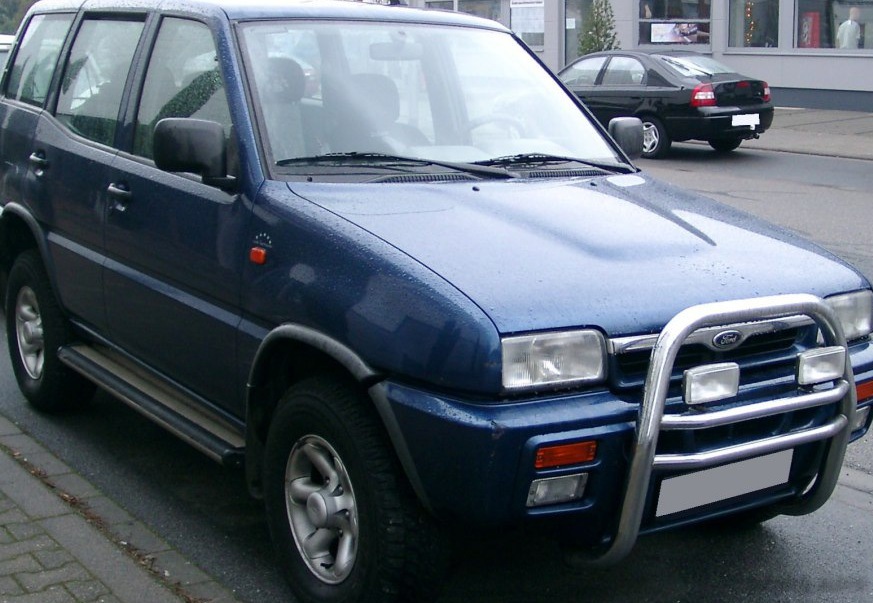
The Ford Maverick 2.7 TD GL (3-door) was a compact SUV produced between 1996 and 1998, representing a unique offering in Ford’s European lineup. Built on the UDS/UNS platform, it aimed to blend SUV practicality with a smaller footprint and more affordable price point. This particular variant, powered by a 2.7-liter turbocharged diesel engine producing 125 horsepower, occupied a middle ground within the Maverick range, offering a balance between fuel economy, capability, and cost. It was primarily marketed towards buyers seeking a versatile vehicle for both on-road and light off-road use.
Technical Specifications
| Brand | Ford |
| Model | Maverick |
| Generation | Maverick (UDS, UNS) |
| Type (Engine) | 2.7 TD GL (3 dr) (125 Hp) |
| Start of production | 1996 |
| End of production | 1998 |
| Powertrain Architecture | Internal Combustion engine |
| Body type | SUV |
| Seats | 5 |
| Doors | 3 |
| Fuel Type | Diesel |
| Acceleration 0 – 100 km/h | 15.7 sec |
| Acceleration 0 – 62 mph | 15.7 sec |
| Acceleration 0 – 60 mph | 14.9 sec |
| Maximum speed | 155 km/h (96.31 mph) |
| Weight-to-power ratio | 14 kg/Hp, 71.6 Hp/tonne |
| Weight-to-torque ratio | 6.3 kg/Nm, 159.3 Nm/tonne |
| Power | 125 Hp @ 3600 rpm |
| Power per litre | 46.9 Hp/l |
| Torque | 278 Nm @ 2000 rpm (205.04 lb.-ft. @ 2000 rpm) |
| Engine layout | Front, Longitudinal |
| Engine displacement | 2664 cm3 (162.57 cu. in.) |
| Number of cylinders | 4 |
| Engine configuration | Inline |
| Cylinder Bore | 96 mm (3.78 in.) |
| Piston Stroke | 92 mm (3.62 in.) |
| Compression ratio | 21.9:1 |
| Number of valves per cylinder | 2 |
| Fuel injection system | Precombustion chamber injection |
| Engine aspiration | Turbocharger |
| Engine oil capacity | 7.2 l (7.61 US qt | 6.34 UK qt) |
| Kerb Weight | 1745 kg (3847.07 lbs.) |
| Max. weight | 2510 kg (5533.6 lbs.) |
| Max load | 765 kg (1686.54 lbs.) |
| Trunk (boot) space – minimum | 335 l (11.83 cu. ft.) |
| Trunk (boot) space – maximum | 1650 l (58.27 cu. ft.) |
| Fuel tank capacity | 72 l (19.02 US gal | 15.84 UK gal) |
| Length | 4185 mm (164.76 in.) |
| Width | 1755 mm (69.09 in.) |
| Height | 1830 mm (72.05 in.) |
| Wheelbase | 2450 mm (96.46 in.) |
| Front track | 1455 mm (57.28 in.) |
| Rear (Back) track | 1430 mm (56.3 in.) |
| Drive wheel | All wheel drive (4×4) |
| Number of gears and type of gearbox | 5 gears, manual transmission |
| Front suspension | Double wishbone |
| Rear suspension | Coil spring |
| Front brakes | Ventilated discs |
| Rear brakes | Drum |
| Assisting systems | ABS (Anti-lock braking system) |
| Steering type | Steering rack and pinion |
| Power steering | Hydraulic Steering |
| Tires size | 235/75 R15 R |
Powertrain & Engine Architecture
The heart of the Maverick 2.7 TD GL was Ford’s 2.7-liter inline-four diesel engine. This engine, often referred to by its internal codes (likely variations of the older 2.5-liter diesel family), utilized a precombustion chamber injection system. This system, common in European diesels of the era, involved injecting fuel into a precombustion chamber connected to the main cylinder, promoting more complete combustion and reducing noise. A turbocharger was employed to boost power output to 125 horsepower and 278 Nm (205 lb-ft) of torque. The engine’s longitudinal mounting and all-wheel-drive configuration contributed to its robust character. The five-speed manual transmission was the only gearbox option for this variant, providing a direct connection to the engine’s power delivery.
Driving Characteristics
The 2.7 TD GL offered a driving experience geared towards practicality and fuel efficiency rather than outright performance. Acceleration was modest, with a 0-60 mph time of around 14.9 seconds. However, the engine’s torque output provided adequate pulling power for everyday driving and light towing. The manual transmission allowed for driver control, but the gear ratios were optimized for economy, meaning frequent shifting was often necessary. Compared to potential gasoline-powered Mavericks or higher-output diesel versions, the 2.7 TD GL prioritized fuel economy and durability over sporty handling or rapid acceleration.
Equipment & Trim Levels
The “GL” trim level represented a mid-range offering within the Maverick lineup. Standard equipment typically included power steering, central locking, and basic instrumentation. Interior upholstery was generally cloth, with a functional, rather than luxurious, design. Options available for the 2.7 TD GL could include air conditioning, power windows, and upgraded audio systems. The 3-door body style meant rear passenger access was less convenient than in the 5-door version, making this trim more suitable for individuals or small families.
Chassis & Braking
The Maverick’s chassis featured a double wishbone front suspension and a coil spring rear suspension, providing a reasonable balance between ride comfort and handling. The all-wheel-drive system, typically part-time, enhanced traction on slippery surfaces. Braking duties were handled by ventilated discs at the front and drum brakes at the rear. Anti-lock Braking System (ABS) was included as a standard safety feature. The suspension setup was tuned for a comfortable ride, prioritizing stability over sporty handling characteristics.
Market Reception & Comparison
The Ford Maverick 2.7 TD GL was generally well-received as a practical and affordable SUV. Critics praised its fuel efficiency and all-wheel-drive capability, but noted its modest performance. Compared to other Mavericks, the 2.7 TD GL offered a more economical alternative to the gasoline engines, while providing similar off-road ability to the higher-powered diesel variants. Its main competitors included other compact SUVs like the Suzuki Vitara and the Nissan Terrano II, all vying for a share of the growing European SUV market.
Legacy
The Ford Maverick, and specifically the 2.7 TD GL variant, has developed a reputation for reliability and durability. The 2.7-liter diesel engine, while not particularly powerful, is known for its longevity when properly maintained. Today, these Mavericks are increasingly sought after by enthusiasts and collectors, particularly those looking for a rugged and affordable all-wheel-drive vehicle. Parts availability can be a challenge, but the engine’s simplicity and robust construction contribute to its continued viability. The Maverick 2.7 TD GL represents a unique chapter in Ford’s history, offering a blend of practicality, affordability, and all-weather capability that resonated with buyers in the late 1990s.