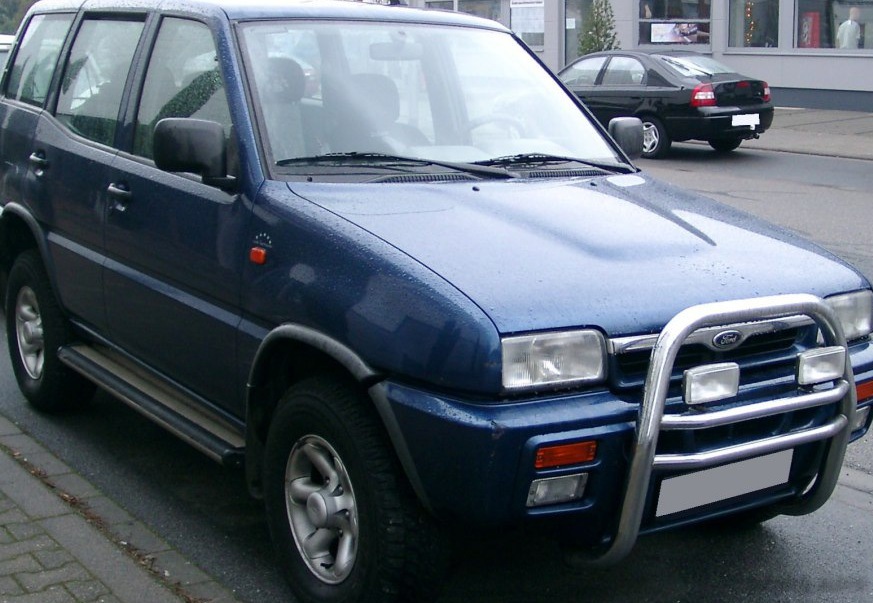
The Ford Maverick 2.7 TD GL, produced between 1996 and 1998, represented a unique offering in Ford’s European lineup. Positioned as a compact SUV, the Maverick aimed to blend the practicality of a station wagon with the ruggedness of a four-wheel-drive vehicle. This particular variant, powered by a 2.7-liter turbocharged diesel engine producing 125 horsepower, was a mid-range option within the Maverick series, offering a balance between fuel efficiency and capability. It was built on the UDS/UNS platform, a relatively uncommon chassis for Ford at the time, and primarily targeted European markets seeking a versatile and economical vehicle.
Technical Specifications
| Brand | Ford |
| Model | Maverick |
| Generation | Maverick (UDS, UNS) |
| Type (Engine) | 2.7 TD GL (5 dr) (125 Hp) |
| Start of production | 1996 |
| End of production | 1998 |
| Powertrain Architecture | Internal Combustion engine |
| Body type | SUV |
| Seats | 5 |
| Doors | 5 |
| Fuel Type | Diesel |
| Acceleration 0 – 100 km/h | 16.7 sec |
| Acceleration 0 – 62 mph | 16.7 sec |
| Acceleration 0 – 60 mph | 15.9 sec |
| Maximum speed | 155 km/h (96.31 mph) |
| Weight-to-power ratio | 15 kg/Hp, 66.7 Hp/tonne |
| Weight-to-torque ratio | 6.7 kg/Nm, 148.3 Nm/tonne |
| Power | 125 Hp @ 3600 rpm |
| Power per litre | 46.9 Hp/l |
| Torque | 278 Nm @ 2000 rpm (205.04 lb.-ft. @ 2000 rpm) |
| Engine layout | Front, Longitudinal |
| Engine displacement | 2664 cm3 (162.57 cu. in.) |
| Number of cylinders | 4 |
| Engine configuration | Inline |
| Cylinder Bore | 96 mm (3.78 in.) |
| Piston Stroke | 92 mm (3.62 in.) |
| Compression ratio | 21.9:1 |
| Number of valves per cylinder | 2 |
| Fuel injection system | Precombustion chamber injection |
| Engine aspiration | Turbocharger |
| Engine oil capacity | 7.2 l (7.61 US qt | 6.34 UK qt) |
| Kerb Weight | 1875 kg (4133.67 lbs.) |
| Max. weight | 2580 kg (5687.93 lbs.) |
| Max load | 705 kg (1554.26 lbs.) |
| Trunk (boot) space – minimum | 115 l (4.06 cu. ft.) |
| Trunk (boot) space – maximum | 1995 l (70.45 cu. ft.) |
| Fuel tank capacity | 80 l (21.13 US gal | 17.6 UK gal) |
| Length | 4665 mm (183.66 in.) |
| Width | 1755 mm (69.09 in.) |
| Height | 1850 mm (72.83 in.) |
| Wheelbase | 2650 mm (104.33 in.) |
| Front track | 1455 mm (57.28 in.) |
| Rear (Back) track | 1430 mm (56.3 in.) |
| Drive wheel | All wheel drive (4×4) |
| Number of gears and type of gearbox | 5 gears, manual transmission |
| Front suspension | Double wishbone |
| Rear suspension | Coil spring |
| Front brakes | Ventilated discs |
| Rear brakes | Drum |
| Assisting systems | ABS (Anti-lock braking system) |
| Steering type | Steering rack and pinion |
| Power steering | Hydraulic Steering |
| Tires size | 235/75 R15 R |
Powertrain & Engine Architecture
The heart of the Maverick 2.7 TD GL was the Ford-sourced, but often built under license, 2.7-liter inline-four diesel engine. This engine, identifiable by various codes depending on the specific market, utilized a precombustion chamber injection system. This system, common in European diesels of the era, involved injecting fuel into a small pre-chamber within the cylinder head, where it partially combusted before igniting the main charge. This design aided in smoother combustion and reduced engine noise compared to direct injection systems of the time. The engine was turbocharged, boosting power output to 125 horsepower and 278 Nm (205 lb-ft) of torque. The five-speed manual transmission was the only gearbox option available with this engine, providing a relatively long-legged gearing setup geared towards fuel economy and relaxed cruising rather than outright acceleration.
Driving Characteristics
The 2.7 TD GL Maverick offered a driving experience focused on practicality and fuel efficiency. Acceleration was modest, with a 0-60 mph time of around 15.9 seconds. However, the engine’s torque output provided adequate pulling power for everyday driving and hauling loads. The all-wheel-drive system enhanced traction in slippery conditions, making it a capable vehicle for rural areas or inclement weather. The manual transmission, while not sporty, offered precise shifts and allowed the driver to make the most of the engine’s torque band. Compared to higher-powered gasoline versions of the Maverick, the 2.7 TD GL prioritized fuel economy and durability over outright performance.
Equipment & Trim Levels
The GL trim level represented a mid-range offering for the Maverick. Standard equipment typically included power steering, central locking, electric windows, and an AM/FM radio. Interior upholstery was usually a durable cloth material. Optional extras could include air conditioning, alloy wheels, and a sunroof. The dashboard layout was functional and straightforward, prioritizing ease of use over aesthetic flair. The Maverick’s interior space was a key selling point, offering ample room for five passengers and a generous cargo area, especially with the rear seats folded down.
Chassis & Braking
The Maverick’s chassis featured a double wishbone front suspension and a coil spring rear suspension. This setup provided a comfortable ride quality, although handling was not particularly sharp. The braking system consisted of ventilated discs on the front wheels and drum brakes on the rear. Anti-lock braking system (ABS) was standard, enhancing safety. The all-wheel-drive system employed a viscous coupling to distribute torque between the front and rear axles, providing automatic engagement of four-wheel drive when needed.
Market Reception & Comparison
The Ford Maverick 2.7 TD GL was generally well-received in European markets as a practical and affordable SUV. Critics praised its fuel efficiency, spacious interior, and all-wheel-drive capability. However, some criticized its modest performance and somewhat dated interior design. Compared to other trims in the Maverick lineup, the 2.7 TD GL offered a more economical alternative to the gasoline-powered models, appealing to buyers who prioritized fuel costs and durability. It competed with other compact SUVs such as the Suzuki Vitara and the Nissan Terrano II.
Legacy
The Ford Maverick, while not a massive sales success, established a foothold for Ford in the growing compact SUV segment. The 2.7-liter diesel engine proved to be relatively reliable, although maintenance costs could be higher compared to gasoline engines due to the complexity of the precombustion chamber injection system. Today, the Maverick 2.7 TD GL is a relatively rare vehicle, sought after by enthusiasts and collectors. Well-maintained examples command a reasonable price in the used car market, appealing to those seeking a unique and practical classic SUV.