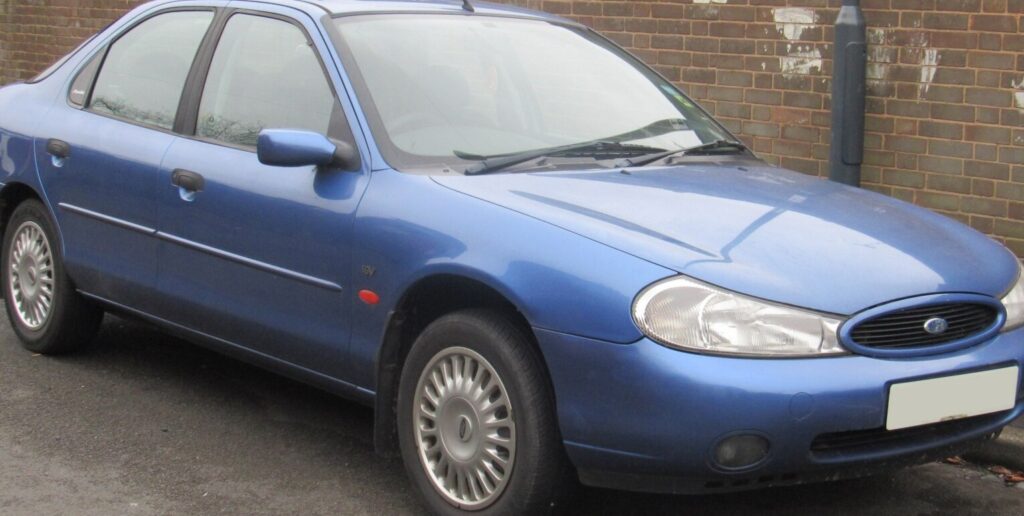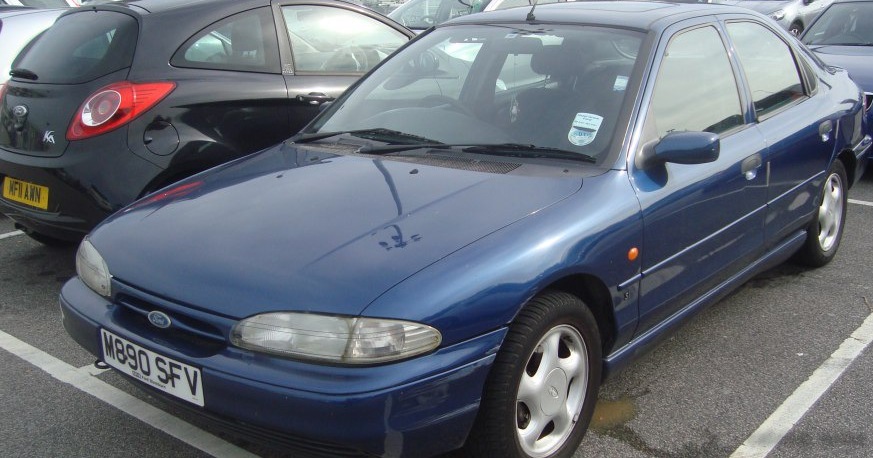
The Ford Mondeo I, launched in 1993, represented a significant step forward for Ford of Europe, aiming to replace the aging Sierra and Escort models with a single, modern family car. The Mondeo was a crucial model for Ford, intended to compete directly with established rivals like the Volkswagen Passat and Opel Vectra. Available in saloon, hatchback, and estate body styles, the Mondeo I was produced from 1993 to 1996. The 2.0i 16V variant, producing 136 horsepower, occupied a mid-range position in the Mondeo lineup, offering a balance between performance and affordability. It was positioned above the base 1.6L models and below the more powerful 2.5L V6.
Technical Specifications
| Brand | Ford |
| Model | Mondeo |
| Generation | Mondeo I Hatchback |
| Type (Engine) | 2.0 i 16V (136 Hp) |
| Start of production | 1993 |
| End of production | 1996 |
| Powertrain Architecture | Internal Combustion engine |
| Body type | Hatchback |
| Seats | 5 |
| Doors | 5 |
| Fuel consumption (combined) | 9.7 l/100 km |
| Fuel consumption (US mpg) | 24.2 US mpg |
| Fuel consumption (UK mpg) | 29.1 UK mpg |
| Fuel consumption (km/l) | 10.3 km/l |
| Fuel Type | Petrol (Gasoline) |
| Acceleration 0 – 100 km/h | 9.7 sec |
| Acceleration 0 – 62 mph | 9.7 sec |
| Acceleration 0 – 60 mph | 9.2 sec |
| Maximum speed | 209 km/h (129.87 mph) |
| Weight-to-power ratio | 9.4 kg/Hp |
| Weight-to-torque ratio | 7.1 kg/Nm |
| Power | 136 Hp @ 6000 rpm |
| Power per litre | 68.4 Hp/l |
| Torque | 180 Nm @ 4000 rpm (132.76 lb.-ft. @ 4000 rpm) |
| Engine layout | Front, Transverse |
| Engine Model/Code | NGA |
| Engine displacement | 1988 cm3 (121.32 cu. in.) |
| Number of cylinders | 4 |
| Engine configuration | Inline |
| Cylinder Bore | 84.8 mm (3.34 in.) |
| Piston Stroke | 88 mm (3.46 in.) |
| Compression ratio | 10:1 |
| Number of valves per cylinder | 4 |
| Fuel injection system | Multi-port manifold injection |
| Engine aspiration | Naturally aspirated engine |
| Valvetrain | DOHC |
| Engine oil capacity | 4.25 l (4.49 US qt | 3.74 UK qt) |
| Coolant capacity | 6.6 l (6.97 US qt | 5.81 UK qt) |
| Kerb Weight | 1280 kg (2821.92 lbs.) |
| Max. weight | 1825 kg (4023.44 lbs.) |
| Max load | 545 kg (1201.52 lbs.) |
| Trunk (boot) space – minimum | 470 l (16.6 cu. ft.) |
| Trunk (boot) space – maximum | 965 l (34.08 cu. ft.) |
| Fuel tank capacity | 61 l (16.11 US gal | 13.42 UK gal) |
| Length | 4481 mm (176.42 in.) |
| Width | 1749 mm (68.86 in.) |
| Height | 1424 mm (56.06 in.) |
| Wheelbase | 2704 mm (106.46 in.) |
| Front track | 1503 mm (59.17 in.) |
| Rear track | 1487 mm (58.54 in.) |
| Drivetrain Architecture | Front wheel drive |
| Number of gears | 5 |
| Gearbox type | Manual transmission |
| Front suspension | Wishbone |
| Rear suspension | Coil spring |
| Front brakes | Ventilated discs |
| Rear brakes | Drum |
| Assisting systems | ABS (Anti-lock braking system) |
| Steering type | Steering rack and pinion |
| Power steering | Hydraulic Steering |
| Tires size | 185/65 R14 |
| Wheel rims size | 6J x 14 |
Powertrain & Engine Architecture
The 2.0i 16V engine, internally designated as the NGA, was a naturally aspirated, inline-four cylinder engine. It featured a dual overhead camshaft (DOHC) valvetrain operating four valves per cylinder, contributing to its relatively high power output for its displacement. The engine utilized multi-port fuel injection, a common technology at the time, for precise fuel delivery. The 1988cc displacement was achieved with a bore of 84.8mm and a stroke of 88mm. The 10:1 compression ratio was typical for a performance-oriented engine of the era. The engine was transversely mounted in the front of the vehicle, driving the front wheels. The five-speed manual transmission was a standard offering, providing a good balance of performance and fuel economy. The gearbox ratios were tuned for everyday driving, prioritizing acceleration in the lower gears and comfortable cruising at highway speeds.
Driving Characteristics
The 2.0i 16V Mondeo offered a noticeable step up in performance compared to the lower-displacement engines. Acceleration to 60 mph took approximately 9.2 seconds, and it could achieve a top speed of around 129.87 mph. While not a sports car, the 136 horsepower engine provided sufficient power for confident overtaking and comfortable highway cruising. Compared to the later 2.5L V6, the 2.0i felt less powerful, particularly at higher engine speeds. However, the 2.0i was more fuel-efficient and generally considered more responsive in everyday driving situations. The manual transmission allowed for greater driver control, but the gear ratios were not particularly short, meaning the engine needed to be revved to extract maximum performance. The handling was generally considered good for a front-wheel-drive family car, with a well-tuned suspension providing a comfortable ride without excessive body roll.
Equipment & Trim Levels
The 2.0i 16V Mondeo typically came equipped with features such as power steering, central locking, electric front windows, and an adjustable steering column. Interior upholstery was typically cloth, with options for upgraded materials available. Dashboard design was functional and straightforward, with clear instrumentation. Optional extras included air conditioning, a sunroof, and an upgraded audio system. The trim level often dictated the availability of these options, with higher trims offering more standard features. Safety features included ABS (Anti-lock Braking System) as standard, a significant advancement for a family car in the early 1990s.
Chassis & Braking
The Mondeo I utilized a front-wheel-drive chassis with independent wishbone suspension at the front and a coil spring rear suspension. This setup provided a good balance of ride comfort and handling. The front brakes were ventilated discs, offering good stopping power, while the rear brakes were drums, a cost-saving measure common in this class of vehicle. ABS was standard, enhancing braking performance and stability, particularly on slippery surfaces. The steering was a rack and pinion system with hydraulic power assistance, providing precise and responsive steering feel.
Market Reception & Comparison
The Ford Mondeo I was generally well-received by automotive critics. The 2.0i 16V variant was praised for its blend of performance, fuel economy, and affordability. It was considered a strong competitor to the Volkswagen Passat and Opel Vectra. Fuel economy was respectable for the time, averaging around 24.2 US mpg. Reliability was generally good, although some owners reported issues with the cooling system and electrical components. Compared to the 1.6L models, the 2.0i offered a significant performance boost, while the 2.5L V6 provided even more power but at the expense of fuel economy and increased cost.
Legacy
The Ford Mondeo I established the Mondeo nameplate as a serious contender in the European family car market. The 2.0i 16V engine proved to be a reliable and durable unit, and many examples are still on the road today. While not particularly collectible, well-maintained examples of the 2.0i 16V Mondeo are sought after by enthusiasts looking for a classic 1990s family car. The Mondeo’s success paved the way for subsequent generations, solidifying its position as one of Ford’s most important models in Europe. The NGA engine, while superseded by newer designs, remains a testament to Ford’s engineering capabilities of the early 1990s.