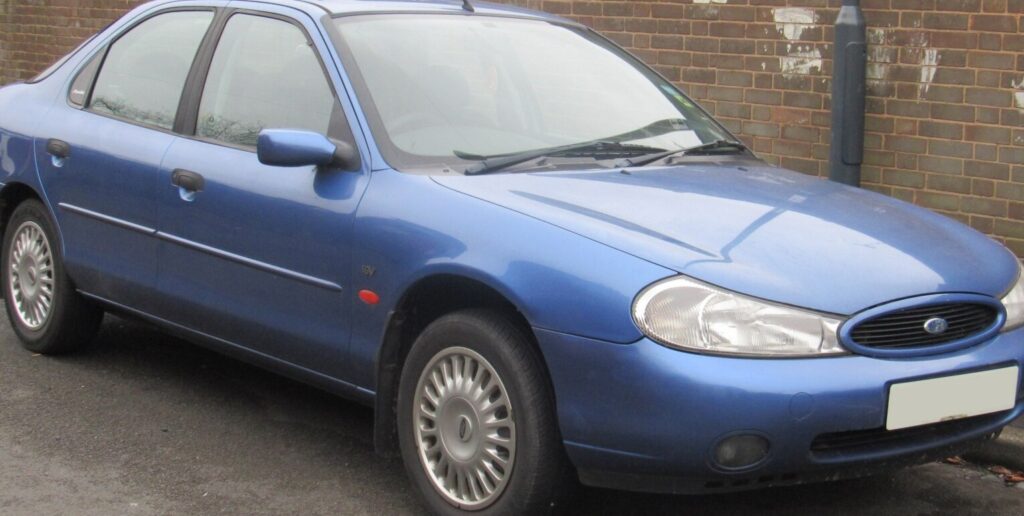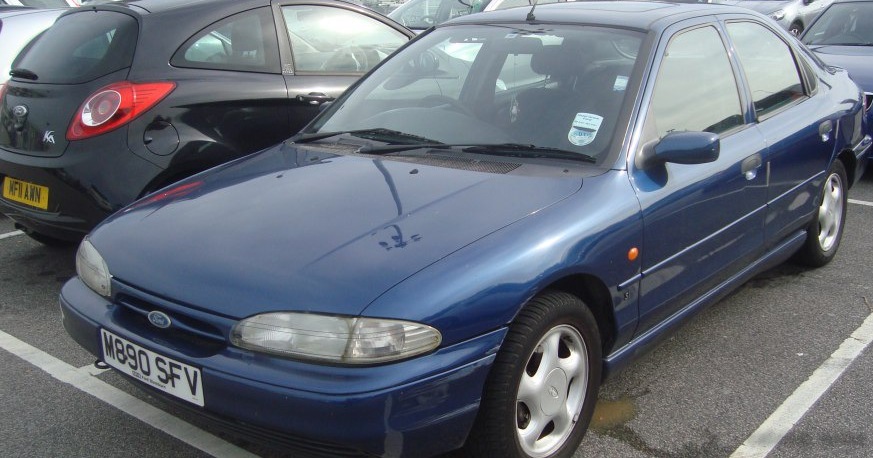
The Ford Mondeo I, launched in 1993, represented a significant step forward for Ford of Europe, replacing the Sierra and Escort ranges with a single, modern family car. The Mondeo was designed to compete directly with established rivals like the Volkswagen Passat and Opel Vectra, offering a blend of practicality, comfort, and driving dynamics. Production of the first generation Mondeo spanned from 1993 to 1996, with a facelift occurring in 1996. Within the first generation, the 2.0i 16V 4×4 variant, produced between 1994 and 1996, occupied a mid-to-upper position in the lineup, appealing to buyers seeking all-weather capability and a more spirited driving experience than the base models offered. This model was primarily sold in European markets, where demand for all-wheel-drive vehicles was higher.
Technical Specifications
| Brand | Ford |
| Model | Mondeo |
| Generation | Mondeo I Hatchback |
| Type (Engine) | 2.0 i 16V 4×4 (136 Hp) |
| Start of production | 1994 |
| End of production | 1996 |
| Powertrain Architecture | Internal Combustion engine |
| Body type | Hatchback |
| Seats | 4 |
| Doors | 5 |
| Fuel consumption (combined) | 8.8 l/100 km |
| Fuel consumption (US mpg) | 26.7 US mpg |
| Fuel consumption (UK mpg) | 32.1 UK mpg |
| Fuel consumption (km/l) | 11.4 km/l |
| Fuel Type | Petrol (Gasoline) |
| Acceleration 0 – 100 km/h | 10.1 sec |
| Acceleration 0 – 62 mph | 10.1 sec |
| Acceleration 0 – 60 mph | 9.6 sec |
| Maximum speed | 203 km/h (126.14 mph) |
| Weight-to-power ratio | 10.1 kg/Hp |
| Weight-to-torque ratio | 7.6 kg/Nm |
| Power | 136 Hp @ 6000 rpm |
| Power per litre | 68.4 Hp/l |
| Torque | 180 Nm @ 4000 rpm (132.76 lb.-ft. @ 4000 rpm) |
| Engine layout | Front, Transverse |
| Engine Model/Code | NGA |
| Engine displacement | 1988 cm3 (121.32 cu. in.) |
| Number of cylinders | 4 |
| Engine configuration | Inline |
| Cylinder Bore | 84.8 mm (3.34 in.) |
| Piston Stroke | 88 mm (3.46 in.) |
| Compression ratio | 10:1 |
| Number of valves per cylinder | 4 |
| Fuel injection system | Multi-port manifold injection |
| Engine aspiration | Naturally aspirated engine |
| Valvetrain | DOHC |
| Engine oil capacity | 4.25 l (4.49 US qt | 3.74 UK qt) |
| Coolant capacity | 6.6 l (6.97 US qt | 5.81 UK qt) |
| Kerb Weight | 1370 kg (3020.33 lbs.) |
| Max. weight | 1900 kg (4188.78 lbs.) |
| Max load | 530 kg (1168.45 lbs.) |
| Trunk (boot) space – minimum | 470 l (16.6 cu. ft.) |
| Trunk (boot) space – maximum | 965 l (34.08 cu. ft.) |
| Fuel tank capacity | 61 l (16.11 US gal | 13.42 UK gal) |
| Length | 4481 mm (176.42 in.) |
| Width | 1749 mm (68.86 in.) |
| Height | 1424 mm (56.06 in.) |
| Wheelbase | 2704 mm (106.46 in.) |
| Front track | 1503 mm (59.17 in.) |
| Rear track | 1487 mm (58.54 in.) |
| Drive wheel | All wheel drive (4×4) |
| Number of gears | 5 |
| Gearbox type | Manual transmission |
| Front suspension | Wishbone |
| Rear suspension | Coil spring |
| Front brakes | Ventilated discs |
| Rear brakes | Drum |
| Assisting systems | ABS (Anti-lock braking system) |
| Steering type | Steering rack and pinion |
| Power steering | Hydraulic Steering |
| Tires size | 195/65 R15 |
Powertrain & Engine Architecture
The 2.0i 16V engine, internally designated as the NGA, was a naturally aspirated, inline-four cylinder powerplant. It featured a dual overhead camshaft (DOHC) valvetrain operating four valves per cylinder, contributing to its relatively high output for its displacement. Fuel delivery was handled by a multi-port fuel injection system, providing precise fuel metering for improved efficiency and performance. The engine produced 136 horsepower at 6000 rpm and 180 Nm (132.76 lb-ft) of torque at 4000 rpm. This engine was paired with a five-speed manual transmission, directing power to all four wheels via a viscous coupling all-wheel-drive system. The all-wheel-drive system was primarily reactive, engaging the rear wheels when front wheel slip was detected, enhancing traction in adverse conditions.
Driving Characteristics
The 2.0i 16V 4×4 Mondeo offered a noticeable step up in performance compared to the lower-powered 1.6 and 1.8 liter versions. While not a sports car, the 136 hp engine provided adequate acceleration for everyday driving and overtaking maneuvers. The all-wheel-drive system significantly improved grip, particularly on slippery surfaces, making it a confident handler in all weather conditions. The five-speed manual transmission allowed for precise control over the engine’s powerband. Compared to the 1.8L automatic, the manual offered a more engaging driving experience and slightly better fuel economy. The 2.0i 4×4 wasn’t as nimble as front-wheel-drive Mondeos due to the added weight of the AWD system, but the enhanced traction more than compensated for this in many situations.
Equipment & Trim Levels
The 2.0i 16V 4×4 typically came equipped with a reasonable level of standard features. These included central locking, electric front windows, power steering, and an anti-lock braking system (ABS). Interior trim generally consisted of cloth upholstery, with options for upgraded materials available. Optional extras could include air conditioning, a sunroof, and a higher-end audio system. The trim level often dictated the quality of the interior materials and the availability of additional convenience features. The 4×4 variant was often specified with higher trim levels, reflecting its higher price point and appeal to buyers seeking a more well-equipped vehicle.
Chassis & Braking
The Mondeo I utilized a MacPherson strut front suspension and a coil spring rear suspension. The 4×4 models often featured slightly stiffer spring rates to compensate for the added weight of the all-wheel-drive components. Braking duties were handled by ventilated discs at the front and drum brakes at the rear. The ABS system provided enhanced braking control, particularly in emergency situations. Stabilizer bars were fitted to both the front and rear axles to reduce body roll during cornering.
Market Reception & Comparison
The Mondeo I 2.0i 16V 4×4 was generally well-received by automotive critics. It was praised for its spacious interior, comfortable ride, and capable all-wheel-drive system. However, some reviewers noted that the engine could feel slightly strained at higher speeds, and the fuel economy wasn’t exceptional. Compared to the 1.8L automatic version, the 2.0i 4×4 offered significantly better performance and a more engaging driving experience, but at a higher price and with slightly increased running costs. The 2.0i 4×4 also provided a compelling alternative to rivals like the Volkswagen Passat 4Motion and Audi 80 quattro.
Legacy
The Ford Mondeo I 2.0i 16V 4×4, while not a particularly rare or collectible model, remains a reasonably popular choice among classic Ford enthusiasts. The NGA engine is generally considered to be a reliable unit, although regular maintenance is essential. The all-wheel-drive system is relatively robust, but the viscous coupling can require replacement over time. Today, well-maintained examples of the 2.0i 16V 4×4 can be found on the used car market, offering a practical and affordable option for those seeking a classic Ford with all-weather capability. Its impact lies in establishing the Mondeo as a strong contender in the family car segment and demonstrating Ford’s commitment to offering a diverse range of models to suit different customer needs.