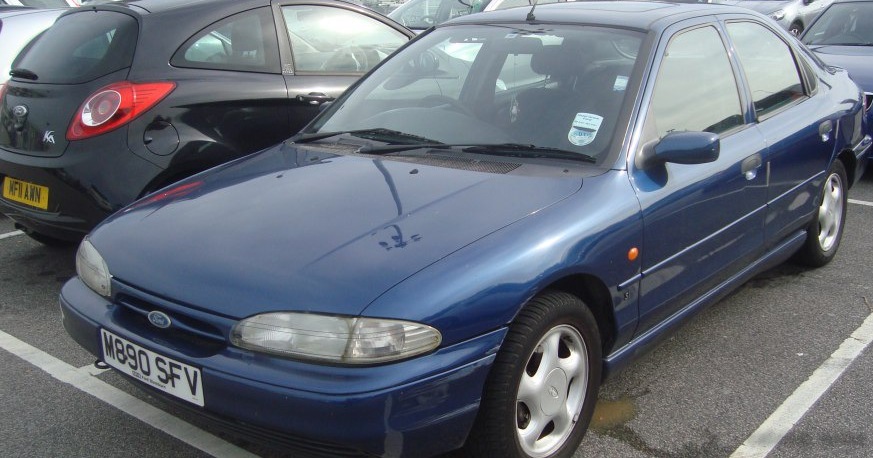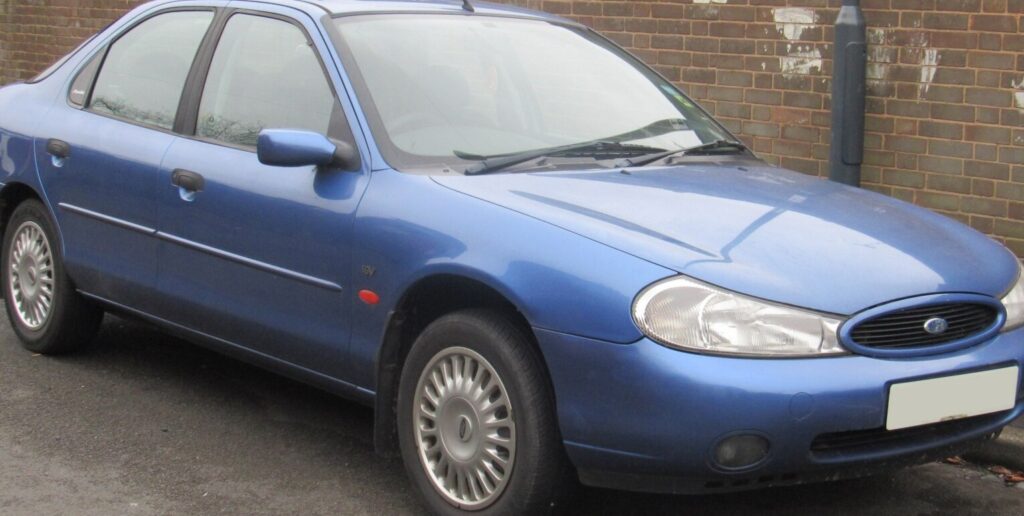
The Ford Mondeo I, launched in 1993, represented a significant step forward for Ford of Europe, replacing the aging Sierra and Escort ranges with a single, modern family car. The facelifted version, introduced in 1996, brought subtle styling revisions and mechanical improvements. Among the engine options available was the 1.8 TD (90 hp) variant, a diesel-powered model aimed at providing economical transportation. Production of this specific configuration ran from 1995 to 2001, and it occupied the lower-mid range of the Mondeo lineup, positioned as a practical and fuel-efficient choice for buyers prioritizing economy over outright performance. This model was primarily sold in Europe, where diesel engines held a much larger market share than in the United States.
Technical Specifications
| Brand | Ford |
| Model | Mondeo |
| Generation | Mondeo I Hatchback (facelift 1996) |
| Type (Engine) | 1.8 TD (90 Hp) |
| Start of production | 1995 |
| End of production | 2001 |
| Powertrain Architecture | Internal Combustion engine |
| Body type | Hatchback |
| Seats | 5 |
| Doors | 5 |
| Fuel consumption (combined) | 6.3 l/100 km (37.3 US mpg, 44.8 UK mpg, 15.9 km/l) |
| Fuel Type | Diesel |
| Acceleration 0 – 100 km/h | 13.2 sec |
| Acceleration 0 – 62 mph | 13.2 sec |
| Acceleration 0 – 60 mph | 12.5 sec |
| Maximum speed | 180 km/h (111.85 mph) |
| Weight-to-power ratio | 15.2 kg/Hp, 65.6 Hp/tonne |
| Weight-to-torque ratio | 7.6 kg/Nm, 131.3 Nm/tonne |
| Power | 90 Hp @ 4500 rpm |
| Power per litre | 51.3 Hp/l |
| Torque | 180 Nm @ 2000 rpm (132.76 lb.-ft. @ 2000 rpm) |
| Engine layout | Front, Transverse |
| Engine Model/Code | Endura / RFN |
| Engine displacement | 1753 cm3 (106.97 cu. in.) |
| Number of cylinders | 4 |
| Engine configuration | Inline |
| Cylinder Bore | 82.5 mm (3.25 in.) |
| Piston Stroke | 82 mm (3.23 in.) |
| Compression ratio | 21.5:1 |
| Number of valves per cylinder | 2 |
| Fuel injection system | Precombustion chamber injection |
| Engine aspiration | Turbocharger |
| Valvetrain | OHC |
| Engine oil capacity | 5.1 l (5.39 US qt | 4.49 UK qt) |
| Coolant | 9.3 l (9.83 US qt | 8.18 UK qt) |
| Kerb Weight | 1371 kg (3022.54 lbs.) |
| Max. weight | 1860 kg (4100.6 lbs.) |
| Max load | 489 kg (1078.06 lbs.) |
| Trunk (boot) space – minimum | 460 l (16.24 cu. ft.) |
| Trunk (boot) space – maximum | 1290 l (45.56 cu. ft.) |
| Fuel tank capacity | 61 l (16.11 US gal | 13.42 UK gal) |
| Length | 4556 mm (179.37 in.) |
| Width | 1751 mm (68.94 in.) |
| Height | 1427 mm (56.18 in.) |
| Wheelbase | 2704 mm (106.46 in.) |
| Front track | 1503 mm (59.17 in.) |
| Rear (Back) track | 1487 mm (58.54 in.) |
| Drivetrain Architecture | The Internal combustion engine (ICE) drives the front wheels of the vehicle. |
| Drive wheel | Front wheel drive |
| Number of gears and type of gearbox | 5 gears, manual transmission |
| Front suspension | Wishbone |
| Rear suspension | Coil spring |
| Front brakes | Ventilated discs |
| Rear brakes | Drum |
| Assisting systems | ABS (Anti-lock braking system) |
| Steering type | Steering rack and pinion |
| Power steering | Hydraulic Steering |
| Tires size | 185/65 R14 |
Powertrain & Engine Architecture
The 1.8 TD Mondeo utilized the Ford Endura-D engine, specifically the RFN variant. This engine was a 1.8-liter, inline-four cylinder diesel, employing precombustion chamber injection. This system, common in European diesels of the era, involved injecting fuel into a small pre-chamber within the cylinder head, where it partially combusted before igniting the main charge. This design aided in smoother combustion and reduced engine noise compared to direct injection systems. The RFN engine featured a single overhead camshaft (OHC) operating two valves per cylinder. A turbocharger was fitted to boost power output to 90 horsepower at 4500 rpm and 180 Nm (132.76 lb-ft) of torque at 2000 rpm. The engine was transversely mounted in the front of the vehicle. The transmission was a five-speed manual gearbox, chosen for its efficiency and cost-effectiveness. While an automatic transmission was available on other Mondeo variants, it wasn’t offered with the 1.8 TD engine.
Driving Characteristics
The 1.8 TD Mondeo, with its 90 hp and manual transmission, offered a practical but not particularly sporty driving experience. Acceleration was modest, taking around 13.2 seconds to reach 62 mph (100 km/h). The engine’s strength lay in its torque, providing reasonable pulling power for everyday driving and overtaking maneuvers. The five-speed gearbox allowed for efficient cruising on highways, while the relatively long gearing helped to maximize fuel economy. Compared to the higher-output petrol engines (like the 2.0L or V6), the 1.8 TD felt significantly slower. However, it offered a substantial improvement in fuel economy, making it a popular choice for high-mileage drivers. The manual transmission provided a more engaging driving experience than the automatic options available on other Mondeo trims.
Equipment & Trim Levels
The 1.8 TD typically came equipped with a fairly basic level of trim, reflecting its position as an entry-level or mid-range model. Standard features generally included power steering, central locking, and an adjustable steering column. Interior upholstery was typically cloth, and the dashboard featured a functional but unpretentious design. Optional extras included air conditioning, electric windows, and an upgraded audio system. Higher trim levels, such as the Ghia, offered more luxurious appointments, but were not typically paired with the 1.8 TD engine.
Chassis & Braking
The Mondeo I utilized a front-wheel-drive layout with independent wishbone suspension at the front and a coil spring rear suspension. This setup provided a comfortable ride and decent handling characteristics. The 1.8 TD models were equipped with ventilated disc brakes at the front and drum brakes at the rear. Anti-lock Braking System (ABS) was standard, enhancing safety. The suspension was tuned for comfort rather than outright performance, and stabilizer bars were used to reduce body roll during cornering. The chassis was designed to accommodate a range of engine and transmission combinations, and the 1.8 TD’s weight of approximately 1371 kg (3022.54 lbs) was relatively manageable for the engine’s output.
Market Reception & Comparison
The 1.8 TD Mondeo was well-received in Europe as a practical and economical family car. Critics praised its fuel efficiency and comfortable ride, but noted its lack of outright performance. Compared to the petrol-powered Mondeos, the 1.8 TD offered significantly better fuel economy, but at the expense of acceleration and refinement. The 1.9 TDI versions, offered by Volkswagen (with whom Ford had a close partnership at the time), were often seen as a more refined and powerful alternative, but also came at a higher price point. The 1.8 TD appealed to buyers who prioritized economy and practicality over sporty driving dynamics.
Legacy
The Ford Mondeo I 1.8 TD, while not a performance icon, proved to be a reliable and durable powertrain. The Endura-D engine, despite its indirect injection system, was known for its longevity and relatively low maintenance costs. Today, these cars are relatively rare, but well-maintained examples can still be found. They represent a significant milestone in Ford’s history, marking the transition to a more modern and unified family car range. The 1.8 TD variant remains a popular choice among enthusiasts seeking a classic European diesel with good fuel economy and a simple, robust mechanical design. Parts availability can be a challenge, but the engine’s simplicity makes it relatively easy to repair for those with mechanical skills.