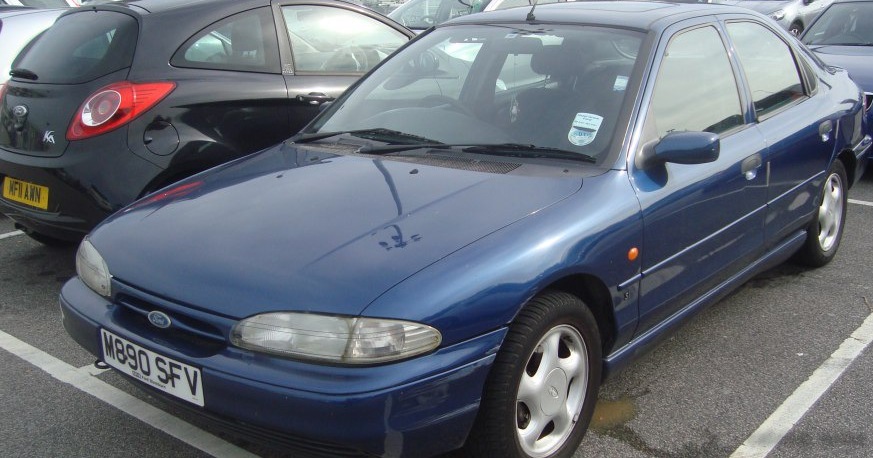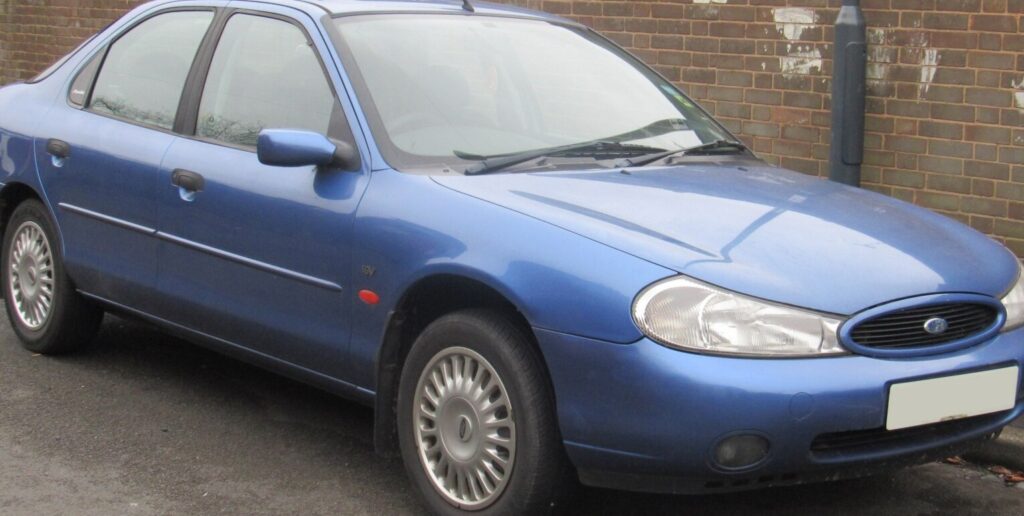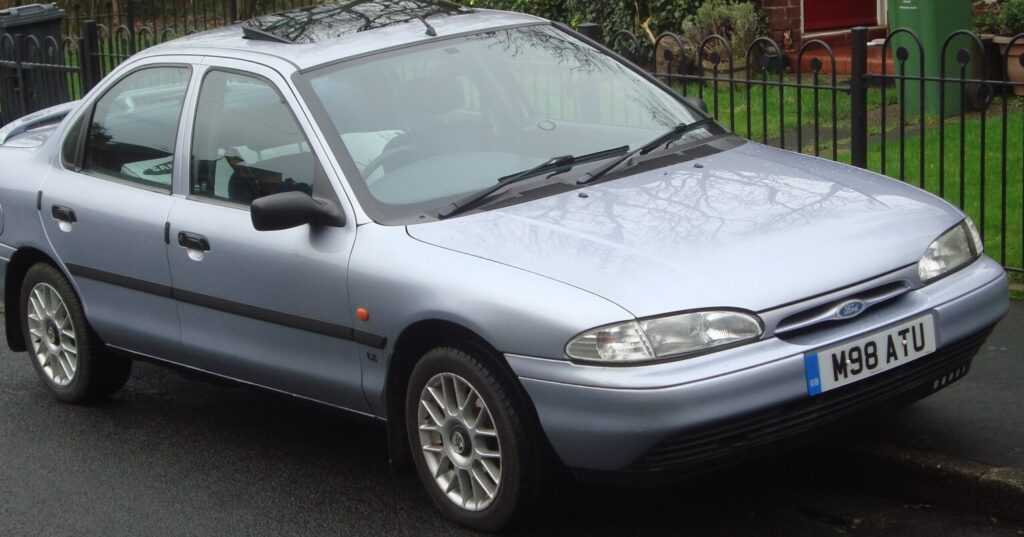
The Ford Mondeo I Sedan 1.6 i 16V, produced between 1994 and 1996, represented an important entry point into the first generation of the Mondeo, Ford’s ambitious replacement for the Sierra and Escort ranges in Europe. Positioned as a mainstream family sedan, this variant offered a balance of affordability and practicality, aiming to appeal to buyers seeking a comfortable and reasonably efficient vehicle. It was a key component of Ford’s strategy to offer a unified, modern platform – the CDW27 – across multiple market segments. This model was primarily sold in Europe, where it competed with vehicles like the Vauxhall/Opel Vectra, Volkswagen Passat, and Renault Laguna.
Technical Specifications
| Brand | Ford |
| Model | Mondeo |
| Generation | Mondeo I Sedan |
| Type (Engine) | 1.6 i 16V (88 Hp) |
| Start of production | 1994 |
| End of production | 1996 |
| Powertrain Architecture | Internal Combustion engine |
| Body type | Sedan |
| Seats | 5 |
| Doors | 4 |
| Fuel consumption (combined) | 7.6 l/100 km (30.9 US mpg, 37.2 UK mpg, 13.2 km/l) |
| Fuel Type | Petrol (Gasoline) |
| Acceleration 0 – 100 km/h | 13.7 sec |
| Acceleration 0 – 62 mph | 13.7 sec |
| Acceleration 0 – 60 mph | 13 sec |
| Maximum speed | 180 km/h (111.85 mph) |
| Weight-to-power ratio | 14.1 kg/Hp, 71 Hp/tonne |
| Weight-to-torque ratio | 9.2 kg/Nm, 108.9 Nm/tonne |
| Power | 88 Hp @ 5250 rpm |
| Power per litre | 55.1 Hp/l |
| Torque | 135 Nm @ 3500 rpm (99.57 lb.-ft. @ 3500 rpm) |
| Engine layout | Front, Transverse |
| Engine Model/Code | L1J |
| Engine displacement | 1597 cm3 (97.45 cu. in.) |
| Number of cylinders | 4 |
| Engine configuration | Inline |
| Cylinder Bore | 76 mm (2.99 in.) |
| Piston Stroke | 88 mm (3.46 in.) |
| Compression ratio | 10.3:1 |
| Number of valves per cylinder | 4 |
| Fuel injection system | Multi-port manifold injection |
| Engine aspiration | Naturally aspirated engine |
| Valvetrain | DOHC |
| Engine oil capacity | 4.25 l (4.49 US qt | 3.74 UK qt) |
| Coolant | 6.6 l (6.97 US qt | 5.81 UK qt) |
| Kerb Weight | 1240 kg (2733.73 lbs.) |
| Max. weight | 1800 kg (3968.32 lbs.) |
| Max load | 560 kg (1234.59 lbs.) |
| Trunk (boot) space – minimum | 480 l (16.95 cu. ft.) |
| Fuel tank capacity | 61 l (16.11 US gal | 13.42 UK gal) |
| Length | 4481 mm (176.42 in.) |
| Width | 1749 mm (68.86 in.) |
| Height | 1428 mm (56.22 in.) |
| Wheelbase | 2704 mm (106.46 in.) |
| Front track | 1503 mm (59.17 in.) |
| Rear (Back) track | 1487 mm (58.54 in.) |
| Drivetrain Architecture | The Internal combustion engine (ICE) drives the front wheels of the vehicle. |
| Drive wheel | Front wheel drive |
| Number of gears and type of gearbox | 5 gears, manual transmission |
| Front suspension | Wishbone |
| Rear suspension | Coil spring |
| Front brakes | Ventilated discs |
| Rear brakes | Drum |
| Assisting systems | ABS (Anti-lock braking system) |
| Steering type | Steering rack and pinion |
| Power steering | Hydraulic Steering |
| Tires size | 185/65 R14 |
| Wheel rims size | 6J x 14 |
Powertrain & Engine Architecture
The 1.6 i 16V engine, designated with the code L1J, was a naturally aspirated, four-cylinder inline engine. It featured a dual overhead camshaft (DOHC) valvetrain operating four valves per cylinder, contributing to its relatively high power output for its displacement. The engine utilized multi-port fuel injection, a common technology at the time, to deliver fuel directly into the intake ports. This system, combined with the 10.3:1 compression ratio, helped optimize combustion efficiency. The engine’s 88 horsepower at 5250 rpm and 135 Nm (99.57 lb-ft) of torque at 3500 rpm were respectable figures for a family sedan of this era. The engine was transversely mounted in the front of the vehicle, driving the front wheels. The standard transmission for this variant was a five-speed manual gearbox, although a four-speed automatic transmission was also offered as an option, impacting performance and fuel economy.
Driving Characteristics
The Mondeo 1.6 i 16V, particularly with the manual transmission, offered a reasonably engaging driving experience. While not a performance car, the engine provided adequate power for everyday driving and highway cruising. The five-speed manual allowed drivers to keep the engine in its optimal power band. The automatic transmission, while offering convenience, noticeably dulled acceleration. 0-60 mph took around 13 seconds, and top speed was limited to 111.85 mph. The suspension, featuring wishbone front suspension and coil springs in the rear, provided a comfortable ride, absorbing bumps and imperfections in the road well. Steering was via a hydraulic rack and pinion system, offering a decent level of feedback and precision.
Equipment & Trim Levels
The 1.6 i 16V typically represented the entry-level trim in the Mondeo range. Standard equipment included power steering, central locking, and an anti-lock braking system (ABS). Interior appointments were functional and durable, with cloth upholstery and a relatively simple dashboard layout. Optional extras included air conditioning, electric windows, and a radio/cassette player. Higher trim levels, such as the Ghia, offered more luxurious features like leather upholstery, alloy wheels, and upgraded audio systems. The base trim focused on providing essential features at an affordable price point.
Chassis & Braking
The Mondeo I Sedan utilized a front-wheel-drive chassis with ventilated disc brakes at the front and drum brakes at the rear. The drum brakes on the rear were a cost-saving measure common in this segment. ABS was standard, enhancing braking safety. The suspension setup, as mentioned, comprised wishbone front suspension and coil springs at the rear. Stabilizer bars were fitted to both axles to reduce body roll during cornering. The chassis was designed to provide a balance between comfort and handling, prioritizing ride quality for everyday use.
Market Reception & Comparison
The Mondeo 1.6 i 16V was generally well-received by automotive critics as a practical and affordable family car. However, some reviewers noted that the engine felt somewhat underpowered, especially when paired with the automatic transmission. Compared to the higher-specification Mondeo variants, such as the 2.0L or V6 models, the 1.6L offered significantly less performance. However, it also offered better fuel economy – around 30.9 US mpg combined – and lower running costs. The 1.6L appealed to buyers who prioritized economy and practicality over outright performance. Compared to rivals like the Vauxhall/Opel Vectra and Volkswagen Passat, the Mondeo offered a more modern design and a more engaging driving experience.
Legacy
The Ford Mondeo I Sedan 1.6 i 16V, while not the most powerful or luxurious variant, played a crucial role in establishing the Mondeo as a successful family car in Europe. The L1J engine proved to be relatively reliable, although regular maintenance was essential. Today, these cars are relatively rare and are often sought after by enthusiasts and collectors. The 1.6L engine, while not known for its high performance, is generally considered to be durable and relatively easy to maintain. The Mondeo I, in general, is remembered as a significant step forward for Ford, offering a modern and well-rounded package that challenged established rivals in the family car segment.