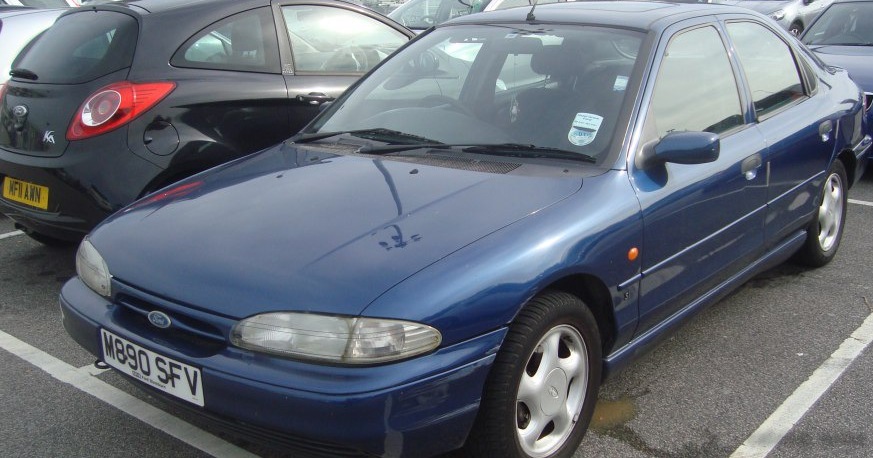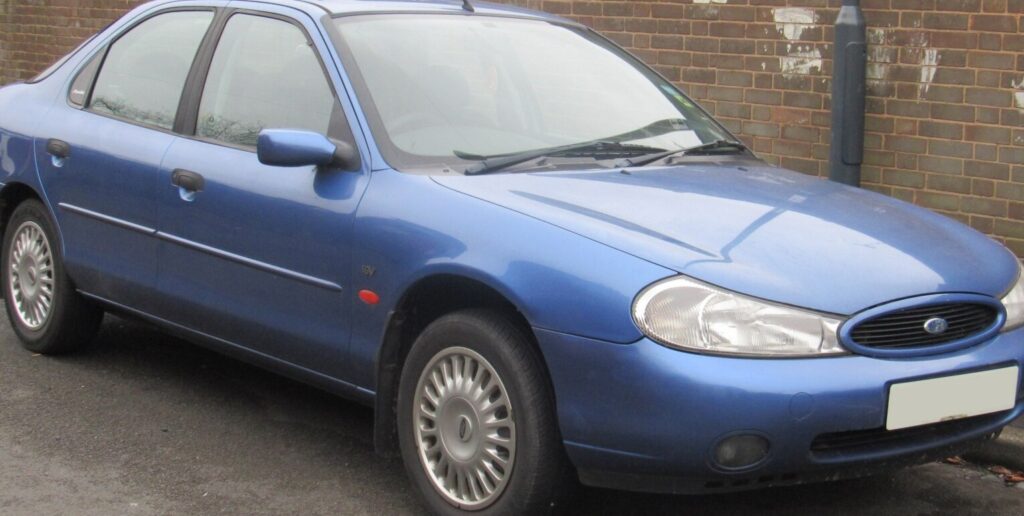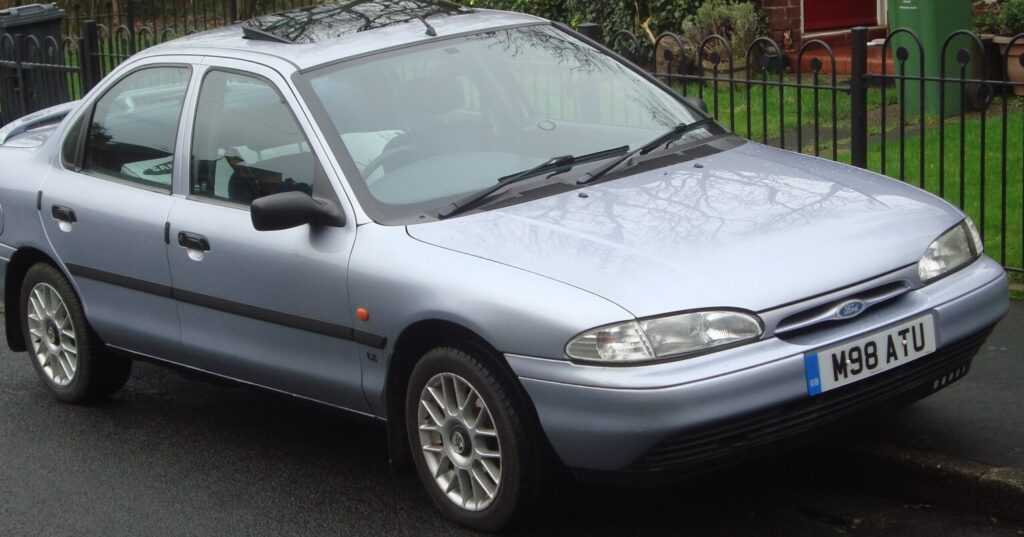
The Ford Mondeo I Sedan 1.6 i 16V, produced between 1993 and 1996, represented Ford’s entry into the mid-size family car segment, aiming to replace the aging Sierra and Escort models. This particular variant, equipped with a 1.6-liter, 16-valve engine producing 90 horsepower, served as the base model for the Mondeo sedan in many European markets. It was positioned as an affordable and economical option, prioritizing fuel efficiency and practicality over outright performance. The Mondeo I was a significant vehicle for Ford, introducing a new level of sophistication and driving dynamics to the company’s mainstream offerings, and it played a key role in establishing Ford of Europe as a competitive force.
Technical Specifications
| Brand | Ford |
| Model | Mondeo |
| Generation | Mondeo I Sedan |
| Type (Engine) | 1.6 i 16V (90 Hp) |
| Start of production | 1993 |
| End of production | 1996 |
| Powertrain Architecture | Internal Combustion engine |
| Body type | Sedan |
| Seats | 5 |
| Doors | 4 |
| Fuel consumption (urban) | 10.1 l/100 km (23.3 US mpg, 28 UK mpg, 9.9 km/l) |
| Fuel consumption (extra urban) | 5.5 l/100 km (42.8 US mpg, 51.4 UK mpg, 18.2 km/l) |
| Fuel consumption (combined) | 7.1 l/100 km (33.1 US mpg, 39.8 UK mpg, 14.1 km/l) |
| Fuel Type | Petrol (Gasoline) |
| Acceleration 0 – 100 km/h | 13.5 sec |
| Acceleration 0 – 62 mph | 13.5 sec |
| Acceleration 0 – 60 mph | 12.8 sec |
| Maximum speed | 180 km/h (111.85 mph) |
| Weight-to-power ratio | 13.5 kg/Hp, 74.1 Hp/tonne |
| Weight-to-torque ratio | 9.1 kg/Nm, 110.3 Nm/tonne |
| Power | 90 Hp @ 5500 rpm |
| Power per litre | 56.4 Hp/l |
| Torque | 134 Nm @ 3000 rpm (98.83 lb.-ft. @ 3000 rpm) |
| Engine layout | Front, Transverse |
| Engine Model/Code | L1F |
| Engine displacement | 1597 cm3 (97.45 cu. in.) |
| Number of cylinders | 4 |
| Engine configuration | Inline |
| Cylinder Bore | 76 mm (2.99 in.) |
| Piston Stroke | 88 mm (3.46 in.) |
| Compression ratio | 10.3:1 |
| Number of valves per cylinder | 4 |
| Fuel injection system | Multi-port manifold injection |
| Engine aspiration | Naturally aspirated engine |
| Valvetrain | DOHC |
| Engine oil capacity | 4.25 l (4.49 US qt | 3.74 UK qt) |
| Coolant | 6.6 l (6.97 US qt | 5.81 UK qt) |
| Kerb Weight | 1215 kg (2678.62 lbs.) |
| Max. weight | 1725 kg (3802.97 lbs.) |
| Max load | 510 kg (1124.36 lbs.) |
| Trunk (boot) space – minimum | 480 l (16.95 cu. ft.) |
| Fuel tank capacity | 61 l (16.11 US gal | 13.42 UK gal) |
| Length | 4480 mm (176.38 in.) |
| Width | 1750 mm (68.9 in.) |
| Height | 1430 mm (56.3 in.) |
| Wheelbase | 2705 mm (106.5 in.) |
| Front track | 1505 mm (59.25 in.) |
| Rear (Back) track | 1485 mm (58.46 in.) |
| Drivetrain Architecture | The Internal combustion engine (ICE) drives the front wheels of the vehicle. |
| Drive wheel | Front wheel drive |
| Number of gears and type of gearbox | 5 gears, manual transmission |
| Front suspension | Wishbone |
| Rear suspension | Coil spring |
| Front brakes | Disc |
| Rear brakes | Drum |
| Assisting systems | ABS (Anti-lock braking system) |
| Steering type | Steering rack and pinion |
| Power steering | Hydraulic Steering |
| Tires size | 185/65 R14 |
| Wheel rims size | 6J x 14 |
Powertrain & Engine Architecture
The 1.6-liter engine, designated L1F, was a naturally aspirated, inline-four cylinder unit. It featured a dual overhead camshaft (DOHC) valvetrain with four valves per cylinder, contributing to its relatively high specific output for the time. The engine utilized multi-port fuel injection, a significant upgrade over earlier carburetor-based systems, improving fuel efficiency and throttle response. The 90 horsepower output was achieved at 5500 rpm, while peak torque of 134 Nm (98.83 lb-ft) arrived at 3000 rpm. The engine’s compression ratio was 10.3:1. The Mondeo 1.6 i 16V was typically paired with a five-speed manual transmission, although a four-speed automatic transmission was also available, albeit less common. The automatic transmission, while offering convenience, did impact acceleration and fuel economy compared to the manual version.
Driving Characteristics
The 1.6-liter engine in the Mondeo I Sedan provided adequate, but not exhilarating, performance. Acceleration from 0 to 60 mph took around 12.8 to 13.5 seconds, and top speed was approximately 112 mph. The engine felt somewhat strained when pushed hard, particularly when fully loaded or tackling steep inclines. The automatic transmission, when equipped, further dulled the driving experience, with noticeable delays in gear changes. However, for everyday commuting and general driving, the 1.6-liter engine proved to be reasonably refined and fuel-efficient. The Mondeo’s chassis, a significant improvement over its predecessors, offered a comfortable ride and predictable handling, making it a pleasant car to drive even with the base engine.
Equipment & Trim Levels
The 1.6 i 16V Mondeo typically came with a modest level of standard equipment. This included central locking, power steering, and an adjustable steering column. Interior upholstery was typically cloth, and the dashboard featured a functional, if somewhat basic, design. Optional extras included air conditioning, electric windows, and an upgraded audio system. Higher trim levels, such as the Ghia, offered more luxurious appointments, including leather upholstery, alloy wheels, and additional comfort features. The base 1.6L model was aimed at buyers prioritizing value and practicality, while the higher trims catered to those seeking more comfort and style.
Chassis & Braking
The Mondeo I Sedan featured an independent front suspension with MacPherson struts and a multi-link rear suspension, providing a good balance of ride comfort and handling. Front brakes were ventilated discs, while rear brakes were drums. Anti-lock Braking System (ABS) was available as an option, enhancing safety. The suspension was tuned to provide a comfortable ride, but it also allowed for reasonably confident cornering. The weight distribution was fairly balanced, contributing to the car’s stability.
Market Reception & Comparison
The Mondeo I Sedan 1.6 i 16V was generally well-received by automotive critics as a sensible and practical family car. However, the 1.6-liter engine was often criticized for being underpowered, particularly when compared to the more potent 2.0-liter and V6 engine options available in the Mondeo lineup. The 2.0-liter engine offered a significant performance boost, while the V6 provided a more luxurious and refined driving experience. In terms of fuel economy, the 1.6-liter engine was the most efficient in the range, making it an attractive option for budget-conscious buyers. Reliability was generally good, although some owners reported minor issues with the fuel injection system.
Legacy
The Ford Mondeo I Sedan 1.6 i 16V, while not the most powerful or luxurious variant, played a crucial role in establishing the Mondeo as a successful and competitive family car. The L1F engine proved to be reasonably durable, and many examples are still on the road today. In the used car market, these models are often sought after by enthusiasts looking for an affordable and reliable classic Ford. While not a performance icon, the 1.6-liter Mondeo represents a significant step forward for Ford in terms of design, engineering, and driving dynamics, and it remains a popular choice for those seeking a practical and economical mid-size sedan.