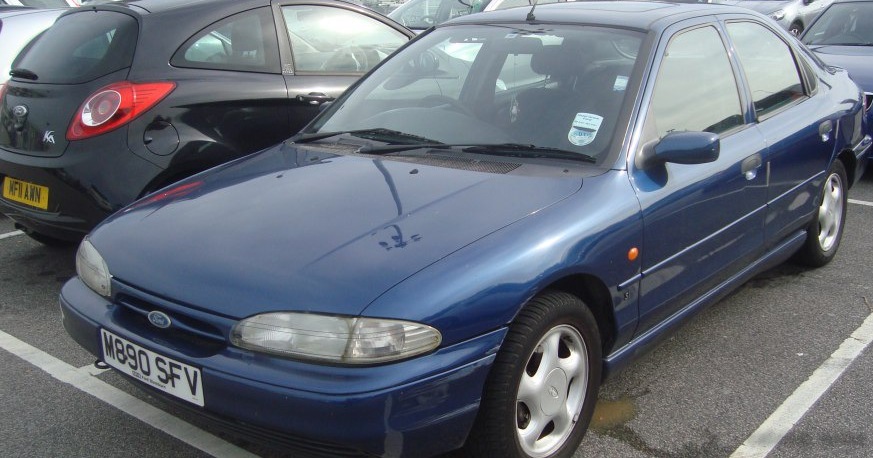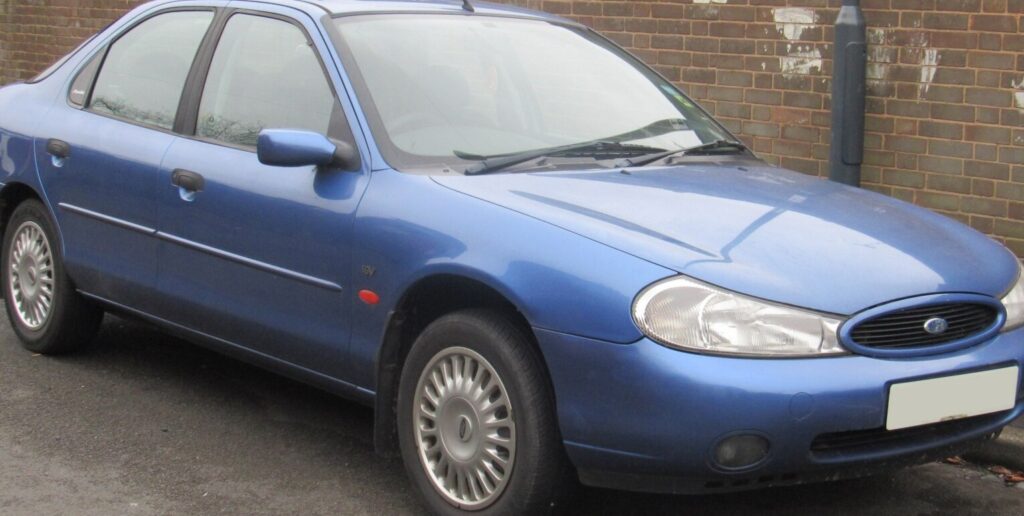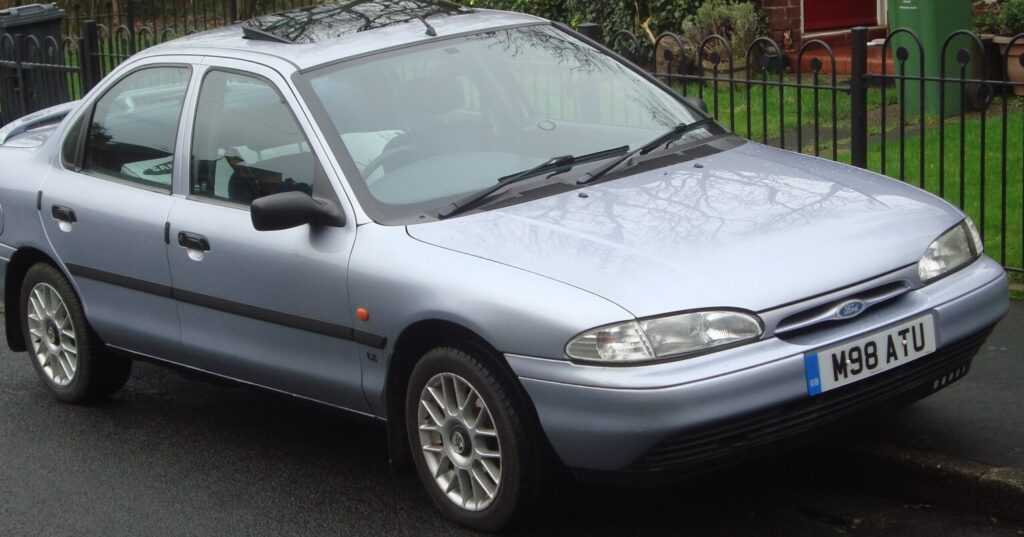
The Ford Mondeo I Sedan 2.0 i 16V 4×4, produced between 1994 and 1996, represented a significant step forward for Ford in the mid-size family car segment. Part of the first generation Mondeo (1993-1996), this variant offered all-wheel drive capability combined with a 2.0-liter, 16-valve engine, positioning it as a more premium and capable offering within the Mondeo lineup. The Mondeo was designed to replace the Ford Sierra and Ford Escort in Europe, aiming to provide a unified platform and a more modern driving experience. This model was primarily marketed in Europe, where the demand for all-wheel-drive vehicles was growing, offering a blend of practicality, comfort, and all-weather performance.
Technical Specifications
| Brand | Ford |
| Model | Mondeo |
| Generation | Mondeo I Sedan |
| Type (Engine) | 2.0 i 16V 4×4 (136 Hp) |
| Start of production | 1994 |
| End of production | 1996 |
| Powertrain Architecture | Internal Combustion engine |
| Body type | Sedan |
| Seats | 5 |
| Doors | 4 |
| Fuel consumption (combined) | 8.8 l/100 km (26.7 US mpg, 32.1 UK mpg, 11.4 km/l) |
| Fuel Type | Petrol (Gasoline) |
| Acceleration 0 – 100 km/h | 10.1 sec |
| Acceleration 0 – 62 mph | 10.1 sec |
| Acceleration 0 – 60 mph | 9.6 sec |
| Maximum speed | 203 km/h (126.14 mph) |
| Weight-to-power ratio | 9.9 kg/Hp, 100.7 Hp/tonne |
| Weight-to-torque ratio | 7.5 kg/Nm, 133.3 Nm/tonne |
| Power | 136 Hp @ 6000 rpm |
| Power per litre | 68.4 Hp/l |
| Torque | 180 Nm @ 4000 rpm (132.76 lb.-ft. @ 4000 rpm) |
| Engine layout | Front, Transverse |
| Engine Model/Code | NGA |
| Engine displacement | 1988 cm3 (121.32 cu. in.) |
| Number of cylinders | 4 |
| Engine configuration | Inline |
| Cylinder Bore | 84.8 mm (3.34 in.) |
| Piston Stroke | 88 mm (3.46 in.) |
| Compression ratio | 10:1 |
| Number of valves per cylinder | 4 |
| Fuel injection system | Multi-port manifold injection |
| Engine aspiration | Naturally aspirated engine |
| Valvetrain | OHC |
| Engine oil capacity | 4.25 l (4.49 US qt | 3.74 UK qt) |
| Coolant | 6.6 l (6.97 US qt | 5.81 UK qt) |
| Kerb Weight | 1350 kg (2976.24 lbs.) |
| Max. weight | 1900 kg (4188.78 lbs.) |
| Max load | 550 kg (1212.54 lbs.) |
| Trunk (boot) space – minimum | 480 l (16.95 cu. ft.) |
| Fuel tank capacity | 61 l (16.11 US gal | 13.42 UK gal) |
| Length | 4481 mm (176.42 in.) |
| Width | 1749 mm (68.86 in.) |
| Height | 1428 mm (56.22 in.) |
| Wheelbase | 2704 mm (106.46 in.) |
| Front track | 1503 mm (59.17 in.) |
| Rear (Back) track | 1487 mm (58.54 in.) |
| Drive wheel | All wheel drive (4×4) |
| Number of gears and type of gearbox | 5 gears, manual transmission |
| Front suspension | Wishbone |
| Rear suspension | Coil spring |
| Front brakes | Ventilated discs |
| Rear brakes | Drum |
| Assisting systems | ABS (Anti-lock braking system) |
| Steering type | Steering rack and pinion |
| Power steering | Hydraulic Steering |
| Tires size | 185/65 R14 |
| Wheel rims size | 6J x 14 |
Powertrain & Engine Architecture
The heart of the Mondeo I Sedan 2.0 i 16V 4×4 was the Ford NGA engine, a 1.998-liter inline-four cylinder gasoline engine. This engine featured a single overhead camshaft (OHC) design and utilized multi-port fuel injection for precise fuel delivery. The 16-valve configuration, with four valves per cylinder, enhanced breathing and contributed to the engine’s respectable power output for its time. The NGA engine was known for its relatively smooth operation and decent fuel economy, although it wasn’t considered a particularly high-performance unit. The all-wheel-drive system was a viscous coupling system, providing automatic torque distribution between the front and rear axles based on traction conditions. This system wasn’t a sophisticated electronic system, but it offered improved grip on slippery surfaces. The five-speed manual transmission was the only gearbox option available with this engine and drivetrain combination.
Driving Characteristics
The 2.0 i 16V 4×4 Mondeo offered a balanced driving experience. While not overtly sporty, the 136 horsepower engine provided adequate acceleration, with a 0-60 mph time of around 9.6 seconds. The all-wheel-drive system significantly improved traction, particularly in wet or snowy conditions, making it a more confident vehicle to drive year-round. Compared to the base 1.6-liter Mondeo, the 2.0-liter offered noticeably more power and torque, resulting in more relaxed cruising and better performance when fully loaded. However, it wasn’t as quick as the higher-spec V6 models. The five-speed manual transmission was well-matched to the engine, offering a reasonable spread of gears for both city and highway driving. The gear ratios were tuned for a balance of fuel economy and performance.
Equipment & Trim Levels
The 2.0 i 16V 4×4 typically sat in the mid-range of the Mondeo lineup. Standard equipment included power steering, ABS brakes, central locking, and electric front windows. Interior trim generally consisted of cloth upholstery, with a functional and straightforward dashboard layout. Optional extras included air conditioning, a sunroof, and upgraded audio systems. The 4×4 models often received slightly upgraded interior trim compared to the base models, reflecting their higher price point. The Mondeo aimed for a practical and comfortable interior, rather than a luxurious one.
Chassis & Braking
The Mondeo I featured independent front suspension with MacPherson struts and a multi-link rear suspension, providing a comfortable ride and good handling characteristics. The 4×4 models often had slightly stiffer suspension settings to compensate for the added weight of the all-wheel-drive system. Braking was handled by ventilated discs on the front wheels and drum brakes on the rear. ABS was standard, enhancing braking performance and stability. The chassis was designed to be robust and durable, providing a solid foundation for the vehicle.
Market Reception & Comparison
The Ford Mondeo I was generally well-received by automotive critics. The 2.0 i 16V 4×4 variant was praised for its all-weather capability and comfortable ride. However, some critics noted that the engine lacked the outright performance of some of its rivals. Fuel economy was considered reasonable for the time, but not exceptional. Compared to other trims, the 4×4 offered a significant advantage in traction and stability, but at the cost of slightly increased fuel consumption and a higher purchase price. The V6 models offered more power, while the 1.6-liter and 1.8-liter versions were more affordable but less capable.
Legacy
The Ford Mondeo I Sedan 2.0 i 16V 4×4, while not a particularly rare or collectible vehicle today, represents an important milestone in Ford’s history. It demonstrated Ford’s commitment to building modern, well-equipped, and capable family cars. The NGA engine proved to be relatively reliable, although regular maintenance is essential for older examples. In the used car market, these models are often sought after by enthusiasts who appreciate their practicality, all-weather capability, and relatively simple mechanical design. Parts availability is generally good, making them relatively easy to maintain and repair. The Mondeo I laid the groundwork for the subsequent generations of Mondeo, which have become popular choices in the mid-size family car segment.