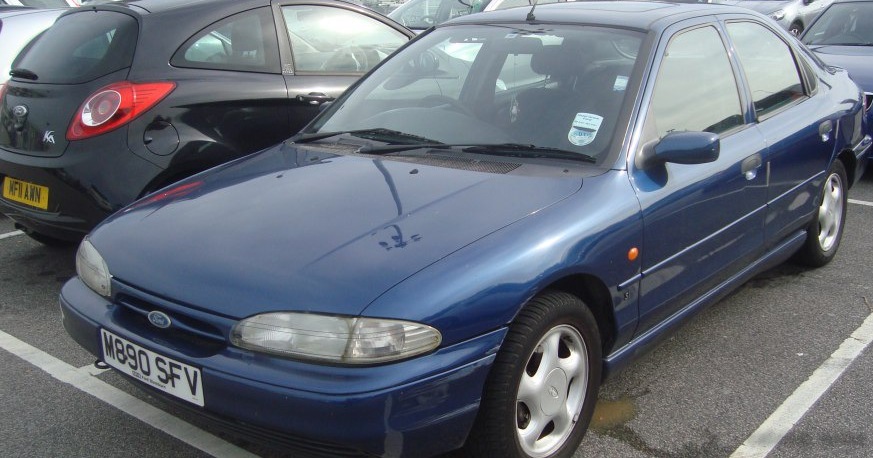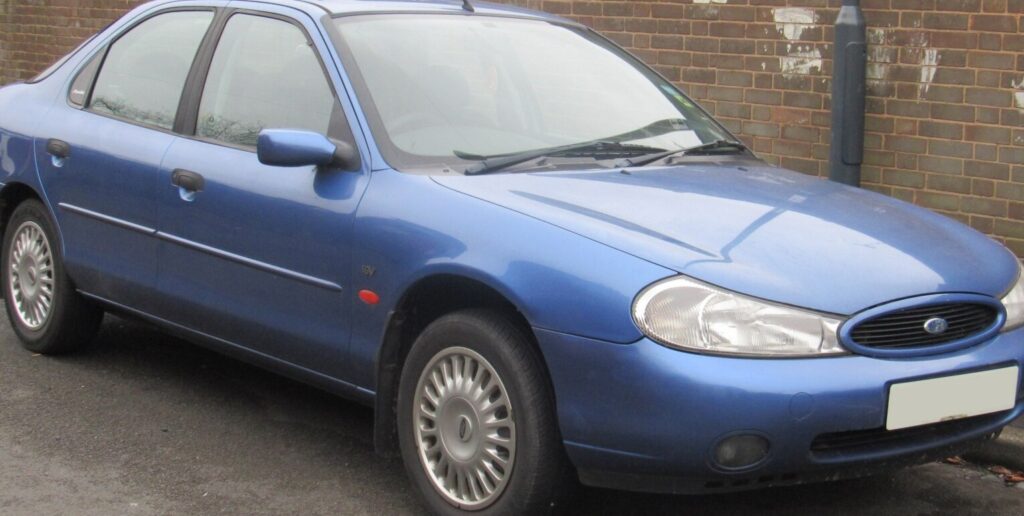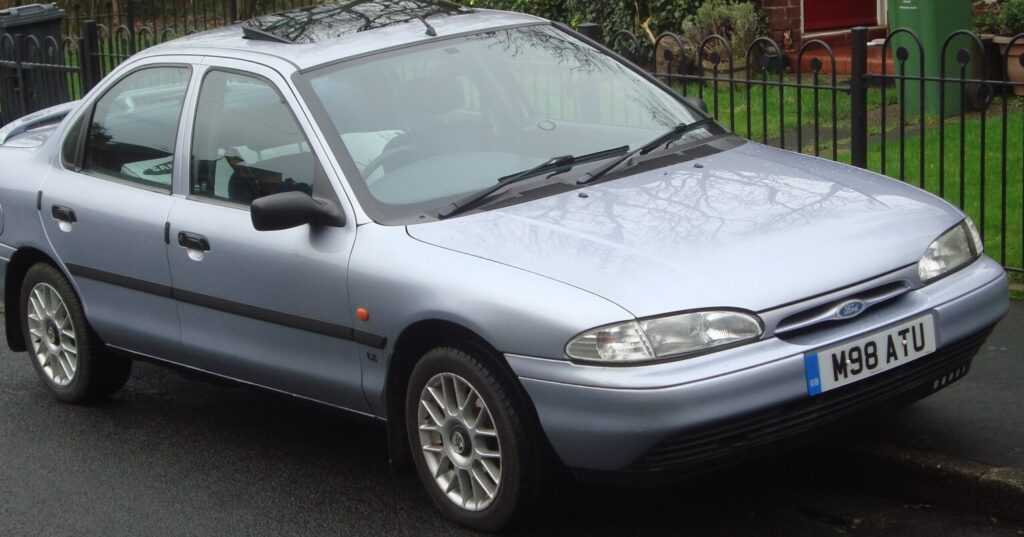
The Ford Mondeo I Sedan 2.5i 24V, produced between 1994 and 1996, represented a significant step forward for Ford’s mid-size offerings in Europe and, to a lesser extent, in other markets. Positioned as a premium variant within the first generation Mondeo (1993-1996) lineup, it aimed to compete with established rivals like the Opel Vectra and Volkswagen Passat. The Mondeo was a crucial model for Ford, representing a move towards a more cohesive and globally-oriented platform strategy, built around the CDW27 platform. This 2.5-liter, 24-valve engine and five-speed manual transmission combination offered a blend of performance and refinement that distinguished it from the lower-spec models.
Technical Specifications
| Brand | Ford |
| Model | Mondeo |
| Generation | Mondeo I Sedan |
| Type (Engine) | 2.5i 24V (170 Hp) |
| Start of production | 1994 |
| End of production | 1996 |
| Powertrain Architecture | Internal Combustion engine |
| Body type | Sedan |
| Seats | 5 |
| Doors | 4 |
| Fuel consumption (combined) | 9.3 l/100 km (25.3 US mpg, 30.4 UK mpg, 10.8 km/l) |
| Fuel Type | Petrol (Gasoline) |
| Acceleration 0 – 100 km/h | 8.7 sec |
| Acceleration 0 – 62 mph | 8.7 sec |
| Acceleration 0 – 60 mph | 8.3 sec |
| Maximum speed | 225 km/h (139.81 mph) |
| Weight-to-power ratio | 7.8 kg/Hp, 128.8 Hp/tonne |
| Weight-to-torque ratio | 6 kg/Nm, 166.7 Nm/tonne |
| Power | 170 Hp @ 6250 rpm |
| Power per litre | 66.8 Hp/l |
| Torque | 220 Nm @ 4250 rpm (162.26 lb.-ft. @ 4250 rpm) |
| Engine layout | Front, Transverse |
| Engine Model/Code | SEA |
| Engine displacement | 2544 cm3 (155.24 cu. in.) |
| Number of cylinders | 6 |
| Engine configuration | V-engine |
| Cylinder Bore | 82.4 mm (3.24 in.) |
| Piston Stroke | 79.5 mm (3.13 in.) |
| Compression ratio | 9.7:1 |
| Number of valves per cylinder | 4 |
| Fuel injection system | Multi-port manifold injection |
| Engine aspiration | Naturally aspirated engine |
| Valvetrain | DOHC |
| Engine oil capacity | 5.5 l (5.81 US qt | 4.84 UK qt) |
| Coolant | 9.5 l (10.04 US qt | 8.36 UK qt) |
| Kerb Weight | 1320 kg (2910.1 lbs.) |
| Max. weight | 1875 kg (4133.67 lbs.) |
| Max load | 555 kg (1223.57 lbs.) |
| Trunk (boot) space – minimum | 480 l (16.95 cu. ft.) |
| Fuel tank capacity | 61 l (16.11 US gal | 13.42 UK gal) |
| Length | 4481 mm (176.42 in.) |
| Width | 1749 mm (68.86 in.) |
| Height | 1428 mm (56.22 in.) |
| Wheelbase | 2704 mm (106.46 in.) |
| Front track | 1503 mm (59.17 in.) |
| Rear (Back) track | 1487 mm (58.54 in.) |
| Drivetrain Architecture | The Internal combustion engine (ICE) drives the front wheels of the vehicle. |
| Drive wheel | Front wheel drive |
| Number of gears and type of gearbox | 5 gears, manual transmission |
| Front suspension | Wishbone |
| Rear suspension | Coil spring |
| Front brakes | Ventilated discs |
| Rear brakes | Ventilated discs |
| Assisting systems | ABS (Anti-lock braking system) |
| Steering type | Steering rack and pinion |
| Power steering | Hydraulic Steering |
| Tires size | 205/55 R15 |
INTRODUCTION
The Ford Mondeo I Sedan 2.5i 24V, launched in 1994, was a key variant in the initial Mondeo range. It represented a significant upgrade over the base models, offering a more powerful and refined driving experience. The Mondeo was Ford’s attempt to create a genuinely world car, replacing the separate models previously sold in Europe (Ford Sierra) and North America (Ford Tempo/Topaz). The 2.5i 24V trim sat near the top of the Mondeo sedan lineup, below only the higher-specification versions with additional luxury features. It was designed to appeal to drivers seeking a comfortable and capable family sedan with a sporting edge.
Powertrain & Engine Architecture
At the heart of the 2.5i 24V Mondeo lay the SEA engine, a 2.5-liter V6. This engine was a significant departure from the four-cylinder engines offered in lower Mondeo trims. The SEA engine featured a 60-degree V-angle, contributing to a smoother power delivery. It utilized multi-port fuel injection and a double overhead camshaft (DOHC) valvetrain, enabling precise control over the intake and exhaust valves. The 24-valve configuration (four valves per cylinder) further enhanced breathing and contributed to the engine’s 170 horsepower output. The engine’s block was constructed from cast iron, while the cylinder heads were made of aluminum. The five-speed manual transmission was well-matched to the engine’s characteristics, providing crisp shifts and allowing the driver to fully exploit the V6’s power. The transmission featured a conventional layout with synchromesh on all forward gears.
Driving Characteristics
The 2.5i 24V Mondeo offered a noticeably more engaging driving experience than its four-cylinder counterparts. The V6 engine delivered strong acceleration, with a 0-60 mph time of around 8.3 seconds. While not a sports car, the Mondeo 2.5i 24V provided ample power for overtaking and cruising on highways. The engine’s torque curve was relatively flat, providing good responsiveness across a wide range of engine speeds. The five-speed manual transmission allowed for precise gear selection, and the gear ratios were well-chosen to maximize performance and fuel efficiency. Compared to the lower-powered Mondeos, the 2.5i 24V felt more refined and less strained during acceleration. The increased weight of the V6 engine did slightly impact handling, but the well-tuned suspension helped to maintain a balanced and controlled ride.
Equipment & Trim Levels
The 2.5i 24V trim typically included features such as power windows, central locking, and an upgraded audio system. Interior upholstery was generally cloth, but leather options were available. The dashboard layout was functional and well-designed, with clear instrumentation. Optional extras included air conditioning, a sunroof, and alloy wheels. The Mondeo 2.5i 24V was positioned as a comfortable and well-equipped family sedan, offering a step up in terms of features and refinement compared to the base models. The trim level aimed to provide a balance between luxury and practicality.
Chassis & Braking
The Mondeo I Sedan featured an independent front suspension with MacPherson struts and a multi-link rear suspension. This setup provided a comfortable ride and good handling characteristics. The 2.5i 24V models were typically equipped with ventilated disc brakes on all four wheels, providing ample stopping power. An anti-lock braking system (ABS) was standard, enhancing safety and control during emergency braking. The steering was rack-and-pinion with hydraulic power assistance, offering precise and responsive steering feel. The suspension was tuned to provide a balance between comfort and handling, making the Mondeo a capable and enjoyable car to drive on a variety of road surfaces.
Market Reception & Comparison
The Ford Mondeo I Sedan 2.5i 24V was generally well-received by automotive critics. It was praised for its powerful engine, comfortable ride, and spacious interior. However, some critics noted that the V6 engine’s fuel consumption was higher than that of the four-cylinder models. Compared to the 1.8L and 2.0L Mondeos, the 2.5i 24V offered significantly more performance but at a higher price point. It competed directly with models like the Opel Vectra V6 and Volkswagen Passat V6, offering a comparable level of performance and refinement. The Mondeo’s modern design and well-engineered chassis gave it an edge over some of its rivals.
Legacy
The Ford Mondeo I Sedan 2.5i 24V remains a popular choice among enthusiasts and collectors. The SEA V6 engine is known for its reliability and durability, although regular maintenance is essential. Parts availability is generally good, although some specific components may be becoming increasingly difficult to find. Today, well-maintained examples of the Mondeo 2.5i 24V are sought after for their classic styling, comfortable ride, and engaging driving experience. It represents a significant milestone in Ford’s history, demonstrating the company’s commitment to building world-class vehicles.