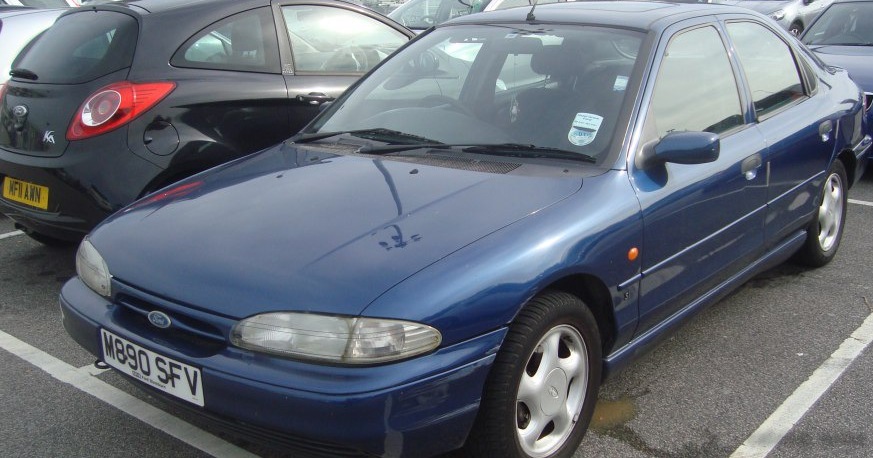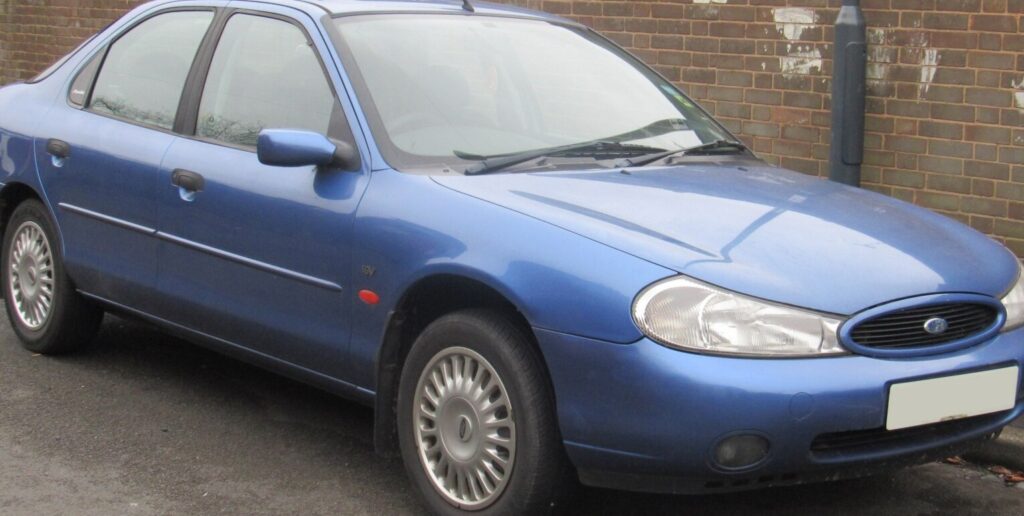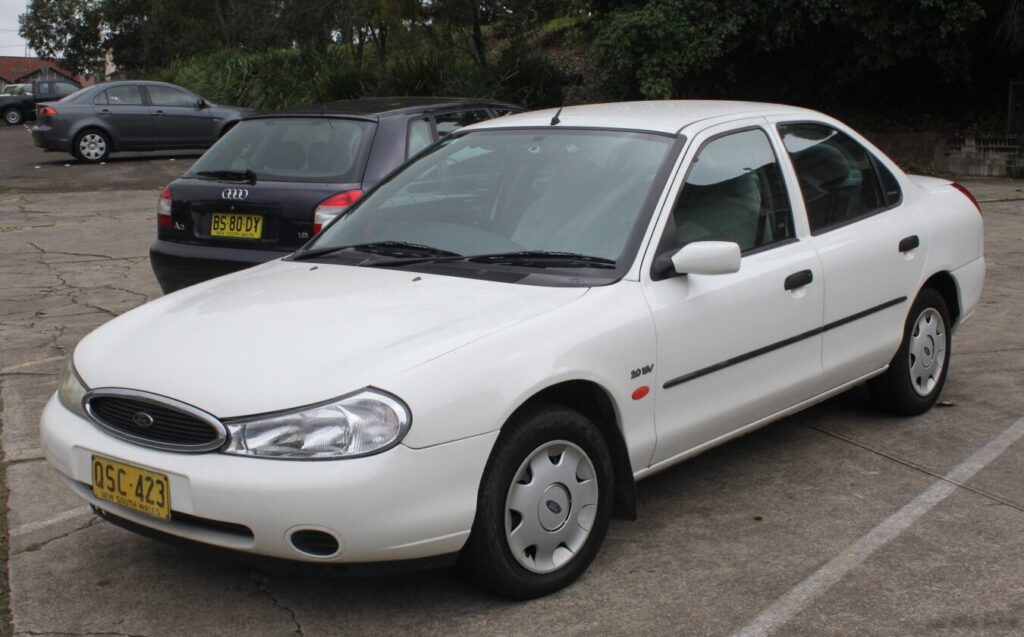
The Ford Mondeo I Sedan, particularly the 1.6 i 16V variant produced from 1998 to 2001, represented a significant step forward for Ford’s mid-size offerings in Europe. Introduced as part of the facelifted first generation (following initial production in 1993), this model aimed to provide a more refined and modern alternative to the Sierra it replaced. The 1.6L engine, producing 95 horsepower, was positioned as the entry-level engine option in the Mondeo sedan range, targeting buyers prioritizing fuel efficiency and affordability over outright performance. It was a key component of Ford’s strategy to appeal to a broader customer base with a vehicle offering a blend of practicality, comfort, and contemporary styling.
Technical Specifications
| Brand | Ford |
| Model | Mondeo |
| Generation | Mondeo I Sedan (facelift 1996) |
| Type (Engine) | 1.6 i 16V (95 Hp) |
| Start of production | 1998 year |
| End of production | 2001 year |
| Powertrain Architecture | Internal Combustion engine |
| Body type | Sedan |
| Seats | 5 |
| Doors | 4 |
| Fuel consumption (urban) | 10.7 l/100 km (22 US mpg, 26.4 UK mpg, 9.3 km/l) |
| Fuel consumption (extra urban) | 5.89 l/100 km (39.9 US mpg, 48 UK mpg, 17 km/l) |
| Fuel Type | Petrol (Gasoline) |
| Acceleration 0 – 100 km/h | 12.7 sec |
| Acceleration 0 – 62 mph | 12.7 sec |
| Acceleration 0 – 60 mph | 12.1 sec |
| Maximum speed | 185 km/h (114.95 mph) |
| Weight-to-power ratio | 13.1 kg/Hp, 76.6 Hp/tonne |
| Weight-to-torque ratio | 8.7 kg/Nm, 114.5 Nm/tonne |
| Power | 95 Hp @ 5250 rpm |
| Power per litre | 59.5 Hp/l |
| Torque | 142 Nm @ 3600 rpm (104.73 lb.-ft. @ 3600 rpm) |
| Engine layout | Front, Transverse |
| Engine Model/Code | Zetec / L1L, L1N, L1Q |
| Engine displacement | 1597 cm3 (97.45 cu. in.) |
| Number of cylinders | 4 |
| Engine configuration | Inline |
| Cylinder Bore | 76 mm (2.99 in.) |
| Piston Stroke | 88 mm (3.46 in.) |
| Compression ratio | 10.3:1 |
| Number of valves per cylinder | 4 |
| Fuel injection system | Multi-port manifold injection |
| Engine aspiration | Naturally aspirated engine |
| Valvetrain | DOHC |
| Engine oil capacity | 4.25 l (4.49 US qt | 3.74 UK qt) |
| Coolant | 6.6 l (6.97 US qt | 5.81 UK qt) |
| Kerb Weight | 1240 kg (2733.73 lbs.) |
| Max. weight | 1805 kg (3979.34 lbs.) |
| Max load | 565 kg (1245.61 lbs.) |
| Trunk (boot) space – minimum | 460 l (16.24 cu. ft.) |
| Trunk (boot) space – maximum | 1290 l (45.56 cu. ft.) |
| Fuel tank capacity | 61 l (16.11 US gal | 13.42 UK gal) |
| Length | 4556 mm (179.37 in.) |
| Width | 1751 mm (68.94 in.) |
| Height | 1424 mm (56.06 in.) |
| Wheelbase | 2704 mm (106.46 in.) |
| Front track | 1503 mm (59.17 in.) |
| Rear (Back) track | 1487 mm (58.54 in.) |
| Drivetrain Architecture | The Internal combustion engine (ICE) drives the front wheels of the vehicle. |
| Drive wheel | Front wheel drive |
| Number of gears and type of gearbox | 5 gears, manual transmission |
| Front suspension | Wishbone |
| Rear suspension | Coil spring |
| Front brakes | Ventilated discs |
| Rear brakes | Drum |
| Steering type | Steering rack and pinion |
| Power steering | Hydraulic Steering |
| Tires size | 185/65 R14 |
Powertrain & Engine Architecture
The 1.6 i 16V engine in the Mondeo I Sedan utilized the Ford Zetec engine family, specifically the L1L, L1N, or L1Q engine codes depending on the specific production year and market. This engine was a naturally aspirated, inline-four cylinder unit featuring a double overhead camshaft (DOHC) valvetrain and multi-port fuel injection. The 16 valves (four per cylinder) contributed to improved breathing and a broader powerband compared to older 8-valve designs. The engine’s 1597cc displacement produced 95 horsepower at 5250 rpm and 142 Nm (104.73 lb-ft) of torque at 3600 rpm. The engine was transversely mounted in the front of the vehicle, driving the front wheels. The transmission was a standard five-speed manual gearbox, offering a relatively conventional gear ratio spread designed for everyday driving. While an automatic transmission was available on other Mondeo trims, it wasn’t typically paired with the base 1.6L engine.
Driving Characteristics
The 1.6L Mondeo Sedan offered a comfortable, if not particularly exhilarating, driving experience. Acceleration from 0-60 mph took around 12.1 seconds, and top speed was approximately 115 mph. Compared to the more powerful 1.8L or 2.0L versions, the 1.6L felt noticeably less responsive, especially when fully loaded or tackling inclines. The five-speed manual transmission was well-matched to the engine’s characteristics, allowing drivers to keep the engine in its optimal power range. However, frequent downshifts were often necessary for overtaking or maintaining speed on hills. The suspension provided a good balance between comfort and handling, absorbing bumps reasonably well while still offering decent body control. The steering was light and precise, making it easy to maneuver in urban environments.
Equipment & Trim Levels
The 1.6L Mondeo Sedan typically represented the entry-level trim in the Mondeo lineup. Standard equipment generally included central locking, power steering, electric front windows, and an adjustable steering column. Interior upholstery was typically cloth, and the dashboard featured a functional, if somewhat basic, design. Optional extras included air conditioning, alloy wheels, a sunroof, and an upgraded audio system. Higher trim levels, such as the Ghia, offered more luxurious appointments, including leather upholstery, wood trim, and additional convenience features.
Chassis & Braking
The Mondeo I Sedan utilized a front-wheel-drive layout with independent wishbone suspension at the front and a coil spring rear suspension. This setup provided a good compromise between ride comfort and handling. Braking was accomplished via ventilated discs on the front wheels and drum brakes on the rear. Hydraulic power steering was standard, providing light and easy steering input. The 185/65 R14 tires offered adequate grip for everyday driving conditions.
Market Reception & Comparison
The 1.6L Mondeo Sedan was generally well-received by critics as a practical and affordable family car. However, its performance was often criticized as being somewhat underwhelming, particularly when compared to the more powerful engine options. Fuel economy was a strong point, making it an attractive option for drivers prioritizing efficiency. Compared to rivals like the Vauxhall/Opel Vectra and Volkswagen Passat, the Mondeo offered a more modern design and a more engaging driving experience, although the Vectra and Passat often had a reputation for slightly better build quality. The 1.6L variant was often seen as a sensible choice for those who didn’t require the extra performance of the larger engines.
Legacy
The 1.6L Zetec engine in the Mondeo I Sedan proved to be a relatively reliable unit, although regular maintenance was essential. Common issues included oil leaks and occasional problems with the fuel injection system. Today, these cars are relatively affordable to purchase on the used market, but finding well-maintained examples can be challenging. The Mondeo I Sedan, particularly the 1.6L variant, represents a significant milestone in Ford’s history, marking a shift towards more modern and sophisticated family cars. It laid the foundation for the subsequent generations of Mondeo, which have continued to be popular choices for drivers seeking a blend of practicality, comfort, and value.