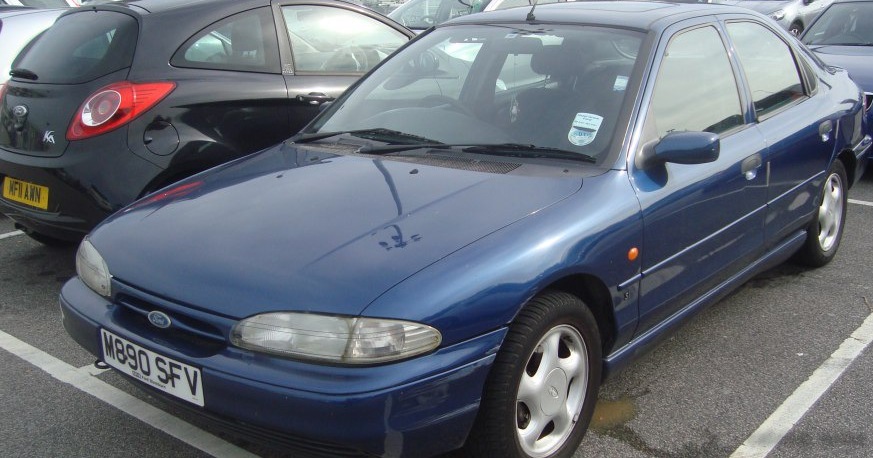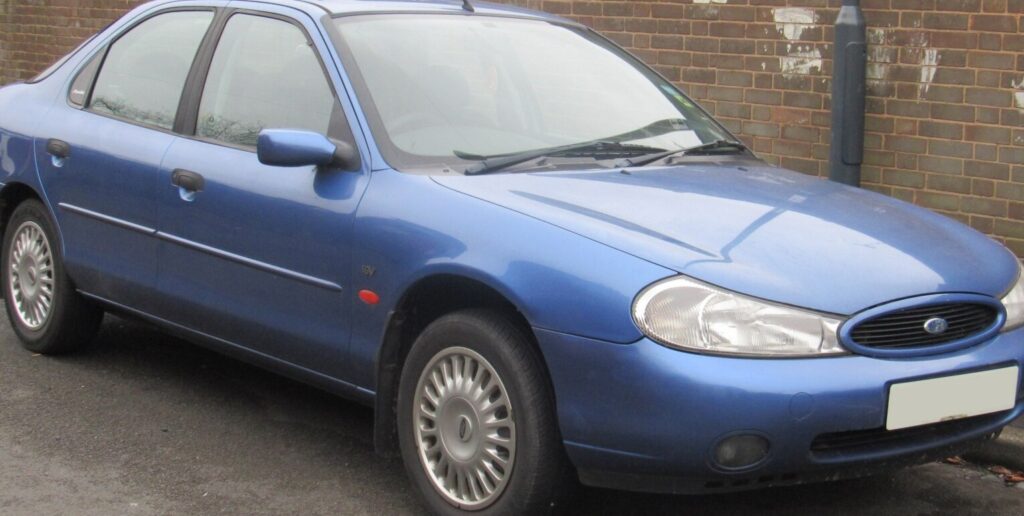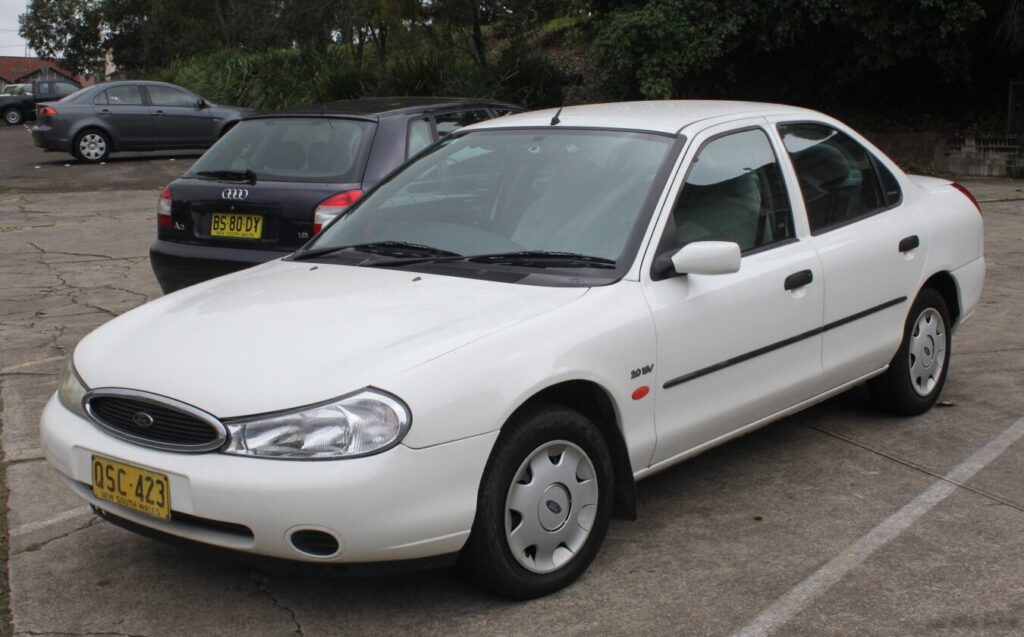
The Ford Mondeo I Sedan, particularly the facelifted version introduced in 1996, represented a significant step forward for Ford’s mid-size offerings in Europe. Positioned as a direct competitor to the likes of the Volkswagen Passat and Opel Vectra, the Mondeo aimed to deliver a more modern and engaging driving experience. The 1.8 16V variant, producing 115 horsepower, was a mainstay of the lineup from 1996 through 2001, offering a balance between affordability, fuel economy, and acceptable performance. This model occupied a middle ground in the Mondeo range, appealing to buyers who didn’t require the higher performance of the V6 models or the fuel efficiency of the diesel options.
Technical Specifications
| Brand | Ford |
| Model | Mondeo |
| Generation | Mondeo I Sedan (facelift 1996) |
| Type (Engine) | 1.8 16V (115 Hp) |
| Start of production | 1996 |
| End of production | 2001 |
| Powertrain Architecture | Internal Combustion engine |
| Body type | Sedan |
| Seats | 5 |
| Doors | 4 |
| Fuel consumption (urban) | 10.9 l/100 km (21.6 US mpg) |
| Fuel consumption (extra urban) | 5.4 l/100 km (43.6 US mpg) |
| Fuel consumption (combined) | 6.8 l/100 km (34.6 US mpg) |
| Fuel Type | Petrol (Gasoline) |
| Acceleration 0 – 100 km/h | 11 sec |
| Acceleration 0 – 62 mph | 11 sec |
| Acceleration 0 – 60 mph | 10.5 sec |
| Maximum speed | 195 km/h (121.17 mph) |
| Weight-to-power ratio | 10.7 kg/Hp |
| Weight-to-torque ratio | 7.7 kg/Nm |
| Power | 115 Hp @ 5750 rpm |
| Torque | 160 Nm @ 4500 rpm (118.01 lb.-ft. @ 4500 rpm) |
| Engine layout | Front, Transverse |
| Engine Model/Code | Zetec / RKB, RKF, RKH, RKJ, RKK |
| Engine displacement | 1796 cm3 (109.6 cu. in.) |
| Number of cylinders | 4 |
| Engine configuration | Inline |
| Cylinder Bore | 80.6 mm (3.17 in.) |
| Piston Stroke | 88 mm (3.46 in.) |
| Compression ratio | 9.8:1 |
| Number of valves per cylinder | 4 |
| Fuel injection system | Multi-port manifold injection |
| Engine aspiration | Naturally aspirated engine |
| Valvetrain | DOHC |
| Engine oil capacity | 4.25 l (4.49 US qt | 3.74 UK qt) |
| Coolant capacity | 6.6 l (6.97 US qt | 5.81 UK qt) |
| Kerb Weight | 1225 kg (2700.66 lbs.) |
| Max. weight | 1750 kg (3858.09 lbs.) |
| Max load | 525 kg (1157.43 lbs.) |
| Trunk (boot) space – minimum | 480 l (16.95 cu. ft.) |
| Fuel tank capacity | 61 l (16.11 US gal | 13.42 UK gal) |
| Length | 4480 mm (176.38 in.) |
| Width | 1750 mm (68.9 in.) |
| Height | 1430 mm (56.3 in.) |
| Wheelbase | 2705 mm (106.5 in.) |
| Front track | 1505 mm (59.25 in.) |
| Rear track | 1485 mm (58.46 in.) |
| Drivetrain Architecture | Front wheel drive |
| Number of gears | 5 |
| Gearbox type | Manual transmission |
| Front suspension | Wishbone |
| Rear suspension | Coil spring |
| Front brakes | Ventilated discs |
| Rear brakes | Disc |
| Assisting systems | ABS (Anti-lock braking system) |
| Steering type | Steering rack and pinion |
| Power steering | Hydraulic Steering |
| Tires size | 185/65 R14 |
| Wheel rims size | 6J x 14 |
INTRODUCTION
The 1.8 16V Mondeo Sedan, launched with the 1996 facelift, was a key component of Ford’s strategy to offer a genuinely competitive and modern family car. Built on the CDW27 platform (internally known as the 1HX0 for the sedan), the Mondeo represented a departure from the traditionally boxy Ford designs, embracing a more aerodynamic and contemporary aesthetic. The facelift brought subtle but important changes, including revised front and rear styling, improved interior materials, and refinements to the suspension. The 1.8 16V engine, part of Ford’s Zetec family, was a popular choice for buyers seeking a balance of performance and economy.
Powertrain & Engine Architecture
The heart of the 1.8 16V Mondeo was the Zetec engine, specifically coded RKB, RKF, RKH, RKJ, or RKK depending on the specific market and year of production. This 1796cc inline-four cylinder engine featured a dual overhead camshaft (DOHC) valvetrain with four valves per cylinder, contributing to its relatively high output for its displacement. Fuel delivery was handled by a multi-port fuel injection system, ensuring precise fuel metering and efficient combustion. The engine’s 9.8:1 compression ratio was a compromise between performance and the ability to run on readily available fuel grades. The 1.8L engine was typically paired with a five-speed manual transmission, but a four-speed automatic transmission was also offered, though less common. The automatic transmission, while providing convenience, did impact acceleration and fuel economy compared to the manual.
Driving Characteristics
The 1.8 16V Mondeo with a manual transmission offered a reasonably engaging driving experience. While not a sports car, the engine provided adequate power for everyday driving and overtaking maneuvers. The 0-60 mph time of around 10.5 seconds was respectable for the era. The automatic transmission, however, dulled the performance somewhat, adding approximately a second to the 0-60 mph time. Gear ratios were tuned for a balance of acceleration and fuel efficiency. The Mondeo’s suspension, featuring independent front wishbones and a coil spring rear setup, provided a comfortable ride, absorbing bumps and imperfections in the road well. Steering was precise and well-weighted, contributing to a confident feel behind the wheel.
Equipment & Trim Levels
The 1.8 16V Mondeo typically came equipped with a reasonable level of standard features. These included central locking, power steering, electric front windows, and an adjustable steering column. Higher trim levels, such as the Ghia, added features like alloy wheels, air conditioning, a sunroof, and upgraded interior trim. Interior upholstery was typically cloth, with options for leather in the higher-spec models. The dashboard layout was functional and straightforward, with easy-to-read gauges and logically placed controls. Optional extras included a CD player, rear electric windows, and upgraded sound systems.
Chassis & Braking
The Mondeo I Sedan featured a robust chassis designed for both comfort and handling. The front suspension utilized independent wishbones, providing good control and responsiveness. The rear suspension employed a coil spring setup, offering a comfortable ride. Braking duties were handled by ventilated discs at the front and solid discs at the rear, providing adequate stopping power for most driving situations. Anti-lock Braking System (ABS) was standard equipment, enhancing safety by preventing wheel lockup during hard braking. The Mondeo’s weight distribution was relatively balanced, contributing to its stable handling characteristics.
Market Reception & Comparison
The 1.8 16V Mondeo was generally well-received by automotive critics. It was praised for its comfortable ride, spacious interior, and modern styling. However, some critics noted that the engine, while adequate, lacked the outright punch of the V6 models. Compared to the 2.0L and V6 variants, the 1.8L offered better fuel economy but less performance. The 1.9 TDI diesel version provided even better fuel economy but with a noticeable difference in driving characteristics. The 1.8L automatic was often criticized for feeling sluggish, with many buyers opting for the more responsive manual transmission.
Legacy
The Ford Mondeo I Sedan 1.8 16V has proven to be a relatively reliable and durable vehicle. The Zetec engine is known for its longevity, provided it is properly maintained. Common issues include oil leaks and occasional problems with the cooling system. In the used car market today, these Mondeos are often available at very affordable prices, making them attractive options for budget-conscious buyers. While not a collector’s item, the 1.8 16V Mondeo represents a significant milestone in Ford’s history, demonstrating the company’s commitment to building modern, well-equipped, and enjoyable family cars. Parts availability remains good, ensuring that these vehicles can be kept on the road for many years to come.