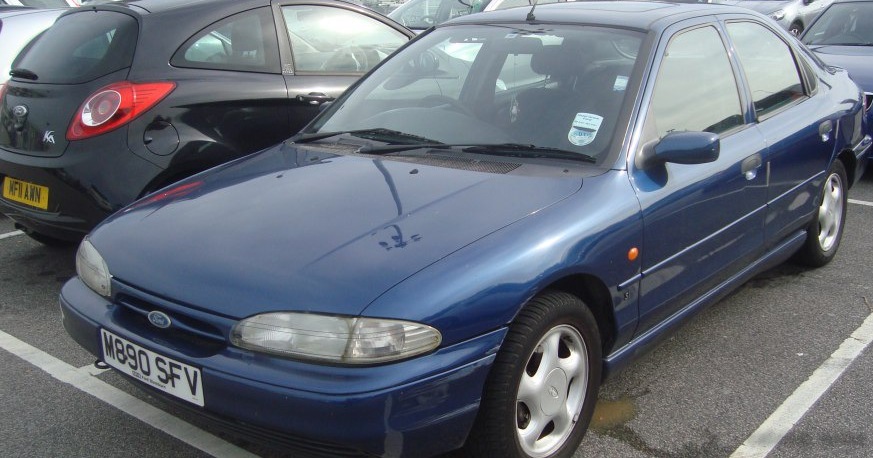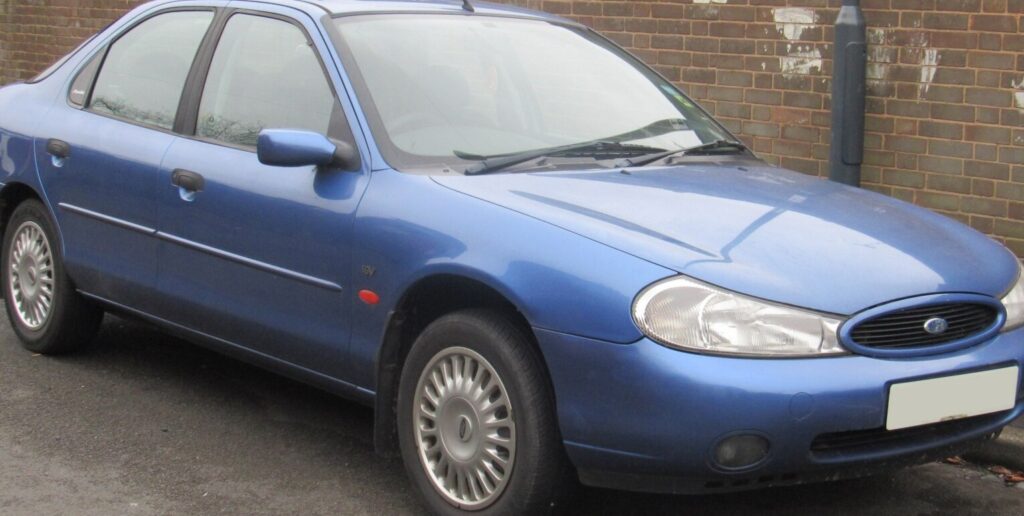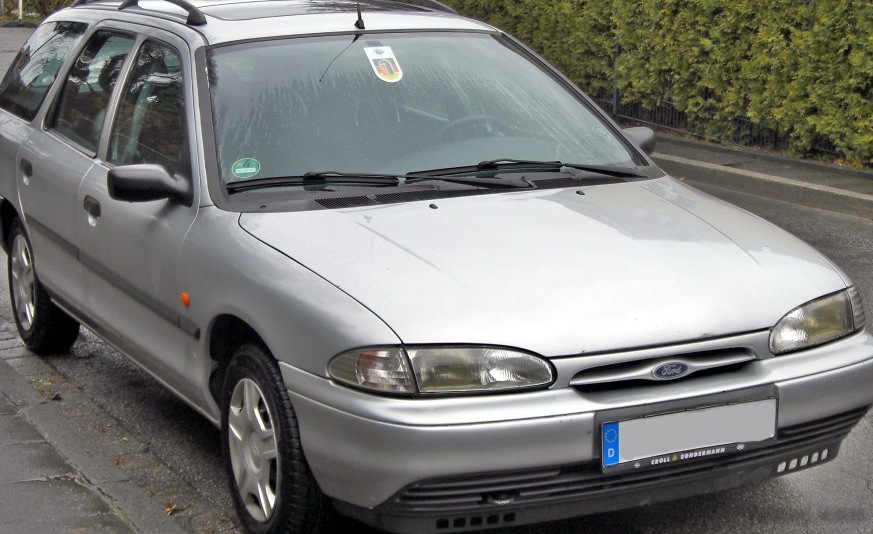
The Ford Mondeo I Wagon 1.6 i 16V, produced between 1994 and 1996, represented an entry-level offering within the first generation Mondeo (Mk I) wagon lineup. Positioned as a practical and affordable family vehicle, it aimed to provide spaciousness and reasonable fuel economy. The Mondeo Mk I, launched in 1993, was a significant vehicle for Ford of Europe, replacing the Sierra and Escort estates with a single, modern platform – the CDW27 platform, also known internally as the 1HX0. The wagon variant, introduced shortly after the saloon, quickly became popular for its versatility and large cargo capacity.
Technical Specifications
| Brand | Ford |
| Model | Mondeo |
| Generation | Mondeo I Wagon |
| Type (Engine) | 1.6 i 16V (88 Hp) |
| Start of production | 1994 |
| End of production | 1996 |
| Powertrain Architecture | Internal Combustion engine |
| Body type | Station wagon (estate) |
| Seats | 5 |
| Doors | 5 |
| Fuel consumption (combined) | 8.1 l/100 km (29 US mpg, 34.9 UK mpg, 12.3 km/l) |
| Fuel Type | Petrol (Gasoline) |
| Acceleration 0 – 100 km/h | 13.9 sec |
| Acceleration 0 – 62 mph | 13.9 sec |
| Acceleration 0 – 60 mph | 13.2 sec |
| Maximum speed | 175 km/h (108.74 mph) |
| Weight-to-power ratio | 14.7 kg/Hp (68 Hp/tonne) |
| Weight-to-torque ratio | 9.6 kg/Nm (104.2 Nm/tonne) |
| Power | 88 Hp @ 5250 rpm |
| Power per litre | 55.1 Hp/l |
| Torque | 135 Nm @ 3500 rpm (99.57 lb.-ft. @ 3500 rpm) |
| Engine layout | Front, Transverse |
| Engine Model/Code | L1J |
| Engine displacement | 1597 cm3 (97.45 cu. in.) |
| Number of cylinders | 4 |
| Engine configuration | Inline |
| Cylinder Bore | 76 mm (2.99 in.) |
| Piston Stroke | 88 mm (3.46 in.) |
| Compression ratio | 10.3:1 |
| Number of valves per cylinder | 4 |
| Fuel injection system | Multi-port manifold injection |
| Engine aspiration | Naturally aspirated engine |
| Valvetrain | DOHC |
| Engine oil capacity | 4.25 l (4.49 US qt | 3.74 UK qt) |
| Coolant | 6.6 l (6.97 US qt | 5.81 UK qt) |
| Kerb Weight | 1295 kg (2854.99 lbs.) |
| Max. weight | 1950 kg (4299.01 lbs.) |
| Max load | 655 kg (1444.03 lbs.) |
| Trunk (boot) space – minimum | 650 l (22.95 cu. ft.) |
| Trunk (boot) space – maximum | 900 l (31.78 cu. ft.) |
| Fuel tank capacity | 61 l (16.11 US gal | 13.42 UK gal) |
| Length | 4631 mm (182.32 in.) |
| Width | 1749 mm (68.86 in.) |
| Height | 1442 mm (56.77 in.) |
| Wheelbase | 2704 mm (106.46 in.) |
| Front track | 1503 mm (59.17 in.) |
| Rear (Back) track | 1504 mm (59.21 in.) |
| Drivetrain Architecture | The Internal combustion engine (ICE) drives the front wheels of the vehicle. |
| Drive wheel | Front wheel drive |
| Number of gears and type of gearbox | 5 gears, manual transmission |
| Front suspension | Wishbone |
| Rear suspension | Coil spring |
| Front brakes | Ventilated discs |
| Rear brakes | Drum |
| Assisting systems | ABS (Anti-lock braking system) |
| Steering type | Steering rack and pinion |
| Power steering | Hydraulic Steering |
| Tires size | 185/65 R14 |
| Wheel rims size | 6J x 14 |
Powertrain & Engine Architecture
The 1.6 i 16V engine, designated with the code L1J, was a naturally aspirated, four-cylinder inline engine. It featured a dual overhead camshaft (DOHC) valvetrain operating four valves per cylinder, contributing to its relatively high power output for its displacement. The engine utilized multi-port fuel injection, a common technology in the early 1990s, for precise fuel delivery. This engine was part of Ford’s Zetec engine family, known for its responsiveness and relatively smooth operation. The 5-speed manual transmission was the standard offering, providing a balance between fuel efficiency and drivability. The transmission’s gear ratios were tuned for everyday driving, prioritizing acceleration in the lower gears and comfortable cruising at highway speeds.
Driving Characteristics
The 1.6L engine, producing 88 horsepower, delivered adequate but not exhilarating performance in the Mondeo Wagon. Acceleration from 0-60 mph took around 13.2 seconds, making it slower than the higher-powered variants like the 2.0L or V6 models. However, it offered a more economical driving experience. The engine felt most comfortable in the mid-range, providing sufficient power for overtaking maneuvers on open roads. Compared to the more powerful engines, the 1.6L required more frequent downshifting, especially when fully loaded or tackling inclines. The manual transmission provided a more engaging driving experience than the optional automatic, offering greater control over the engine’s power band.
Equipment & Trim Levels
The 1.6 i 16V Mondeo Wagon typically came with a modest level of standard equipment. This included central locking, power steering, and an adjustable steering column. Interior upholstery was typically cloth, with a functional but not luxurious dashboard layout. Optional extras included air conditioning, electric windows, and an upgraded audio system. The trim level was generally considered the base model, aimed at buyers prioritizing practicality and affordability over luxury features. Higher trim levels, such as the Ghia, offered more premium appointments like leather upholstery, alloy wheels, and additional comfort features.
Chassis & Braking
The Mondeo Mk I Wagon featured independent front suspension with MacPherson struts and a multi-link rear suspension, providing a comfortable and controlled ride. The front brakes were ventilated discs, offering good stopping power, while the rear brakes were drums, a cost-saving measure common in this class of vehicle. Anti-lock Braking System (ABS) was available as an option, enhancing safety by preventing wheel lockup during hard braking. The suspension was tuned to prioritize ride comfort, making it well-suited for long journeys and carrying passengers or cargo. Stabilizer bars were fitted to both the front and rear axles to reduce body roll during cornering.
Market Reception & Comparison
The 1.6L Mondeo Wagon was generally well-received as a practical and affordable family vehicle. Critics praised its spacious interior, large cargo capacity, and comfortable ride. However, the engine’s performance was often cited as a drawback, particularly when compared to the more powerful alternatives. Fuel economy was considered reasonable for its class, averaging around 29 US mpg in combined driving. Compared to the 2.0L models, the 1.6L offered lower running costs but sacrificed performance. The V6 models provided significantly more power but came with a higher price tag and increased fuel consumption. The 1.6L appealed to buyers who prioritized value for money and practicality over outright performance.
Legacy
The L1J 1.6L engine, while not known for exceptional durability, proved to be generally reliable with proper maintenance. Common issues included oil leaks and occasional sensor failures. Today, the Mondeo Mk I Wagon 1.6 i 16V is a relatively affordable classic car, appealing to enthusiasts seeking a practical and spacious estate car. Parts availability is generally good, although some components may be becoming increasingly difficult to find. The car’s simple mechanical design makes it relatively easy to maintain and repair for those with some mechanical aptitude. It remains a testament to Ford’s commitment to providing affordable and practical transportation for families.