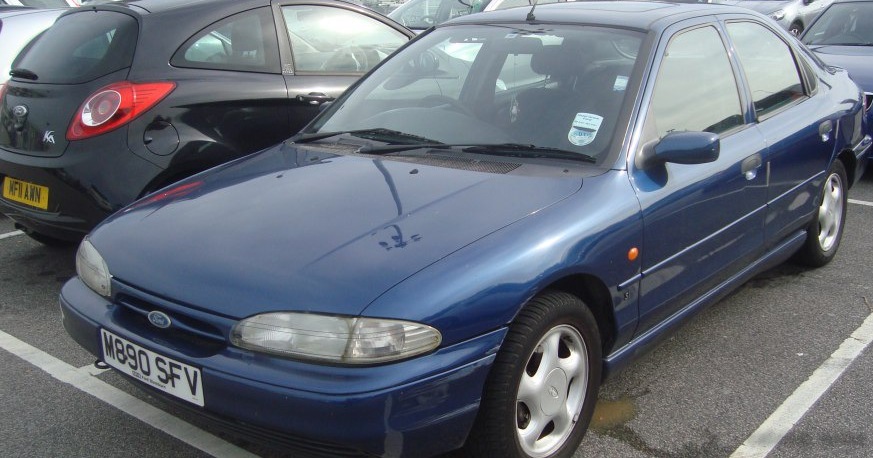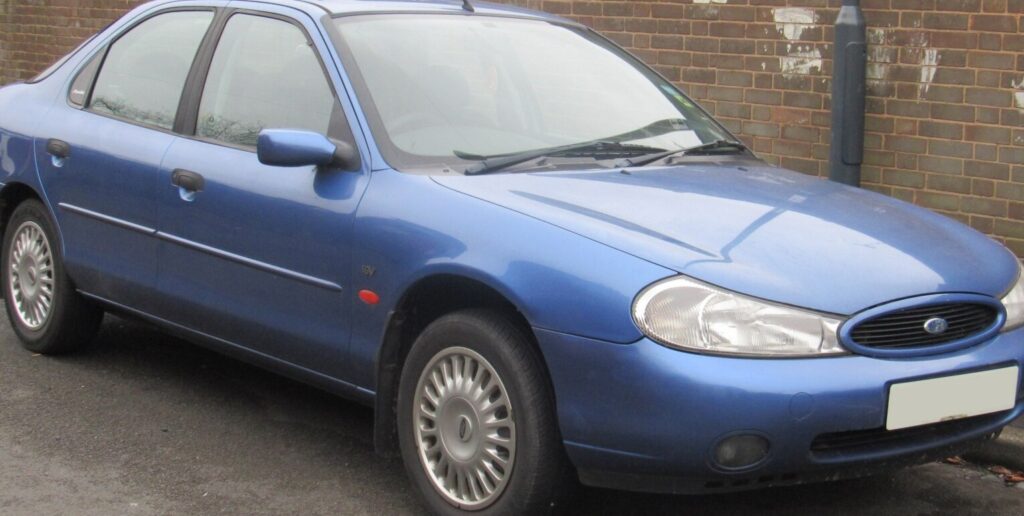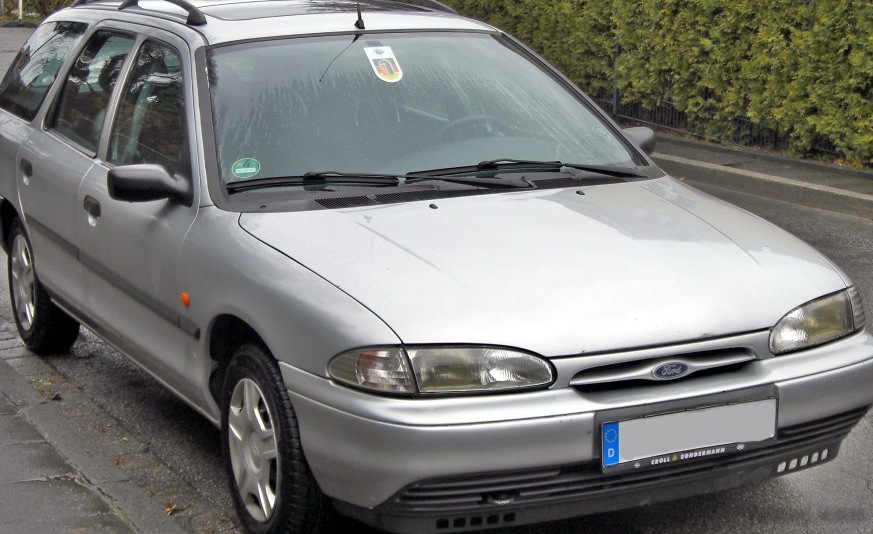
The Ford Mondeo I Wagon 1.6 i 16V (90 hp) was a station wagon variant produced between 1993 and 1996, forming part of the initial Mondeo lineup. Introduced as a replacement for the Ford Sierra and Escort estates in Europe, the Mondeo aimed to offer a more modern and spacious family vehicle. This particular 1.6-liter engine and five-speed manual transmission combination represented the entry-level powertrain option for the Mondeo Wagon, targeting buyers prioritizing fuel economy and practicality over outright performance. It was built on the Ford CDW27 platform, also known as the 1HX0, which underpinned the entire first-generation Mondeo range.
Technical Specifications
| Brand | Ford |
| Model | Mondeo |
| Generation | Mondeo I Wagon |
| Type (Engine) | 1.6 i 16V (90 Hp) |
| Start of production | 1993 |
| End of production | 1996 |
| Powertrain Architecture | Internal Combustion engine |
| Body type | Station wagon (estate) |
| Seats | 5 |
| Doors | 5 |
| Fuel consumption (combined) | 8.1 l/100 km (29 US mpg, 34.9 UK mpg, 12.3 km/l) |
| Fuel Type | Petrol (Gasoline) |
| Acceleration 0 – 100 km/h | 13.9 sec |
| Acceleration 0 – 62 mph | 13.9 sec |
| Acceleration 0 – 60 mph | 13.2 sec |
| Maximum speed | 175 km/h (108.74 mph) |
| Weight-to-power ratio | 15 kg/Hp, 66.7 Hp/tonne |
| Weight-to-torque ratio | 10.1 kg/Nm, 99.3 Nm/tonne |
| Power | 90 Hp @ 5500 rpm |
| Power per litre | 56.4 Hp/l |
| Torque | 134 Nm @ 3000 rpm (98.83 lb.-ft. @ 3000 rpm) |
| Engine layout | Front, Transverse |
| Engine Model/Code | L1F |
| Engine displacement | 1597 cm3 (97.45 cu. in.) |
| Number of cylinders | 4 |
| Engine configuration | Inline |
| Cylinder Bore | 76 mm (2.99 in.) |
| Piston Stroke | 88 mm (3.46 in.) |
| Compression ratio | 10.3:1 |
| Number of valves per cylinder | 4 |
| Fuel injection system | Multi-port manifold injection |
| Engine aspiration | Naturally aspirated engine |
| Valvetrain | DOHC |
| Engine oil capacity | 4.25 l (4.49 US qt | 3.74 UK qt) |
| Coolant | 6.6 l (6.97 US qt | 5.81 UK qt) |
| Kerb Weight | 1350 kg (2976.24 lbs.) |
| Max. weight | 1950 kg (4299.01 lbs.) |
| Max load | 600 kg (1322.77 lbs.) |
| Trunk (boot) space – minimum | 540 l (19.07 cu. ft.) |
| Trunk (boot) space – maximum | 1610 l (56.86 cu. ft.) |
| Fuel tank capacity | 61 l (16.11 US gal | 13.42 UK gal) |
| Length | 4671 mm (183.9 in.) |
| Width | 1751 mm (68.94 in.) |
| Height | 1510 mm (59.45 in.) |
| Wheelbase | 2704 mm (106.46 in.) |
| Front track | 1503 mm (59.17 in.) |
| Rear (Back) track | 1504 mm (59.21 in.) |
| Drivetrain Architecture | The Internal combustion engine (ICE) drives the front wheels of the vehicle. |
| Drive wheel | Front wheel drive |
| Number of gears and type of gearbox | 5 gears, manual transmission |
| Front suspension | Wishbone |
| Rear suspension | Suspension with traction connecting levers |
| Front brakes | Ventilated discs |
| Rear brakes | Drum |
| Assisting systems | ABS (Anti-lock braking system) |
| Steering type | Steering rack and pinion |
| Power steering | Hydraulic Steering |
| Tires size | 185/65 R14 |
| Wheel rims size | 6J x 14 |
Powertrain & Engine Architecture
The Mondeo 1.6 i 16V utilized the Ford L1F engine, a 1.6-liter inline-four cylinder gasoline engine. This engine featured a dual overhead camshaft (DOHC) valvetrain operating four valves per cylinder, contributing to improved breathing and higher-end power compared to older single overhead cam designs. Fuel delivery was managed by a multi-port fuel injection system, providing precise fuel metering for optimal combustion. The engine produced 90 horsepower at 5500 rpm and 134 Nm (98.83 lb-ft) of torque at 3000 rpm. The engine was transversely mounted in the front of the vehicle. The five-speed manual transmission was a standard offering, providing a relatively long gearing setup geared towards fuel efficiency rather than rapid acceleration.
Driving Characteristics
The 1.6-liter engine, paired with the five-speed manual transmission, delivered modest performance. Acceleration from 0 to 60 mph took approximately 13.2 seconds, and the top speed was around 108.74 mph. While adequate for everyday driving, it lacked the punch of the higher-spec engines available in the Mondeo range, such as the 2.0-liter or V6 options. The long gearing emphasized fuel economy, making it a comfortable cruiser on highways but requiring frequent downshifts when overtaking or climbing hills. The steering was light and precise, typical of Ford’s steering systems of the era, and the suspension provided a reasonably comfortable ride, although it could feel somewhat unsettled on rough surfaces.
Equipment & Trim Levels
The 1.6 i 16V trim typically represented the base model in the Mondeo Wagon lineup. Standard equipment included central locking, power steering, and an adjustable steering column. Interior upholstery was typically cloth, and the dashboard featured a functional, if somewhat basic, design. Optional extras included air conditioning, electric windows, and a radio/cassette player. The trim level was often identified by badging on the rear of the vehicle and could vary slightly depending on the specific market.
Chassis & Braking
The Mondeo I Wagon featured independent front suspension with wishbones and a semi-independent rear suspension utilizing traction connecting levers. This setup provided a good balance between ride comfort and handling. Braking duties were handled by ventilated discs on the front wheels and drum brakes on the rear. Anti-lock Braking System (ABS) was available as an option, enhancing braking performance and stability, particularly in adverse conditions. The chassis was designed to provide a stable and predictable driving experience, prioritizing safety and comfort over sporty handling.
Market Reception & Comparison
The Mondeo 1.6 i 16V Wagon was generally well-received as a practical and affordable family vehicle. Critics praised its spacious interior, comfortable ride, and competitive price. However, the 1.6-liter engine was often criticized for being underpowered, especially when the vehicle was fully loaded. Compared to the 2.0-liter and V6 variants, the 1.6 offered significantly less performance but boasted better fuel economy. The 1.9 TDI diesel version offered superior fuel economy and torque, but at the expense of refinement and outright speed. The 1.6L was aimed at buyers who prioritized value and running costs over performance.
Legacy
The Ford Mondeo I Wagon 1.6 i 16V, while not the most powerful or exciting variant, proved to be a reliable and durable vehicle. The L1F engine, while simple in design, was generally robust and capable of high mileage with proper maintenance. Today, these vehicles are relatively rare, but well-maintained examples are sought after by enthusiasts and collectors. The Mondeo I Wagon established the Mondeo as a strong competitor in the European family car market, and the 1.6-liter variant played a crucial role in making the model accessible to a wider range of buyers. Common issues with these vehicles include corrosion, particularly in colder climates, and wear and tear on suspension components. However, parts availability remains relatively good, making them a viable option for those seeking a classic and affordable estate car.