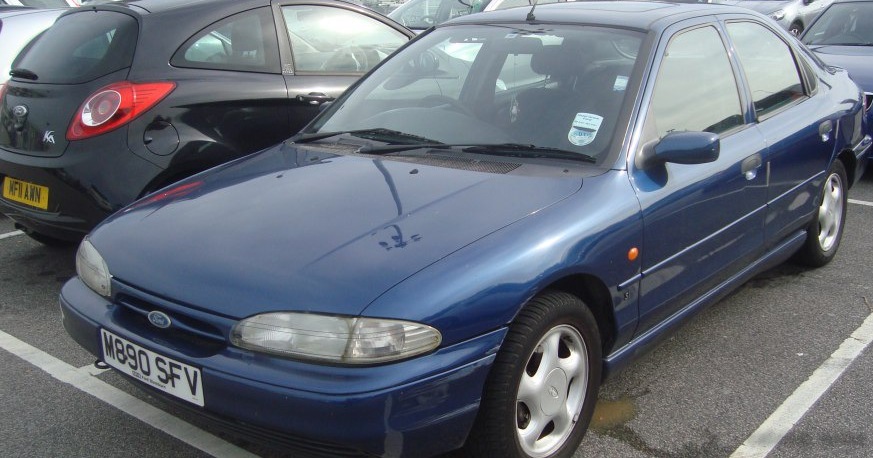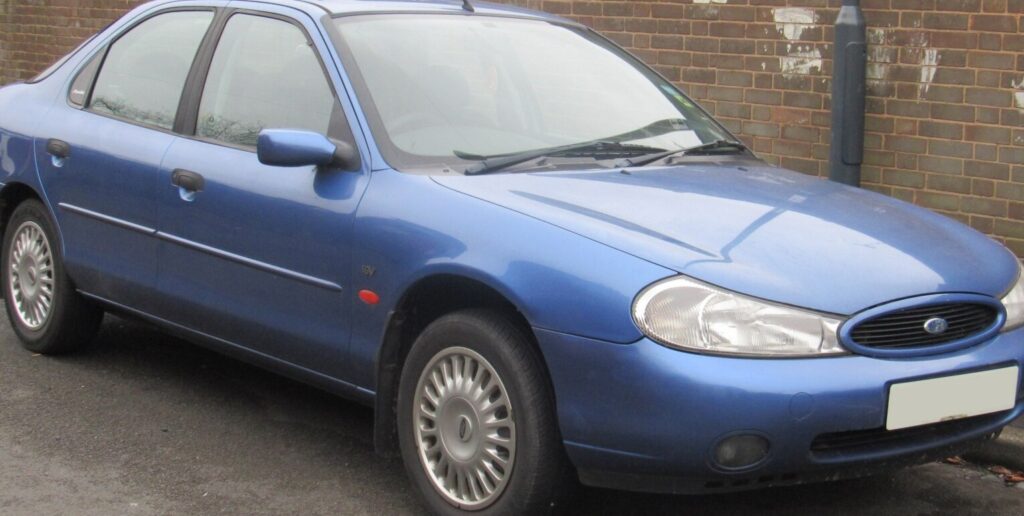
The Ford Mondeo I Wagon, specifically the 2.0i variant with a four-speed automatic transmission, represented a significant offering in the mid-size station wagon segment during its production run from 1996 to 2001. This facelifted version of the original Mondeo (introduced in 1993) aimed to provide a comfortable and practical family vehicle with a degree of sophistication not always found in its class. Positioned as a mid-range trim, it slotted between the base 1.6L models and the more performance-oriented 2.5 V6 versions. The Mondeo Wagon was crucial to Ford of Europe’s strategy of offering a unified, globally-relevant platform – the CDW27 – that could be adapted for various body styles and markets.
Technical Specifications
| Brand | Ford |
| Model | Mondeo |
| Generation | Mondeo I Wagon (facelift 1996) |
| Type (Engine) | 2.0i (130 Hp) Automatic |
| Start of production | 1996 |
| End of production | 2001 |
| Powertrain Architecture | Internal Combustion engine |
| Body type | Station wagon (estate) |
| Seats | 5 |
| Doors | 5 |
| Fuel consumption (urban) | 13.2 l/100 km (17.8 US mpg, 21.4 UK mpg) |
| Fuel consumption (extra urban) | 7.1 l/100 km (33.1 US mpg, 39.8 UK mpg) |
| Fuel Type | Petrol (Gasoline) |
| Acceleration 0 – 100 km/h | 12.2 sec |
| Acceleration 0 – 62 mph | 12.2 sec |
| Acceleration 0 – 60 mph | 11.6 sec |
| Maximum speed | 186 km/h (115.58 mph) |
| Weight-to-power ratio | 10.6 kg/Hp |
| Weight-to-torque ratio | 7.8 kg/Nm |
| Power | 130 Hp @ 5700 rpm |
| Torque | 176 Nm @ 3700 rpm (129.81 lb.-ft. @ 3700 rpm) |
| Engine layout | Front, Transverse |
| Engine Model/Code | Zetec / NGA, NGB, NGC, NGD |
| Engine displacement | 1988 cm3 (121.32 cu. in.) |
| Number of cylinders | 4 |
| Engine configuration | Inline |
| Cylinder Bore | 84.8 mm (3.34 in.) |
| Piston Stroke | 88 mm (3.46 in.) |
| Compression ratio | 10:1 |
| Number of valves per cylinder | 4 |
| Fuel injection system | Multi-port manifold injection |
| Engine aspiration | Naturally aspirated engine |
| Valvetrain | DOHC |
| Engine oil capacity | 4.25 l (4.49 US qt | 3.74 UK qt) |
| Coolant capacity | 7.1 l (7.5 US qt | 6.25 UK qt) |
| Kerb Weight | 1373 kg (3026.95 lbs.) |
| Max. weight | 1955 kg (4310.04 lbs.) |
| Max load | 582 kg (1283.09 lbs.) |
| Trunk (boot) space – minimum | 540 l (19.07 cu. ft.) |
| Trunk (boot) space – maximum | 1610 l (56.86 cu. ft.) |
| Fuel tank capacity | 61 l (16.11 US gal | 13.42 UK gal) |
| Length | 4671 mm (183.9 in.) |
| Width | 1751 mm (68.94 in.) |
| Height | 1510 mm (59.45 in.) |
| Wheelbase | 2704 mm (106.46 in.) |
| Front track | 1503 mm (59.17 in.) |
| Rear track | 1504 mm (59.21 in.) |
| Drivetrain Architecture | Front wheel drive |
| Number of gears | 4 |
| Gearbox type | Automatic transmission |
| Front suspension | Wishbone |
| Rear suspension | Coil spring |
| Front brakes | Ventilated discs |
| Rear brakes | Drum |
| Assisting systems | ABS (Anti-lock braking system) |
| Steering type | Steering rack and pinion |
| Power steering | Hydraulic |
| Tires size | 195/60 R15 |
| Wheel rims size | 6J x 15 |
INTRODUCTION
The 1996 facelift of the Ford Mondeo I Wagon brought subtle but important revisions to the original design, enhancing its appeal and addressing some early criticisms. The 2.0i Automatic model was a popular choice for buyers prioritizing comfort and convenience over outright performance. It was designed to appeal to families and individuals who needed a spacious and versatile vehicle for everyday use. The Mondeo, as a whole, was a departure for Ford, moving away from the traditionally separate models for different European markets and embracing a unified platform. This particular variant, with its automatic transmission, was aimed at buyers who preferred the ease of use and reduced driver fatigue offered by a self-shifting gearbox.
Powertrain & Engine Architecture
At the heart of the Mondeo 2.0i Automatic lay the Zetec engine, specifically the NGA, NGB, NGC, or NGD code variants depending on the specific year and market. This 1.988-liter inline-four cylinder engine featured a double overhead camshaft (DOHC) valvetrain with four valves per cylinder, contributing to its relatively good power output for its displacement. The engine utilized multi-port fuel injection, a common technology at the time, to deliver fuel directly into the intake ports. The compression ratio of 10:1 was a standard figure for naturally aspirated gasoline engines of this era. The four-speed automatic transmission was a crucial component of this variant, offering smooth gear changes but at the expense of some fuel efficiency compared to the manual transmission options. This transmission was designed for durability and ease of use, rather than sporty performance.
Driving Characteristics
The 2.0i Automatic Mondeo Wagon offered a comfortable and relaxed driving experience. With 130 horsepower and 176 Nm (129.81 lb-ft) of torque, acceleration was adequate for everyday driving, but not particularly brisk. The 0-60 mph time of around 11.6 seconds and a top speed of 115.58 mph reflected this. The automatic transmission, while convenient, did result in some power loss compared to the manual versions. Gear ratios were optimized for fuel economy and smooth cruising, rather than rapid acceleration. The car felt stable and predictable in corners, but its weight and suspension setup were geared towards comfort rather than sporty handling. Compared to the higher-output 2.5 V6 models, the 2.0i Automatic felt noticeably slower, but it offered significantly better fuel economy.
Equipment & Trim Levels
The 2.0i Automatic trim level typically included features such as power steering, central locking, electric front windows, and an AM/FM radio. Air conditioning was often an optional extra. Interior upholstery was usually cloth, with a relatively simple and functional dashboard layout. Higher-spec versions could be equipped with features like alloy wheels, a sunroof, and upgraded audio systems. Safety features included ABS (Anti-lock Braking System) as standard, a significant advancement for the time. The overall interior ambiance was practical and durable, prioritizing functionality over luxury.
Chassis & Braking
The Mondeo Wagon featured independent front suspension with wishbones and a coil spring rear suspension. This setup provided a good balance between ride comfort and handling. The front brakes were ventilated discs, offering good stopping power, while the rear brakes were drums, a cost-saving measure common in this class of vehicle. The hydraulic power steering provided light and easy steering, making it convenient for maneuvering in urban environments. Stabilizer bars were fitted to both the front and rear axles to reduce body roll during cornering.
Market Reception & Comparison
The Mondeo Wagon 2.0i Automatic was generally well-received by automotive critics as a practical and comfortable family vehicle. It was praised for its spacious interior, good ride quality, and standard safety features. However, some critics noted that the automatic transmission could feel sluggish at times and that the engine lacked the punch of some of its rivals. Compared to the manual transmission versions, the automatic offered less engaging driving experience but greater convenience. Against competitors like the Vauxhall/Opel Vectra Estate and the Peugeot 406 Estate, the Mondeo offered a compelling package with a good balance of features and price.
Legacy
The Ford Mondeo I Wagon 2.0i Automatic, while not a particularly rare or collectible vehicle today, remains a relatively reliable and affordable option in the used car market. The Zetec engine is known for its durability, and the automatic transmission, while not the most technologically advanced, is generally robust. Common issues include wear and tear on suspension components and potential corrosion, particularly in areas exposed to harsh weather conditions. The Mondeo’s impact lies in its role as a pioneer of the unified European Ford platform, setting the stage for future generations of the Mondeo and other Ford models. It represents a solid and dependable family vehicle from a period when Ford was striving to create a truly global product.