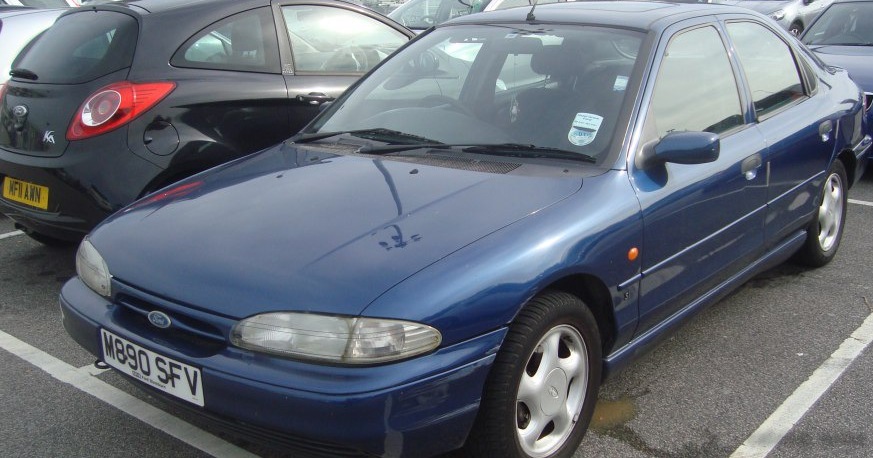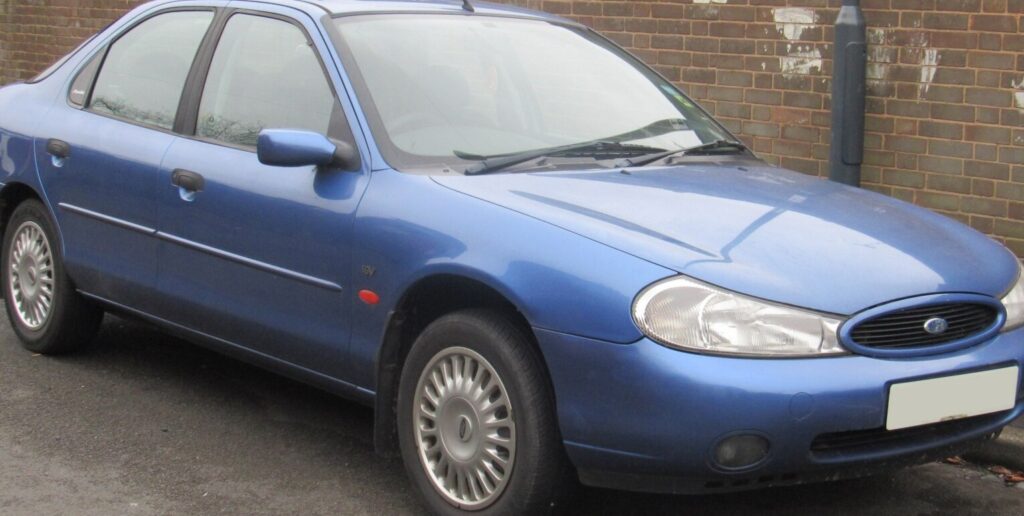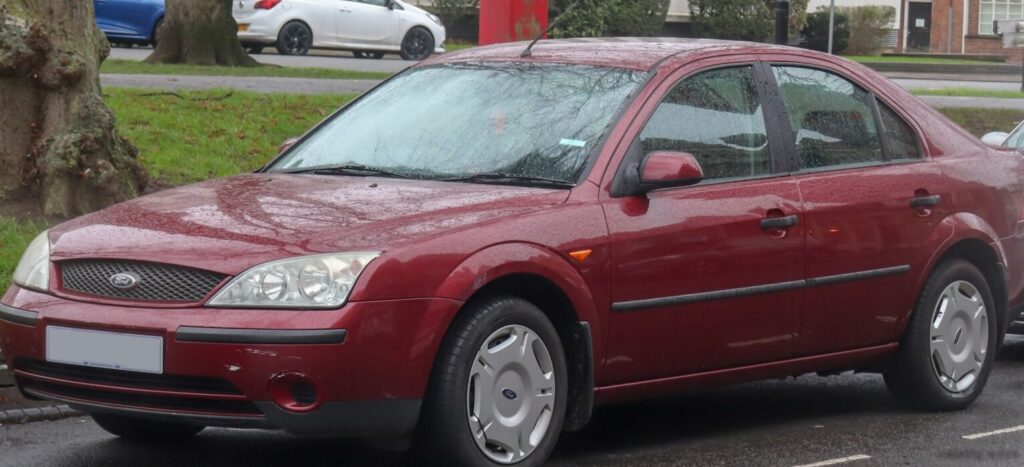
The Ford Mondeo II Hatchback 1.8 16V, produced between 2001 and 2007, represented a significant evolution of Ford’s mid-size family car. Positioned as a mainstream offering within the second-generation Mondeo range (internally designated as the B500 platform), this variant aimed to provide a balance of affordability, practicality, and reasonable performance. It served as a key volume seller in European markets, where the Mondeo competed directly with vehicles like the Volkswagen Passat, Opel Vectra, and Peugeot 406. The 1.8 16V engine, coupled with a five-speed manual transmission, was a popular choice for buyers prioritizing fuel efficiency and everyday usability over outright speed.
Technical Specifications
| Brand | Ford |
| Model | Mondeo |
| Generation | Mondeo II Hatchback |
| Type (Engine) | 1.8 16V (110 Hp) |
| Start of production | 2001 |
| End of production | 2007 |
| Powertrain Architecture | Internal Combustion engine |
| Body type | Hatchback |
| Seats | 5 |
| Doors | 5 |
| Fuel consumption (urban) | 11.4 l/100 km (20.6 US mpg, 24.8 UK mpg, 8.8 km/l) |
| Fuel consumption (extra urban) | 5.7 l/100 km (41.3 US mpg, 49.6 UK mpg, 17.5 km/l) |
| Fuel consumption (combined) | 7.8 l/100 km (30.2 US mpg, 36.2 UK mpg, 12.8 km/l) |
| Fuel Type | Petrol (Gasoline) |
| Acceleration 0 – 100 km/h | 11.7 sec |
| Acceleration 0 – 62 mph | 11.7 sec |
| Acceleration 0 – 60 mph | 11.1 sec |
| Maximum speed | 193 km/h (119.92 mph) |
| Weight-to-power ratio | 12.6 kg/Hp, 79.5 Hp/tonne |
| Weight-to-torque ratio | 8.4 kg/Nm, 119.2 Nm/tonne |
| Power | 110 Hp @ 5500 rpm |
| Power per litre | 61.2 Hp/l |
| Torque | 165 Nm @ 3950 rpm (121.7 lb.-ft. @ 3950 rpm) |
| Engine layout | Front, Transverse |
| Engine Model/Code | CGBA |
| Engine displacement | 1798 cm3 (109.72 cu. in.) |
| Number of cylinders | 4 |
| Engine configuration | Inline |
| Cylinder Bore | 83 mm (3.27 in.) |
| Piston Stroke | 83.1 mm (3.27 in.) |
| Compression ratio | 10.8:1 |
| Number of valves per cylinder | 4 |
| Fuel injection system | Multi-port manifold injection |
| Engine aspiration | Naturally aspirated engine |
| Valvetrain | DOHC |
| Engine oil capacity | 4.3 l (4.54 US qt | 3.78 UK qt) |
| Coolant capacity | 8.1 l (8.56 US qt | 7.13 UK qt) |
| Kerb Weight | 1384 kg (3051.2 lbs.) |
| Max. weight | 1865 kg (4111.62 lbs.) |
| Max load | 481 kg (1060.42 lbs.) |
| Trunk (boot) space – minimum | 500 l (17.66 cu. ft.) |
| Trunk (boot) space – maximum | 1370 l (48.38 cu. ft.) |
| Fuel tank capacity | 58 l (15.32 US gal | 12.76 UK gal) |
| Length | 4731 mm (186.26 in.) |
| Width | 1812 mm (71.34 in.) |
| Height | 1429 mm (56.26 in.) |
| Wheelbase | 2754 mm (108.43 in.) |
| Front track | 1522 mm (59.92 in.) |
| Rear track | 1537 mm (60.51 in.) |
| Drivetrain Architecture | Front wheel drive |
| Number of gears | 5 |
| Gearbox type | Manual transmission |
| Front suspension | Wishbone |
| Rear suspension | Several levers and rods |
| Front brakes | Ventilated discs |
| Rear brakes | Disc |
| Assisting systems | ABS (Anti-lock braking system) |
| Steering type | Steering rack and pinion |
| Power steering | Hydraulic Steering |
| Tires size | 205/55 R16 |
Powertrain & Engine Architecture
The heart of this Mondeo variant was the Ford CGBA 1.8-liter inline-four engine. This engine belonged to the Zetec-E family, known for its relatively lightweight construction and decent power output for its displacement. The CGBA featured a dual overhead camshaft (DOHC) valvetrain with four valves per cylinder, contributing to improved breathing and higher-end power. Fuel delivery was handled by a multi-port fuel injection system, providing precise fuel metering for optimal combustion. The engine’s 110 horsepower peak arrived at 5500 rpm, while its 165 Nm (121.7 lb-ft) of torque was available at 3950 rpm. The five-speed manual transmission was a standard offering, providing a good balance between acceleration and fuel economy. The gear ratios were fairly conventional, prioritizing usability over sporty performance.
Driving Characteristics
The 1.8 16V Mondeo offered a comfortable and predictable driving experience. Acceleration was adequate for everyday driving, with the 0-60 mph sprint taking around 11.1 seconds. However, it wasn’t a particularly quick car, especially when fully loaded with passengers and luggage. Compared to the higher-output 2.0-liter or V6 versions of the Mondeo, the 1.8 felt noticeably less responsive. The manual transmission allowed for a degree of driver engagement, but the gear ratios weren’t optimized for aggressive driving. The focus was on smooth power delivery and fuel efficiency, making it a suitable choice for commuting and long-distance journeys. The steering was light and precise, contributing to easy maneuverability.
Equipment & Trim Levels
The 1.8 16V Mondeo typically came equipped with a reasonable level of standard features. Base models included power steering, central locking, electric front windows, and an AM/FM radio. Higher trim levels, such as Zetec or Ghia, added features like alloy wheels, air conditioning, upgraded upholstery, and a CD player. Optional extras included a sunroof, rear parking sensors, and a more advanced audio system. Interior upholstery was typically cloth, with higher trims offering partial leather options. The dashboard layout was functional and straightforward, prioritizing usability over aesthetic flair.
Chassis & Braking
The Mondeo II utilized an independent front suspension with MacPherson struts and a multi-link rear suspension. This setup provided a good balance between ride comfort and handling. Front brakes were ventilated discs, offering adequate stopping power, while rear brakes were solid discs. Anti-lock Braking System (ABS) was standard, enhancing safety during emergency braking situations. The chassis was relatively lightweight, contributing to the car’s overall agility. Stabilizer bars were fitted to both the front and rear axles to reduce body roll during cornering.
Market Reception & Comparison
The 1.8 16V Mondeo was generally well-received by automotive critics as a practical and affordable family car. It was praised for its comfortable ride, spacious interior, and reasonable fuel economy. However, some critics noted that the engine lacked outright power, particularly when compared to its rivals. Compared to the 2.0-liter Mondeo, the 1.8 offered better fuel economy but significantly less performance. The 1.8 was also more affordable to purchase and insure, making it an attractive option for budget-conscious buyers. Reliability was generally good, although some owners reported minor issues with the engine’s cooling system.
Legacy
The Ford Mondeo II 1.8 16V remains a relatively common sight on used car lots today. The CGBA engine is known for its durability and relatively low maintenance costs, provided it has been properly serviced. While not a particularly exciting car, it represents a solid and dependable choice for those seeking an affordable and practical family vehicle. Parts availability is generally good, and the car’s simple mechanical design makes it relatively easy to repair. The Mondeo II 1.8 16V cemented the Mondeo’s reputation as a well-rounded and reliable mid-size family car in the European market.