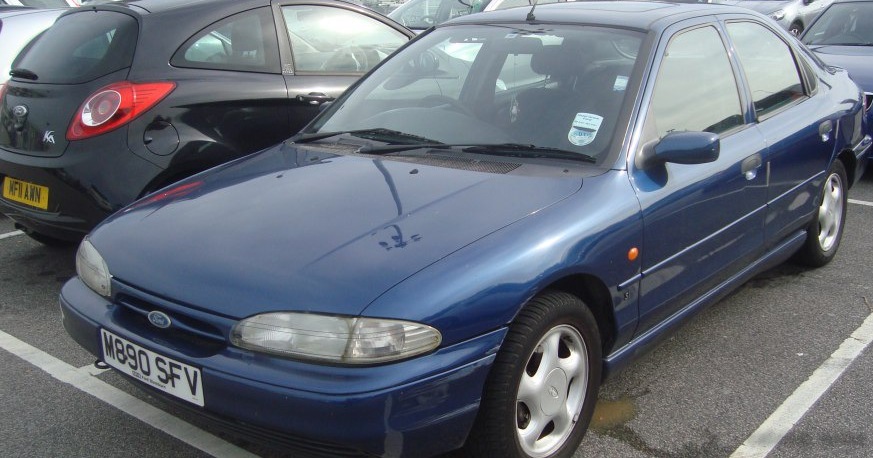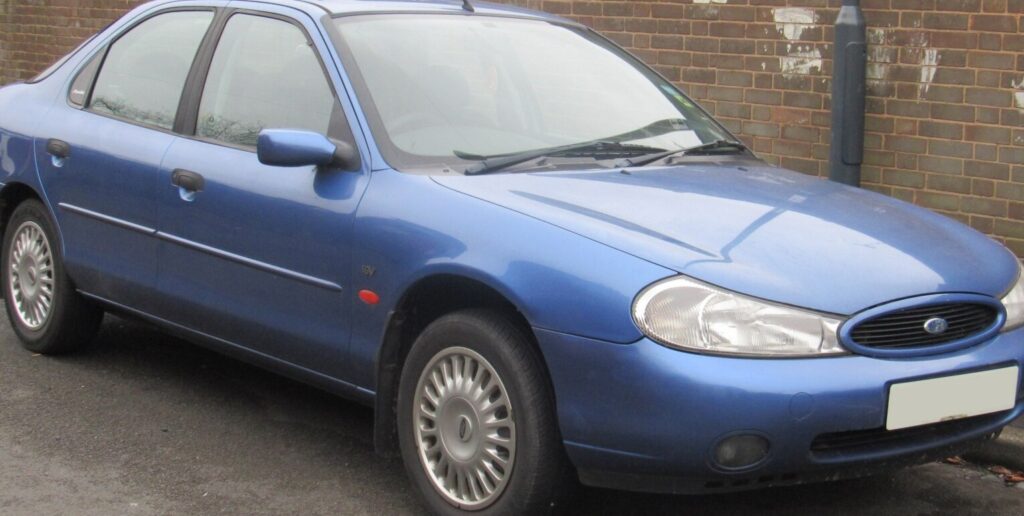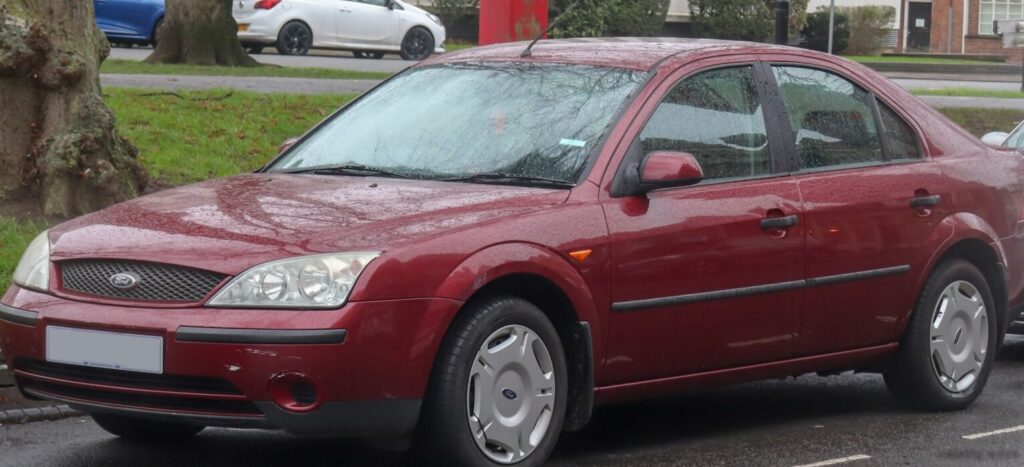
The Ford Mondeo II Hatchback 1.8 16V, produced between 2001 and 2007, represented a significant offering in the mid-size family car segment. Positioned as a mainstream variant within the second-generation Mondeo range (internally designated as the B500 platform), this model aimed to provide a balance of practicality, affordability, and reasonable performance. It served as a key volume seller for Ford in Europe, competing with vehicles like the Volkswagen Passat, Opel Vectra, and Peugeot 406. The 1.8 16V engine, coupled with a five-speed manual transmission, was a popular choice for buyers prioritizing fuel efficiency and everyday usability over outright speed.
Technical Specifications
| Brand | Ford |
| Model | Mondeo |
| Generation | Mondeo II Hatchback |
| Type (Engine) | 1.8 16V (125 Hp) |
| Start of production | 2001 |
| End of production | 2007 |
| Powertrain Architecture | Internal Combustion engine |
| Body type | Hatchback |
| Seats | 5 |
| Doors | 5 |
| Fuel consumption (urban) | 11.5 l/100 km (20.5 US mpg) |
| Fuel consumption (extra urban) | 5.8 l/100 km (40.6 US mpg) |
| Fuel consumption (combined) | 7.9 l/100 km (29.8 US mpg) |
| Fuel Type | Petrol (Gasoline) |
| Acceleration 0 – 100 km/h | 10.9 sec |
| Acceleration 0 – 62 mph | 10.9 sec |
| Acceleration 0 – 60 mph | 10.4 sec |
| Maximum speed | 205 km/h (127.38 mph) |
| Weight-to-power ratio | 11.1 kg/Hp |
| Weight-to-torque ratio | 8.1 kg/Nm |
| Power | 125 Hp @ 6000 rpm |
| Torque | 170 Nm @ 4500 rpm (125.39 lb.-ft. @ 4500 rpm) |
| Engine layout | Front, Transverse |
| Engine Model/Code | CHBA |
| Engine displacement | 1798 cm3 (109.72 cu. in.) |
| Number of cylinders | 4 |
| Engine configuration | Inline |
| Cylinder Bore | 83 mm (3.27 in.) |
| Piston Stroke | 83.1 mm (3.27 in.) |
| Compression ratio | 10.8:1 |
| Number of valves per cylinder | 4 |
| Fuel injection system | Multi-port manifold injection |
| Engine aspiration | Naturally aspirated |
| Valvetrain | DOHC |
| Engine oil capacity | 4.3 l (4.54 US qt | 3.78 UK qt) |
| Coolant capacity | 8.1 l (8.56 US qt | 7.13 UK qt) |
| Kerb Weight | 1384 kg (3051.2 lbs.) |
| Max. weight | 1875 kg (4133.67 lbs.) |
| Max load | 491 kg (1082.47 lbs.) |
| Trunk (boot) space – minimum | 500 l (17.66 cu. ft.) |
| Trunk (boot) space – maximum | 1370 l (48.38 cu. ft.) |
| Fuel tank capacity | 58 l (15.32 US gal | 12.76 UK gal) |
| Length | 4731 mm (186.26 in.) |
| Width | 1812 mm (71.34 in.) |
| Height | 1429 mm (56.26 in.) |
| Wheelbase | 2754 mm (108.43 in.) |
| Front track | 1522 mm (59.92 in.) |
| Rear track | 1537 mm (60.51 in.) |
| Drivetrain Architecture | Front wheel drive |
| Number of gears | 5 |
| Gearbox type | Manual transmission |
| Front suspension | Wishbone |
| Rear suspension | Several levers and rods |
| Front brakes | Ventilated discs |
| Rear brakes | Disc |
| Assisting systems | ABS (Anti-lock braking system) |
| Steering type | Steering rack and pinion |
| Power steering | Hydraulic |
| Tires size | 205/55 R16 |
INTRODUCTION
The Ford Mondeo II, launched in 2000, represented a significant step forward for Ford’s mid-size offering. The 1.8 16V variant, available as a hatchback, saloon (sedan), and estate (wagon), was a mainstay of the lineup from 2001 through 2007. It was designed to appeal to families and individuals seeking a practical and reliable vehicle without the expense of higher-powered engines or premium trim levels. The Mondeo II built upon the success of the original Mondeo, improving refinement, safety, and interior space. This particular engine and transmission combination was aimed at buyers who prioritized fuel economy and ease of driving over sporty performance.
Powertrain & Engine Architecture
The heart of the Mondeo II 1.8 16V is the CHBA engine, a 1.8-liter inline-four cylinder petrol engine. This engine utilizes a multi-port fuel injection system, delivering fuel directly into the intake ports just before the intake valves. The engine features a double overhead camshaft (DOHC) valvetrain, operating four valves per cylinder, which contributes to improved breathing and power output. The compression ratio of 10.8:1 strikes a balance between efficiency and performance. The five-speed manual transmission provides smooth gear changes and contributes to the vehicle’s overall fuel efficiency. The CHBA engine is known for its relative simplicity and robustness, making it a reasonably reliable unit when properly maintained. It’s a naturally aspirated engine, meaning it doesn’t employ turbocharging or supercharging, relying solely on displacement and efficient combustion for power.
Driving Characteristics
The 125 horsepower and 170 Nm (125 lb-ft) of torque produced by the 1.8 16V engine provide adequate, but not exhilarating, performance. Acceleration from 0-60 mph takes around 10.4 seconds, and the top speed is approximately 127 mph. The five-speed manual transmission is well-matched to the engine’s characteristics, offering a reasonable spread of gear ratios. In real-world driving, the 1.8 16V feels responsive enough for everyday commuting and highway cruising. However, it can feel strained when fully loaded or attempting brisk overtaking maneuvers. Compared to the higher-output 2.0-liter or V6 versions of the Mondeo II, the 1.8 16V lacks the punch and responsiveness of those engines. The gear ratios are tuned for fuel efficiency, meaning the engine doesn’t rev as freely as some competitors.
Equipment & Trim Levels
The 1.8 16V Mondeo II typically came equipped with a reasonable level of standard features. These included central locking, power steering, electric front windows, and an AM/FM radio. Higher trim levels, such as Zetec and Ghia, added features like alloy wheels, air conditioning, upgraded upholstery, and a CD player. Interior upholstery was typically cloth, with options for upgraded materials on higher trims. The dashboard layout was functional and straightforward, prioritizing usability over stylistic flair. Optional extras included a sunroof, rear parking sensors, and a trip computer.
Chassis & Braking
The Mondeo II featured independent front suspension with MacPherson struts and a multi-link rear suspension, providing a comfortable and controlled ride. The front brakes were ventilated discs, offering good stopping power, while the rear brakes were typically solid discs. Anti-lock Braking System (ABS) was standard, enhancing safety. The chassis was designed to provide a good balance between handling and ride comfort. Stabilizer bars were fitted to both the front and rear axles to reduce body roll during cornering. The suspension setup was tuned to prioritize comfort over outright sportiness, making it well-suited for long journeys.
Market Reception & Comparison
The Ford Mondeo II 1.8 16V was generally well-received by automotive critics as a practical and affordable family car. It was praised for its spacious interior, comfortable ride, and reasonable fuel economy. However, some critics noted that the 1.8-liter engine could feel underpowered, particularly when the car was fully loaded. Compared to the 2.0-liter and V6 variants, the 1.8 16V offered better fuel economy but less performance. The 1.8 was often seen as a sensible choice for buyers who prioritized value and practicality over outright driving excitement. Its fuel economy figures of around 30 mpg combined were competitive for its class.
Legacy
The Ford Mondeo II 1.8 16V has proven to be a relatively reliable vehicle, with many examples still on the road today. The CHBA engine is known for its durability, although regular maintenance is essential to prevent issues. Common problems include oil leaks and occasional sensor failures. On the used car market, the 1.8 16V Mondeo II represents a good value proposition, offering a lot of car for the money. It remains a popular choice for budget-conscious buyers seeking a practical and dependable family vehicle. Its simplicity and relatively low running costs contribute to its continued appeal.