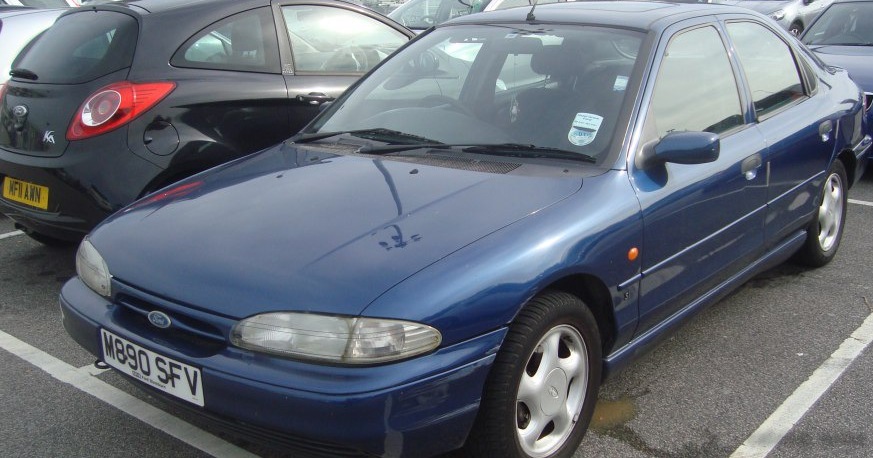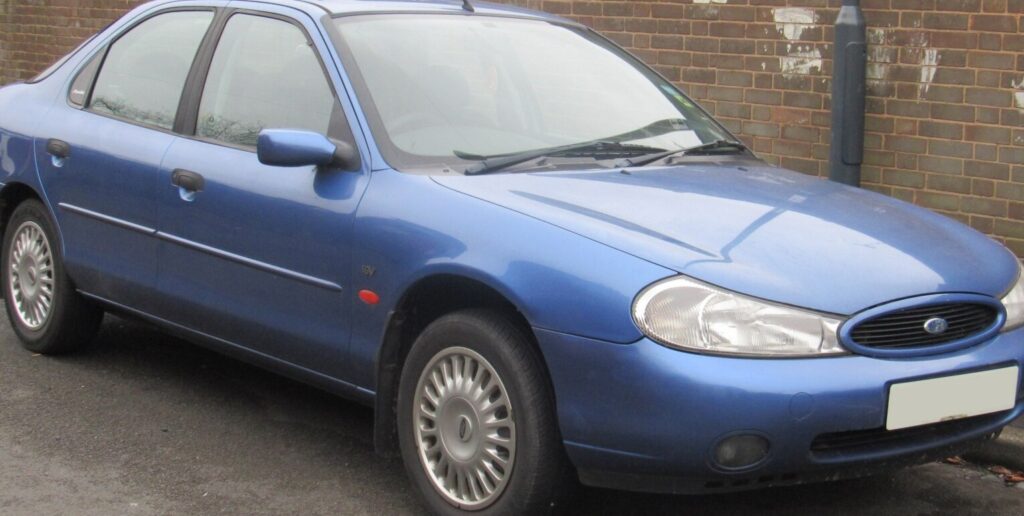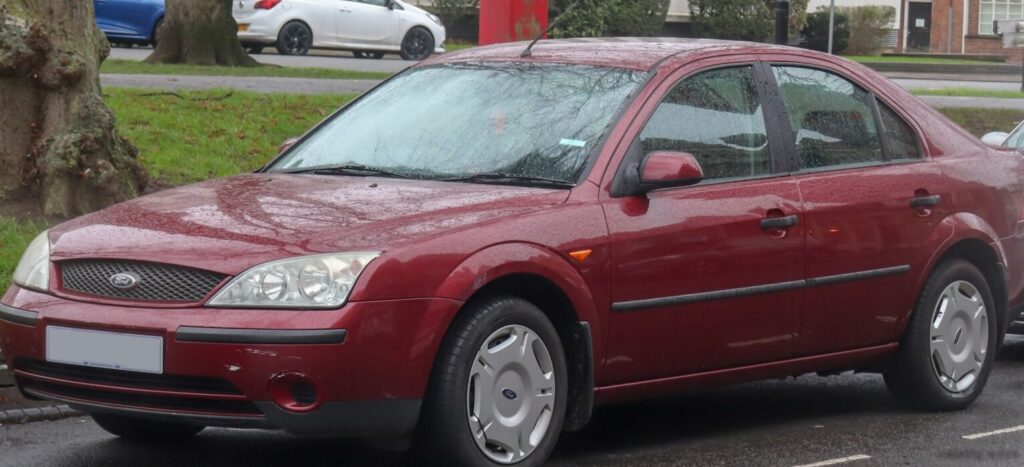
The Ford Mondeo II, produced from 1996 to 2007, represented a significant step forward for Ford’s mid-size offerings in Europe and, to a lesser extent, North America. The second generation Mondeo, available in saloon, estate, and hatchback body styles, aimed to build upon the success of its predecessor by offering improved refinement, safety, and driving dynamics. The 2.0-liter 16V variant, producing 145 horsepower, was a mainstay of the Mondeo II lineup from 2001-2007, positioned as a strong mid-range option appealing to drivers seeking a balance of performance and fuel economy. This particular configuration, when paired with the five-speed manual transmission, offered a compelling alternative to both the base models and the more powerful ST220.
Technical Specifications
| Brand | Ford |
| Model | Mondeo |
| Generation | Mondeo II Hatchback |
| Type (Engine) | 2.0 16V (145 Hp) |
| Start of production | 2001 |
| End of production | 2007 |
| Powertrain Architecture | Internal Combustion engine |
| Body type | Hatchback |
| Seats | 5 |
| Doors | 5 |
| Fuel consumption (urban) | 11.8 l/100 km (19.9 US mpg) |
| Fuel consumption (extra urban) | 6 l/100 km (39.2 US mpg) |
| Fuel consumption (combined) | 8.1 l/100 km (29 US mpg) |
| Fuel Type | Petrol (Gasoline) |
| Acceleration 0 – 100 km/h | 9.9 sec |
| Acceleration 0 – 62 mph | 9.9 sec |
| Acceleration 0 – 60 mph | 9.4 sec |
| Maximum speed | 215 km/h (133.59 mph) |
| Weight-to-power ratio | 9.6 kg/Hp |
| Weight-to-torque ratio | 7.3 kg/Nm |
| Power | 145 Hp @ 6000 rpm |
| Torque | 190 Nm @ 4500 rpm (140.14 lb.-ft. @ 4500 rpm) |
| Engine layout | Front, Transverse |
| Engine Model/Code | CJBA |
| Engine displacement | 1999 cm3 (121.99 cu. in.) |
| Number of cylinders | 4 |
| Engine configuration | Inline |
| Cylinder Bore | 87.5 mm (3.44 in.) |
| Piston Stroke | 83.1 mm (3.27 in.) |
| Compression ratio | 10.8:1 |
| Number of valves per cylinder | 4 |
| Fuel injection system | Multi-port manifold injection |
| Engine aspiration | Naturally aspirated engine |
| Valvetrain | DOHC |
| Engine oil capacity | 4.3 l (4.54 US qt | 3.78 UK qt) |
| Coolant capacity | 8.3 l (8.77 US qt | 7.3 UK qt) |
| Kerb Weight | 1388 kg (3060.02 lbs.) |
| Max. weight | 1875 kg (4133.67 lbs.) |
| Max load | 487 kg (1073.65 lbs.) |
| Trunk (boot) space – minimum | 500 l (17.66 cu. ft.) |
| Trunk (boot) space – maximum | 1370 l (48.38 cu. ft.) |
| Fuel tank capacity | 58 l (15.32 US gal | 12.76 UK gal) |
| Length | 4731 mm (186.26 in.) |
| Width | 1812 mm (71.34 in.) |
| Height | 1429 mm (56.26 in.) |
| Wheelbase | 2754 mm (108.43 in.) |
| Front track | 1522 mm (59.92 in.) |
| Rear track | 1537 mm (60.51 in.) |
| Drivetrain Architecture | Front wheel drive |
| Number of gears | 5 |
| Gearbox type | Manual transmission |
| Front suspension | Wishbone |
| Rear suspension | Several levers and rods |
| Front brakes | Ventilated discs |
| Rear brakes | Disc |
| Assisting systems | ABS (Anti-lock braking system) |
| Steering type | Steering rack and pinion |
| Power steering | Hydraulic Steering |
| Tires size | 205/55 R16 |
Powertrain & Engine Architecture
The 2.0-liter 16V engine, designated CJBA, was a naturally aspirated inline-four cylinder powerplant. It featured a dual overhead camshaft (DOHC) valvetrain operating four valves per cylinder, enhancing breathing and contributing to its respectable power output. Fuel delivery was managed by a multi-port fuel injection system, providing precise fuel metering for optimal combustion. The engine’s 10.8:1 compression ratio was a typical value for the era, balancing performance and fuel efficiency. The five-speed manual transmission offered precise shifts and allowed the driver to fully utilize the engine’s powerband. This transmission was known for its durability and relatively smooth operation.
Driving Characteristics
The 145 hp 2.0-liter Mondeo II Hatchback provided a comfortable and capable driving experience. Acceleration from 0-60 mph took approximately 9.4 seconds, making it competitive within its class. While not a sports car, the engine delivered sufficient power for everyday driving and overtaking maneuvers. The five-speed manual transmission allowed for good control over the engine’s revs, and the gear ratios were well-matched to the engine’s torque curve. Compared to the lower-powered 1.6-liter models, the 2.0-liter offered a noticeable improvement in performance, particularly when fully loaded or tackling inclines. It wasn’t as sporty as the later ST220 with its 3.0-liter V6, but offered a more economical and practical alternative.
Equipment & Trim Levels
The 2.0-liter Mondeo II Hatchback was typically offered in Zetec and Ghia trim levels. Zetec models included features such as alloy wheels, air conditioning, and a CD player. Ghia models added more luxurious touches, such as leather upholstery, wood trim, and upgraded audio systems. Standard safety equipment included ABS brakes, driver and passenger airbags, and seatbelt pretensioners. Optional extras included a sunroof, parking sensors, and heated front seats. The interior design was functional and well-built, with a focus on ergonomics and practicality.
Chassis & Braking
The Mondeo II featured independent front suspension with wishbones and a multi-link rear suspension, providing a comfortable ride and good handling characteristics. The front brakes were ventilated discs, offering strong stopping power, while the rear brakes were solid discs. The hydraulic power steering provided a light and precise steering feel. The chassis was well-balanced, contributing to the car’s stability and predictable handling. The suspension was tuned to provide a good compromise between comfort and handling, making it suitable for both city driving and long-distance journeys.
Market Reception & Comparison
The 2.0-liter Mondeo II Hatchback was well-received by automotive critics, who praised its comfortable ride, spacious interior, and good value for money. It was considered a strong competitor to other mid-size hatchbacks, such as the Vauxhall/Opel Astra and Volkswagen Golf. Fuel economy was respectable for its class, averaging around 29 US mpg in combined driving. Reliability was generally good, although some owners reported minor issues with the electrical system. Compared to the 1.6-liter models, the 2.0-liter offered a significant performance upgrade, while remaining more affordable than the ST220.
Legacy
The Ford Mondeo II 2.0-liter 16V remains a popular choice in the used car market today, appreciated for its reliability, practicality, and affordability. The CJBA engine is known for its durability, and with regular maintenance, it can provide many years of reliable service. Parts availability is generally good, and maintenance costs are relatively low. While not a collector’s item, the Mondeo II 2.0-liter represents a well-engineered and capable family car that continues to offer good value for money.