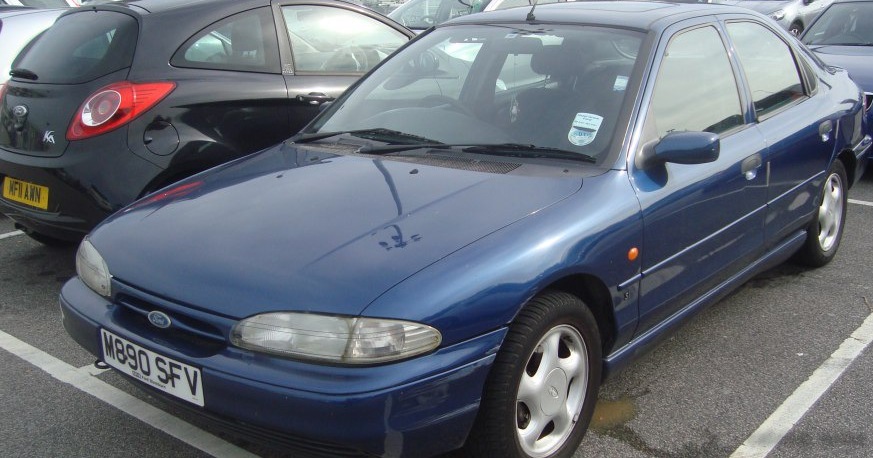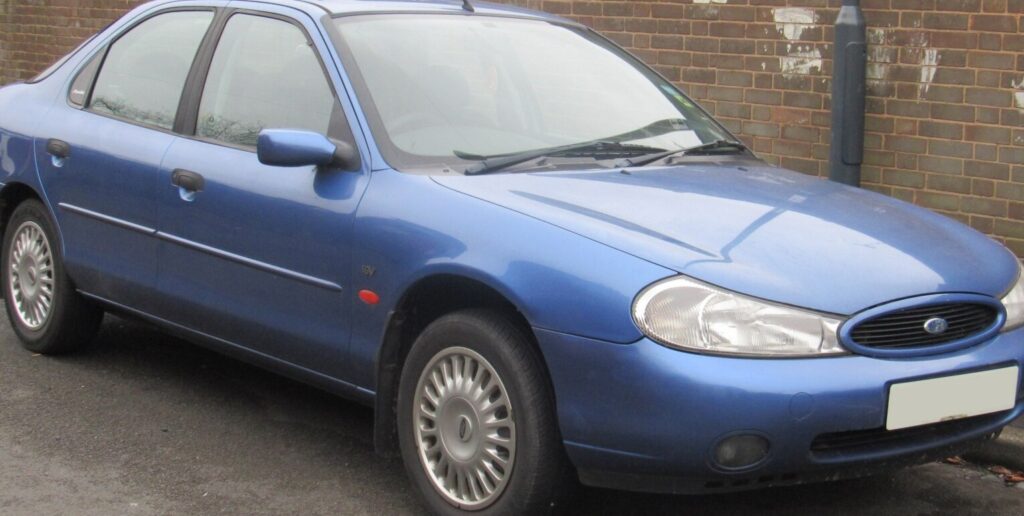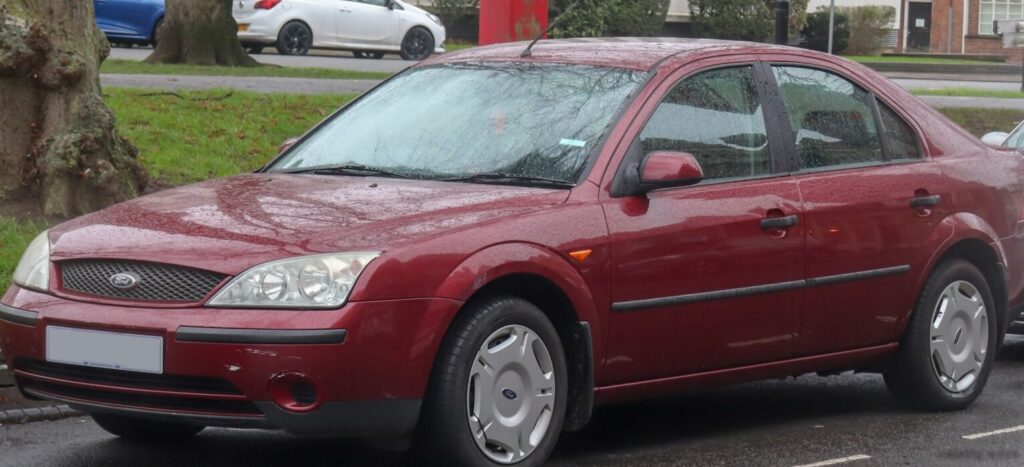
The Ford Mondeo II Hatchback 2.0 16V Automatic, produced between 2001 and 2007, represented a significant offering in the mid-size family car segment. Positioned as a comfortable and practical option, this variant utilized a 2.0-liter, 16-valve gasoline engine paired with a four-speed automatic transmission. It sat within the broader Mondeo II range, which included various engine options and transmission choices, catering to a wide spectrum of buyer preferences. The Mondeo II, built on the Ford CDW270 platform (internally known as the 1HX0/A3 platform), aimed to improve upon its predecessor with enhanced refinement, safety features, and a more modern design. This particular 2.0L automatic configuration was aimed at buyers prioritizing ease of driving and convenience over outright performance.
Technical Specifications
| Brand | Ford |
| Model | Mondeo |
| Generation | Mondeo II Hatchback |
| Type (Engine) | 2.0 16V (145 Hp) Automatic |
| Start of production | 2001 |
| End of production | 2007 |
| Powertrain Architecture | Internal Combustion engine |
| Body type | Hatchback |
| Seats | 5 |
| Doors | 5 |
| Fuel consumption (urban) | 13.1 l/100 km (18 US mpg, 21.6 UK mpg, 7.6 km/l) |
| Fuel consumption (extra urban) | 7.3 l/100 km (32.2 US mpg, 38.7 UK mpg, 13.7 km/l) |
| Fuel consumption (combined) | 9.1 l/100 km (25.8 US mpg, 31 UK mpg, 11 km/l) |
| Fuel Type | Petrol (Gasoline) |
| Acceleration 0 – 100 km/h | 10.9 sec |
| Acceleration 0 – 62 mph | 10.9 sec |
| Acceleration 0 – 60 mph | 10.4 sec |
| Maximum speed | 190 km/h (118.06 mph) |
| Weight-to-power ratio | 9.6 kg/Hp, 104.5 Hp/tonne |
| Weight-to-torque ratio | 7.3 kg/Nm, 136.9 Nm/tonne |
| Power | 145 Hp @ 6000 rpm |
| Power per litre | 72.5 Hp/l |
| Torque | 190 Nm @ 4500 rpm (140.14 lb.-ft. @ 4500 rpm) |
| Engine layout | Front, Transverse |
| Engine Model/Code | CJBA |
| Engine displacement | 1999 cm3 (121.99 cu. in.) |
| Number of cylinders | 4 |
| Engine configuration | Inline |
| Cylinder Bore | 87.5 mm (3.44 in.) |
| Piston Stroke | 83.1 mm (3.27 in.) |
| Compression ratio | 10.8:1 |
| Number of valves per cylinder | 4 |
| Fuel injection system | Multi-port manifold injection |
| Engine aspiration | Naturally aspirated engine |
| Valvetrain | DOHC |
| Engine oil capacity | 4.3 l (4.54 US qt | 3.78 UK qt) |
| Coolant | 8.3 l (8.77 US qt | 7.3 UK qt) |
| Kerb Weight | 1388 kg (3060.02 lbs.) |
| Max. weight | 1875 kg (4133.67 lbs.) |
| Max load | 487 kg (1073.65 lbs.) |
| Trunk (boot) space – minimum | 500 l (17.66 cu. ft.) |
| Trunk (boot) space – maximum | 1370 l (48.38 cu. ft.) |
| Fuel tank capacity | 58 l (15.32 US gal | 12.76 UK gal) |
| Length | 4731 mm (186.26 in.) |
| Width | 1812 mm (71.34 in.) |
| Height | 1429 mm (56.26 in.) |
| Wheelbase | 2754 mm (108.43 in.) |
| Front track | 1522 mm (59.92 in.) |
| Rear (Back) track | 1537 mm (60.51 in.) |
| Drivetrain Architecture | The Internal combustion engine (ICE) drives the front wheels of the vehicle. |
| Drive wheel | Front wheel drive |
| Number of gears and type of gearbox | 4 gears, automatic transmission |
| Front suspension | Wishbone |
| Rear suspension | Several levers and rods |
| Front brakes | Ventilated discs |
| Rear brakes | Disc |
| Assisting systems | ABS (Anti-lock braking system) |
| Steering type | Steering rack and pinion |
| Power steering | Hydraulic Steering |
| Tires size | 205/55 R16 |
| Wheel rims size | 16 |
Powertrain & Engine Architecture
The heart of this Mondeo variant was the Ford CJBA engine, a 1.999-liter inline-four cylinder gasoline engine. This engine featured a dual overhead camshaft (DOHC) valvetrain with four valves per cylinder, contributing to its relatively high output for its displacement. The CJBA utilized multi-port fuel injection, a common technology at the time, delivering fuel directly into the intake ports. The engine’s 10.8:1 compression ratio was a balance between efficiency and performance. Paired with this engine was a four-speed automatic transmission. While not the most modern transmission available at the time, it provided smooth and convenient gear changes, appealing to drivers seeking a relaxed driving experience. The transmission was electronically controlled, optimizing shift points based on throttle position and vehicle speed.
Driving Characteristics
The 2.0 16V Automatic Mondeo offered a comfortable and predictable driving experience. With 145 horsepower and 190 Nm (140 lb-ft) of torque, acceleration was adequate for everyday driving, achieving 0-60 mph in around 10.4 seconds. However, it wasn’t a particularly sporty vehicle. The automatic transmission, while convenient, did result in some power loss compared to the available five-speed manual transmission. Gear ratios were tuned for fuel efficiency and smooth cruising rather than rapid acceleration. Compared to the higher-performance Mondeo variants, such as those equipped with the 2.5-liter V6 engine, the 2.0 Automatic felt noticeably less powerful. However, it offered a more refined and less stressed driving experience, particularly in urban environments.
Equipment & Trim Levels
The 2.0 16V Automatic Mondeo typically came equipped with a reasonable level of standard features. These generally included power windows, power steering, central locking, an air conditioning system, and an AM/FM radio. Higher trim levels, such as the Ghia, added features like alloy wheels, upgraded interior trim (often including leather upholstery), a sunroof, and more sophisticated audio systems. Optional extras included features like a CD changer, heated front seats, and parking sensors. The interior design was functional and relatively modern for its time, with a focus on ergonomics and practicality.
Chassis & Braking
The Mondeo II featured independent front suspension using a MacPherson strut and wishbone setup, providing a comfortable ride and decent handling. The rear suspension utilized a multi-link design, further enhancing ride quality and stability. Braking duties were handled by ventilated discs on the front wheels and solid discs on the rear. Anti-lock Braking System (ABS) was standard, improving braking performance and safety. The steering was rack and pinion with hydraulic power assistance, offering a responsive and easy-to-use steering feel. The chassis was designed to provide a good balance between comfort and handling, making it a suitable vehicle for both city driving and longer journeys.
Market Reception & Comparison
The Ford Mondeo II 2.0 16V Automatic was generally well-received by automotive critics as a practical and comfortable family car. However, the automatic transmission was sometimes criticized for being slightly sluggish compared to the manual gearbox. Fuel economy was considered average for its class, with combined figures around 9.1 l/100 km (25.8 US mpg). Compared to other trims, the 2.0 Automatic offered a good balance between price and features, making it an attractive option for buyers who didn’t require the extra performance of the V6 models or the fuel efficiency of the diesel variants. The diesel models, particularly the 1.8 TDCi, offered significantly better fuel economy but lacked the refinement of the gasoline engine.
Legacy
The Ford Mondeo II 2.0 16V Automatic has proven to be a relatively reliable vehicle, with many examples still on the road today. The CJBA engine is generally considered durable, although regular maintenance is crucial to prevent issues such as oil leaks and timing belt failure. The four-speed automatic transmission is also reasonably reliable, but can be prone to wear and tear over time. In the used car market, these Mondeos represent a good value proposition, offering a comfortable and practical driving experience at an affordable price. However, potential buyers should be aware of the age-related issues common to vehicles of this era, such as corrosion and wear on suspension components.