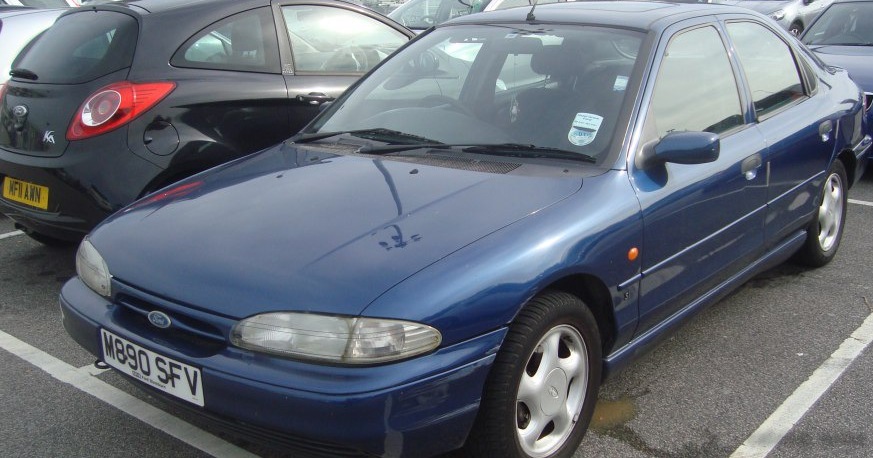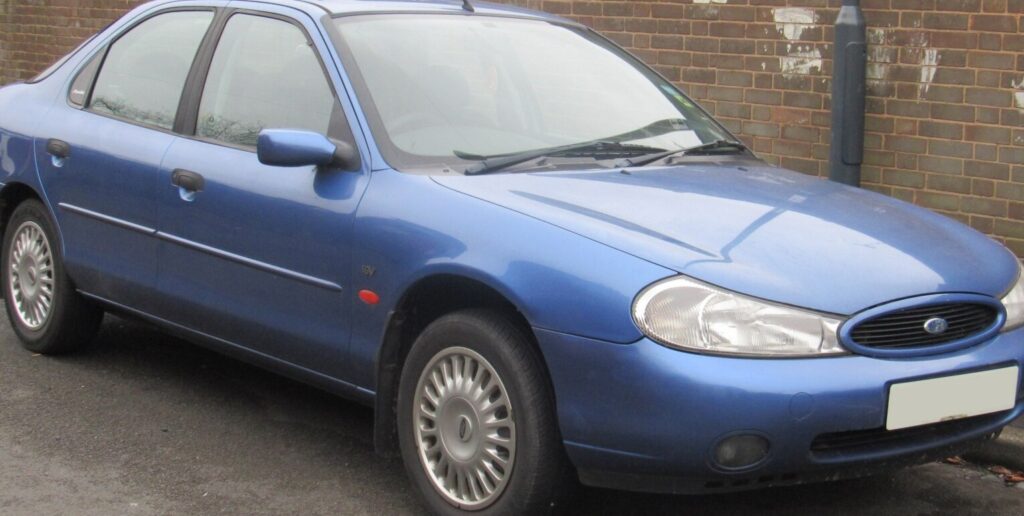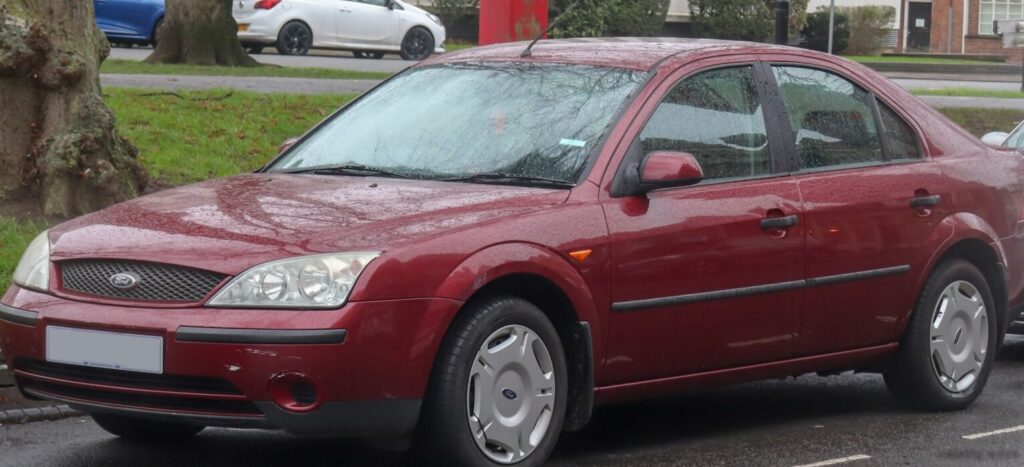
The Ford Mondeo II Hatchback 2.0 DI, produced between 2001 and 2007, represented a significant step forward for Ford’s mid-size offering in the European market. Positioned as a practical and efficient option within the Mondeo II range, the 2.0 DI utilized a direct injection diesel engine to deliver a balance of performance and fuel economy. This variant was particularly popular in countries where diesel fuel was favored due to taxation and government incentives. It sat in the middle of the Mondeo II lineup, offering a step up in performance and refinement from the lower-powered engine options, but remaining more affordable than the petrol-powered V6 models.
Technical Specifications
| Brand | Ford |
| Model | Mondeo |
| Generation | Mondeo II Hatchback |
| Type (Engine) | 2.0 DI (115 Hp) |
| Start of production | 2001 |
| End of production | 2007 |
| Powertrain Architecture | Internal Combustion engine |
| Body type | Hatchback |
| Seats | 5 |
| Doors | 5 |
| Fuel consumption (urban) | 8.2 l/100 km (28.7 US mpg, 34.4 UK mpg, 12.2 km/l) |
| Fuel consumption (extra urban) | 4.6 l/100 km (51.1 US mpg, 61.4 UK mpg, 21.7 km/l) |
| Fuel consumption (combined) | 5.9 l/100 km (39.9 US mpg, 47.9 UK mpg, 16.9 km/l) |
| Fuel Type | Diesel |
| Acceleration 0 – 100 km/h | 10.7 sec |
| Acceleration 0 – 62 mph | 10.7 sec |
| Acceleration 0 – 60 mph | 10.2 sec |
| Maximum speed | 195 km/h (121.17 mph) |
| Weight-to-power ratio | 13 kg/Hp, 76.8 Hp/tonne |
| Weight-to-torque ratio | 5.4 kg/Nm, 186.9 Nm/tonne |
| Power | 115 Hp @ 4000 rpm |
| Power per litre | 57.6 Hp/l |
| Torque | 280 Nm @ 1900 rpm (206.52 lb.-ft. @ 1900 rpm) |
| Engine layout | Front, Transverse |
| Engine Model/Code | D6BA |
| Engine displacement | 1998 cm3 (121.93 cu. in.) |
| Number of cylinders | 4 |
| Engine configuration | Inline |
| Cylinder Bore | 86 mm (3.39 in.) |
| Piston Stroke | 86 mm (3.39 in.) |
| Compression ratio | 19:1 |
| Number of valves per cylinder | 4 |
| Fuel injection system | Diesel Commonrail |
| Engine aspiration | Turbocharger, Intercooler |
| Valvetrain | DOHC |
| Engine oil capacity | 6 l (6.34 US qt | 5.28 UK qt) |
| Coolant | 10.4 l (10.99 US qt | 9.15 UK qt) |
| Kerb Weight | 1498 kg (3302.52 lbs.) |
| Max. weight | 1980 kg (4365.15 lbs.) |
| Max load | 482 kg (1062.63 lbs.) |
| Trunk (boot) space – minimum | 500 l (17.66 cu. ft.) |
| Trunk (boot) space – maximum | 1370 l (48.38 cu. ft.) |
| Fuel tank capacity | 56 l (14.79 US gal | 12.32 UK gal) |
| Length | 4731 mm (186.26 in.) |
| Width | 1812 mm (71.34 in.) |
| Height | 1429 mm (56.26 in.) |
| Wheelbase | 2754 mm (108.43 in.) |
| Front track | 1522 mm (59.92 in.) |
| Rear (Back) track | 1537 mm (60.51 in.) |
| Drivetrain Architecture | The Internal combustion engine (ICE) drives the front wheels of the vehicle. |
| Drive wheel | Front wheel drive |
| Number of gears and type of gearbox | 5 gears, manual transmission |
| Front suspension | Wishbone |
| Rear suspension | Several levers and rods |
| Front brakes | Ventilated discs |
| Rear brakes | Disc |
| Assisting systems | ABS (Anti-lock braking system) |
| Steering type | Steering rack and pinion |
| Power steering | Hydraulic Steering |
| Tires size | 205/55 R16 |
INTRODUCTION
The Ford Mondeo II, launched in 1999, was a crucial model for Ford in Europe, aiming to compete with established rivals like the Volkswagen Passat and Opel Vectra. The 2.0 DI variant, introduced in 2001, offered a diesel alternative to the petrol engines available, capitalizing on the growing popularity of diesel cars in Europe. This model year saw updates to the original Mondeo II, improving refinement and addressing some earlier criticisms. The hatchback body style, as featured in this 2.0 DI version, provided a more compact and versatile option compared to the traditional saloon (sedan) and estate (wagon) body styles.
Powertrain & Engine Architecture
The heart of the Mondeo II 2.0 DI is the D6BA engine, a 1998cc inline-four cylinder diesel. This engine utilizes direct fuel injection, a technology that significantly improved fuel efficiency and reduced emissions compared to older indirect injection diesel systems. The D6BA engine employed a turbocharger with an intercooler to boost power output. The common rail direct injection system, a relatively new technology at the time, allowed for precise control of fuel delivery, optimizing combustion and reducing engine noise. The engine featured a double overhead camshaft (DOHC) valvetrain with four valves per cylinder, contributing to its relatively high power output for a diesel engine of its size. The 5-speed manual transmission was the standard gearbox for this variant, providing a good balance between fuel economy and performance.
Driving Characteristics
The 2.0 DI Mondeo offered a noticeable step up in torque compared to the lower-powered petrol engines. The 280 Nm (206.52 lb.-ft.) of torque, available from just 1900 rpm, provided strong acceleration in everyday driving situations. While not a sports car, the 2.0 DI offered sufficient power for comfortable cruising and overtaking. The 0-60 mph time of around 10.2 seconds was respectable for a diesel car of this era. The five-speed manual transmission was well-matched to the engine’s characteristics, allowing drivers to keep the engine in its optimal power band. Compared to the higher-output petrol versions, the 2.0 DI prioritized fuel economy and low-end torque over outright horsepower. The gear ratios were tuned for efficiency, rather than aggressive acceleration.
Equipment & Trim Levels
The 2.0 DI typically came equipped with a reasonable level of standard features. These included central locking, electric front windows, power steering, and an anti-lock braking system (ABS). Interior upholstery was typically cloth, with a functional and durable design. Higher trim levels, such as the Ghia, offered additional features like alloy wheels, climate control, and upgraded audio systems. Optional extras included a sunroof, leather upholstery, and parking sensors. The dashboard layout was typical of Ford designs from the period, with a clear and straightforward instrument cluster.
Chassis & Braking
The Mondeo II utilized a front-wheel-drive layout with independent front suspension (wishbone) and a multi-link rear suspension. This suspension setup provided a comfortable ride quality while maintaining good handling characteristics. The front brakes were ventilated discs, providing ample stopping power, while the rear brakes were solid discs. The hydraulic power steering offered a good balance between assistance and feedback. The 205/55 R16 tires provided adequate grip for most driving conditions.
Market Reception & Comparison
The Mondeo II 2.0 DI was generally well-received by automotive critics. It was praised for its fuel efficiency, comfortable ride, and spacious interior. However, some critics noted that the engine could be somewhat noisy compared to some of its rivals. Compared to the petrol-powered Mondeos, the 2.0 DI offered significantly better fuel economy, making it a popular choice for high-mileage drivers. Against competitors like the Volkswagen Passat TDI, the Mondeo 2.0 DI offered a comparable level of performance and refinement at a competitive price point. The 2.0 DI was often seen as a more sensible and practical choice than the more powerful, but less economical, petrol variants.
Legacy
The Ford Mondeo II 2.0 DI remains a relatively common sight on European roads today, testament to its durability and reliability. The D6BA engine, while not without its quirks, is generally considered to be a robust and long-lasting unit. Common issues include turbocharger wear and potential problems with the fuel injection system, but these are typically manageable with regular maintenance. In the used car market, the 2.0 DI Mondeo offers excellent value for money, providing a practical and economical mode of transport. Its blend of comfort, fuel efficiency, and reliability has ensured its continued popularity among budget-conscious buyers.