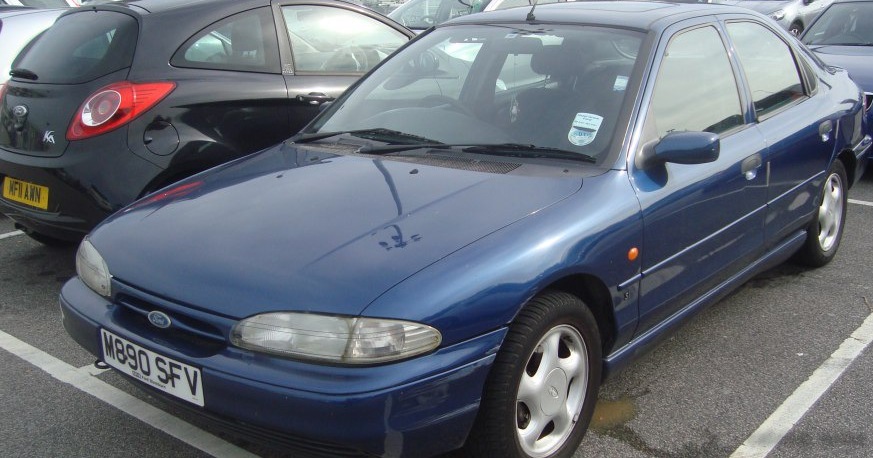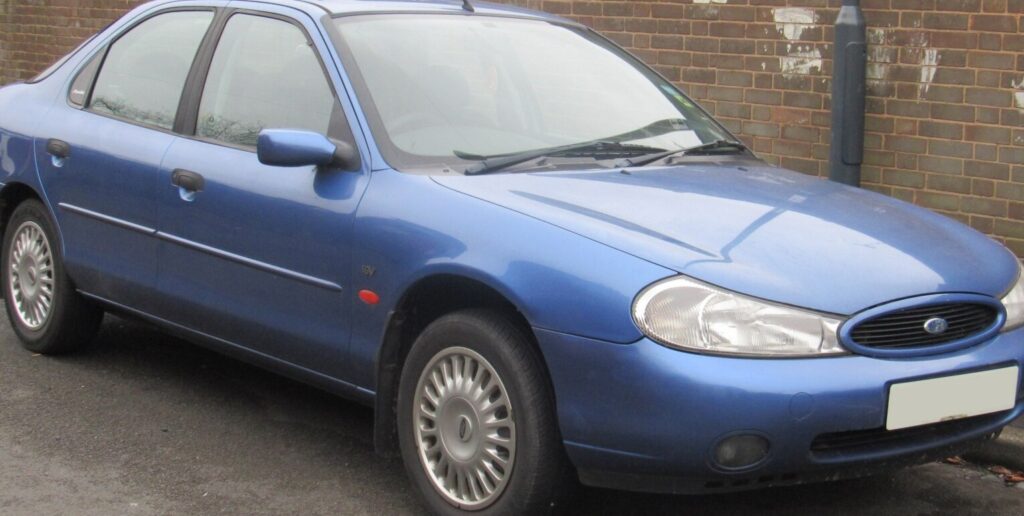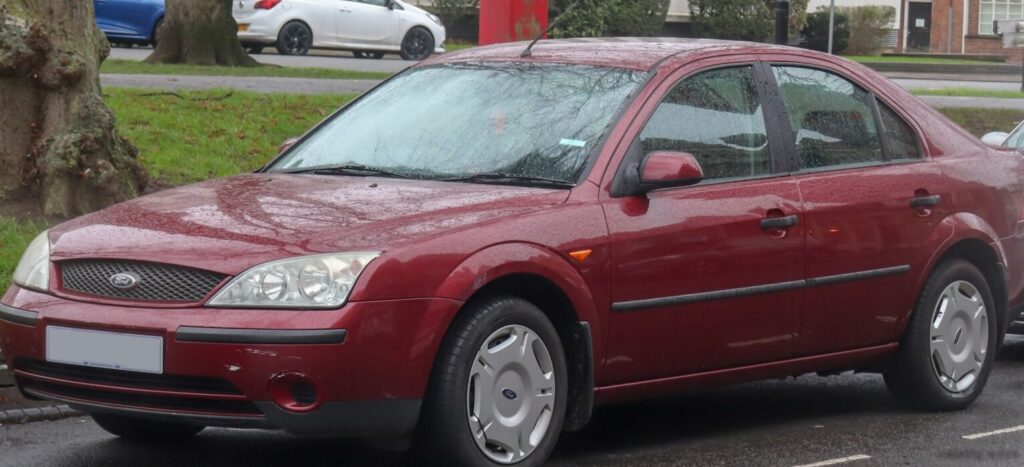
The Ford Mondeo II Hatchback 2.0 DI Automatic, produced between 2001 and 2007, represented a significant offering in the mid-size family car segment. Positioned as a practical and efficient option within the Mondeo II range, this variant combined a 2.0-liter turbocharged diesel engine with a five-speed automatic transmission. It aimed to provide comfortable, effortless motoring for drivers prioritizing convenience over outright performance. The Mondeo II, internally designated as the B500 platform, was a crucial model for Ford in Europe, building upon the success of the original Mondeo and establishing a reputation for solid engineering and a spacious interior.
Technical Specifications
| Brand | Ford |
| Model | Mondeo |
| Generation | Mondeo II Hatchback |
| Type (Engine) | 2.0 DI (115 Hp) Automatic |
| Start of production | 2001 |
| End of production | 2007 |
| Powertrain Architecture | Internal Combustion engine |
| Body type | Hatchback |
| Seats | 5 |
| Doors | 5 |
| Fuel consumption (urban) | 10.2 l/100 km (23.1 US mpg, 27.7 UK mpg, 9.8 km/l) |
| Fuel consumption (extra urban) | 5.8 l/100 km (40.6 US mpg, 48.7 UK mpg, 17.2 km/l) |
| Fuel consumption (combined) | 7.9 l/100 km (29.8 US mpg, 35.8 UK mpg, 12.7 km/l) |
| Fuel Type | Diesel |
| Acceleration 0 – 100 km/h | 12.5 sec |
| Acceleration 0 – 62 mph | 12.5 sec |
| Acceleration 0 – 60 mph | 11.9 sec |
| Maximum speed | 192 km/h (119.3 mph) |
| Weight-to-power ratio | 13 kg/Hp, 76.8 Hp/tonne |
| Weight-to-torque ratio | 5.4 kg/Nm, 186.9 Nm/tonne |
| Power | 115 Hp @ 4000 rpm |
| Power per litre | 57.6 Hp/l |
| Torque | 280 Nm @ 1900 rpm (206.52 lb.-ft. @ 1900 rpm) |
| Engine layout | Front, Transverse |
| Engine Model/Code | D6BA |
| Engine displacement | 1998 cm3 (121.93 cu. in.) |
| Number of cylinders | 4 |
| Engine configuration | Inline |
| Cylinder Bore | 86 mm (3.39 in.) |
| Piston Stroke | 86 mm (3.39 in.) |
| Compression ratio | 19:1 |
| Number of valves per cylinder | 4 |
| Fuel injection system | Diesel Commonrail |
| Engine aspiration | Turbocharger, Intercooler |
| Valvetrain | DOHC |
| Engine oil capacity | 6 l (6.34 US qt | 5.28 UK qt) |
| Coolant capacity | 10.4 l (10.99 US qt | 9.15 UK qt) |
| Kerb Weight | 1498 kg (3302.52 lbs.) |
| Max. weight | 1980 kg (4365.15 lbs.) |
| Max load | 482 kg (1062.63 lbs.) |
| Trunk (boot) space – minimum | 500 l (17.66 cu. ft.) |
| Trunk (boot) space – maximum | 1370 l (48.38 cu. ft.) |
| Fuel tank capacity | 56 l (14.79 US gal | 12.32 UK gal) |
| Length | 4731 mm (186.26 in.) |
| Width | 1812 mm (71.34 in.) |
| Height | 1429 mm (56.26 in.) |
| Wheelbase | 2754 mm (108.43 in.) |
| Front track | 1522 mm (59.92 in.) |
| Rear track | 1537 mm (60.51 in.) |
| Drivetrain Architecture | Front wheel drive |
| Number of gears | 5 |
| Gearbox type | Automatic transmission |
| Front suspension | Wishbone |
| Rear suspension | Several levers and rods |
| Front brakes | Ventilated discs |
| Rear brakes | Disc |
| Assisting systems | ABS (Anti-lock braking system) |
| Steering type | Steering rack and pinion |
| Power steering | Hydraulic |
| Tires size | 205/55 R16 |
| Wheel rims size | 16 |
Powertrain & Engine Architecture
The heart of the Mondeo II 2.0 DI Automatic was the D6BA engine, a 1.998-liter inline-four cylinder diesel. This engine utilized a turbocharger with an intercooler to boost power and torque. Crucially, it employed a common rail direct injection system, a relatively advanced technology for its time, allowing for precise fuel delivery and improved combustion efficiency. The D6BA featured a double overhead camshaft (DOHC) valvetrain with four valves per cylinder, contributing to its respectable power output for a diesel engine of that era. The five-speed automatic transmission was a conventional torque converter type, prioritizing smooth shifts and ease of use over outright performance. While not known for its sportiness, the transmission was generally reliable and well-suited to the engine’s torque characteristics.
Driving Characteristics
The 2.0 DI Automatic Mondeo offered a comfortable and relaxed driving experience. With 115 horsepower and 280 Nm (206 lb-ft) of torque, acceleration was adequate for everyday driving, though noticeably slower than the higher-powered petrol variants like the 2.5 V6. The automatic transmission, while smooth, did contribute to some power loss compared to the manual versions. Gear ratios were tuned for fuel efficiency and cruising comfort, rather than rapid acceleration. In real-world conditions, the car felt most at home on the highway, where the engine could comfortably maintain cruising speeds. Overtaking required planning, and the transmission sometimes hesitated during kickdown. The steering was light and precise, making it easy to maneuver in urban environments.
Equipment & Trim Levels
The 2.0 DI Automatic typically fell into the mid-range of the Mondeo II lineup. Standard equipment generally included air conditioning, power windows, central locking, and an RDS radio. Higher trim levels, such as Ghia, added features like leather upholstery, alloy wheels, and a more sophisticated audio system. Optional extras included a sunroof, heated front seats, and parking sensors. Interior upholstery was typically cloth, though leather was available on higher-spec models. The dashboard layout was functional and well-designed, with clear instrumentation and logically placed controls.
Chassis & Braking
The Mondeo II featured independent front suspension with MacPherson struts and a multi-link rear suspension. This setup provided a good balance between ride comfort and handling. The 2.0 DI Automatic models typically used ventilated disc brakes at the front and solid discs at the rear. Anti-lock Braking System (ABS) was standard, enhancing safety. Stabilizer bars were fitted front and rear to reduce body roll during cornering. The suspension was tuned to prioritize comfort, resulting in a slightly softer ride compared to the sportier variants.
Market Reception & Comparison
The Mondeo II 2.0 DI Automatic was generally well-received by critics as a practical and economical family car. It offered a good compromise between performance, fuel efficiency, and comfort. However, some reviewers noted that the automatic transmission could feel sluggish at times, and the engine lacked the refinement of some of its competitors. Compared to the petrol-powered Mondeos, the 2.0 DI Automatic offered significantly better fuel economy, making it a popular choice for high-mileage drivers. Against rivals like the Vauxhall/Opel Vectra and Volkswagen Passat, the Mondeo II offered a spacious interior and a competitive price point.
Legacy
The Ford Mondeo II 2.0 DI Automatic has proven to be a relatively reliable vehicle, with many examples still on the road today. The D6BA engine, while not without its quirks, is generally durable and capable of high mileage with proper maintenance. Common issues include turbocharger wear and potential problems with the fuel injection system. The automatic transmission is generally robust, but regular fluid changes are essential. In the used car market, these Mondeos represent a good value proposition for buyers seeking an affordable and practical family car. They are often favored by those prioritizing fuel economy and reliability over outright performance.