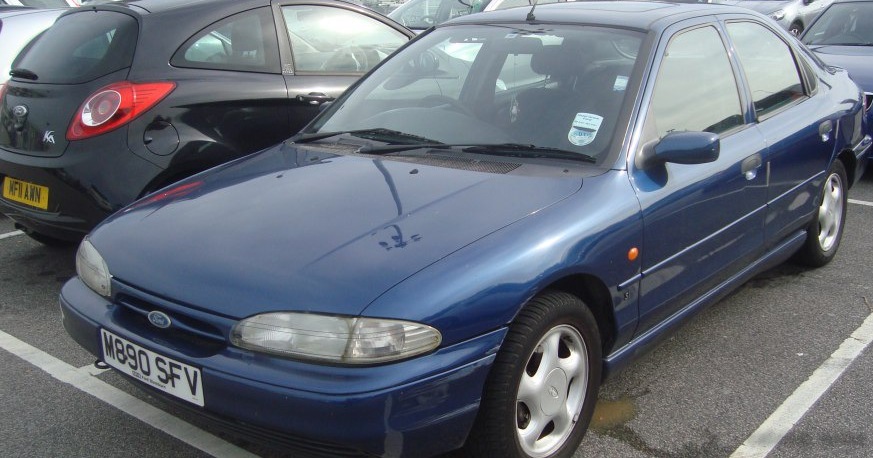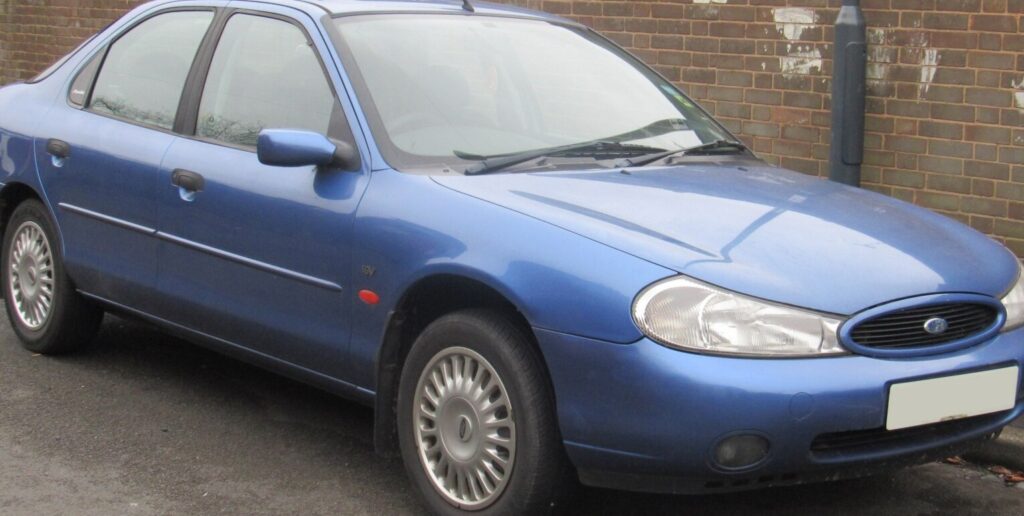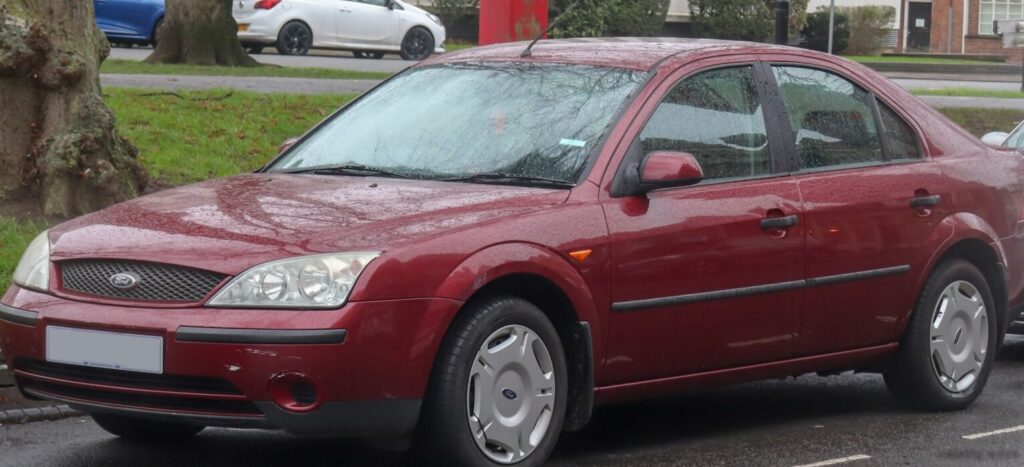
The Ford Mondeo II Hatchback 2.0 DI (90 hp) was a diesel-powered variant of Ford’s popular Mondeo, produced between 2001 and 2007. Positioned as an economy-focused option within the second-generation Mondeo range (internally designated as the B500 series), this model aimed to provide fuel efficiency and practicality for family and fleet buyers. It represented a key offering in the European market, where diesel engines held a significant share of the automotive landscape. The 2.0 DI utilized a direct injection diesel engine, offering a balance between performance and fuel economy, though it sat at the lower end of the Mondeo’s power offerings.
Technical Specifications
| Brand | Ford |
| Model | Mondeo |
| Generation | Mondeo II Hatchback |
| Type (Engine) | 2.0 DI (90 Hp) |
| Start of production | 2001 |
| End of production | 2007 |
| Powertrain Architecture | Internal Combustion engine |
| Body type | Hatchback |
| Seats | 5 |
| Doors | 5 |
| Fuel consumption (urban) | 8.2 l/100 km (28.7 US mpg) |
| Fuel consumption (extra urban) | 4.6 l/100 km (51.1 US mpg) |
| Fuel consumption (combined) | 5.9 l/100 km (39.9 US mpg) |
| Fuel Type | Diesel |
| Acceleration 0 – 100 km/h | 13.2 sec |
| Acceleration 0 – 62 mph | 13.2 sec |
| Acceleration 0 – 60 mph | 12.5 sec |
| Maximum speed | 180 km/h (111.85 mph) |
| Weight-to-power ratio | 16.6 kg/Hp |
| Weight-to-torque ratio | 6.1 kg/Nm |
| Power | 90 Hp @ 4000 rpm |
| Power per litre | 45 Hp/l |
| Torque | 245 Nm @ 1900 rpm (180.7 lb.-ft. @ 1900 rpm) |
| Engine layout | Front, Transverse |
| Engine Model/Code | D5BA |
| Engine displacement | 1998 cm3 (121.93 cu. in.) |
| Number of cylinders | 4 |
| Engine configuration | Inline |
| Cylinder Bore | 86 mm (3.39 in.) |
| Piston Stroke | 86 mm (3.39 in.) |
| Compression ratio | 19:1 |
| Number of valves per cylinder | 4 |
| Fuel injection system | Diesel Commonrail |
| Engine aspiration | Turbocharger, Intercooler |
| Valvetrain | DOHC |
| Engine oil capacity | 6 l (6.34 US qt | 5.28 UK qt) |
| Coolant capacity | 10.4 l (10.99 US qt | 9.15 UK qt) |
| Kerb Weight | 1492 kg (3289.3 lbs.) |
| Max. weight | 1980 kg (4365.15 lbs.) |
| Max load | 488 kg (1075.86 lbs.) |
| Trunk (boot) space – minimum | 500 l (17.66 cu. ft.) |
| Trunk (boot) space – maximum | 1370 l (48.38 cu. ft.) |
| Fuel tank capacity | 56 l (14.79 US gal | 12.32 UK gal) |
| Length | 4731 mm (186.26 in.) |
| Width | 1812 mm (71.34 in.) |
| Height | 1429 mm (56.26 in.) |
| Wheelbase | 2754 mm (108.43 in.) |
| Front track | 1522 mm (59.92 in.) |
| Rear track | 1537 mm (60.51 in.) |
| Drivetrain Architecture | Front wheel drive |
| Number of gears | 5 |
| Gearbox type | Manual transmission |
| Front suspension | Wishbone |
| Rear suspension | Several levers and rods |
| Front brakes | Ventilated discs |
| Rear brakes | Disc |
| Assisting systems | ABS (Anti-lock braking system) |
| Steering type | Steering rack and pinion |
| Power steering | Hydraulic |
| Tires size | 205/55 R16 |
Powertrain & Engine Architecture
The 2.0 DI engine, bearing the code D5BA, was a four-cylinder, inline diesel engine. It featured direct fuel injection and a turbocharger with an intercooler to enhance power output and efficiency. The common rail direct injection system allowed for precise fuel delivery, contributing to improved combustion and reduced emissions. The engine utilized a double overhead camshaft (DOHC) valvetrain, operating four valves per cylinder. This configuration optimized gas flow, further enhancing performance. The 5-speed manual transmission was the standard offering, chosen for its efficiency and cost-effectiveness. The engine’s 19:1 compression ratio was typical for direct injection diesels of the era, maximizing energy extraction from the fuel.
Driving Characteristics
The 90 hp output of the 2.0 DI engine resulted in a driving experience focused on fuel economy rather than outright performance. Acceleration from 0-60 mph took around 12.5 seconds, and top speed was limited to 111.85 mph. The engine delivered its peak torque of 180.7 lb-ft at a relatively low 1900 rpm, providing adequate pulling power for everyday driving and overtaking maneuvers. However, compared to the higher-powered Mondeo variants, such as those equipped with the 2.0-liter gasoline engine or the larger 2.2-liter diesel, the 2.0 DI felt noticeably slower. The 5-speed manual transmission was well-matched to the engine’s characteristics, offering a reasonable spread of gears for both urban and highway driving. The gear ratios were optimized for fuel efficiency, meaning the engine often needed to be worked harder when climbing hills or carrying a full load.
Equipment & Trim Levels
The 2.0 DI typically occupied an entry-level or mid-range position within the Mondeo II Hatchback lineup. Standard equipment generally included power steering, ABS brakes, front airbags, and air conditioning. Interior upholstery was typically cloth, and the dashboard featured a functional, if somewhat basic, design. Optional extras included alloy wheels, a CD stereo system, electric windows, and upgraded interior trim. Higher trim levels, such as the Ghia, offered more luxurious appointments, but were typically paired with more powerful engines. The 2.0 DI was often favored by fleet buyers, so many examples were equipped with practical features like rear parking sensors and upgraded audio systems.
Chassis & Braking
The Mondeo II Hatchback featured independent front suspension with wishbones and a multi-link rear suspension. This setup provided a comfortable ride and good handling characteristics. The 2.0 DI variant, due to its lower weight compared to some of the more powerful models, generally exhibited balanced handling. Braking was provided by ventilated discs on the front wheels and solid discs on the rear. ABS was standard, enhancing braking performance and stability. Stabilizer bars were fitted to both the front and rear axles to reduce body roll during cornering.
Market Reception & Comparison
The Ford Mondeo II 2.0 DI (90 hp) was generally well-received as a practical and economical family car. Critics praised its fuel efficiency and comfortable ride, but noted its relatively modest performance. Compared to the gasoline-powered Mondeos, the 2.0 DI offered significantly better fuel economy, making it an attractive option for high-mileage drivers. However, the higher-powered diesel variants, such as the 2.2 TDCi, provided a more refined and responsive driving experience. The 2.0 DI’s reliability was generally good, although some owners reported issues with the turbocharger and fuel injection system over the long term.
Legacy
The Ford Mondeo II 2.0 DI (90 hp) remains a relatively common sight on used car markets today. Its robust engine and durable construction have contributed to its longevity. While not a performance icon, it represents a practical and affordable option for those seeking a reliable family hatchback. The D5BA engine, while superseded by more modern designs, is known for its relative simplicity and ease of maintenance. However, potential buyers should be aware of the potential for age-related issues, such as turbocharger wear and fuel injector problems. Overall, the 2.0 DI Mondeo II Hatchback offers a compelling blend of fuel efficiency, practicality, and affordability, making it a worthwhile consideration for budget-conscious buyers.