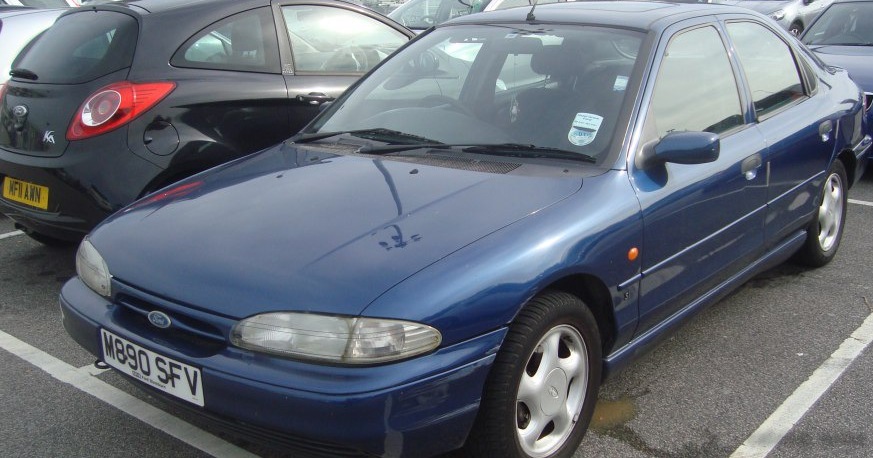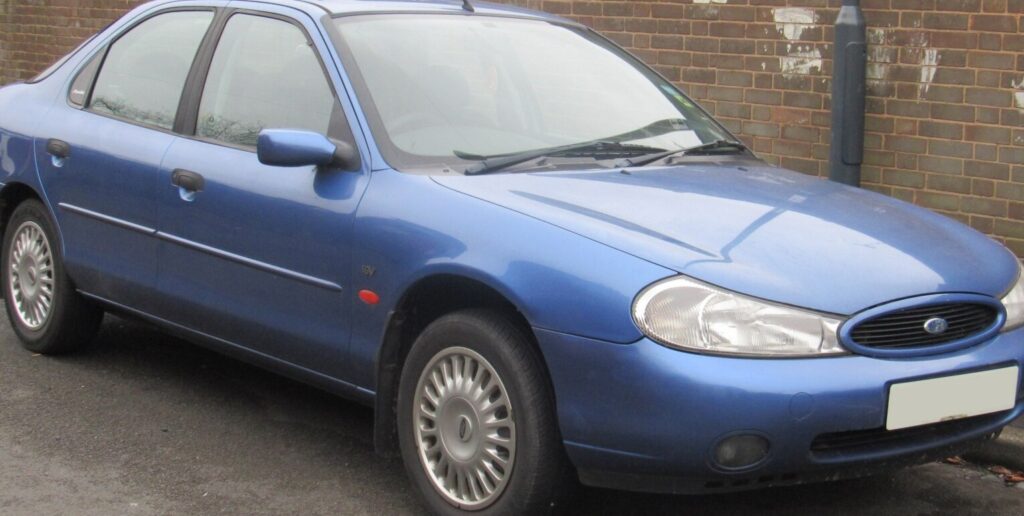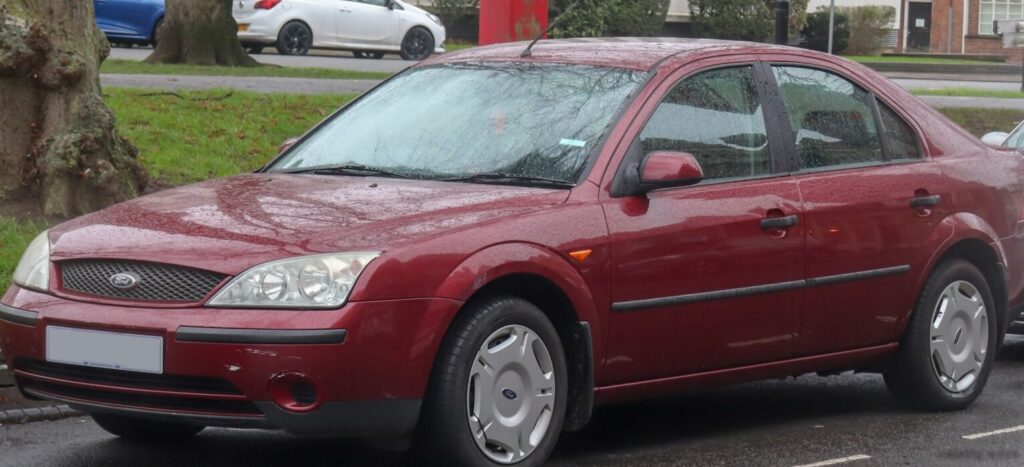
The Ford Mondeo II Hatchback 2.0 TDCi, producing 130 horsepower, was a significant offering in the European market from 2002 to 2007. Positioned as a mid-range trim within the second-generation Mondeo (internally designated as the B500 series), it aimed to balance fuel efficiency with respectable performance for family and fleet buyers. This variant represented Ford’s commitment to diesel technology, offering a practical and economical alternative to gasoline-powered models. The Mondeo II, in general, was a crucial model for Ford of Europe, building upon the success of the original Mondeo and establishing a strong presence in the competitive mid-size segment.
Technical Specifications
| Brand | Ford |
| Model | Mondeo |
| Generation | Mondeo II Hatchback |
| Type (Engine) | 2.0 TDCi (130 Hp) |
| Start of production | 2002 |
| End of production | 2007 |
| Powertrain Architecture | Internal Combustion engine |
| Body type | Hatchback |
| Seats | 5 |
| Doors | 5 |
| Fuel consumption (urban) | 8.3 l/100 km (28.3 US mpg, 34 UK mpg, 12 km/l) |
| Fuel consumption (extra urban) | 5.2 l/100 km (45.2 US mpg, 54.3 UK mpg, 19.2 km/l) |
| Fuel consumption (combined) | 6 l/100 km (39.2 US mpg, 47.1 UK mpg, 16.7 km/l) |
| Fuel Type | Diesel |
| Acceleration 0 – 100 km/h | 9.8 sec |
| Acceleration 0 – 62 mph | 9.8 sec |
| Acceleration 0 – 60 mph | 9.3 sec |
| Maximum speed | 208 km/h (129.25 mph) |
| Weight-to-power ratio | 11.2 kg/Hp, 89 Hp/tonne |
| Weight-to-torque ratio | 4.4 kg/Nm, 226 Nm/tonne |
| Power | 130 Hp @ 3800 rpm |
| Power per litre | 65.1 Hp/l |
| Torque | 330 Nm @ 1800 rpm (243.4 lb.-ft. @ 1800 rpm) |
| Engine layout | Front, Transverse |
| Engine Model/Code | FMBA, FMBB |
| Engine displacement | 1998 cm3 (121.93 cu. in.) |
| Number of cylinders | 4 |
| Engine configuration | Inline |
| Cylinder Bore | 86 mm (3.39 in.) |
| Piston Stroke | 86 mm (3.39 in.) |
| Compression ratio | 18.2:1 |
| Number of valves per cylinder | 4 |
| Fuel injection system | Diesel Commonrail |
| Engine aspiration | Turbocharger, Intercooler |
| Engine oil capacity | 6 l (6.34 US qt | 5.28 UK qt) |
| Coolant | 10.4 l (10.99 US qt | 9.15 UK qt) |
| Kerb Weight | 1460 kg (3218.75 lbs.) |
| Max. weight | 2000 kg (4409.25 lbs.) |
| Max load | 540 kg (1190.5 lbs.) |
| Trunk (boot) space – minimum | 500 l (17.66 cu. ft.) |
| Trunk (boot) space – maximum | 1370 l (48.38 cu. ft.) |
| Fuel tank capacity | 56 l (14.79 US gal | 12.32 UK gal) |
| Length | 4731 mm (186.26 in.) |
| Width | 1812 mm (71.34 in.) |
| Height | 1429 mm (56.26 in.) |
| Wheelbase | 2754 mm (108.43 in.) |
| Front track | 1522 mm (59.92 in.) |
| Rear (Back) track | 1537 mm (60.51 in.) |
| Drivetrain Architecture | The Internal combustion engine (ICE) drives the front wheels of the vehicle. |
| Drive wheel | Front wheel drive |
| Number of gears and type of gearbox | 6 gears, manual transmission |
| Front suspension | Wishbone |
| Rear suspension | Several levers and rods |
| Front brakes | Ventilated discs |
| Rear brakes | Disc |
| Assisting systems | ABS (Anti-lock braking system) |
| Steering type | Steering rack and pinion |
| Power steering | Hydraulic Steering |
| Tires size | 205/55 R16 |
INTRODUCTION
The Ford Mondeo II Hatchback 2.0 TDCi (130 hp) was produced between 2002 and 2007, representing a key variant within the second-generation Mondeo range. Built on the B500 platform, shared with other Ford models of the era, the Mondeo II aimed to provide a spacious, comfortable, and technologically advanced package for the mid-size family car segment. The 2.0 TDCi engine was a cornerstone of Ford’s diesel strategy, offering a balance between performance, fuel economy, and refinement. This particular version, with its 130 horsepower output, was positioned as a popular choice for drivers seeking a practical and efficient vehicle for both daily commuting and longer journeys.
Powertrain & Engine Architecture
The heart of this Mondeo variant is the 2.0-liter TDCi diesel engine, specifically utilizing the FMBA or FMBB engine codes depending on the exact production year and market. This engine is a four-cylinder, inline configuration, featuring a common-rail direct fuel injection system. This system, supplied by Bosch, allowed for precise fuel delivery and optimized combustion, contributing to both power output and fuel efficiency. The engine also incorporates a turbocharger with an intercooler, boosting power and torque. The valvetrain utilizes four valves per cylinder, enhancing breathing and overall engine performance. The 130 horsepower peak is achieved at 3800 rpm, while the substantial 330 Nm (243.4 lb-ft) of torque is available from just 1800 rpm, providing strong low-end and mid-range acceleration. The engine is transversely mounted in the front of the vehicle. The 2.0 TDCi was paired with a six-speed manual transmission, offering smooth gear changes and contributing to the vehicle’s overall efficiency.
Driving Characteristics
The 2.0 TDCi 130 hp Mondeo Hatchback offered a composed and comfortable driving experience. While not overtly sporty, the engine’s strong torque output provided ample power for everyday driving situations, including overtaking and highway cruising. Acceleration from 0-60 mph took around 9.3 seconds, and the top speed was approximately 129 mph. The six-speed manual transmission allowed drivers to keep the engine in its optimal power band, maximizing efficiency and responsiveness. Compared to the higher-output 2.2-liter TDCi versions, the 2.0 TDCi felt less urgent in its acceleration, but it offered superior fuel economy. The gear ratios were well-chosen, providing a balance between acceleration and cruising comfort. The steering was precise and well-weighted, and the suspension provided a comfortable ride without feeling overly soft.
Equipment & Trim Levels
The 2.0 TDCi 130 hp Mondeo typically came equipped with a reasonable level of standard features. These included air conditioning, power steering, electric front windows, central locking, and an audio system. Higher trim levels, such as Ghia or Titanium, added features like alloy wheels, upgraded upholstery, climate control, and a more comprehensive audio system. Optional extras included a sunroof, leather seats, and parking sensors. Interior upholstery was typically cloth, although leather was available on higher-spec models. The dashboard layout was functional and well-designed, with clear instrumentation and intuitive controls.
Chassis & Braking
The Mondeo II Hatchback utilized a front-wheel-drive layout with independent front suspension (wishbone) and a multi-link rear suspension. This suspension setup provided a good balance between ride comfort and handling. The front brakes were ventilated discs, while the rear brakes were solid discs. Anti-lock Braking System (ABS) was standard, enhancing safety and stability during braking. The chassis was designed to provide a stable and predictable driving experience, with minimal body roll in corners. The steering employed a hydraulic power steering system, offering a responsive and precise feel.
Market Reception & Comparison
The Ford Mondeo II 2.0 TDCi 130 hp was generally well-received by automotive critics. It was praised for its fuel efficiency, comfortable ride, and spacious interior. However, some critics noted that the engine could be somewhat noisy under hard acceleration. Compared to the petrol-powered Mondeo variants, the 2.0 TDCi offered significantly better fuel economy, making it a popular choice for high-mileage drivers. Against competitors like the Volkswagen Passat and Opel/Vauxhall Vectra, the Mondeo offered a compelling package of value, practicality, and driving dynamics. The 2.2 TDCi Mondeo offered more performance, but at the cost of slightly reduced fuel economy and a higher purchase price.
Legacy
The 2.0 TDCi engine proved to be a relatively reliable unit, although, like all diesel engines, it is susceptible to issues related to the fuel injection system and turbocharger. Regular maintenance, including oil changes and filter replacements, is crucial for ensuring long-term reliability. Today, the Mondeo II 2.0 TDCi can be found on the used car market at affordable prices. It remains a practical and economical choice for those seeking a spacious and comfortable family car. While not a collector’s item, well-maintained examples are still capable of providing years of reliable service. The Mondeo II, and this variant in particular, solidified Ford’s reputation for building competent and well-rounded mid-size vehicles.