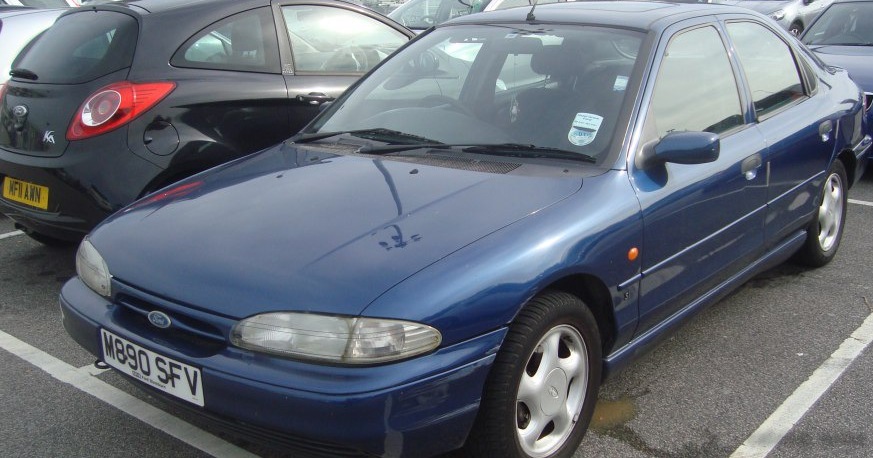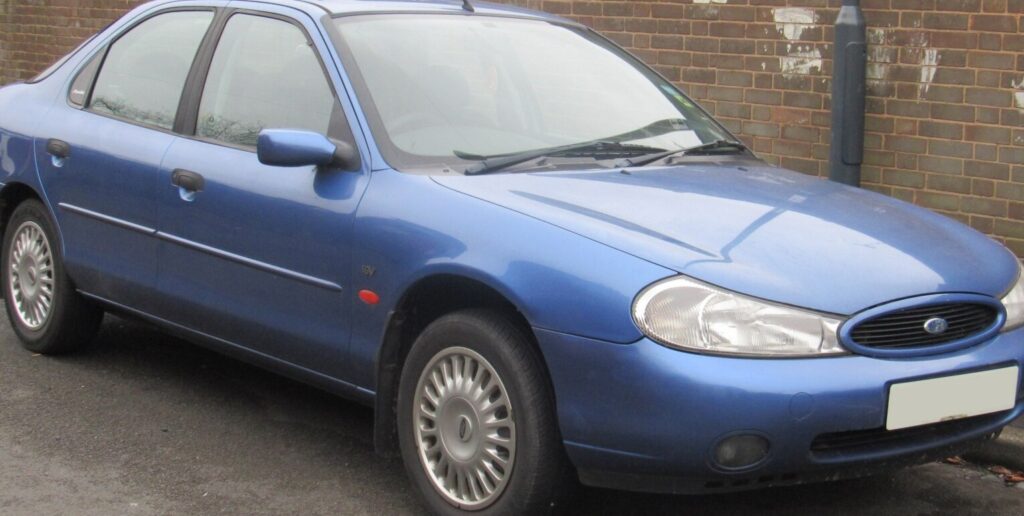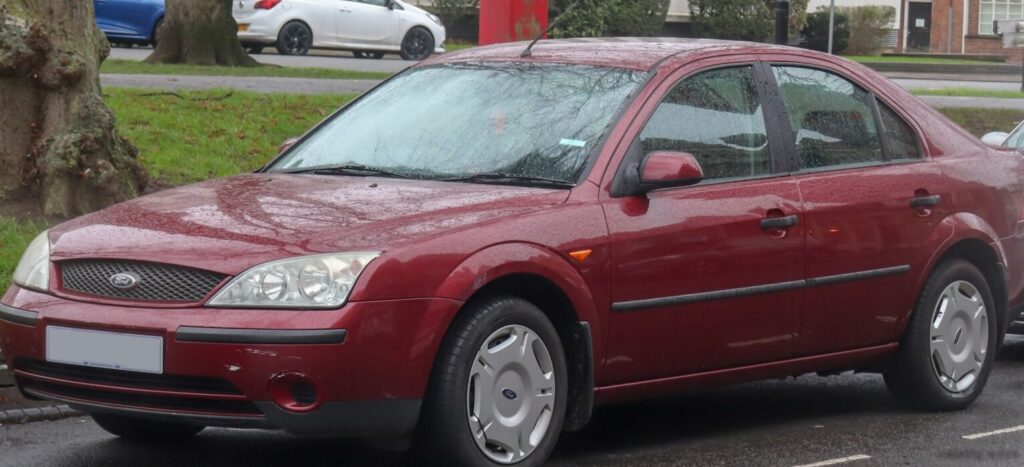
The Ford Mondeo II Hatchback 2.0 TDCi Automatic, produced between 2002 and 2007, represented a significant offering in the mid-size family car segment. Positioned as a practical and relatively efficient option within the Mondeo II range, this variant combined a diesel engine with the convenience of an automatic transmission. It was a key model for Ford in Europe, where diesel hatchbacks were – and continue to be – highly popular due to fuel economy and suitability for long-distance driving. The Mondeo II, built on the B5 platform, aimed to provide a more refined and spacious alternative to rivals like the Volkswagen Passat and Opel/Vauxhall Vectra.
Technical Specifications
| Brand | Ford |
| Model | Mondeo |
| Generation | Mondeo II Hatchback |
| Type (Engine) | 2.0 TDCi (130 Hp) Automatic |
| Start of production | 2002 |
| End of production | 2007 |
| Powertrain Architecture | Internal Combustion engine |
| Body type | Hatchback |
| Seats | 5 |
| Doors | 5 |
| Fuel consumption (urban) | 10.2 l/100 km (23.1 US mpg, 27.7 UK mpg, 9.8 km/l) |
| Fuel consumption (extra urban) | 5.8 l/100 km (40.6 US mpg, 48.7 UK mpg, 17.2 km/l) |
| Fuel consumption (combined) | 7.4 l/100 km (31.8 US mpg, 38.2 UK mpg, 13.5 km/l) |
| Fuel Type | Diesel |
| Acceleration 0 – 100 km/h | 11.3 sec |
| Acceleration 0 – 62 mph | 11.3 sec |
| Acceleration 0 – 60 mph | 10.7 sec |
| Maximum speed | 208 km/h (129.25 mph) |
| Weight-to-power ratio | 11.2 kg/Hp, 89 Hp/tonne |
| Weight-to-torque ratio | 4.4 kg/Nm, 226 Nm/tonne |
| Power | 130 Hp @ 3800 rpm |
| Power per litre | 65.1 Hp/l |
| Torque | 330 Nm @ 1800 rpm (243.4 lb.-ft. @ 1800 rpm) |
| Engine layout | Front, Transverse |
| Engine Model/Code | FMBA, FMBB |
| Engine displacement | 1998 cm3 (121.93 cu. in.) |
| Number of cylinders | 4 |
| Engine configuration | Inline |
| Cylinder Bore | 86 mm (3.39 in.) |
| Piston Stroke | 86 mm (3.39 in.) |
| Compression ratio | 18.2:1 |
| Number of valves per cylinder | 4 |
| Fuel injection system | Diesel Commonrail |
| Engine aspiration | Turbocharger, Intercooler |
| Engine oil capacity | 6 l (6.34 US qt | 5.28 UK qt) |
| Coolant capacity | 10.4 l (10.99 US qt | 9.15 UK qt) |
| Kerb Weight | 1460 kg (3218.75 lbs.) |
| Max. weight | 2000 kg (4409.25 lbs.) |
| Max load | 540 kg (1190.5 lbs.) |
| Trunk (boot) space – minimum | 500 l (17.66 cu. ft.) |
| Trunk (boot) space – maximum | 1370 l (48.38 cu. ft.) |
| Fuel tank capacity | 56 l (14.79 US gal | 12.32 UK gal) |
| Length | 4731 mm (186.26 in.) |
| Width | 1812 mm (71.34 in.) |
| Height | 1429 mm (56.26 in.) |
| Wheelbase | 2754 mm (108.43 in.) |
| Front track | 1522 mm (59.92 in.) |
| Rear track | 1537 mm (60.51 in.) |
| Drivetrain Architecture | Front wheel drive |
| Number of gears | 5 |
| Gearbox type | Automatic transmission |
| Front suspension | Wishbone |
| Rear suspension | Several levers and rods |
| Front brakes | Ventilated discs |
| Rear brakes | Disc |
| Assisting systems | ABS (Anti-lock braking system) |
| Steering type | Steering rack and pinion |
| Power steering | Hydraulic |
| Tires size | 205/55 R16 |
| Wheel rims size | 16 |
INTRODUCTION
The Ford Mondeo II Hatchback 2.0 TDCi Automatic, launched in 2002 as part of the Mondeo II facelift, offered a compelling blend of practicality, fuel efficiency, and comfort. This variant was aimed at buyers who desired the benefits of a diesel engine – particularly its superior fuel economy – but preferred the ease of use offered by an automatic transmission. Within the Mondeo II range, it occupied a mid-range position, offering a step up in refinement and performance compared to the lower-powered 1.8-liter petrol models, while remaining more accessible than the higher-specification trims and more powerful engine options.
Powertrain & Engine Architecture
At the heart of the 2.0 TDCi Automatic was the Ford FMBA or FMBB engine, a 1998cc four-cylinder diesel. This engine utilized a common rail direct injection system, a technology that significantly improved fuel atomization and combustion efficiency compared to older diesel injection methods. The engine featured a single overhead camshaft (SOHC) design with four valves per cylinder. A turbocharger with an intercooler was employed to boost power and torque. The automatic transmission was a conventional five-speed unit, chosen for its smooth operation and suitability for everyday driving. The transmission’s programming was geared towards fuel efficiency and comfortable cruising, rather than outright performance.
Driving Characteristics
The 2.0 TDCi Automatic Mondeo offered a relaxed and comfortable driving experience. While not particularly sporty, the engine provided adequate power for most driving situations, with 130 horsepower and a healthy 330 Nm (243 lb-ft) of torque available from low engine speeds. The automatic transmission, while smooth, did result in some power loss compared to the manual versions. Acceleration from 0-60 mph took around 10.7 seconds, and top speed was approximately 129 mph. The gear ratios were optimized for fuel economy, meaning the engine often operated at lower RPMs during cruising. This contributed to a quiet and refined ride, but could sometimes feel sluggish when requiring rapid acceleration, such as overtaking.
Equipment & Trim Levels
The 2.0 TDCi Automatic typically came equipped with a reasonable level of standard features. These generally included air conditioning, power steering, electric front windows, central locking, and an RDS radio. Higher trim levels, such as Ghia or Titanium, added features like alloy wheels, upgraded upholstery, climate control, and a CD changer. Optional extras included a sunroof, leather seats, and parking sensors. Interior materials were generally of good quality for the price point, with a focus on durability and practicality.
Chassis & Braking
The Mondeo II Hatchback featured independent front suspension using MacPherson struts and a multi-link rear suspension. This setup provided a good balance between ride comfort and handling. The front brakes were ventilated discs, while the rear brakes were solid discs. Anti-lock Braking System (ABS) was standard. The suspension was tuned to prioritize comfort, resulting in a relatively soft ride. Stabilizer bars were fitted to both the front and rear axles to reduce body roll during cornering.
Market Reception & Comparison
The 2.0 TDCi Automatic Mondeo was generally well-received by automotive critics. It was praised for its fuel efficiency, comfortable ride, and spacious interior. However, some reviewers noted that the automatic transmission could feel a little slow to respond, and that the engine lacked the outright performance of some of its rivals. Compared to the 1.8-liter petrol versions, the 2.0 TDCi offered significantly better fuel economy and more torque. Against the higher-powered 2.2-liter petrol or diesel models, it represented a more affordable and economical option, albeit with slightly less performance. Reliability was generally good, although common rail diesel systems can be prone to issues if not properly maintained.
Legacy
The Ford Mondeo II 2.0 TDCi Automatic remains a relatively common sight on used car markets today. The FMBA/FMBB engine, while not without its potential issues (such as injector problems and turbocharger wear), is generally considered to be durable if properly maintained. The automatic transmission is also reasonably reliable. These cars offer a good value proposition for buyers seeking a practical, fuel-efficient, and comfortable family hatchback. However, potential buyers should be aware of the age-related issues common to all vehicles of this era, such as corrosion and wear and tear on suspension components. The Mondeo II, and this variant in particular, helped solidify Ford’s reputation for building well-rounded and dependable family cars.