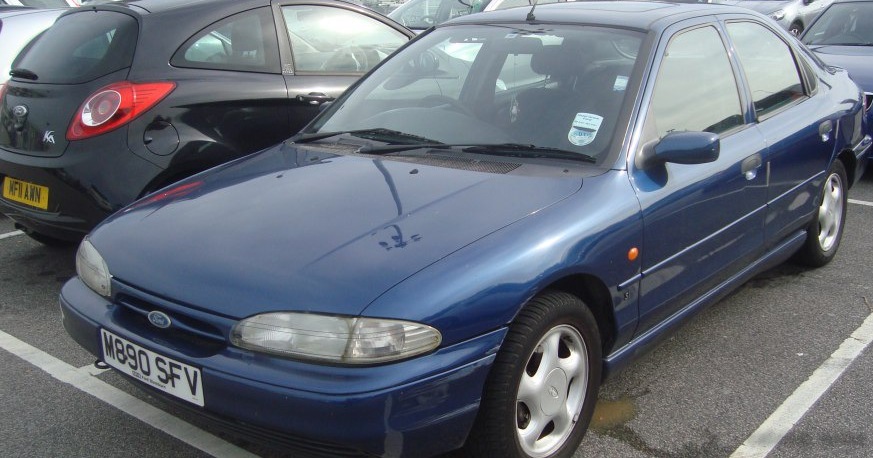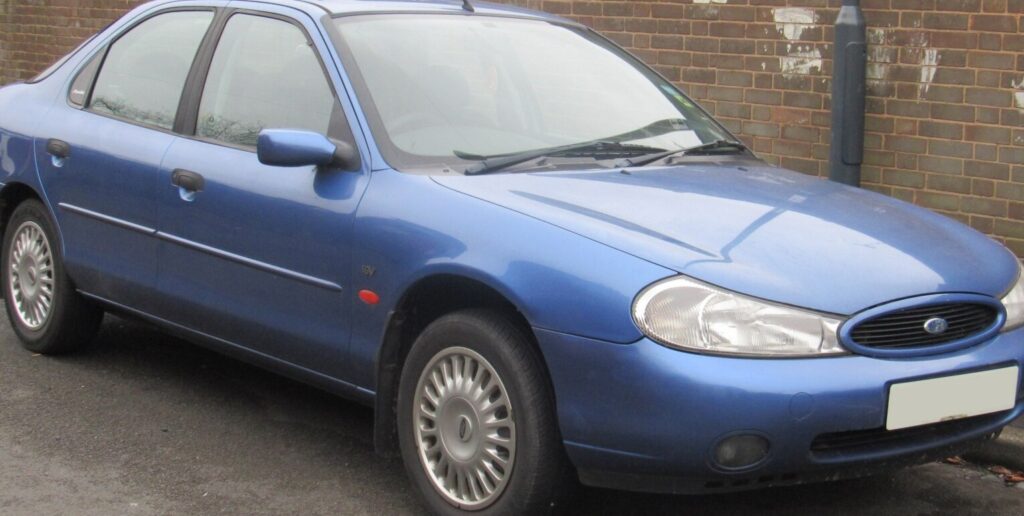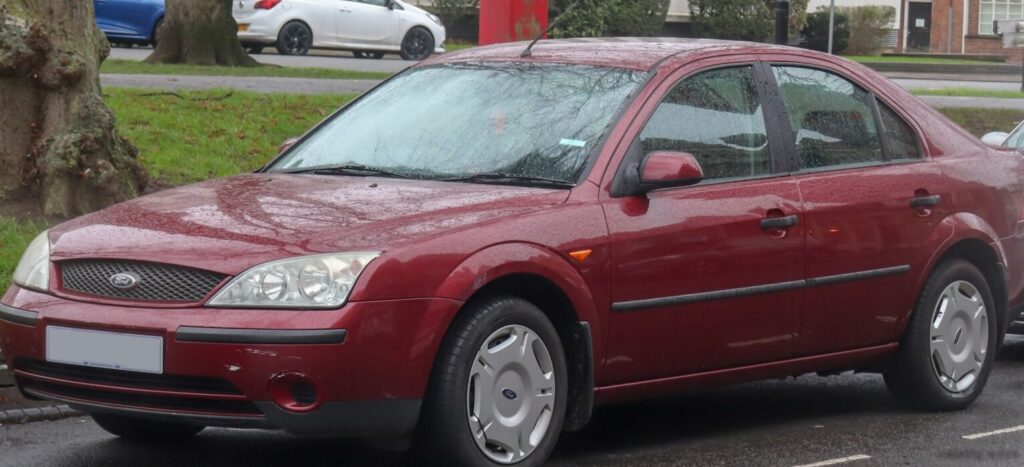
The Ford Mondeo II Hatchback 2.5 V6 Automatic, produced between 2001 and 2007, represented a significant offering in the mid-size family car segment. Positioned as a more premium variant within the second-generation Mondeo (internally designated as the B500 series), this model combined a naturally aspirated V6 engine with a conventional automatic transmission. It aimed to provide a blend of performance and comfort, appealing to buyers seeking a more refined driving experience than the base four-cylinder models. The Mondeo II, in general, was Ford of Europe’s attempt to create a genuinely world car, and it found success in both European and, to a lesser extent, North American markets.
Technical Specifications
| Brand | Ford |
| Model | Mondeo |
| Generation | Mondeo II Hatchback |
| Type (Engine) | 2.5 V6 (170 Hp) Automatic |
| Start of production | 2001 |
| End of production | 2007 |
| Powertrain Architecture | Internal Combustion engine |
| Body type | Hatchback |
| Seats | 5 |
| Doors | 5 |
| Fuel consumption (urban) | 15.2 l/100 km (15.5 US mpg, 18.6 UK mpg, 6.6 km/l) |
| Fuel consumption (extra urban) | 7.5 l/100 km (31.4 US mpg, 37.7 UK mpg, 13.3 km/l) |
| Fuel consumption (combined) | 10.2 l/100 km (23.1 US mpg, 27.7 UK mpg, 9.8 km/l) |
| Fuel Type | Petrol (Gasoline) |
| Acceleration 0 – 100 km/h | 9.6 sec |
| Acceleration 0 – 62 mph | 9.6 sec |
| Acceleration 0 – 60 mph | 9.1 sec |
| Maximum speed | 216 km/h (134.22 mph) |
| Weight-to-power ratio | 8.7 kg/Hp, 115.1 Hp/tonne |
| Weight-to-torque ratio | 6.7 kg/Nm, 149 Nm/tonne |
| Power | 170 Hp @ 6000 rpm |
| Power per litre | 68.1 Hp/l |
| Torque | 220 Nm @ 4250 rpm (162.26 lb.-ft. @ 4250 rpm) |
| Engine layout | Front, Transverse |
| Engine Model/Code | LCBD |
| Engine displacement | 2495 cm3 (152.25 cu. in.) |
| Number of cylinders | 6 |
| Engine configuration | V-engine |
| Cylinder Bore | 81.6 mm (3.21 in.) |
| Piston Stroke | 79.5 mm (3.13 in.) |
| Compression ratio | 9.8:1 |
| Number of valves per cylinder | 4 |
| Fuel injection system | Multi-port manifold injection |
| Engine aspiration | Naturally aspirated engine |
| Valvetrain | DOHC |
| Engine oil capacity | 5.7 l (6.02 US qt | 5.02 UK qt) |
| Coolant | 9.5 l (10.04 US qt | 8.36 UK qt) |
| Kerb Weight | 1477 kg (3256.23 lbs.) |
| Max. weight | 1950 kg (4299.01 lbs.) |
| Max load | 473 kg (1042.79 lbs.) |
| Trunk (boot) space – minimum | 500 l (17.66 cu. ft.) |
| Trunk (boot) space – maximum | 1370 l (48.38 cu. ft.) |
| Fuel tank capacity | 58 l (15.32 US gal | 12.76 UK gal) |
| Length | 4731 mm (186.26 in.) |
| Width | 1812 mm (71.34 in.) |
| Height | 1429 mm (56.26 in.) |
| Wheelbase | 2754 mm (108.43 in.) |
| Front track | 1522 mm (59.92 in.) |
| Rear (Back) track | 1537 mm (60.51 in.) |
| Drivetrain Architecture | The Internal combustion engine (ICE) drives the front wheels of the vehicle. |
| Drive wheel | Front wheel drive |
| Number of gears and type of gearbox | 5 gears, automatic transmission |
| Front suspension | Wishbone |
| Rear suspension | Several levers and rods |
| Front brakes | Ventilated discs |
| Rear brakes | Disc |
| Assisting systems | ABS (Anti-lock braking system) |
| Steering type | Steering rack and pinion |
| Power steering | Hydraulic Steering |
| Tires size | 205/55 R16 |
| Wheel rims size | 16 |
Powertrain & Engine Architecture
The heart of this Mondeo variant is the Ford LCBD 2.5-liter V6 engine. This engine, a member of Ford’s Cologne V6 family, features a 60-degree V-angle and utilizes a double overhead camshaft (DOHC) valvetrain with four valves per cylinder. The engine employs multi-port fuel injection, delivering fuel directly into the intake ports. The LCBD engine is known for its relatively smooth operation and characteristic V6 sound. Paired with this engine was a five-speed automatic transmission, a conventional torque converter type, chosen for its ease of use and comfort. While not particularly sporty, this transmission provided smooth shifts and adequate performance for everyday driving. The engine’s 9.8:1 compression ratio was a compromise between performance and the ability to run on readily available fuel grades.
Driving Characteristics
The 2.5 V6 Automatic Mondeo offered a noticeable step up in performance compared to the more common 1.8 and 2.0-liter four-cylinder versions. The 170 horsepower and 220 Nm (162 lb-ft) of torque provided brisk acceleration, with a 0-60 mph time of around 9.1 seconds. However, the automatic transmission did detract somewhat from the engine’s potential. Gear changes weren’t particularly quick or responsive, and the transmission tended to hunt for gears on inclines. Compared to the manual transmission versions, the automatic felt less engaging and slightly slower. The power delivery was linear, making it easy to modulate, but lacked the punch of turbocharged alternatives. The weight of the vehicle, around 1477 kg (3256 lbs), also contributed to a less nimble feel.
Equipment & Trim Levels
The 2.5 V6 Automatic typically came with a generous level of standard equipment. This included air conditioning, power windows and mirrors, central locking, an upgraded audio system, and alloy wheels. Higher trim levels, such as the Ghia, added features like leather upholstery, heated front seats, automatic climate control, and rain-sensing wipers. Optional extras included a sunroof, satellite navigation, and upgraded sound systems. The interior design was generally functional and well-built, although the materials used weren’t as luxurious as some of its competitors.
Chassis & Braking
The Mondeo II utilized an independent front suspension with MacPherson struts and a multi-link rear suspension. This setup provided a comfortable ride and decent handling characteristics. The front brakes were ventilated discs, while the rear brakes were solid discs, providing adequate stopping power for the vehicle’s weight and performance. Anti-lock Braking System (ABS) was standard. Steering was rack and pinion with hydraulic power assistance, offering a reasonably direct feel. The suspension was tuned for comfort rather than outright sportiness, resulting in a slightly softer ride than some of its rivals.
Market Reception & Comparison
The 2.5 V6 Automatic Mondeo was generally well-received by automotive critics. It was praised for its smooth engine, comfortable ride, and spacious interior. However, the automatic transmission was often criticized for its lack of responsiveness. Compared to the 1.8 and 2.0-liter models, the V6 offered significantly more performance but at the cost of increased fuel consumption. The V6 also commanded a higher price. Against competitors like the Volkswagen Passat and Opel/Vauxhall Vectra, the Mondeo offered a compelling package, particularly in terms of value for money. Fuel economy was a weak point, averaging around 23.1 US mpg in combined driving.
Legacy
The Ford Mondeo II 2.5 V6 Automatic, while not a high-volume seller, remains a reasonably sought-after used car. The LCBD V6 engine is generally considered reliable, although regular maintenance is essential. Common issues include oil leaks and occasional problems with the automatic transmission. Parts availability is generally good, but some components may be becoming increasingly difficult to find. Today, these cars represent an affordable way to experience a comfortable and relatively powerful family car from the early 2000s. The Mondeo II, in general, helped establish Ford as a serious contender in the European mid-size car market, and the V6 variant offered a premium alternative for buyers seeking a more refined driving experience.