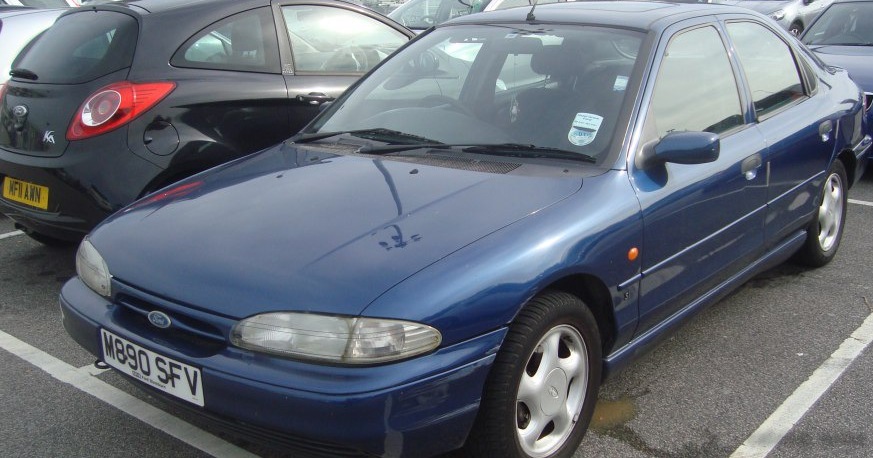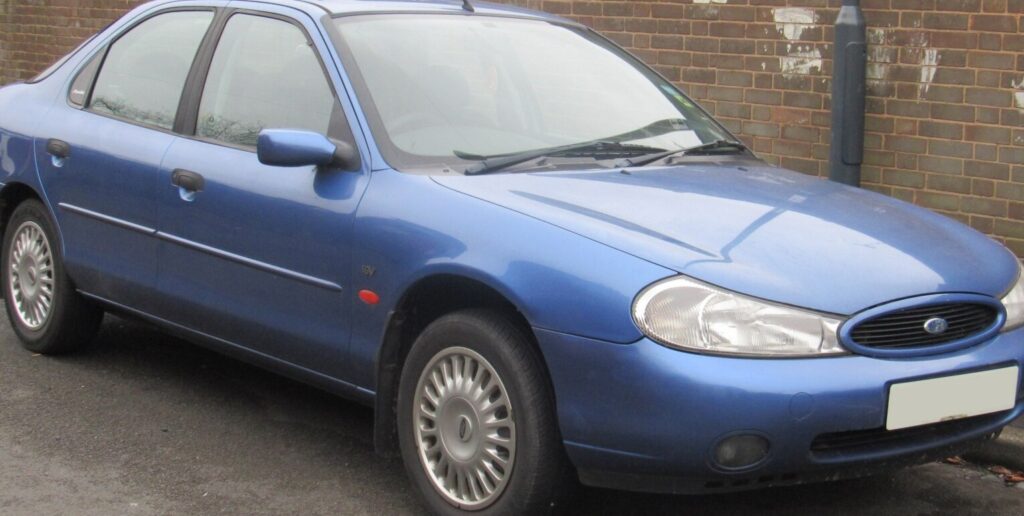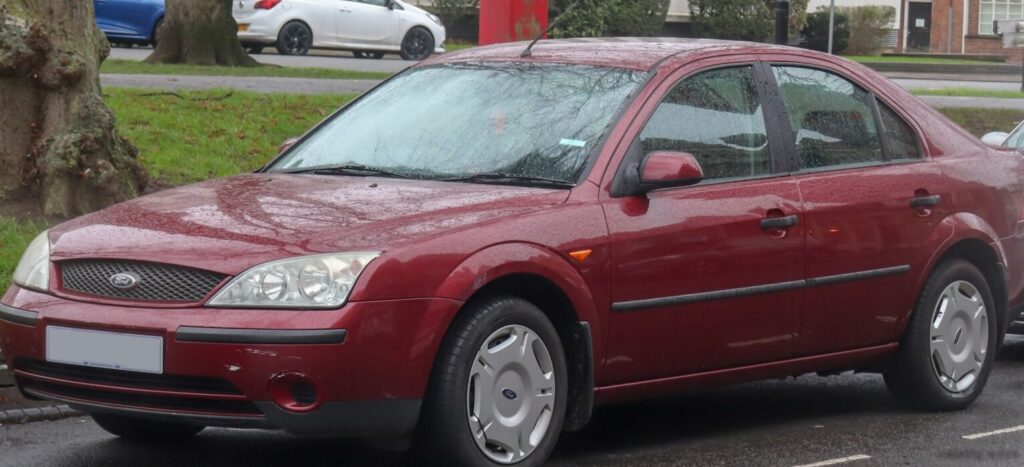
The Ford Mondeo II Hatchback 3.0i V6 24V, produced between 2003 and 2007, represented the performance pinnacle of the second-generation Mondeo range in Europe. Positioned as the flagship trim, it offered a significant step up in power and refinement compared to the more common four-cylinder variants. This model was part of the broader Mondeo Mk II (B500) series, built on the Ford CDW270 platform, and aimed at buyers seeking a spacious, comfortable, and relatively sporty family hatchback. While the Mondeo was never a major seller in the US market, the Mk II generation showcased Ford of Europe’s engineering capabilities and offered a compelling alternative to rivals like the Volkswagen Passat and Opel Vectra.
Technical Specifications
| Brand | Ford |
| Model | Mondeo |
| Generation | Mondeo II Hatchback |
| Type (Engine) | 3.0 i V6 24V (204 Hp) |
| Start of production | 2003 |
| End of production | 2007 |
| Powertrain Architecture | Internal Combustion engine |
| Body type | Hatchback |
| Seats | 5 |
| Doors | 5 |
| Fuel consumption (urban) | 15.1 l/100 km (15.6 US mpg, 18.7 UK mpg) |
| Fuel consumption (extra urban) | 7.5 l/100 km (31.4 US mpg, 37.7 UK mpg) |
| Fuel Type | Petrol (Gasoline) |
| Acceleration 0 – 100 km/h | 7.9 sec |
| Acceleration 0 – 62 mph | 7.9 sec |
| Acceleration 0 – 60 mph | 7.5 sec |
| Maximum speed | 240 km/h (149.13 mph) |
| Weight-to-power ratio | 6.9 kg/Hp |
| Weight-to-torque ratio | 5 kg/Nm |
| Power | 204 Hp @ 6000 rpm |
| Power per litre | 68.8 Hp/l |
| Torque | 280 Nm @ 4900 rpm (206.52 lb.-ft. @ 4900 rpm) |
| Engine layout | Front, Transverse |
| Engine Model/Code | REBA |
| Engine displacement | 2967 cm3 (181.06 cu. in.) |
| Number of cylinders | 6 |
| Engine configuration | V-engine |
| Cylinder Bore | 89 mm (3.5 in.) |
| Piston Stroke | 79.5 mm (3.13 in.) |
| Compression ratio | 10:1 |
| Number of valves per cylinder | 4 |
| Fuel injection system | Multi-port manifold injection |
| Engine aspiration | Naturally aspirated engine |
| Valvetrain | DOHC |
| Engine oil capacity | 5.7 l (6.02 US qt | 5.02 UK qt) |
| Coolant capacity | 9.5 l (10.04 US qt | 8.36 UK qt) |
| Kerb Weight | 1405 kg (3097.49 lbs.) |
| Max. weight | 1995 kg (4398.22 lbs.) |
| Max load | 590 kg (1300.73 lbs.) |
| Trunk (boot) space – minimum | 500 l (17.66 cu. ft.) |
| Trunk (boot) space – maximum | 1370 l (48.38 cu. ft.) |
| Fuel tank capacity | 56 l (14.79 US gal | 12.32 UK gal) |
| Length | 4731 mm (186.26 in.) |
| Width | 1812 mm (71.34 in.) |
| Height | 1429 mm (56.26 in.) |
| Wheelbase | 2754 mm (108.43 in.) |
| Front track | 1522 mm (59.92 in.) |
| Rear track | 1537 mm (60.51 in.) |
| Drivetrain Architecture | Front wheel drive |
| Drive wheel | Front wheel drive |
| Number of gears | 6 |
| Gearbox type | Manual transmission |
| Front suspension | Wishbone |
| Rear suspension | Several levers and rods |
| Front brakes | Ventilated discs |
| Rear brakes | Disc |
| Assisting systems | ABS (Anti-lock braking system) |
| Steering type | Steering rack and pinion |
| Power steering | Hydraulic Steering |
| Tires size | 205/55 R16 |
Powertrain & Engine Architecture
The heart of the Mondeo II 3.0i V6 was the Ford REBA engine, a 2.967-liter, naturally aspirated V6. This engine, part of Ford’s Duratec family, featured a 60-degree V-angle and a double overhead camshaft (DOHC) valvetrain with four valves per cylinder. It utilized multi-port fuel injection to deliver fuel directly into the intake ports, optimizing combustion efficiency. The REBA engine was known for its smooth power delivery and relatively refined character. The 6-speed manual transmission, a Getrag M65, was the standard pairing, offering precise shifts and contributing to the car’s sporty feel. The transmission’s gear ratios were tuned to maximize both acceleration and fuel economy, with a relatively long sixth gear for comfortable highway cruising.
Driving Characteristics
The 3.0i V6 Mondeo offered a noticeably different driving experience compared to the more common 1.8 and 2.0-liter four-cylinder models. The V6 provided ample torque throughout the rev range, resulting in strong acceleration and effortless overtaking. The 0-60 mph time of around 7.5 seconds was respectable for a family hatchback of this era. While not a dedicated sports car, the Mondeo V6 handled well, with a well-tuned suspension that balanced comfort and control. The manual transmission allowed for greater driver engagement, and the precise gear changes enhanced the overall driving experience. Compared to the automatic transmission options available on other Mondeo trims, the manual version felt more responsive and connected.
Equipment & Trim Levels
The 3.0i V6 typically came with a generous level of standard equipment. This included air conditioning, power windows and mirrors, central locking, an upgraded audio system, and alloy wheels. Higher-spec versions often featured leather upholstery, heated front seats, a sunroof, and automatic headlights and wipers. The interior design was functional and well-built, with a focus on ergonomics and practicality. The dashboard layout was straightforward, with easy-to-read gauges and intuitive controls. Optional extras included a navigation system and a premium sound system.
Chassis & Braking
The Mondeo II utilized an independent front suspension with MacPherson struts and a multi-link rear suspension. This setup provided a comfortable ride and good handling characteristics. The front brakes were ventilated discs, while the rear brakes were solid discs, providing adequate stopping power for the car’s weight and performance. Anti-lock Braking System (ABS) was standard, enhancing safety and stability during emergency braking. The steering was a hydraulic power-assisted rack and pinion system, offering precise and responsive steering feel.
Market Reception & Comparison
The Mondeo II 3.0i V6 was generally well-received by automotive critics. It was praised for its smooth engine, comfortable ride, and spacious interior. However, some reviewers noted that the fuel economy was relatively poor compared to the four-cylinder models. Compared to the 1.8-liter and 2.0-liter Mondeos, the V6 offered significantly more performance but came at a higher price point and with increased running costs. The V6 also provided a more refined and luxurious driving experience, appealing to buyers who prioritized comfort and performance over fuel efficiency. Against rivals like the Volkswagen Passat V6 and Opel Vectra V6, the Mondeo offered a compelling combination of value, performance, and practicality.
Legacy
The Ford Mondeo II 3.0i V6 remains a relatively sought-after model among enthusiasts. The REBA V6 engine is generally considered to be reliable, although regular maintenance is essential. Common issues include oil leaks and occasional sensor failures. Finding well-maintained examples can be challenging, as many have been subjected to high mileage or neglected maintenance. Today, the Mondeo II 3.0i V6 represents a piece of Ford’s engineering heritage, offering a unique blend of performance, comfort, and practicality. Its status as a capable and enjoyable family car has ensured its continued appeal in the used car market.