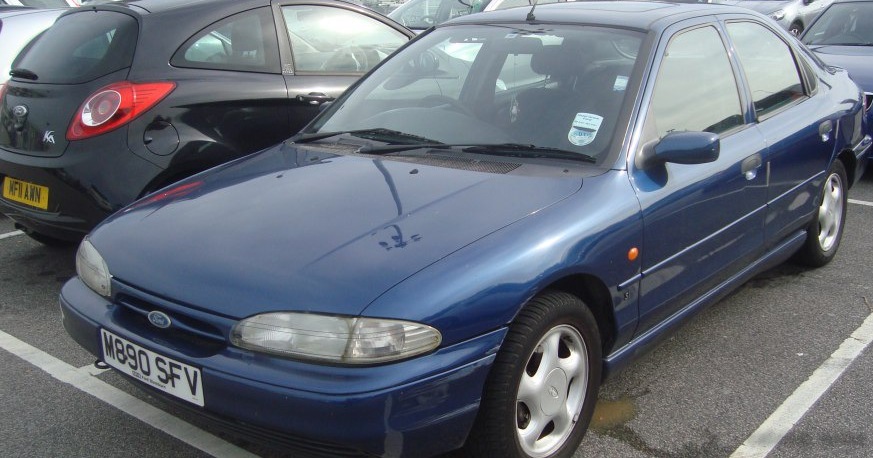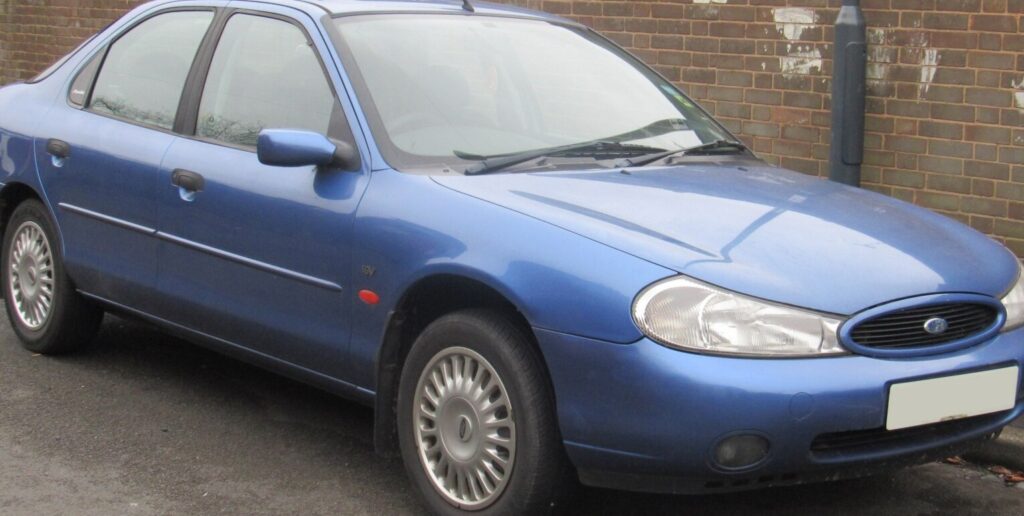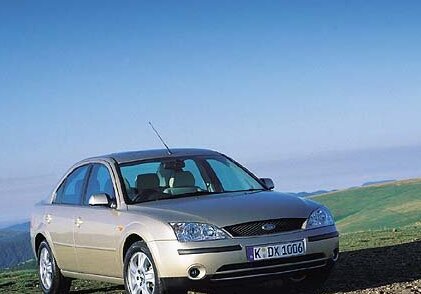
The Ford Mondeo II Sedan 1.8, produced between 2001 and 2006, represented a key entry point into the second generation of Ford’s globally successful Mondeo line. Positioned as a mainstream family sedan, this variant offered a balance of affordability, practicality, and reasonable performance. It was a significant model for Ford in Europe, where the Mondeo competed directly with vehicles like the Volkswagen Passat, Opel Vectra, and Peugeot 406. The Mondeo II, built on the B246 platform, aimed to improve upon the first generation’s already strong reputation for handling and interior space. This 1.8-liter engine and five-speed manual transmission combination was a popular choice for buyers prioritizing fuel efficiency and everyday usability over outright speed.
Technical Specifications
| Brand | Ford |
| Model | Mondeo |
| Generation | Mondeo II Sedan |
| Type (Engine) | 1.8 (110 Hp) |
| Start of production | 2001 |
| End of production | 2006 |
| Powertrain Architecture | Internal Combustion engine |
| Body type | Sedan |
| Seats | 5 |
| Doors | 4 |
| Fuel consumption (urban) | 10.9 l/100 km (21.6 US mpg) |
| Fuel consumption (extra urban) | 5.5 l/100 km (42.8 US mpg) |
| Fuel consumption (combined) | 7.7 l/100 km (30.5 US mpg) |
| Fuel Type | Petrol (Gasoline) |
| Acceleration 0 – 100 km/h | 11.6 sec |
| Acceleration 0 – 62 mph | 11.6 sec |
| Acceleration 0 – 60 mph | 11 sec |
| Maximum speed | 193 km/h (119.92 mph) |
| Weight-to-power ratio | 12.5 kg/Hp |
| Weight-to-torque ratio | 8.3 kg/Nm |
| Power | 110 Hp @ 5500 rpm |
| Torque | 165 Nm @ 3950 rpm (121.7 lb.-ft. @ 3950 rpm) |
| Engine layout | Front, Transverse |
| Engine Model/Code | CGBA |
| Engine displacement | 1798 cm3 (109.72 cu. in.) |
| Number of cylinders | 4 |
| Engine configuration | Inline |
| Cylinder Bore | 83 mm (3.27 in.) |
| Piston Stroke | 83.1 mm (3.27 in.) |
| Compression ratio | 10.8:1 |
| Number of valves per cylinder | 4 |
| Fuel injection system | Multi-port manifold injection |
| Engine aspiration | Naturally aspirated |
| Valvetrain | DOHC |
| Engine oil capacity | 4.3 l (4.54 US qt | 3.78 UK qt) |
| Coolant capacity | 8.1 l (8.56 US qt | 7.13 UK qt) |
| Kerb Weight | 1374 kg (3029.15 lbs.) |
| Max. weight | 1865 kg (4111.62 lbs.) |
| Max load | 491 kg (1082.47 lbs.) |
| Trunk (boot) space – minimum | 500 l (17.66 cu. ft.) |
| Fuel tank capacity | 58 l (15.32 US gal | 12.76 UK gal) |
| Length | 4731 mm (186.26 in.) |
| Width | 1812 mm (71.34 in.) |
| Height | 1429 mm (56.26 in.) |
| Wheelbase | 2754 mm (108.43 in.) |
| Front track | 1522 mm (59.92 in.) |
| Rear track | 1537 mm (60.51 in.) |
| Drivetrain Architecture | Front wheel drive |
| Number of gears | 5 |
| Gearbox type | Manual transmission |
| Front suspension | Wishbone |
| Rear suspension | Coil spring |
| Front brakes | Ventilated discs |
| Rear brakes | Disc |
| Assisting systems | ABS (Anti-lock braking system) |
| Steering type | Steering rack and pinion |
| Power steering | Hydraulic |
| Tires size | 205/55 R16 |
INTRODUCTION
The Ford Mondeo II Sedan 1.8 (110 hp) was a mainstay of the Mondeo range from 2001 to 2006. It occupied the entry-level to mid-range position within the lineup, offering a more affordable alternative to the higher-powered 2.0-liter and V6 models. Built on Ford’s B246 platform (also known as the 1HX0 for the sedan), the Mondeo II represented a significant step forward in terms of refinement, safety, and driving dynamics compared to its predecessor. This particular variant, with its 1.8-liter engine and five-speed manual transmission, was aimed at buyers seeking a practical, economical, and reliable family car.
Powertrain & Engine Architecture
The heart of this Mondeo variant is the Ford CGBA 1.8-liter inline-four cylinder engine. This engine, a member of Ford’s Zetec family, utilizes a multi-port fuel injection system and a double overhead camshaft (DOHC) valvetrain with four valves per cylinder. The CGBA engine is known for its relatively smooth operation and decent fuel economy. It produces 110 horsepower at 5500 rpm and 165 Nm (121.7 lb-ft) of torque at 3950 rpm. The five-speed manual transmission was the standard gearbox for this model, offering a good balance between fuel efficiency and driver control. The transmission’s gear ratios were tuned for everyday driving, prioritizing smooth shifts and reasonable acceleration rather than outright performance. The engine’s transverse mounting and front-wheel-drive configuration were typical for cars in this segment.
Driving Characteristics
The 1.8-liter Mondeo Sedan delivered a competent, if not exhilarating, driving experience. Acceleration from 0-60 mph took around 11 seconds, and the top speed was approximately 119.92 mph. Compared to the more powerful 2.0-liter or V6 versions, the 1.8 felt noticeably less responsive, particularly when accelerating from lower speeds or overtaking. However, the five-speed manual transmission allowed drivers to keep the engine in its optimal power band. The Mondeo II’s suspension, featuring wishbone front suspension and coil springs in the rear, provided a comfortable ride, absorbing bumps and imperfections in the road well. The steering was precise and well-weighted, contributing to a confident feel behind the wheel. While not a sports sedan, the 1.8 Mondeo offered a balanced and predictable handling experience.
Equipment & Trim Levels
The 1.8-liter Mondeo Sedan typically came equipped with a reasonable level of standard features. These included power steering, central locking, electric front windows, and an AM/FM radio. Higher trim levels, such as the Ghia, added features like alloy wheels, air conditioning, upgraded upholstery, and a more comprehensive audio system. Optional extras available for the 1.8 Mondeo included a sunroof, rear parking sensors, and upgraded interior trim materials. Interior upholstery was typically cloth, with a functional and durable design. The dashboard layout was straightforward and user-friendly, with clearly labeled controls.
Chassis & Braking
The Mondeo II Sedan’s chassis was designed to provide a stable and comfortable ride. The front suspension utilized independent wishbones, while the rear suspension employed a coil spring setup. Braking duties were handled by ventilated discs at the front and solid discs at the rear. Anti-lock Braking System (ABS) was standard, enhancing safety by preventing wheel lockup during hard braking. The car’s weight distribution was relatively balanced, contributing to its predictable handling characteristics. The 205/55 R16 tires provided adequate grip in most driving conditions.
Market Reception & Comparison
The Ford Mondeo II Sedan 1.8 was generally well-received by automotive critics. It was praised for its spacious interior, comfortable ride, and good value for money. However, some reviewers noted that the 1.8-liter engine could feel underpowered, particularly when fully loaded or driving uphill. Compared to the 2.0-liter version, the 1.8 offered better fuel economy but sacrificed some performance. The 1.8 was also more affordable to purchase and insure, making it an attractive option for budget-conscious buyers. Against competitors like the Volkswagen Passat and Opel Vectra, the Mondeo II offered a compelling combination of practicality, comfort, and affordability.
Legacy
The Ford Mondeo II Sedan 1.8 has proven to be a relatively reliable and durable vehicle. The CGBA engine is generally considered to be robust, and with regular maintenance, it can provide many years of service. Common issues include occasional problems with the cooling system and the fuel injection system. On the used car market today, the Mondeo II 1.8 represents a very affordable option for those seeking a practical and reliable family sedan. Its simple mechanical design and readily available parts make it relatively easy and inexpensive to maintain. While it may not offer the performance or features of more modern vehicles, the Mondeo II 1.8 remains a capable and dependable choice for everyday transportation.