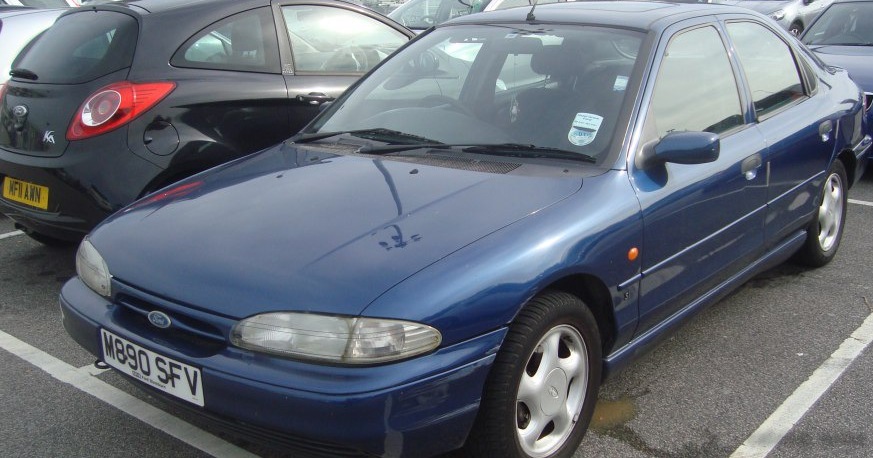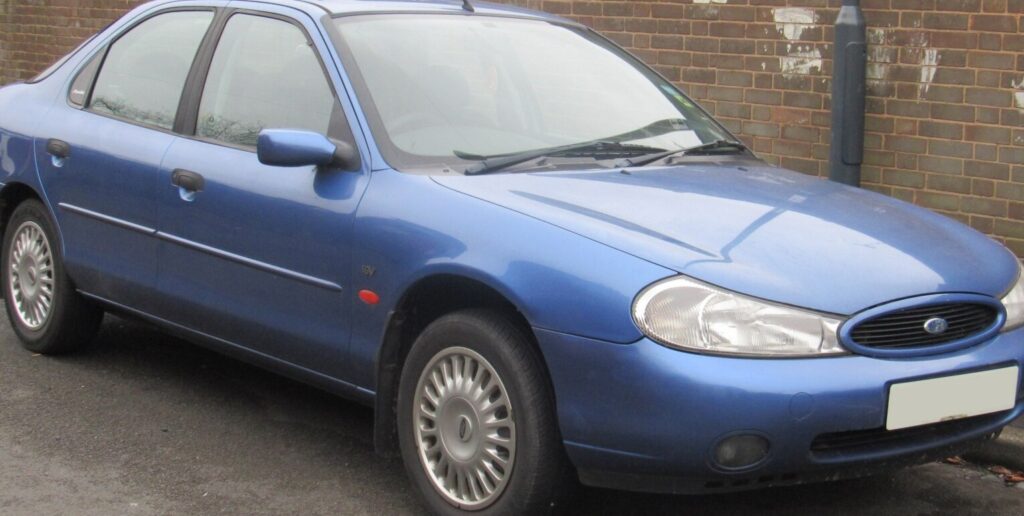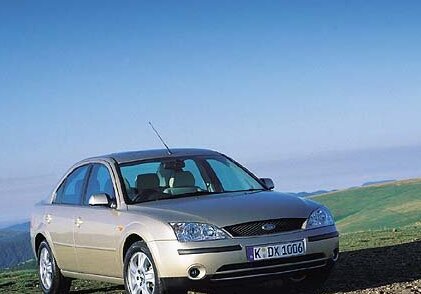
The Ford Mondeo II Sedan 2.0 TDCi Automatic, produced between 2002 and 2006, represented a significant offering in the mid-size family car segment. Positioned as a comfortable and efficient option, this variant utilized a 2.0-liter turbocharged diesel engine paired with a five-speed automatic transmission. It was part of the second generation Mondeo (internally designated as B500), which aimed to build upon the success of the original Mondeo by offering improved refinement, safety, and technology. The 2.0 TDCi Automatic trim typically sat in the mid-range of the Mondeo lineup, offering a balance between performance, fuel economy, and convenience features.
Technical Specifications
| Brand | Ford |
| Model | Mondeo |
| Generation | Mondeo II Sedan |
| Type (Engine) | 2.0 TDCi (130 Hp) Automatic |
| Start of production | 2002 |
| End of production | 2006 |
| Powertrain Architecture | Internal Combustion engine |
| Body type | Sedan |
| Seats | 5 |
| Doors | 4 |
| Fuel consumption (urban) | 8.3 l/100 km (28.3 US mpg, 34 UK mpg, 12 km/l) |
| Fuel consumption (extra urban) | 5.2 l/100 km (45.2 US mpg, 54.3 UK mpg, 19.2 km/l) |
| Fuel consumption (combined) | 6 l/100 km (39.2 US mpg, 47.1 UK mpg, 16.7 km/l) |
| Fuel Type | Diesel |
| Acceleration 0 – 100 km/h | 11.3 sec |
| Acceleration 0 – 62 mph | 11.3 sec |
| Acceleration 0 – 60 mph | 10.7 sec |
| Maximum speed | 208 km/h (129.25 mph) |
| Weight-to-power ratio | 11.2 kg/Hp, 89 Hp/tonne |
| Weight-to-torque ratio | 4.4 kg/Nm, 226 Nm/tonne |
| Power | 130 Hp @ 3800 rpm |
| Power per litre | 65.1 Hp/l |
| Torque | 330 Nm @ 1800 rpm (243.4 lb.-ft. @ 1800 rpm) |
| Engine layout | Front, Transverse |
| Engine Model/Code | FMBA, FMBB |
| Engine displacement | 1998 cm3 (121.93 cu. in.) |
| Number of cylinders | 4 |
| Engine configuration | Inline |
| Cylinder Bore | 86 mm (3.39 in.) |
| Piston Stroke | 86 mm (3.39 in.) |
| Compression ratio | 18.2:1 |
| Number of valves per cylinder | 4 |
| Fuel injection system | Diesel Commonrail |
| Engine aspiration | Turbocharger, Intercooler |
| Engine oil capacity | 6 l (6.34 US qt | 5.28 UK qt) |
| Coolant | 10.4 l (10.99 US qt | 9.15 UK qt) |
| Kerb Weight | 1460 kg (3218.75 lbs.) |
| Max. weight | 2000 kg (4409.25 lbs.) |
| Max load | 540 kg (1190.5 lbs.) |
| Trunk (boot) space – minimum | 500 l (17.66 cu. ft.) |
| Fuel tank capacity | 56 l (14.79 US gal | 12.32 UK gal) |
| Length | 4731 mm (186.26 in.) |
| Width | 1812 mm (71.34 in.) |
| Height | 1429 mm (56.26 in.) |
| Wheelbase | 2754 mm (108.43 in.) |
| Front track | 1522 mm (59.92 in.) |
| Rear (Back) track | 1537 mm (60.51 in.) |
| Drivetrain Architecture | The Internal combustion engine (ICE) drives the front wheels of the vehicle. |
| Drive wheel | Front wheel drive |
| Number of gears and type of gearbox | 5 gears, automatic transmission |
| Front suspension | Wishbone |
| Rear suspension | Coil spring |
| Front brakes | Ventilated discs |
| Rear brakes | Disc |
| Assisting systems | ABS (Anti-lock braking system) |
| Steering type | Steering rack and pinion |
| Power steering | Hydraulic Steering |
| Tires size | 205/55 R16 |
| Wheel rims size | 16 |
Powertrain & Engine Architecture
The heart of the Mondeo II 2.0 TDCi Automatic is the FMBA or FMBB series 2.0-liter inline-four cylinder diesel engine. This engine was a key component of Ford’s push towards more fuel-efficient vehicles. It featured a common rail direct injection system, delivering fuel directly into the combustion chamber at extremely high pressure. This technology, coupled with a variable geometry turbocharger and intercooler, allowed for a good balance of power and economy. The engine produced 130 horsepower at 3800 rpm and a substantial 330 Nm (243 lb-ft) of torque at just 1800 rpm. The five-speed automatic transmission was a conventional torque converter type, chosen for its smoothness and ease of use, although it wasn’t as fuel-efficient as a manual gearbox. The transmission was geared towards providing comfortable cruising rather than outright performance.
Driving Characteristics
The 2.0 TDCi Automatic Mondeo offered a relaxed and comfortable driving experience. The engine’s strong low-end torque meant that brisk acceleration was readily available for overtaking and merging onto highways. However, it wasn’t a particularly sporty car. The automatic transmission, while smooth, could feel somewhat sluggish when downshifting, and the engine didn’t rev as freely as its gasoline counterparts. Compared to the manual transmission versions of the 2.0 TDCi, the automatic suffered a slight performance penalty and reduced fuel economy. Against higher-powered Mondeo variants like the 2.2 TDCi, the 2.0 TDCi Automatic felt noticeably less responsive, but it provided a more economical and refined driving experience.
Equipment & Trim Levels
The 2.0 TDCi Automatic trim level typically included features such as air conditioning, power windows, power mirrors, a CD player, and alloy wheels. Higher trim levels, such as the Ghia, added features like leather upholstery, automatic climate control, rain-sensing wipers, and upgraded audio systems. Optional extras included a sunroof, parking sensors, and a navigation system. The interior generally featured a dark color scheme with durable cloth upholstery in the base models. The dashboard layout was functional and straightforward, prioritizing ease of use over stylistic flair.
Chassis & Braking
The Mondeo II utilized an independent front suspension with MacPherson struts and a multi-link rear suspension. This setup provided a good balance of ride comfort and handling. The front brakes were ventilated discs, while the rear brakes were solid discs on most models, providing adequate stopping power for the vehicle’s weight. Anti-lock Braking System (ABS) was standard. The steering was a hydraulic power-assisted rack and pinion system, offering a reasonable level of feel and precision. Stabilizer bars were fitted to both the front and rear axles to reduce body roll during cornering.
Market Reception & Comparison
The Ford Mondeo II 2.0 TDCi Automatic was generally well-received by automotive critics. It was praised for its comfortable ride, spacious interior, and fuel efficiency. However, some reviewers criticized the automatic transmission for its lack of responsiveness and the engine for being somewhat noisy. Compared to rivals like the Volkswagen Passat and Opel/Vauxhall Vectra, the Mondeo offered a competitive package in terms of price, features, and practicality. The 2.0 TDCi Automatic offered better fuel economy than the gasoline-powered Mondeos, but the higher-output 2.2 TDCi models provided significantly more performance.
Legacy
The Ford Mondeo II 2.0 TDCi Automatic has proven to be a relatively reliable vehicle, with many examples still on the road today. The 2.0 TDCi engine, while not without its potential issues (such as injector problems and turbocharger wear), is generally considered durable when properly maintained. The automatic transmission is also reasonably reliable, although regular fluid changes are essential. In the used car market, these Mondeos represent a good value proposition for buyers seeking a comfortable, practical, and fuel-efficient family car. However, potential buyers should be aware of the common issues associated with diesel engines and automatic transmissions and ensure that any prospective purchase has been well-maintained.