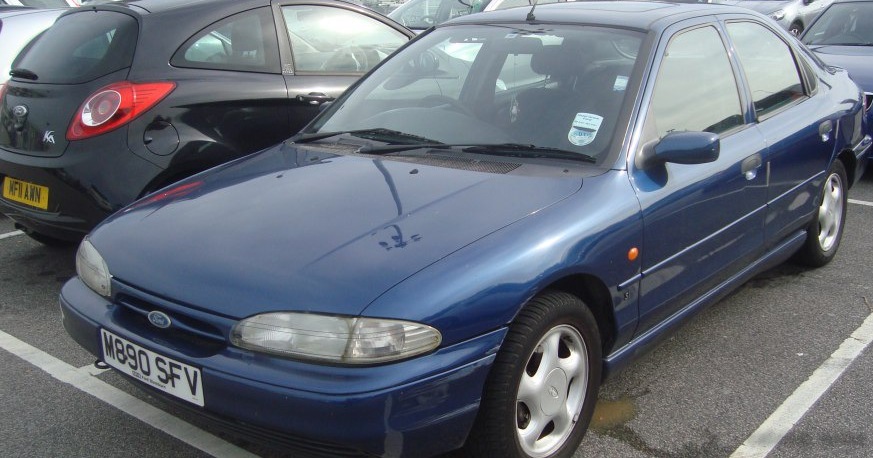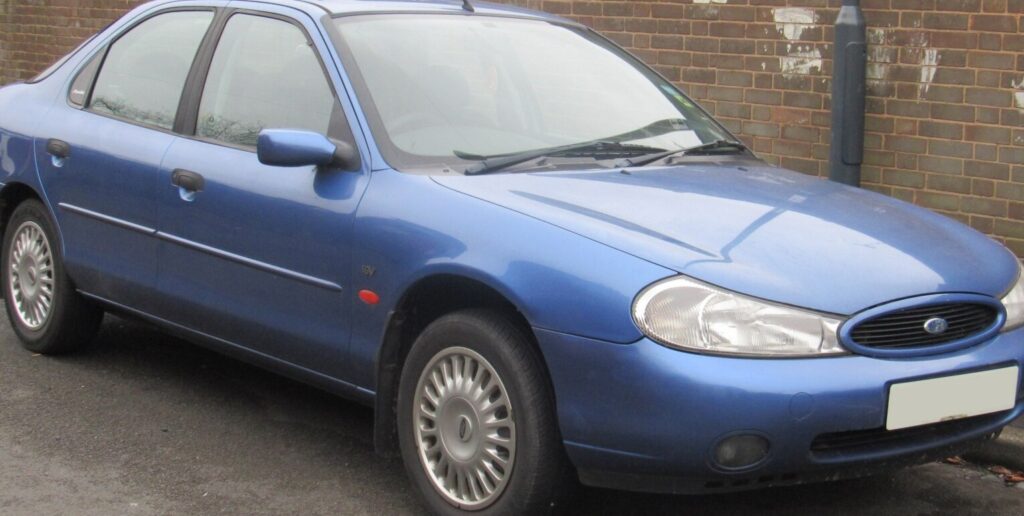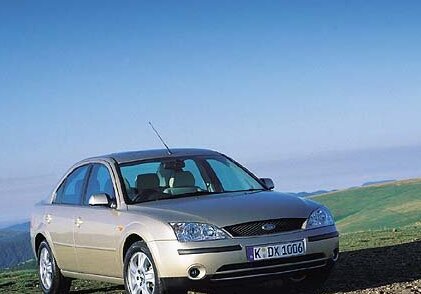
The Ford Mondeo II Sedan 2.2 TDCi, produced between 2003 and 2006, represented a significant step forward for Ford’s mid-size offering in the European market. Positioned as a more premium and refined option within the Mondeo range, the 2.2 TDCi aimed to compete directly with vehicles like the Volkswagen Passat and Opel Vectra. This variant utilized a modern common-rail diesel engine, offering a blend of performance and fuel efficiency that appealed to drivers covering long distances. The Mondeo II, internally designated as the B5 platform, was a crucial model for Ford, solidifying its presence in a highly competitive segment. This particular 2.2 TDCi model was often considered a mid-range offering, bridging the gap between the more economical base models and the higher-performance ST variants.
Technical Specifications
| Brand | Ford |
| Model | Mondeo |
| Generation | Mondeo II Sedan |
| Type (Engine) | 2.2 TDCi (155 Hp) |
| Start of production | 2003 |
| End of production | 2006 |
| Powertrain Architecture | Internal Combustion engine |
| Body type | Sedan |
| Seats | 5 |
| Doors | 4 |
| Fuel consumption (urban) | 8.2 l/100 km (28.7 US mpg) |
| Fuel consumption (extra urban) | 4.9 l/100 km (48 US mpg) |
| Fuel Type | Diesel |
| Acceleration 0 – 100 km/h | 9.3 sec |
| Acceleration 0 – 62 mph | 9.3 sec |
| Acceleration 0 – 60 mph | 8.8 sec |
| Maximum speed | 223 km/h (138.57 mph) |
| Weight-to-power ratio | 9.1 kg/Hp |
| Weight-to-torque ratio | 3.9 kg/Nm |
| Power | 155 Hp @ 3500 rpm |
| Power per litre | 70.5 Hp/l |
| Torque | 360 Nm @ 1800 rpm (265.52 lb.-ft. @ 1800 rpm) |
| Engine layout | Front, Transverse |
| Engine Model/Code | QJBA, QJBB |
| Engine displacement | 2198 cm3 (134.13 cu. in.) |
| Number of cylinders | 4 |
| Engine configuration | Inline |
| Cylinder Bore | 86 mm (3.39 in.) |
| Piston Stroke | 94.6 mm (3.72 in.) |
| Compression ratio | 17.5:1 |
| Number of valves per cylinder | 4 |
| Fuel injection system | Diesel Commonrail |
| Engine aspiration | Turbocharger, Intercooler |
| Engine oil capacity | 6.7 l (7.08 US qt | 5.9 UK qt) |
| Coolant | 10.4 l (10.99 US qt | 9.15 UK qt) |
| Kerb Weight | 1410 kg (3108.52 lbs.) |
| Max. weight | 2015 kg (4442.31 lbs.) |
| Max load | 605 kg (1333.8 lbs.) |
| Trunk (boot) space – minimum | 500 l (17.66 cu. ft.) |
| Fuel tank capacity | 58 l (15.32 US gal | 12.76 UK gal) |
| Length | 4731 mm (186.26 in.) |
| Width | 1812 mm (71.34 in.) |
| Height | 1429 mm (56.26 in.) |
| Wheelbase | 2754 mm (108.43 in.) |
| Front track | 1522 mm (59.92 in.) |
| Rear (Back) track | 1537 mm (60.51 in.) |
| Drivetrain Architecture | The Internal combustion engine (ICE) drives the front wheels of the vehicle. |
| Drive wheel | Front wheel drive |
| Number of gears and type of gearbox | 6 gears, manual transmission |
| Front suspension | Wishbone |
| Rear suspension | Coil spring |
| Front brakes | Ventilated discs |
| Rear brakes | Disc |
| Assisting systems | ABS (Anti-lock braking system) |
| Steering type | Steering rack and pinion |
| Power steering | Hydraulic Steering |
| Tires size | 205/55 R16 |
Powertrain & Engine Architecture
The heart of the Mondeo II 2.2 TDCi is the QJBA or QJBB engine code, a 2.2-liter inline-four cylinder diesel engine. This engine was a significant upgrade from the earlier 2.0-liter TDCi units, offering increased power and torque. It featured a common-rail direct injection system, delivering fuel at extremely high pressure for improved combustion efficiency and reduced emissions. The engine utilized a variable geometry turbocharger (VGT) and an intercooler to maximize power output and minimize turbo lag. The VGT system adjusted the turbine vanes to optimize airflow for different engine speeds and loads. The engine’s valvetrain employed four valves per cylinder, enhancing breathing and contributing to its overall performance. The 6-speed manual transmission was the standard offering, providing a good balance between fuel economy and driver engagement. The gear ratios were tuned to take advantage of the engine’s strong low-end torque, making it suitable for both city driving and highway cruising.
Driving Characteristics
The 2.2 TDCi Mondeo offered a refined driving experience, particularly compared to earlier diesel-powered models. The 155 horsepower and 360 Nm (265 lb-ft) of torque provided ample power for everyday driving and overtaking maneuvers. While not a sports car, the Mondeo 2.2 TDCi could accelerate from 0 to 60 mph in around 8.8 seconds, and reach a top speed of 138.57 mph. The six-speed manual transmission allowed drivers to keep the engine in its optimal power band, resulting in responsive acceleration. Compared to the lower-powered 1.8-liter petrol versions, the 2.2 TDCi offered significantly more torque, making it feel more effortless, especially when fully loaded. Compared to the higher-performance ST models, the 2.2 TDCi prioritized fuel economy and comfort over outright speed. The suspension was tuned for a comfortable ride, absorbing bumps and imperfections in the road well.
Equipment & Trim Levels
The Mondeo II 2.2 TDCi typically came equipped with a respectable level of standard features. These included air conditioning, power windows, power mirrors, central locking, and an integrated audio system. Higher trim levels, such as the Ghia, added features like leather upholstery, alloy wheels, automatic climate control, and a sunroof. Optional extras included a navigation system, parking sensors, and upgraded audio systems. The interior design was generally functional and well-built, with a focus on ergonomics. The dashboard layout was straightforward and easy to use, with clearly labeled controls.
Chassis & Braking
The Mondeo II featured an independent front suspension with MacPherson struts and a multi-link rear suspension. This setup provided a good balance between ride comfort and handling. The front brakes were ventilated discs, while the rear brakes were solid discs on most models, providing adequate stopping power. Anti-lock Braking System (ABS) was standard, enhancing safety. The steering was a hydraulic power-assisted rack and pinion system, offering precise and responsive steering feel. The chassis was designed to be robust and durable, capable of handling the engine’s torque and providing a stable platform for driving.
Market Reception & Comparison
The Ford Mondeo II 2.2 TDCi was generally well-received by automotive critics. It was praised for its refined engine, comfortable ride, and spacious interior. Fuel economy was a major selling point, with the 2.2 TDCi achieving around 48 US mpg on the highway. Compared to the 1.8-liter petrol versions, the 2.2 TDCi offered significantly better fuel economy and more torque. However, some critics noted that the engine could be slightly noisy compared to some of its competitors. Reliability was generally good, although some owners reported issues with the fuel injection system and turbocharger over the long term.
Legacy
The Ford Mondeo II 2.2 TDCi remains a popular choice in the used car market today, particularly for those seeking a comfortable, fuel-efficient, and reliable family sedan. The QJBA/QJBB engine, while not without its potential issues, is generally considered to be a durable and capable unit. Parts availability is good, and maintenance costs are relatively reasonable. The Mondeo II 2.2 TDCi represents a significant step forward in Ford’s diesel engine technology and continues to offer a compelling package for budget-conscious buyers.