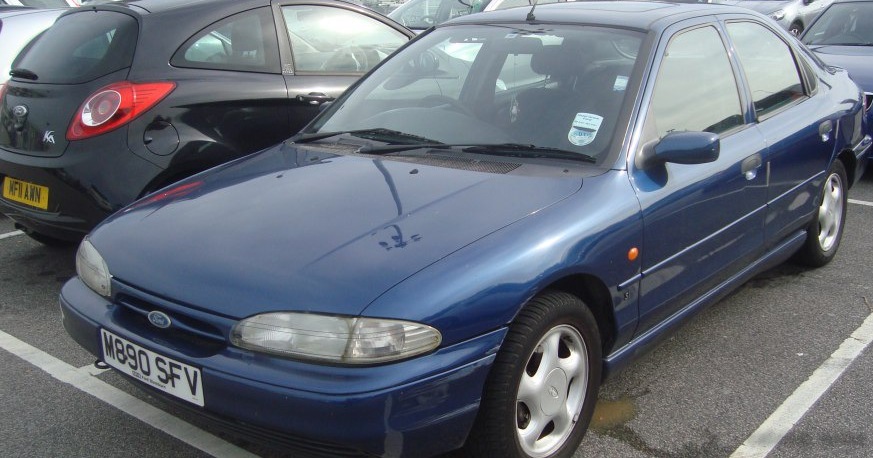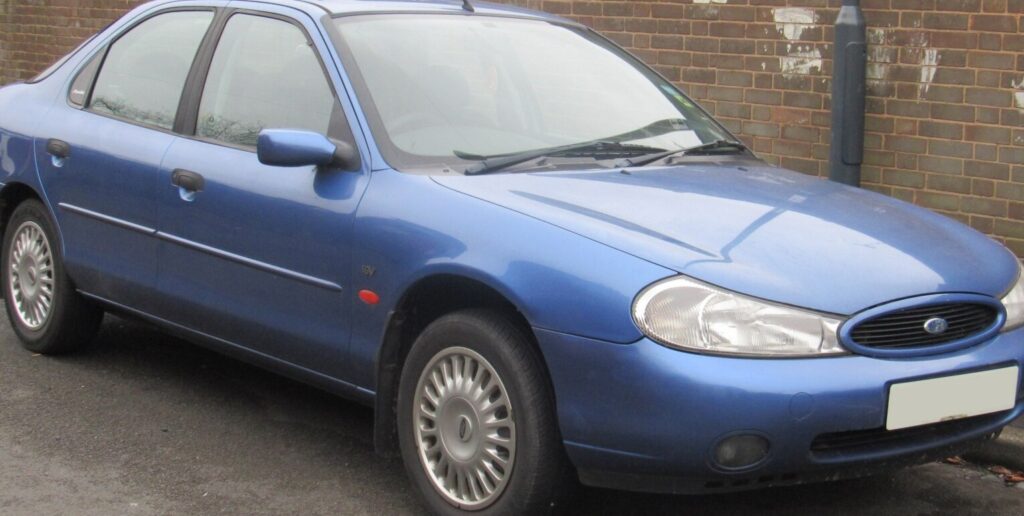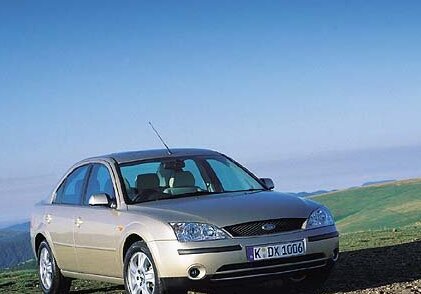
The Ford Mondeo II Sedan 2.5, equipped with a 170 horsepower engine and automatic transmission, represented a significant offering in Ford’s mid-size lineup from 2001 to 2006. Positioned as a more premium variant within the second-generation Mondeo (internally designated as the B500 series), this model aimed to provide a blend of comfort, performance, and refinement for buyers seeking a step up from the base models. It was primarily marketed in Europe and other international markets, serving as a competitor to vehicles like the Volkswagen Passat, Opel Vectra, and Toyota Camry. The Mondeo II built upon the success of the original Mondeo, continuing Ford’s commitment to a well-rounded family car with a focus on driving dynamics.
Technical Specifications
| Brand | Ford |
| Model | Mondeo |
| Generation | Mondeo II Sedan |
| Type (Engine) | 2.5 (170 Hp) Automatic |
| Start of production | 2001 |
| End of production | 2006 |
| Powertrain Architecture | Internal Combustion engine |
| Body type | Sedan |
| Seats | 5 |
| Doors | 4 |
| Fuel consumption (urban) | 15.2 l/100 km (15.5 US mpg, 18.6 UK mpg, 6.6 km/l) |
| Fuel consumption (extra urban) | 7.5 l/100 km (31.4 US mpg, 37.7 UK mpg, 13.3 km/l) |
| Fuel consumption (combined) | 10.2 l/100 km (23.1 US mpg, 27.7 UK mpg, 9.8 km/l) |
| Fuel Type | Petrol (Gasoline) |
| Acceleration 0 – 100 km/h | 9.6 sec |
| Acceleration 0 – 62 mph | 9.6 sec |
| Acceleration 0 – 60 mph | 9.1 sec |
| Maximum speed | 216 km/h (134.22 mph) |
| Weight-to-power ratio | 8.6 kg/Hp, 115.8 Hp/tonne |
| Weight-to-torque ratio | 6.7 kg/Nm, 149.9 Nm/tonne |
| Power | 170 Hp @ 6000 rpm |
| Power per litre | 68.1 Hp/l |
| Torque | 220 Nm @ 4250 rpm (162.26 lb.-ft. @ 4250 rpm) |
| Engine layout | Front, Transverse |
| Engine Model/Code | LCBD |
| Engine displacement | 2495 cm3 (152.25 cu. in.) |
| Number of cylinders | 6 |
| Engine configuration | V-engine |
| Cylinder Bore | 81.6 mm (3.21 in.) |
| Piston Stroke | 79.5 mm (3.13 in.) |
| Compression ratio | 9.8:1 |
| Number of valves per cylinder | 4 |
| Fuel injection system | Multi-port manifold injection |
| Engine aspiration | Naturally aspirated engine |
| Valvetrain | DOHC |
| Engine oil capacity | 5.7 l (6.02 US qt | 5.02 UK qt) |
| Coolant | 9.5 l (10.04 US qt | 8.36 UK qt) |
| Kerb Weight | 1468 kg (3236.39 lbs.) |
| Max. weight | 1940 kg (4276.97 lbs.) |
| Max load | 472 kg (1040.58 lbs.) |
| Trunk (boot) space – minimum | 500 l (17.66 cu. ft.) |
| Fuel tank capacity | 58 l (15.32 US gal | 12.76 UK gal) |
| Length | 4731 mm (186.26 in.) |
| Width | 1812 mm (71.34 in.) |
| Height | 1429 mm (56.26 in.) |
| Wheelbase | 2754 mm (108.43 in.) |
| Front track | 1522 mm (59.92 in.) |
| Rear (Back) track | 1537 mm (60.51 in.) |
| Drivetrain Architecture | The Internal combustion engine (ICE) drives the front wheels of the vehicle. |
| Drive wheel | Front wheel drive |
| Number of gears and type of gearbox | 5 gears, automatic transmission |
| Front suspension | Wishbone |
| Rear suspension | Coil spring |
| Front brakes | Ventilated discs |
| Rear brakes | Disc |
| Assisting systems | ABS (Anti-lock braking system) |
| Steering type | Steering rack and pinion |
| Power steering | Hydraulic Steering |
| Tires size | 205/55 R16 |
| Wheel rims size | 16 |
Powertrain & Engine Architecture
The heart of the Mondeo II 2.5 was the LCBD engine, a 2.5-liter Duratec V6. This engine was a naturally aspirated, 60-degree V6 featuring a dual overhead camshaft (DOHC) valvetrain with four valves per cylinder. It utilized multi-port fuel injection to deliver fuel directly into the intake ports. The engine’s design prioritized smooth power delivery and refinement over outright performance. The automatic transmission paired with this engine was typically a five-speed unit, designed to provide comfortable and effortless cruising. While not a performance-oriented transmission, it was well-suited to the engine’s characteristics and the Mondeo’s intended role as a family vehicle. The engine’s 9.8:1 compression ratio was a compromise between efficiency and power output.
Driving Characteristics
The 170 hp and 220 Nm (162 lb-ft) of torque provided by the 2.5-liter V6 and automatic transmission combination resulted in a comfortable and capable driving experience. Acceleration from 0-60 mph took around 9.1 seconds, which was respectable for the time but noticeably slower than the manual transmission or higher-output variants. The automatic transmission, while smooth, did exhibit some typical characteristics of older automatic gearboxes, such as a slight delay in response and a tendency to ‘hunt’ for gears under hard acceleration. The gear ratios were tuned for relaxed cruising, making it an excellent choice for long highway journeys. Compared to the 1.8-liter models, the 2.5 offered significantly more power and torque, resulting in a more effortless driving experience, especially when fully loaded. However, it lacked the sporty feel of the manual transmission versions.
Equipment & Trim Levels
The 2.5-liter automatic Mondeo typically came with a generous level of standard equipment. This often included air conditioning, power windows and mirrors, central locking, an upgraded audio system, and alloy wheels. Higher trim levels, such as the Ghia, added features like leather upholstery, wood trim, automatic climate control, and upgraded sound systems. Optional extras included a sunroof, heated front seats, and a navigation system. The interior design was generally conservative but well-built, with a focus on ergonomics and practicality.
Chassis & Braking
The Mondeo II featured independent front suspension with MacPherson struts and a multi-link rear suspension, providing a comfortable and controlled ride. The 2.5-liter models typically had slightly stiffer suspension components compared to the lower-powered variants to handle the increased weight and power. Braking was handled by ventilated discs on the front wheels and solid discs on the rear. Anti-lock Braking System (ABS) was standard, enhancing safety and stability during emergency braking. The steering was a hydraulic power-assisted rack and pinion system, offering a good balance of feel and assistance.
Market Reception & Comparison
The Mondeo II 2.5 Automatic was generally well-received by automotive critics. It was praised for its comfortable ride, spacious interior, and refined engine. However, some reviewers noted that the automatic transmission could feel sluggish at times and that the fuel economy was not particularly impressive. Compared to the 1.8-liter and 2.0-liter models, the 2.5 offered a more luxurious and powerful experience, but at a higher price point. The 2.0-liter Duratec engine, while less powerful, offered a better balance of performance and fuel economy for many buyers. The Mondeo also competed with other mid-size sedans, such as the Volkswagen Passat and Opel Vectra, which offered similar levels of comfort and refinement.
Legacy
The Ford Mondeo II 2.5 Automatic, while not a particularly rare or collectible vehicle, remains a popular choice in the used car market. The Duratec V6 engine is known for its reliability, provided it has been properly maintained. Common issues include oil leaks and occasional sensor failures. The automatic transmission is generally durable, but regular fluid changes are essential to prevent problems. Today, these vehicles offer a comfortable and affordable way to experience a well-engineered mid-size sedan. Its blend of practicality, comfort, and reasonable performance continues to appeal to buyers looking for a dependable and spacious family car.